

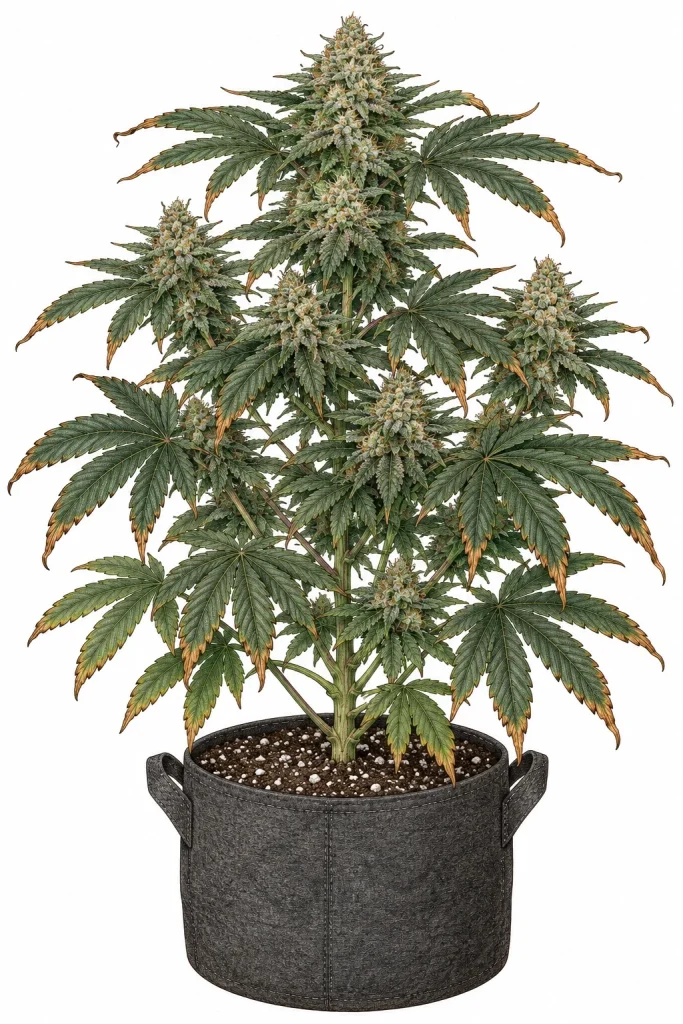
Phosphorus toxicity is one of the most underrated problems in cannabis growing. It rarely shows up on its own. Instead, it usually locks out other nutrients. If you overdo phosphorus-heavy nutrients, you risk a chain reaction of zinc, iron and calcium deficiencies. In this article, you’ll learn how to reliably spot phosphorus toxicity, what causes it and how to get your plant back in balance. That way, you protect your grow from costly follow-up damage.
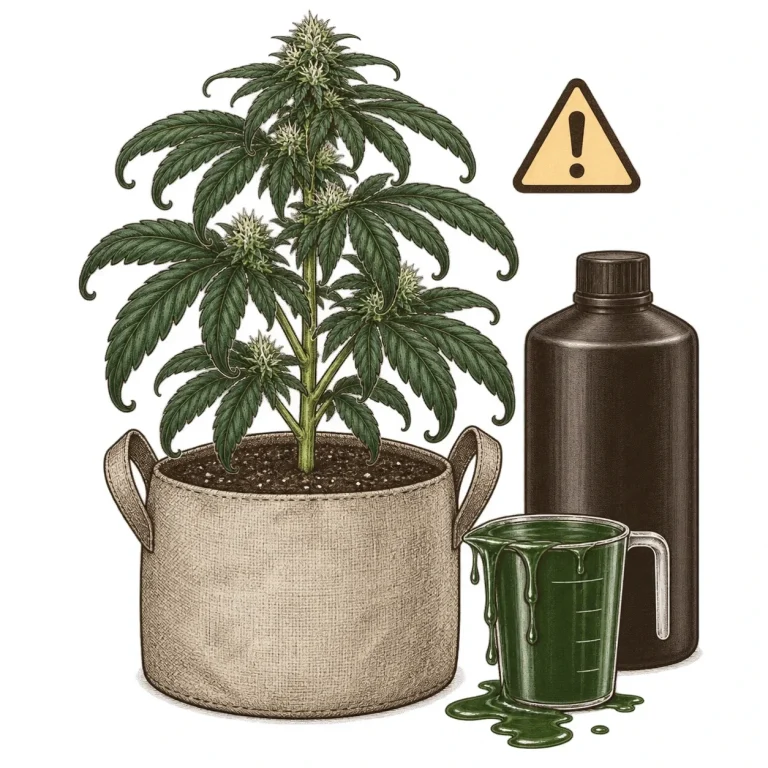
What Is Phosphorus Toxicity in Cannabis?
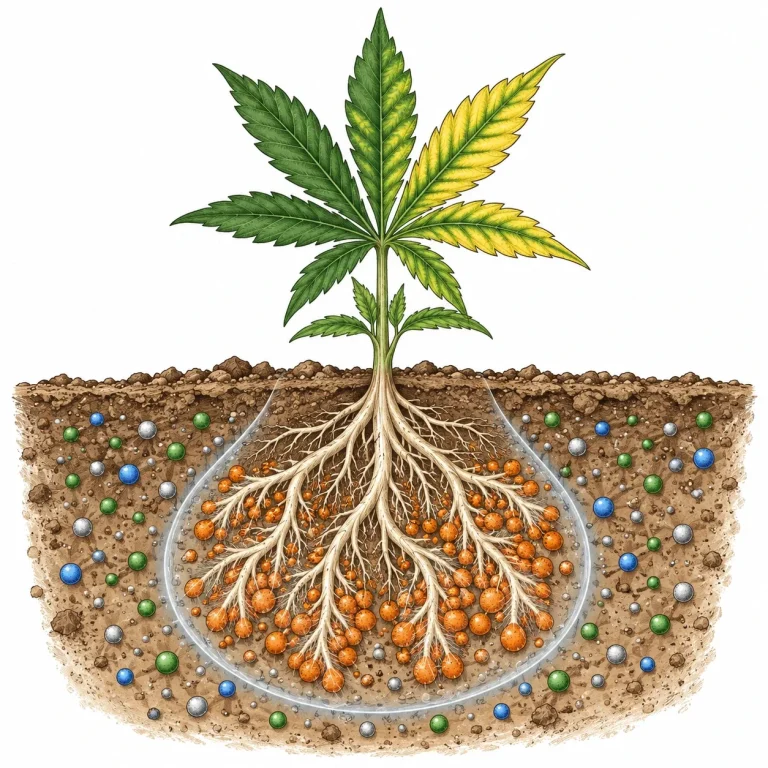
Phosphorus (P) is one of the three macronutrients in NPK (nitrogen, phosphorus, potassium). It plays a key role in root development, energy transfer and bud formation. Cannabis plants need more phosphorus especially during the flowering stage, but there’s an upper limit here too. Once you go past it, the plant can no longer use all the extra phosphorus, and it builds up in the growing medium.
Phosphorus toxicity rarely comes alone. Excess phosphate binds with zinc, iron, copper and calcium to form compounds that barely dissolve, and it blocks their uptake at the roots. That’s why too much phosphorus often leads to nutrient lockout. The RHS overview of nutrient deficiencies also shows how locked-out nutrients look on plants. Your plant then shows deficiency symptoms, even though there should be enough of everything in the medium. That often makes diagnosis trickier than with a classic deficiency.
Growers who lean hard on high-P bloom nutrients or add PK boosters on top are especially at risk if they don’t keep an eye on pH and their overall feeding.
How to Spot Phosphorus Toxicity Symptoms
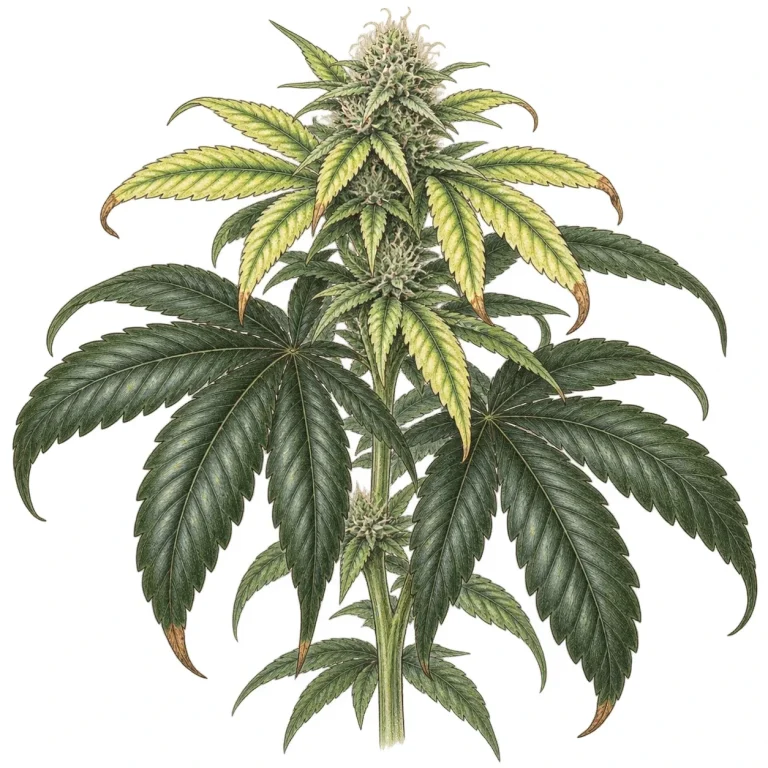
Phosphorus toxicity symptoms usually creep in slowly and are often mistaken for other problems. Watch for these typical signs on your plant so you can react early.
- Unusually dark green to almost black-green leaves, often along with stunted growth
- Zinc or iron deficiency symptoms like chlorosis between the leaf veins, especially on young leaves
- Slow growth even though the plant is getting enough nutrients
- Brown or yellow spots when calcium or magnesium get locked out as well
- Stiff, brittle leaves and leaves dying off early
What Causes Too Much Phosphorus in Cannabis?
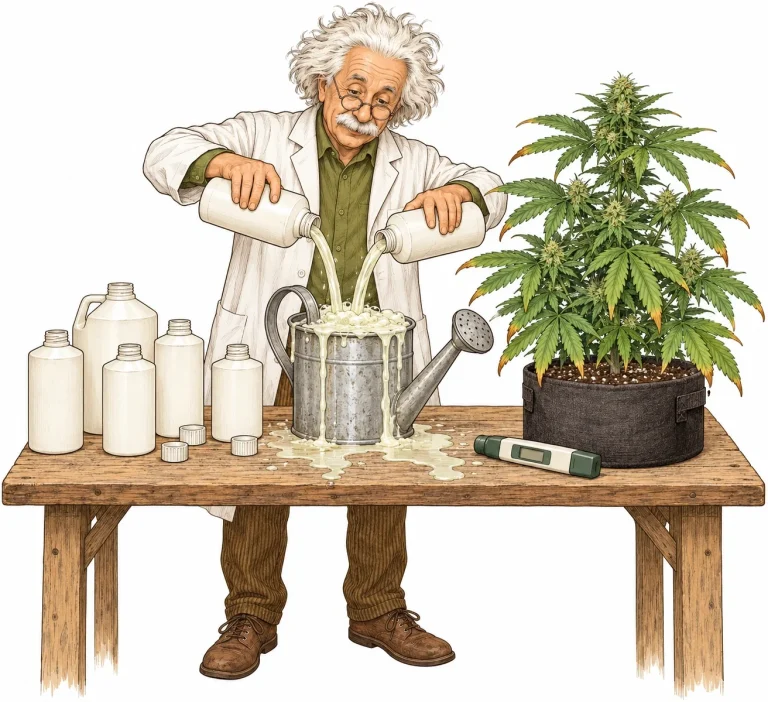
Phosphorus toxicity is almost always caused by the grower during feeding. That makes it a specific form of nutrient burn in cannabis. The most common causes are easy to pin down, and once you understand how they connect, you can usually avoid them.
Overdosing isn’t the only factor. Your growing medium plays a role too: in small pots with little buffer, excess phosphorus builds up faster than in larger, well-aerated volumes of medium. Organic nutrients with a high phosphate content, like some guano products, can also cause trouble if you overdo them.
- Overdosing bloom nutrients or PK boosters during the flowering stage
- Feeding too often without paying attention to what the plant actually needs
- The wrong pH, which throws nutrient uptake off even further
- Using several phosphorus-heavy products at the same time
- Not flushing the growing medium between feeding cycles
How to Tell Phosphorus Toxicity Apart from Other Problems
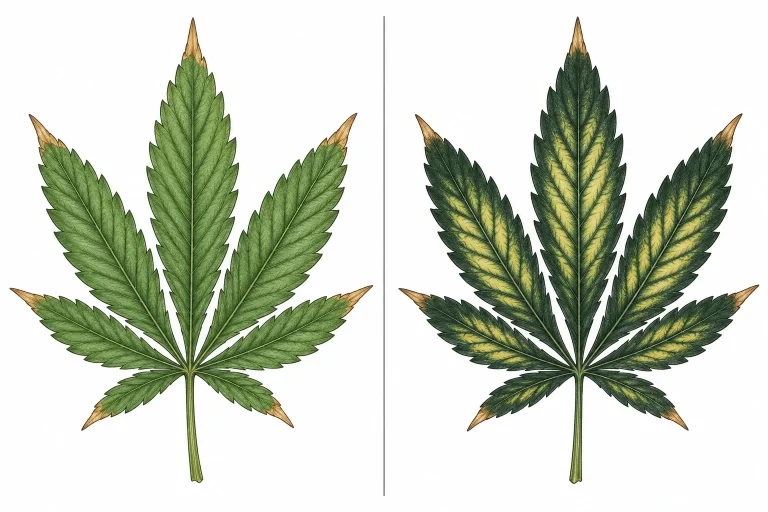
The symptoms of phosphorus toxicity look a lot like a zinc or iron deficiency, and they can also resemble magnesium toxicity. That’s why an accurate diagnosis matters before you take action. Checking the pH of your growing medium and looking back at your feeding history can help you narrow it down.
Not sure whether you’re dealing with a true deficiency or a phosphorus-induced lockout? Compare your feeding with a cannabis NPK chart to get a realistic idea of what your plants need at each growth stage. Other toxicities, like cannabis zinc toxicity, can be just as easy to mix up and should be ruled out too.
Quick Fixes for Phosphorus Toxicity
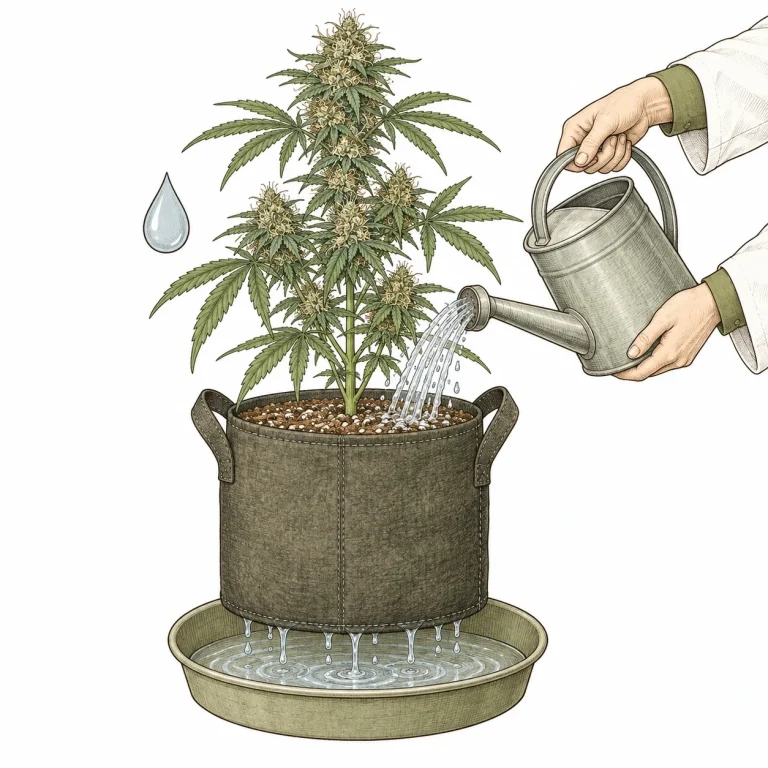
As soon as you suspect phosphorus toxicity, act fast to avoid follow-up damage from nutrient lockout. These steps help you get things back under control quickly.
- Flush the growing medium thoroughly with clean, pH-adjusted water
- Stop feeding completely for at least 1–2 weeks
- Check and correct the pH of your medium and your water, for example with the pH Calculator
- Keep an eye on badly damaged leaves, but don’t rush to remove them
- After the break, start feeding again at a much lower dose
Preventing Phosphorus Toxicity Long-Term
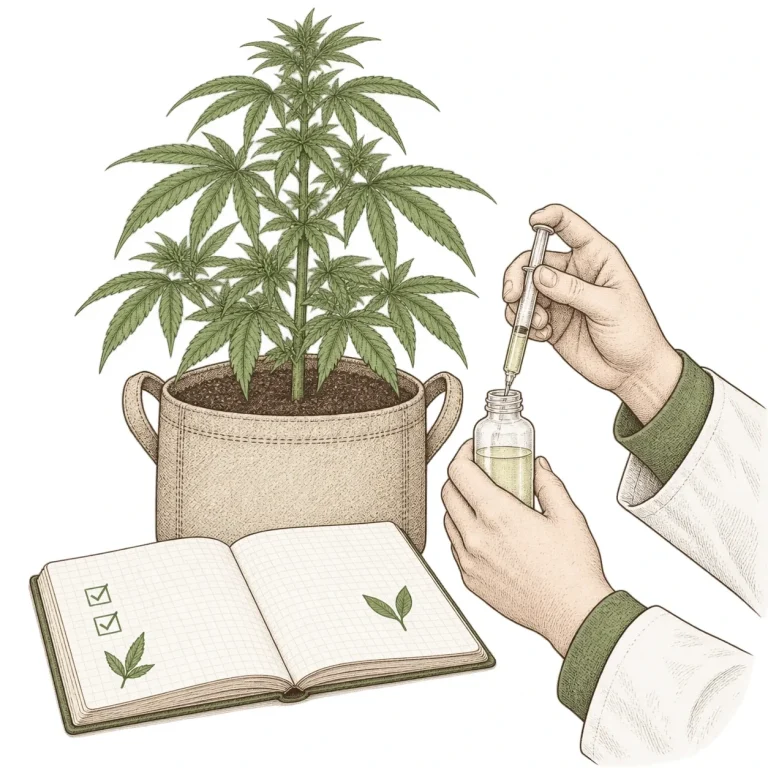
To keep phosphorus toxicity from coming back, it pays to take a structured approach to feeding. When you know what your plant needs in each stage, you can dose more precisely and use less.
A well-mixed growing medium with plenty of buffering capacity also lowers the risk of nutrients building up fast. If you need a refresher, check out how to mix your growing medium so you start with a stable foundation. Regular checks with an EC meter (German) help you keep an eye on total nutrient concentration before problems show up.
- Stick to a feeding schedule that matches the growth stage and the manufacturer’s recommendations
- Measure EC (electrical conductivity) regularly instead of feeding by feel
- Use PK boosters only when needed and for a limited time
- Choose a growing medium with good buffering capacity and good drainage
- Plan a quick check-up flush every few weeks
Frequently Asked Questions
How fast does cannabis recover from phosphorus toxicity?
After a thorough flush and a break from feeding, most plants show visible recovery within 7 to 14 days. Leaves that are already damaged usually won’t fully recover, though, and often stay discolored.
Can phosphorus toxicity put my harvest at risk?
Yes, especially if it hits during the flowering stage and causes nutrient lockout of zinc or iron. That can slow bud development and hurt trichome production.
How can I tell phosphorus toxicity from zinc deficiency?
Both can cause similar chlorosis. Phosphorus toxicity, however, usually comes with very dark green, almost black leaf areas, while a pure zinc deficiency tends to show lighter, more even discoloration. Your feeding history often gives you the deciding clue.
Is a single flush enough to fix phosphorus toxicity?
One flush brings the concentration down noticeably. With heavy nutrient burn, though, a second flush a few days later can make sense to fully clear out the growing medium.
Are organic nutrients less likely to cause phosphorus toxicity?
Organic nutrients usually work more slowly and buffer better, but they aren’t automatically safe. Guano products with a high phosphate content can cause a toxicity just as easily as mineral nutrients if you overdo the dose.
Bottom Line
Phosphorus toxicity in cannabis is usually the result of feeding too hard during flowering. It shows up as dark green leaves plus secondary zinc and iron deficiency symptoms. With a thorough flush, a break from feeding and a dialed-in dose, you can usually get the problem under control. In the long run, a well-planned feeding schedule with regular EC (electrical conductivity) checks is your best protection against it coming back. You’ll find more toxicities and deficiencies compared side by side in our Nutrients hub.
