

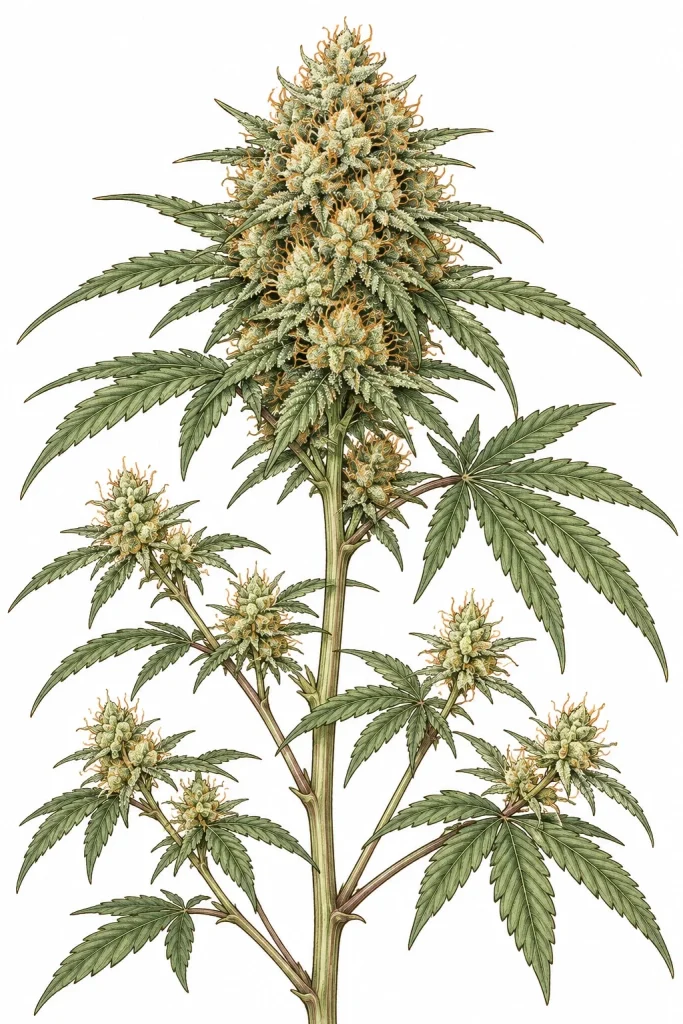
If you want to finally harvest dense, heavy buds instead of disappointing little nuggets, you need to know what causes cannabis popcorn buds. Popcorn buds are small, airy flowers that look a bit like popcorn, but they add little to your yield and carry less potency. They don’t show up by chance. They’re usually the direct result of avoidable growing mistakes. In this article, you’ll learn what encourages popcorn buds, how to spot them, and what you can do about them.
What Are Popcorn Buds and How Do You Spot Them?
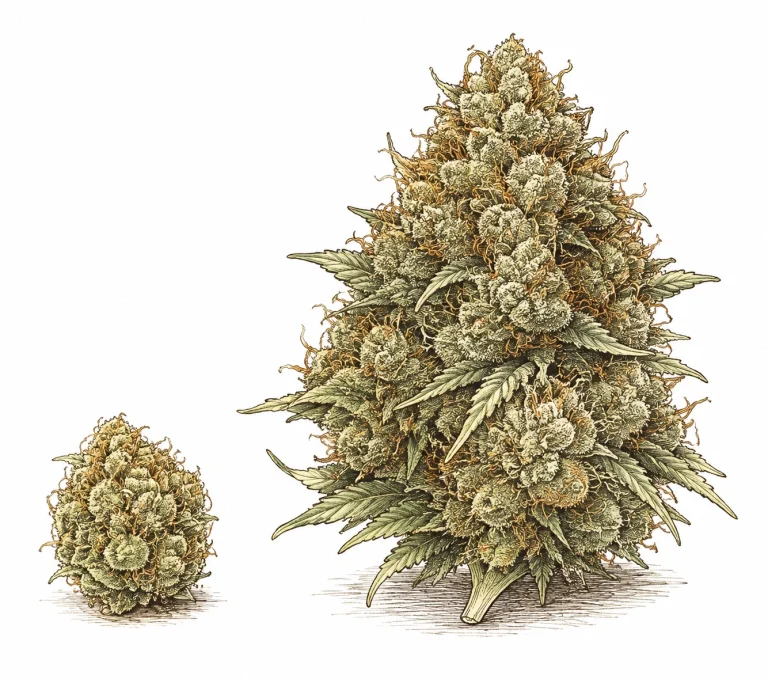
Popcorn buds are small, often loose bud sites that mostly form on the lower and middle parts of a cannabis plant. They get their name from their typical shape: round, small and fluffy, a lot like popped popcorn. Next to the dense, resin-coated colas at the top of the plant, they look pretty puny.
The easiest way to spot popcorn buds: they barely gain size or density, even well into the flowering stage. They stay fluffy, have few trichomes and feel like almost nothing once they dry. Several popcorn buds together often weigh less than one well-developed main cola. They also tend to sit far from the light and in the shade of big fan leaves.
Another giveaway is the low resin coverage. While the top buds of your plant sparkle with trichomes, popcorn buds often look dull and can have noticeably lower THC and CBD levels. That doesn’t make them worthless at harvest, but they’re a lot less appealing than clean, dense colas.
- Small, round, loose bud structure that looks like popcorn
- Mostly on the lower and middle parts of the plant
- Few trichomes and little resin
- Barely grow in size or density during flowering
- Noticeably lower potency than the main colas
- Feel hollow or very light when you squeeze them
What Causes Cannabis Popcorn Buds: The Most Common Triggers
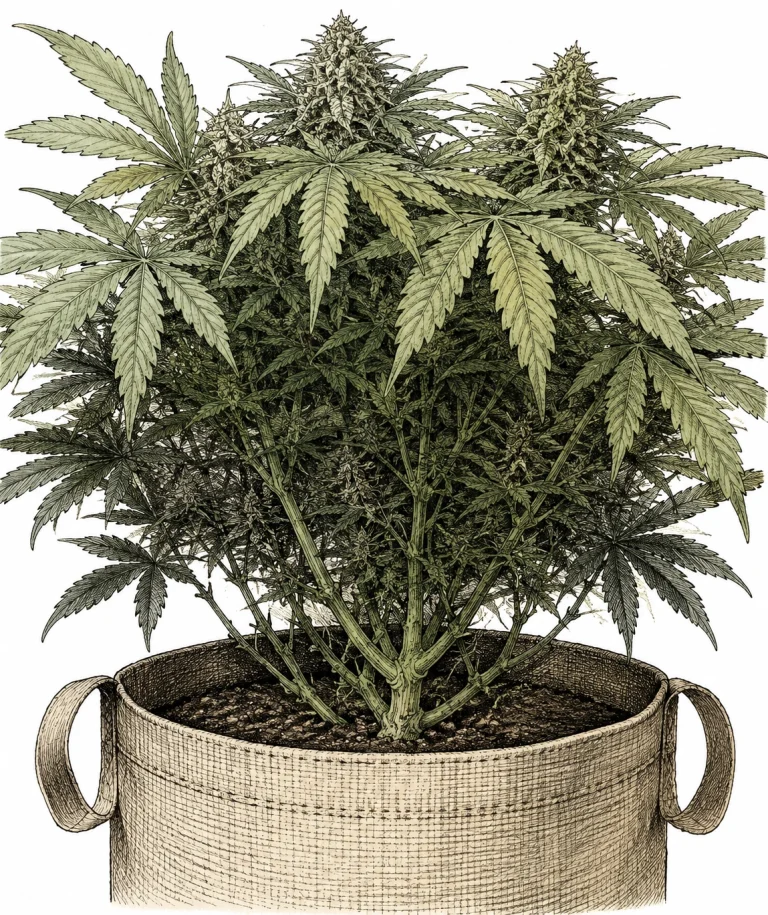
The most common cause of popcorn buds is poor light coverage on the lower part of the plant. Light drives bud development, and cannabis flowers need direct, intense light to grow into dense, resinous buds. When lower branches and side shoots disappear in the shade of big leaves or other branches, the bud sites down there simply don’t get enough energy to develop properly.
Another key factor is planting too densely or letting plants grow too bushy without enough defoliation or training. If you just let your plants do their thing without thinning or shaping them, you create a dark zone inside the plant where only popcorn buds can form. Targeted techniques help here: LST (low stress training), SCROG (screen of green), or removing unnecessary lower growth, a technique known as lollipopping.
Temperature swings and heat stress also play a big role. If your grow room stays above 82 °F (28 °C) for long stretches or the temperature swings a lot, the plant gets stressed and doesn’t put its energy into bud production efficiently. The result is often loose, airy buds, even at the tops. So check the temperature and humidity in your grow regularly.
Nutrient problems, especially an imbalance in late flower, can also encourage popcorn buds. Too much nitrogen during flowering keeps the plant growing vegetatively instead of putting its energy into ripening buds. Too little phosphorus and potassium, on the other hand, directly holds back bud development. A well-balanced feeding schedule for the flowering stage is essential.
- Lack of light on the lower and middle parts of the plant
- No training or shaping (no LST, no SCROG)
- An overly dense canopy blocks light and airflow
- Heat stress or big temperature swings above 82 °F (28 °C)
- Too much nitrogen during flowering (too much vegetative growth)
- Phosphorus and potassium deficiency holds back bud development
- Flowering stage too short or harvesting too early
- Pots that are too small limit root growth
Lack of Light: The Main Cause of Small Cannabis Buds
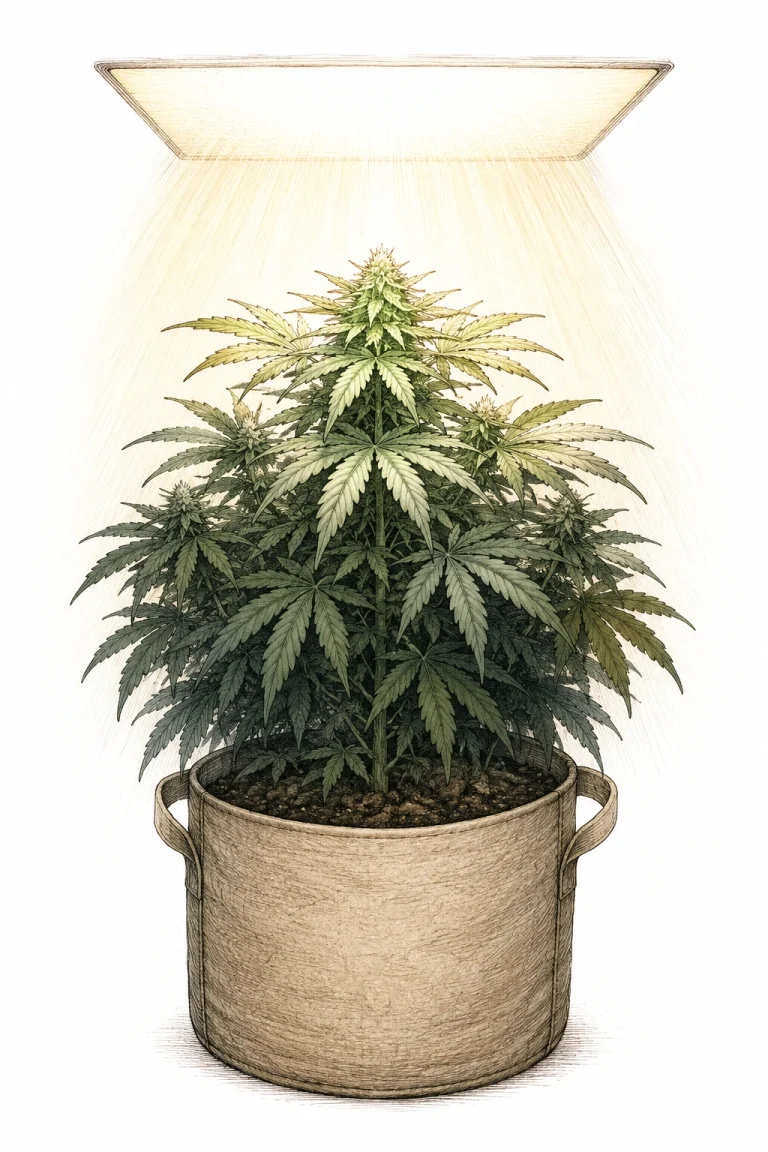
Light is the single biggest factor in growing dense, resin-packed buds. Cannabis plants are highly efficient light machines that turn photons directly into biomass and active compounds. The photosynthesis rate rises in step with light intensity until some other factor becomes the bottleneck. If your lights are too weak, hang too far from the plants or have to cover too big an area, you’ll almost certainly end up harvesting popcorn buds. Use our PPFD Calculator to check whether your light intensity in the flowering zone is high enough.
Light falloff toward the bottom of the plant is especially critical. LED and HPS lights push strong light straight down, but intensity drops off quickly toward the sides and lower down. What hits the top at 600–1000 µmol/m²/s PPFD may reach the lower branches at only 100–200 µmol/m²/s. That’s too little for dense buds. Keeping the canopy flat (SCROG), using white reflective surfaces or adding smaller supplemental lights for the lower areas can help.
Here’s a simple rule of thumb: If you hold your hand below the canopy and can no longer feel or see direct light, it’s just too dark there for bud development. Open up that zone with defoliation or clear it out completely with lollipopping. Anything that doesn’t get direct light won’t produce high-quality buds.
- Minimum PPFD for bud development: 400–600 µmol/m²/s
- Stick to the light distance your manufacturer recommends
- Use white walls or Mylar film as reflectors
- A SCROG (screen of green) net spreads light evenly
- Lollipopping targets and removes low-light zones
- Use several lights or supplemental lighting for large grow rooms
Lollipopping and Defoliation: How to Actively Prevent Popcorn Buds
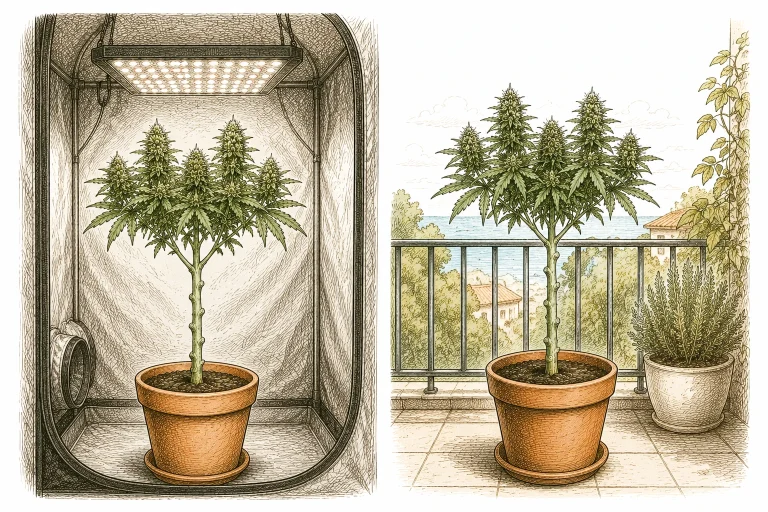
You’ll find a detailed step-by-step guide in our article How to Lollipop Cannabis the Right Way. Lollipopping is the most effective technique for preventing popcorn buds. You remove all side shoots and bud sites in the lower third of the plant, either just before flowering really kicks in or shortly after. The plant then puts all its energy into the upper, well-lit bud sites. The result: fewer buds, but much denser and heavier ones.
Defoliation is a great match for lollipopping. By selectively removing large fan leaves that block light, you open up the flowering zone to light and airflow. Just don’t go overboard. Never remove more than 20–30 % of the leaf mass at once, and give the plant at least 3–5 days to recover afterward. Too much defoliation can stress the plant and backfire.
The best time to lollipop is right before you flip to a 12/12 light cycle or during the first week of flowering. That’s when the plant decides where to invest its resources. Remove the lower side shoots then, and you steer the energy up to the main colas. Cut too late, and you risk unnecessary stress during a critical growth stage.
Combine lollipopping with SCROG or LST for maximum effect. A tightly stretched SCROG net keeps all the tops at the same height and spreads light evenly. LST (low stress training) gently bends branches to the side to get the most out of your light without stressing the plant. Used together, these methods can cut down on popcorn buds dramatically and boost your overall yield.
- Lollipopping: clear out the lower third of the plant completely
- Best timing: just before or during week 1 of the flowering stage
- Defoliation: remove max. 20–30 % of leaf mass per session
- Plan 3–5 days of recovery after defoliation
- SCROG keeps all tops at an even height
- LST gently bends branches for better light coverage
Nutrients, Climate and Pot Size: More Causes of Cannabis Popcorn Buds
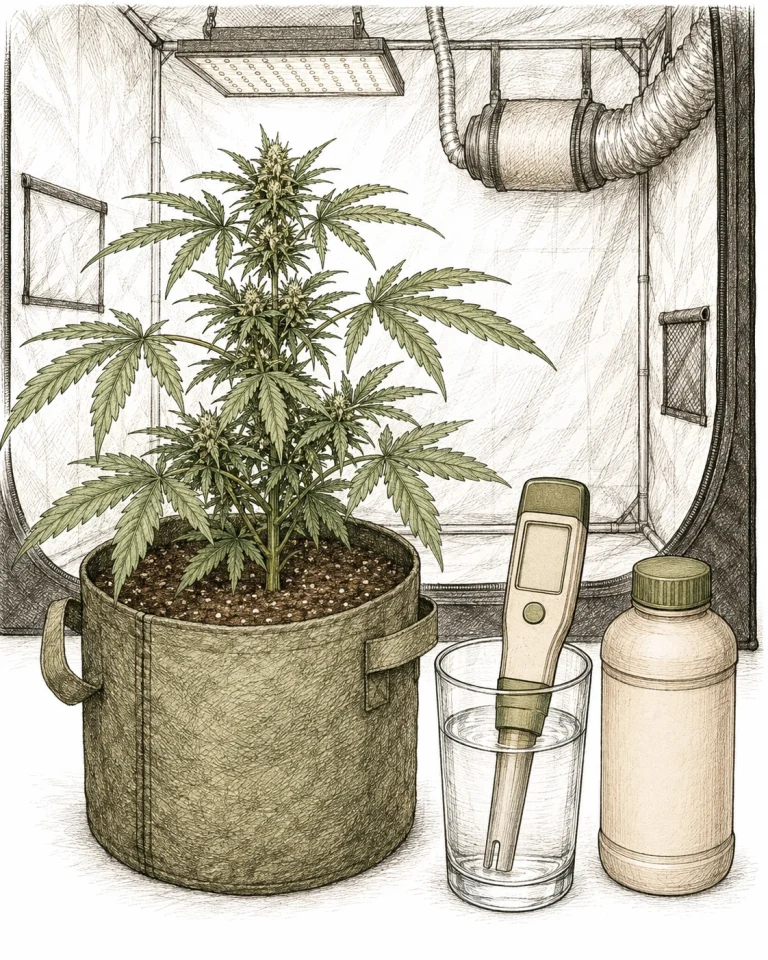
Your feeding during the flowering stage has a direct impact on bud density. A common mistake is sticking with nitrogen-heavy nutrients from the vegetative stage into flowering. Nitrogen drives leaf growth but holds back bud development. In flower, cannabis needs much less nitrogen and more phosphorus (P) and potassium (K), which drive bud formation and resin production. Switch to a bloom nutrient with low N and a higher P-K ratio in good time.
The pH of your growing medium and your water is a factor many growers underestimate. If the pH drifts outside the sweet spot of 6.0–7.0 in soil or 5.5–6.5 in hydro, your plants can’t take up nutrients, even when you feed them enough. The result is a hidden deficiency that can show up as poor bud development and, yes, popcorn buds. So check the pH for cannabis regularly and adjust it when needed.
Pot size decides how much root space your plant gets. Pots that are too small can leave your plant “root-bound.” The roots run out of room, and the whole plant slows down. For indoor cannabis, aim for at least 2.6–4 gal (10–15 L), depending on genetics and growth stage. Bigger plants do well in 5–8 gal (20–30 L). And if you flip to flowering too early, without enough time in veg, you also risk weak, underdeveloped buds.
Humidity and temperature also have a direct effect on bud development. During flowering, drop the relative humidity (RH) to 45–55 %. This lowers the risk of mold and can boost resin production. Temperatures between 68–79 °F (20–26 °C) are ideal. Going above 82 °F (28 °C) can cut terpene and trichome production, while dropping below 64 °F (18 °C) slows down all metabolic processes. A stable climate is one of the simplest, yet most effective steps toward dense buds.
- Use bloom nutrients with low N and high P-K in the flowering stage
- Check pH: 6.0–7.0 in soil, 5.5–6.5 in hydro
- Pot size: at least 2.6–4 gal (10–15 L) for indoor plants
- Humidity during flowering: 45–55 %
- Temperature: 68–79 °F (20–26 °C) for the best bud development
- Plan enough veg time before you flip to flower
Genetics and Strain Choice: When Popcorn Buds Are in the Genes
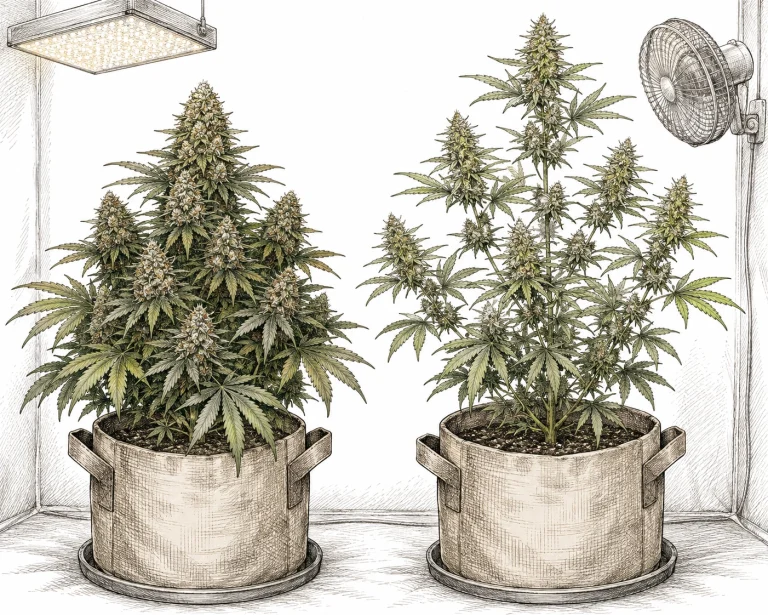
Not every popcorn bud comes from a growing mistake. Some cannabis strains are simply built to produce looser, lighter buds. Sativa-dominant strains, with their often tall, slender phenotype, tend to form airy buds more often than indica-dominant strains, which are known for compact, dense flowers. That’s not a weakness. It’s just a typical trait of the strain.
If you keep fighting popcorn buds even though your growing conditions are dialed in, switching strains can be worth it. Strains known for dense flowers, like many indica hybrids or strains bred specifically for indoor growing, can deliver much better results under the same conditions. Before you buy, check what kind of bud structure your chosen strain is known for.
Also keep in mind that some strains need a longer flowering time to reach their full potential. If you harvest a 10-week strain after 8 weeks, you’ll always end up with smaller, less dense buds. Stick to the recommended flowering times and use a jeweler’s loupe or trichome microscope to nail the right harvest window.
- Sativa strains tend genetically toward airy buds
- Indica-dominant strains produce more compact flowers
- Check a strain’s bud structure before you buy
- Stick to the recommended flowering time and don’t harvest too early
- Use a trichome microscope to judge ripeness accurately
- Pick strains that suit indoor growing and are known for dense buds
Using Popcorn Buds: What Can You Do With Small Buds?
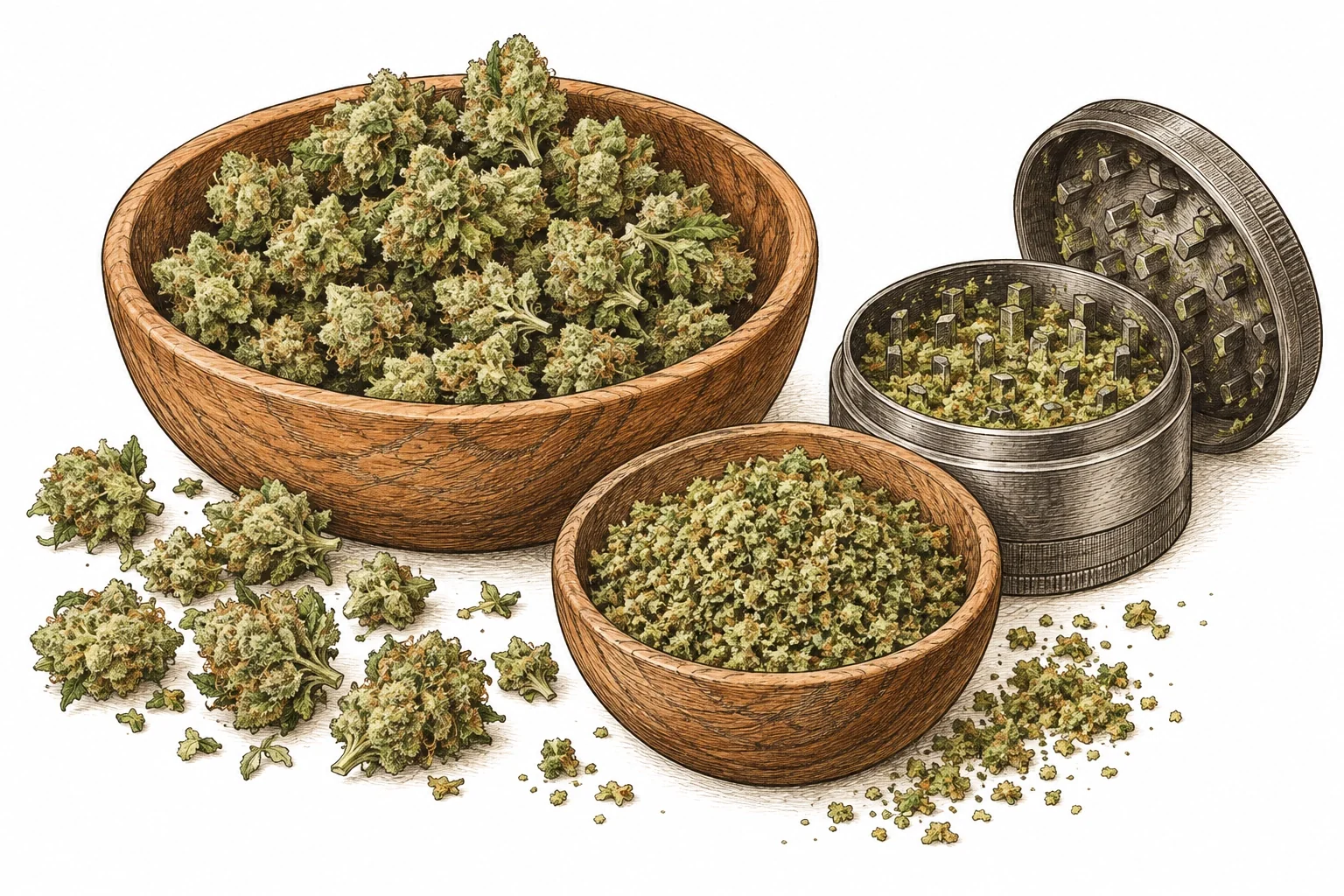
Popcorn buds may fall short of your main colas in quality, but they’re far from useless. Their potency is lower, but it’s not zero. You can still smoke them the usual way, though you’ll often want to mix them with better buds to get a satisfying experience.
Popcorn buds really shine when you make extracts, hash, cannabutter or oils. The trichomes are there, just more sparse, so working with larger amounts can still give you great results. Methods like bubble hash, rosin or simple kief collection are ideal for getting the most out of smaller buds.
You can also store popcorn buds separately and save them for less demanding uses. Just make sure you dry and cure them as carefully as your main buds, to prevent mold and keep the flavor. Poor curing would only widen the quality gap between them and your top buds.
- Turn popcorn buds into extracts, cannabutter or oils
- Bubble hash and rosin are great uses for small buds
- Collect kief from larger amounts of popcorn buds
- Store them separately, but still cure them carefully
- Mix them with your top-shelf buds for more balanced use
- Don’t throw them away: potency is lower, but it’s still there
Frequently Asked Questions
Why do I keep getting popcorn buds even though I feed my plants well?
Feeding is only one factor. The problem often comes from a lack of light in the lower part of the plant or from missing training like lollipopping and defoliation. Also check your pH: at the wrong pH, your plants can’t take up nutrients, even when they’re there.
When should I start lollipopping?
The ideal time for lollipopping is shortly before you flip to a 12/12 light cycle or during the first week of flowering. Remove all side shoots and bud sites in the bottom third of the plant so the energy goes straight to the top colas.
Can I still save popcorn buds somehow?
Once buds have formed as popcorn buds, they can’t turn into dense colas during the same grow. But you can keep conditions dialed in for the rest of flowering to get the most out of them. For your next harvest, plan for lollipopping, better light coverage and an optimized climate.
Are popcorn buds a sign of a sick plant?
Not necessarily. Popcorn buds usually come from growing conditions like a lack of light or missing training, not from disease. If they show up together with discoloration, spots or other symptoms, there may be a nutrient problem or an infection. In that case, it’s worth taking a closer look with the Cannabis Plant Diagnosis hub.
Which strain is best for dense buds when growing indoors?
Indica-dominant strains and hybrids bred specifically for indoor growing tend to produce denser buds. Well-known examples are OG Kush, Northern Lights or various indica-dominant autoflowering strains. Check with your seed bank about the strain’s typical bud structure.
How much light do cannabis buds need to develop fully?
During the flowering stage, cannabis plants need at least 400–600 µmol/m²/s PPFD (photosynthetic photon flux density); 600–900 µmol/m²/s is ideal for dense buds. The exact distance to the light depends on the type of lamp. LED manufacturers usually list recommended hanging heights. Use white walls or Mylar as reflectors to make better use of scattered light.
Related flowering problems that often share the same causes: Cannabis with few trichomes (German) and Foxtailing (German).
Bottom Line
In most cases, cannabis popcorn buds come down to too little light, no training and less-than-ideal climate conditions. The good news: you can control all of these. With targeted lollipopping, consistent defoliation and a well-tuned feeding and climate strategy, your next harvest can bring noticeably denser, heavier buds. The key is to act early, ideally before you flip to the flowering stage, so your plant can reach its full potential. Once you understand the basics and apply them consistently, you can avoid popcorn buds almost completely over the long run.
