

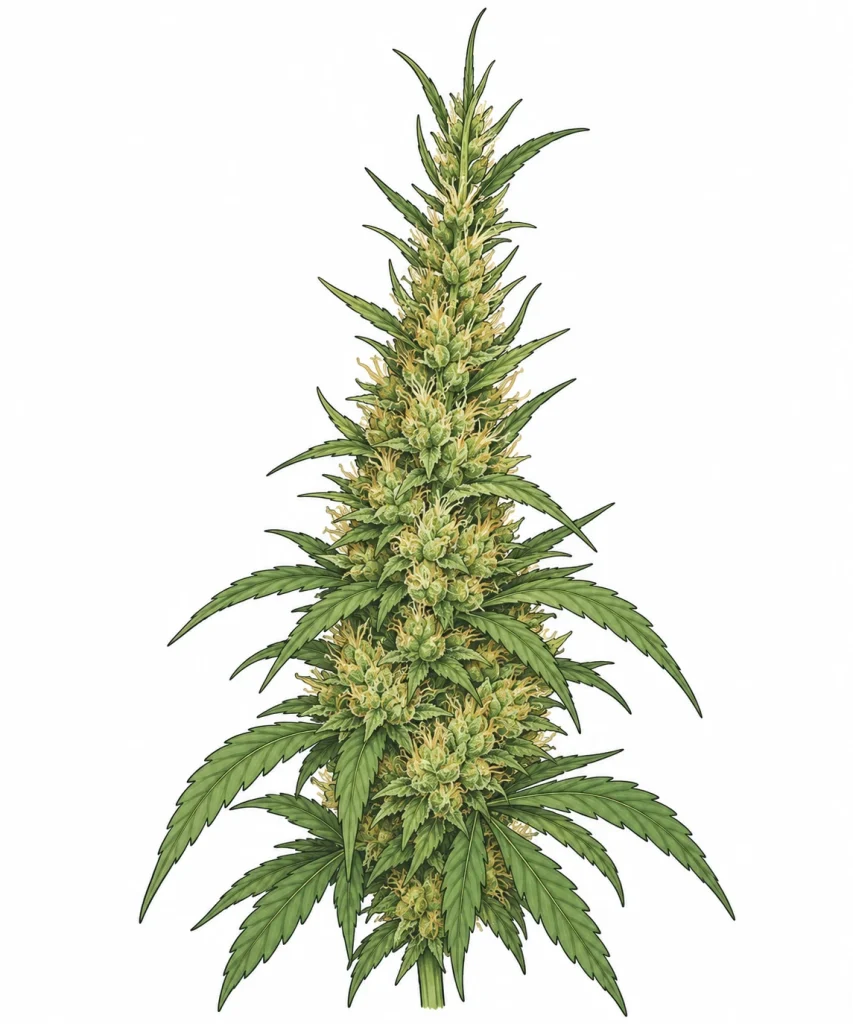
Spotting cannabis foxtailing is a real challenge for many growers. Those tower-like bud spikes can look impressive at first glance, but they can also be a serious warning sign. With foxtailing, narrow, spire-shaped stacks of calyxes grow out of a bud that has already formed, almost as if they were sprouting from the main cola. Whether you are looking at harmless genetics or a stressed plant depends on a close look at your grow conditions. This article walks you through every cause, shows you how to tell genetic foxtailing from stress-related foxtailing, and gives you clear steps to take.
What Exactly Is Cannabis Foxtailing?
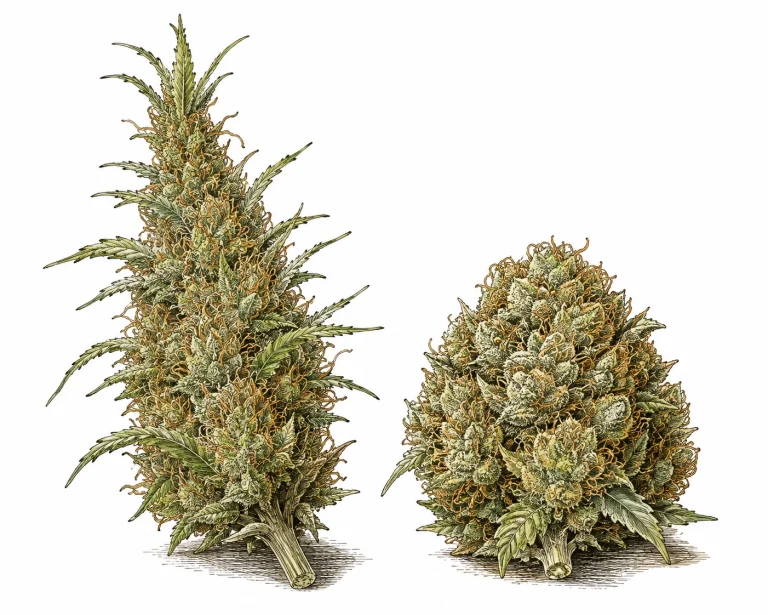
The name “foxtailing” says it all. Once you have seen an affected bud, you will know exactly why. Instead of the usual tight, rounded calyx structure, narrow upright spikes grow out of the actual bud like little towers, or like a fox’s tail. These structures are also made of calyxes and carry pistils, so they are real flower material, just stacked in an unusual, elongated way.
Here is the key point: foxtailing is not one single thing. There are two very different triggers. They look alike, but they mean completely different things for your plant and your harvest. Telling genetic foxtailing apart from stress-related foxtailing is the crucial first step in any diagnosis. Once you know the cause, you can react the right way, or simply relax.
- Foxtails are elongated, tower-like calyx structures that grow out of an existing bud
- They are made of real flower material with pistils and trichomes
- They mostly show up late in the flowering stage
- There are two types: genetic (normal) and stress-related (a problem)
- Affected buds often look spiky, airy and less dense than healthy buds
Spotting Cannabis Foxtailing: Genetic vs. Stress-Related
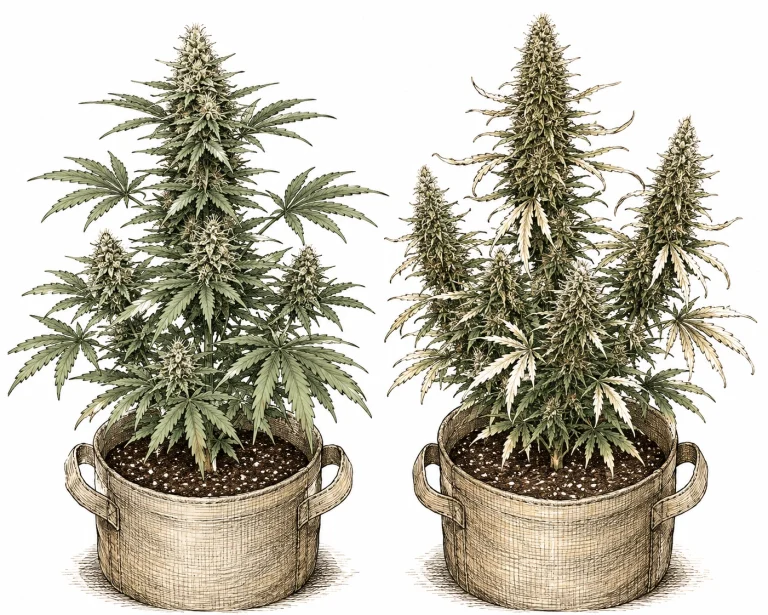
Genetic foxtailing is strain-specific and completely normal. Some sativa-dominant strains and many modern hybrids naturally tend to form elongated bud structures. That is not a reaction to bad conditions. It is a trait written into the genetics. If you are growing a strain known for foxtail buds and the plant otherwise looks perfectly healthy, there is no need to worry. These strains can deliver excellent quality and solid yields despite their airier bud structure.
Stress-related foxtailing, on the other hand, is a response to outside pressure, mainly too much heat and too much light. If your plant has been building dense buds and suddenly starts pushing out spikes late in flower, take that as a clear warning sign. The new foxtails are the plant’s attempt to keep flowering even though stress has already damaged the actual bud structure. The bud basically keeps stretching upward because the right conditions for normal development are missing.
The most important difference in practice: genetic foxtailing starts early and evenly across all bud sites on the plant. Stress-related foxtailing shows up suddenly, often only at the spots closest to the light or where it is hottest. If you also see brown leaf tips, bleached spots on the buds (light bleaching) or wilted upper leaves, stress is the likely cause. For a full check-up of your plant, take a look at our Cannabis Plant Diagnosis Hub as well.
- Genetic foxtailing: even, typical for the strain, shows up on all buds
- Stress-related foxtailing: sudden, localized, usually at the spots closest to the light
- Other symptoms such as leaf burn or bleaching point to stress
- Sativas and sativa-dominant hybrids are more often affected genetically
- Check the breeder’s strain description: does it mention foxtailing?
The Most Common Causes of Stress-Related Foxtailing
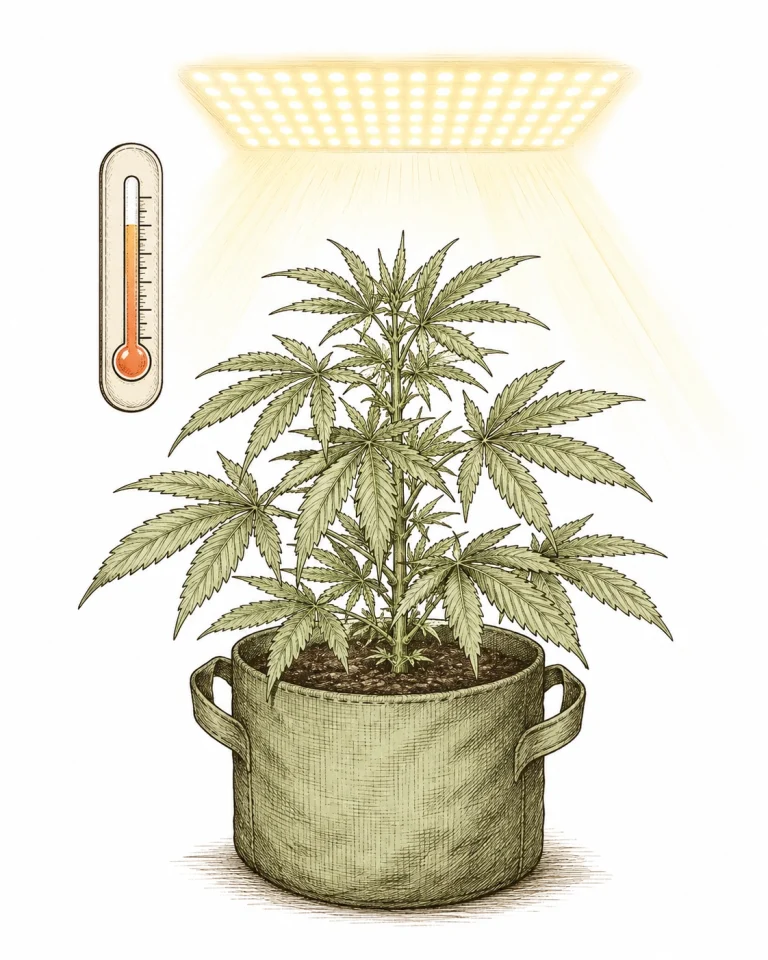
Heat stress is by far the most common cause of unwanted foxtailing in cannabis. Temperatures above 82–86 °F (28–30 °C) around the buds push your plant to its physiological limits, especially when your lights hang too low or ventilation is poor. The tissue in the upper bud zones overheats, normal calyx formation gets disrupted, and the plant tries to keep flowering anyway by pushing out new, elongated structures. If the heat keeps up, the plant’s cellular defense through heat shock proteins eventually can’t keep up anymore (German source), and normal growth breaks down. The top buds take the biggest hit. They sit closest to the light, so they get the hottest.
Too much light is a closely related cause and often shows up together with heat stress. LED or HPS light that’s too intense and hits the bud tips directly can trigger foxtailing even when your temperature is on point. This is called light bleaching (photobleaching). The top trichomes and leaves bleach out first, then the twisted foxtail structures start to form. That’s why the right distance between your light and your plants matters so much. You’ll find more on that in our indoor growing guide.
Nutrient imbalances and pH problems can also encourage or worsen foxtailing, but they’re rarely the only trigger. When the plant’s nutrient balance is under stress, for example from nutrient burn or pH swings that cause nutrient lockout, it becomes more prone to all kinds of stress responses, foxtailing included. In some cases, genetic instability in poorly stabilized strains, hormonal imbalance from light leaks (which can push plants toward hermaphroditism) or extreme over- or underfeeding can play a role too.
- Heat stress: temperatures above 82–86 °F (28–30 °C) around the buds. Learn more in our article on the ideal cannabis temperature
- Too much light and lights hung too close (light bleaching), often tied to your choice between LED and HPS
- Heat and light intensity combined, especially common with LEDs
- pH problems that lead to nutrient lockout
- Light leaks during the dark period (disrupting an 8/16 or 12/12 light cycle)
- Poor ventilation and weak air circulation in your grow room
Does Foxtailing Hurt Quality and Yield?
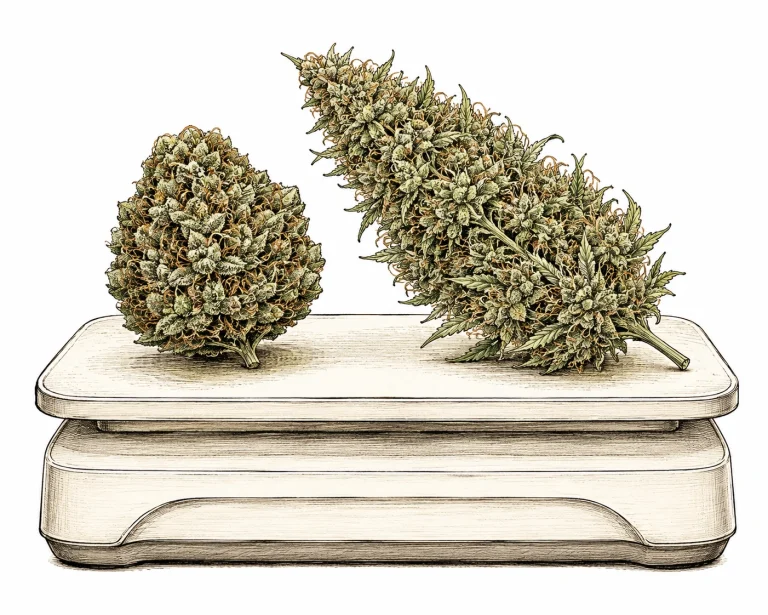
This really depends on the cause. Genetic foxtailing usually doesn’t hurt quality. Trichomes, terpenes and cannabinoids develop fully on foxtail buds too. The structure is just different, not worse. Plenty of connoisseur strains are famous for their foxtail buds and still earn top ratings, sometimes precisely because of them. Your yield might look less dense because of the airy structure, but it doesn’t necessarily weigh less.
Stress-related foxtailing is a much more serious story. Buds that formed under heat or too much light often have fewer trichomes and lower potency. The aroma can turn flat or less complex, because volatile terpenes evaporate faster in the heat. On top of that, stress-induced foxtail growth often ripens unevenly, which makes it a lot harder to pin down the right harvest window. In extreme cases, heat stress can also raise the risk of seed formation or damage the buds for good.
Another practical downside: foxtail buds are airier and have more gaps than dense buds. That makes them more vulnerable to mold and bud rot (botrytis), especially if you don’t keep a tight grip on humidity (relative humidity, RH) in late flower. So if you spot foxtailing on your plant, pay extra attention to air circulation and keep moisture from building up between the buds.
- Genetic: no loss in quality, full trichome and terpene development
- Stress-related: potentially fewer trichomes, lower THC content
- Heat-related: terpenes break down at high temperatures, flatter aroma
- Uneven ripening makes it harder to nail the right harvest time
- Airy structure raises the mold risk, so boost air circulation
- Yield depends heavily on how severe the stress was and how long it lasted
Quick Fixes for Stress-Related Cannabis Foxtailing
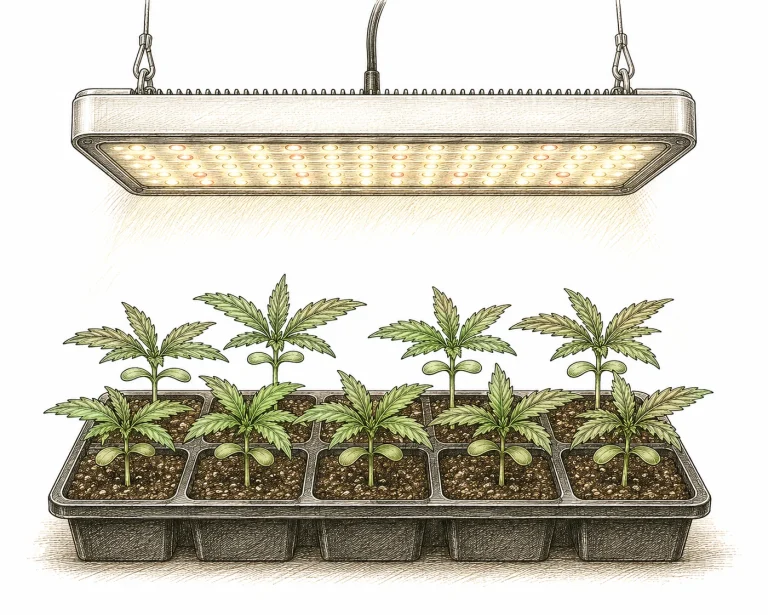
If you spot stress-related foxtailing, act fast, especially if you still have several weeks of flowering ahead of you. Your first step is always temperature control. Measure the temperature right at the bud sites, not just at eye level. Hang your thermometer at the height of your top buds and take readings several times a day, including during the dark period. Target temperature at canopy level: 72–79 °F (22–26 °C) during the day, 64–72 °F (18–22 °C) at night. Anything that stays above 82 °F (28 °C) for long is critical.
Your second quick fix: check your light distance. Every grow light, whether LED, HPS or CMH, has a minimum distance to the canopy. The manufacturer lists it, and you should stick to it at full power. With LEDs, distance is especially tricky. They give off very little heat, but they still put out intense light that can burn plant tissue. Raise your light gradually by 2–4 in (5–10 cm) and watch whether new foxtails slow down. The dimmer on modern LEDs can help too: turn the intensity down to 70–85 % in the last stretch of flowering.
At the same time, improve the ventilation in your grow room. Watering cannabis the right way and good airflow are two sides of the same coin: both directly shape the microclimate around your buds. Make sure a fan gently moves the air between your plants without blasting them directly. An exhaust fan with enough capacity (at least one full air exchange per minute) is a must for indoor grows. If hot outdoor temperatures are causing the problem, consider a portable AC unit or lowering night temps with timer-controlled ventilation.
- Measure temperature at canopy level, right at the height of your top buds
- Raise your light gradually, 2–4 in (5–10 cm) at a time
- Dim your LED to 70–85 % if it has a dimmer
- Improve ventilation and air circulation so no heat pockets build up
- Use an AC unit when outdoor heat keeps your room from cooling down
- Actively lower night temps to give your plants a better recovery period
Long-Term Prevention: Stop Foxtailing in Your Next Flower Run
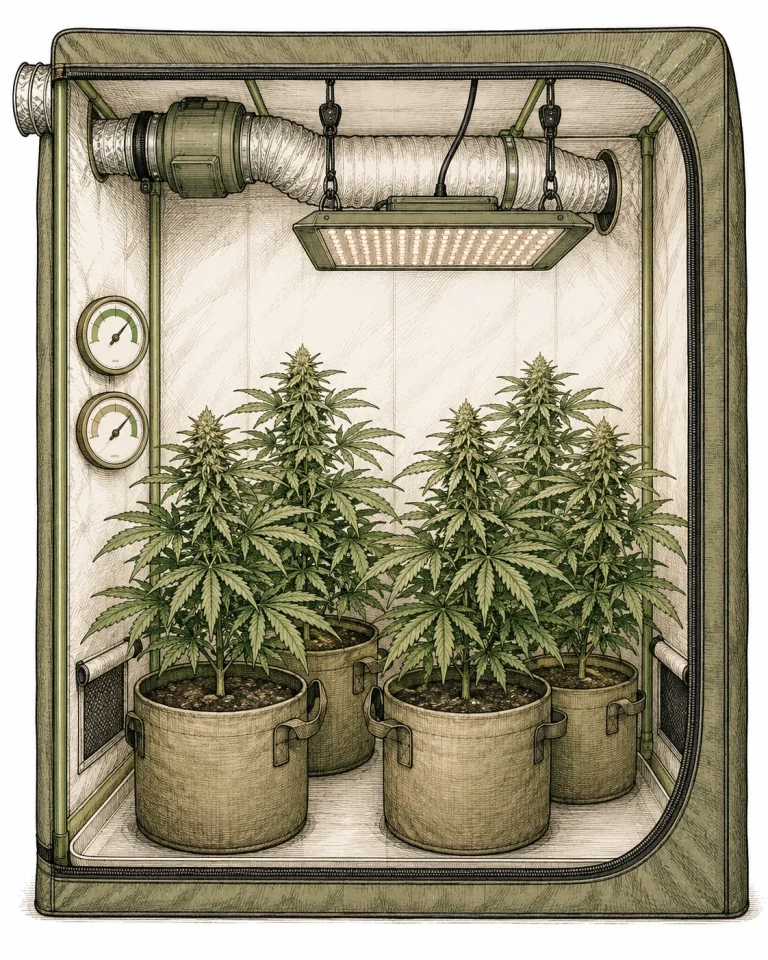
If you want to prevent foxtailing for good, tackle the root causes step by step. The most important thing is consistent temperature control throughout the entire flowering stage. Don’t plan your grow room cooling just for normal conditions. Plan for hot summer days and equipment failures too. A simple AC unit, an inline fan with a temperature controller or a smart thermostat can make all the difference here.
Choose your strains carefully. If you want to rule out foxtailing for genetic reasons, read strain reviews and breeder notes. Indica-dominant strains and well-stabilized hybrids are much less prone to foxtailing than sativa-dominant or haze-heavy strains. On the other hand, if you’re growing a strain you already know and love as a “foxtailer,” you don’t need to change a thing. That’s simply its character.
Keep an eye on your feeding schedule in the final third of flowering, too. Nutrient burn in late flower adds unnecessary stress and can make your plant more prone to foxtailing. Cut back nitrogen significantly from week 5–6 of flowering and bump up phosphorus and potassium for bud development. A stable pH in the optimal range helps your plant take up nutrients efficiently, so it doesn’t waste energy dealing with stress.
- Monitor temperature with a thermometer right at canopy level, not just ambient
- Choose strains carefully: indica-dominant types foxtail less often
- Keep the right light distance from day one and check it regularly
- Adjust your feeding in late flower: less nitrogen, more PK
- Keep your pH stable for optimal nutrient availability
- Size your ventilation for peak summer heat, not just normal conditions
- Eliminate every light leak during the dark period
How to Spot Cannabis Foxtailing: Self-Diagnosis Checklist
Use this checklist to quickly figure out whether you’re dealing with genetic or stress-related foxtailing. Answer the questions below honestly and jot down your answers. The pattern will point you in the right direction. Keep in mind: several symptoms together tell you more than one single clue.
Is the foxtailing showing up evenly on every bud site of the plant? Then genetics is the more likely cause. Did it start suddenly, only on the top buds or the ones closest to the light? Then stress is more likely. Are your temps in the canopy constantly above 81 °F (27 °C)? Is your light hanging very close to the plants? Do the surrounding leaves show signs of burn, bleaching or brown tips? If you answer “yes” to several of these questions, take action right away. You’ll find all our other diagnosis tools for your plant in our complete cannabis plant diagnosis overview.
- Foxtailing evenly everywhere? → Probably genetic
- Foxtailing sudden and only up top? → Probably stress
- Canopy temps above 81–82 °F (27–28 °C)? → Check for heat stress
- Light too close or too strong? → Check for too much light
- Leaves showing burn symptoms or bleaching? → Act right away
- Strain known as a “foxtailer”? → Relax, quality isn’t affected
- Yellow leaves showing up too? → Check your nutrients and the causes of yellow cannabis leaves
Frequently Asked Questions
Is foxtailing bad for cannabis?
That depends on the cause. Genetic foxtailing is totally normal and doesn’t hurt quality or potency. Stress-related foxtailing from heat or too much light can have a negative effect on terpenes and cannabinoids, so you should stop it by dialing in your grow conditions.
Can I reverse foxtailing?
Foxtails that have already formed can’t be reversed. But you can fix the cause so no new foxtails develop. Cut back heat stress and light intensity right away, and the rest of the flowering stage can play out under better conditions.
Which strains foxtail the most?
Sativa-dominant strains and Haze hybrids are the best-known genetic foxtailers. Classic examples include many Thai, Colombian and Jack Herer descendants. Pure indica strains foxtail for genetic reasons much less often.
When should I harvest foxtailed buds?
Finding the right harvest window for foxtailed buds is trickier, because new growth matures later than older growth. Use a loupe or a microscope to check trichome ripeness: with stress-related foxtailing, different parts of the bud can be at different stages. Harvest when most of the trichomes have reached the ripeness you’re aiming for.
Is foxtailing a sign of hermaphroditism?
No, foxtailing by itself isn’t a sign of a hermaphrodite. The elongated structures are made of female calyxes and pistils. That said, heavy stress that triggers foxtailing can generally raise the risk of a plant going hermie. So always check whether you can spot “bananas” (nanners) or pollen sacs next to the foxtails.
Can foxtails also show up in outdoor grows?
Yes, foxtailing can happen in outdoor grows too. The most common triggers are extreme heat waves, direct midday sun on sensitive strains, or a genetic predisposition. Outdoors, you have less control over conditions. But you can plan ahead with your strain choice and where you place your plants.
Related flowering problems that often share the same causes: Cannabis with few trichomes and Popcorn buds. Heat stress is also one of the main causes of both.
Foxtailing is just one of several cannabis symptoms that don’t fit a classic category. You’ll find other special cases like hermaphrodites or HLVd in the overview.
The Bottom Line
Spotting cannabis foxtailing mostly comes down to telling strain-typical growth apart from a real stress signal. Genetic foxtailing isn’t a problem and nothing to worry about – it’s simply the character of certain strains. Stress-related foxtailing from heat or too much light, on the other hand, calls for quick action: lower the temperature, raise your light, improve ventilation. Once you can tell the two apart and keep a close eye on your grow climate, you can still get high-quality results from foxtail buds.
