

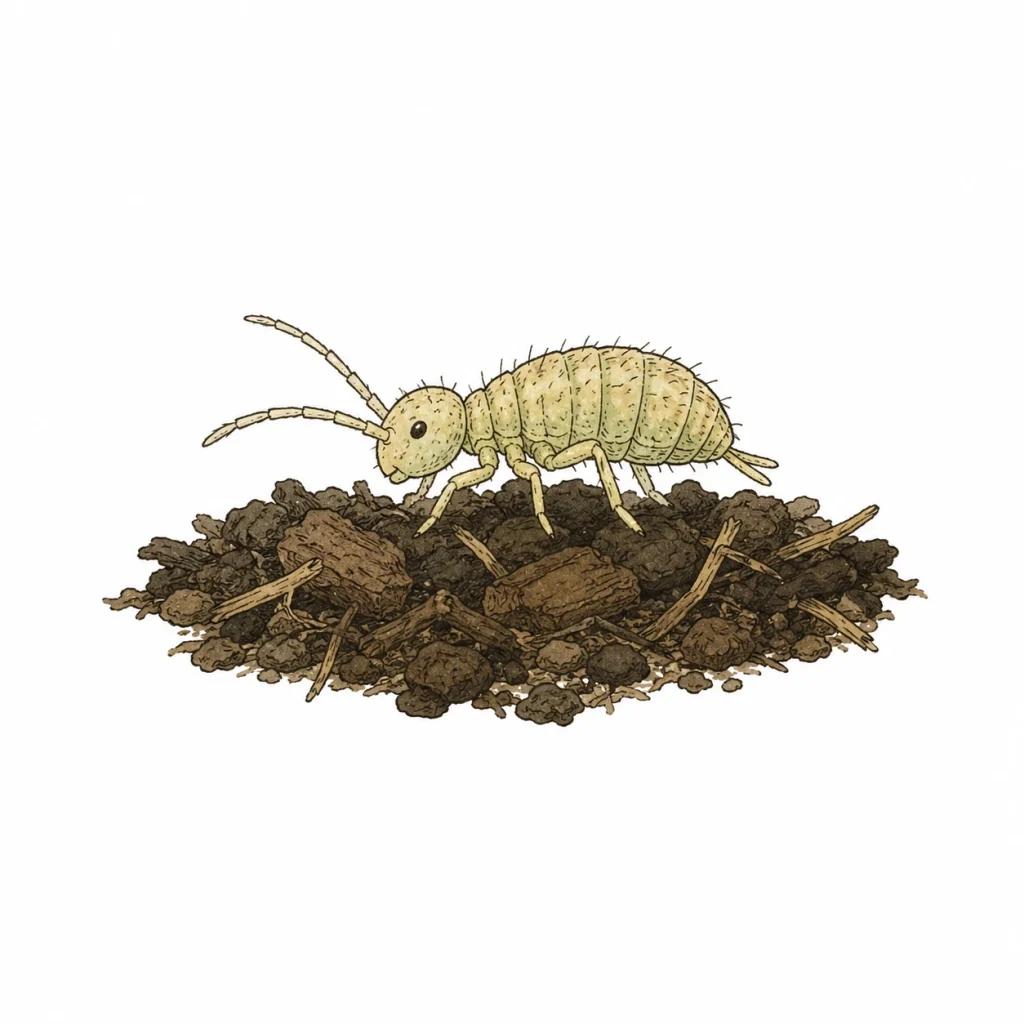
If you suddenly spot tiny, jumping critters in your cannabis soil while watering, you’re probably wondering what’s going on: springtails in soil, and especially in cannabis soil, are more common than you might think and confuse a lot of growers. The good news: in most cases, springtails (collembola) are harmless helpers that break down organic matter — but under certain conditions, they can turn into a real problem. In this article, you’ll learn how to identify springtails with confidence, when you need to act and how to get rid of them in a targeted way — or even put them to work. You’ll find all other diagnosis topics in our Plant Diagnosis hub.
What Are Springtails and How Do You Spot Them in Cannabis Soil?
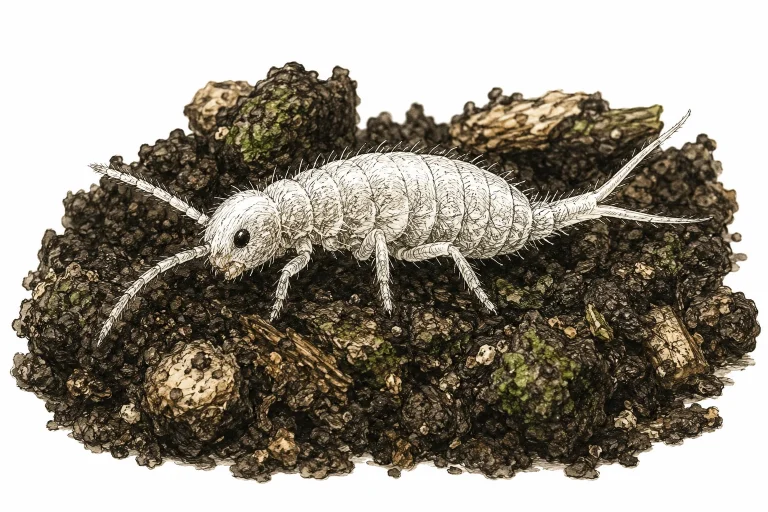
Springtails, known scientifically as collembola, aren’t true insects but belong to the hexapods (six-legged arthropods). They’re tiny — between 0.02 and 0.12 in (0.5 and 3 mm) — and you mostly notice them when you water or disturb the soil. Their namesake feature is the so-called springing organ (furcula), which lets them catapult themselves into the air in a flash when threatened. It’s exactly this jumping that alarms so many growers.
Two main types show up in cannabis soil: white or light gray springtails and dark gray to brown ones. Both are basically harmless to healthy plants — they prefer to feed on fungal spores, algae, bacteria and dead organic matter. They only become a problem when their population explodes or when the growing medium is so wet that springtails start feeding on live root hairs.
So the first and most important question is: are there just a few springtails in healthy soil, or are there hundreds to thousands of them in constantly wet growing medium? In the first case, you can relax. In the second case, you should tackle the cause — usually chronic overwatering — right away.
- Tiny, jumping critters: 0.02–0.12 in (0.5–3 mm), white, gray or brown
- Visible after watering or when you move the pot
- Main food: dead organic matter, fungal spores, algae
- Jumping movement thanks to the characteristic furcula (springing organ)
- No wings, six legs, round to elongated body
- In a mass infestation: may feed on live root hairs
Springtails in Cannabis Soil: Beneficial or Harmful?
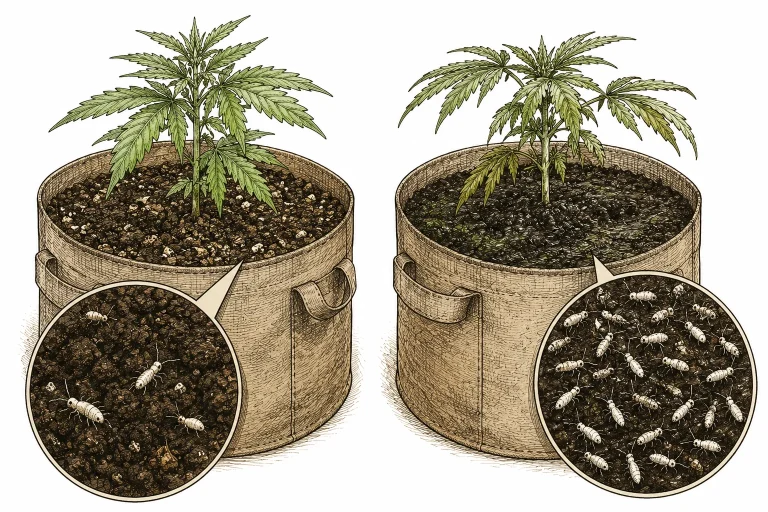
Whether springtails in cannabis soil are beneficial or harmful has no one-size-fits-all answer — it depends heavily on the size of the population and the conditions in the growing medium. Many living soil setups even introduce springtails on purpose, because they help break down organic matter, keep fungal growth in check and support soil life. They’re a natural part of a healthy ecosystem in the pot.
On the other hand, if your cannabis plant shows deficiency symptoms despite correct feeding, the leaves are drooping and the soil constantly smells wet, springtails can be a warning sign — not necessarily the cause, but a hint that the growing medium is too wet. That’s because springtails multiply explosively in wet soil full of fungal growth. This same moisture can also promote root rot and block nutrient uptake — similar to a calcium deficiency in cannabis caused by damaged roots.
Bottom line: a few springtails in slightly moist soil are a good sign of a living growing medium. A mass infestation in constantly wet medium is a clear sign of a watering problem you should fix urgently. The springtails are often just the visible symptom of a deeper problem.
- Positive: support soil life, break down organic matter
- Positive: keep harmful fungi and algae in the growing medium in check
- Neutral: in small numbers, no effect on plant growth
- Negative: a mass infestation points to chronically wet growing medium
- Negative: in extreme infestations, live root hairs can be damaged
- Warning sign: hundreds of visible springtails = check your watering habits
Causes of a Springtail Mass Infestation in Your Grow Tent
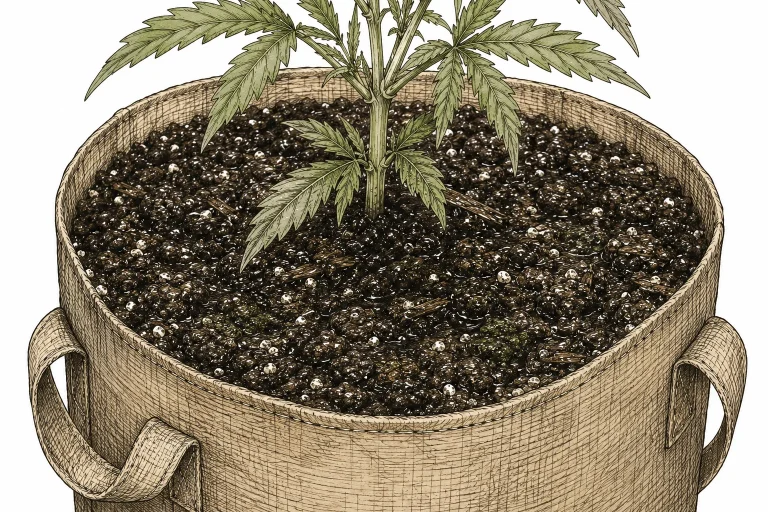
By far the most common reason for an exploding springtail population in cannabis soil is chronic overwatering. If you water your plants too often or too much, you create ideal conditions: the growing medium barely dries out, fungi and bacteria can multiply unchecked — and springtails find an almost endless food supply. Check out our guide to watering cannabis the right way to read up on the right watering interval for each growth stage.
Another factor is using a heavily organic growing medium that contains a lot of unprocessed material — for example fresh compost, worm castings or coarse wood chips. These give springtails not only food but also ideal hiding places. A pH that’s too high or too low in the growing medium can also slow down the breakdown of organic matter and make the soil more attractive to springtails. That’s why you should regularly check the pH for cannabis to create optimal conditions.
External factors also play a role: high humidity in the grow tent, poor air circulation and bringing in already infested soil or fertilizers can introduce springtails into your grow tent or make an existing population grow significantly. It’s important to understand that these critters don’t appear out of nowhere — they either come in with the growing medium or get introduced through poor hygiene.
- Chronic overwatering — by far the main cause
- Growing medium that’s too rich in organic matter or too fresh
- High humidity and poor ventilation in the grow tent
- Infested soil or fertilizers brought in from outside
- Incorrect pH slows down the breakdown of the growing medium
- Missing drainage and waterlogging in the pot
How to Get Rid of Springtails in Cannabis Soil: Quick Fixes and Solutions
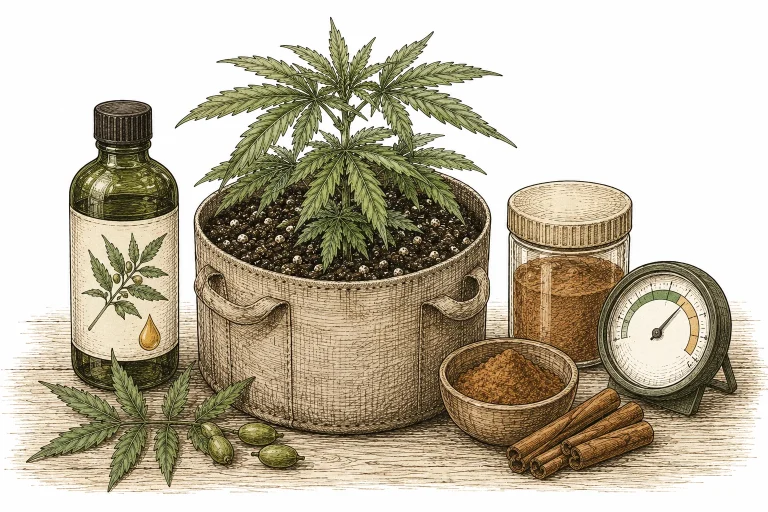
If you notice a mass infestation of springtails in your cannabis soil, the most important immediate step is to adjust your watering habits. Let the growing medium dry out much more before you water again. The “lift test” — simply lift the pot and judge its weight — is the most reliable way to check whether the plant really needs water. Dry growing medium takes away the springtails’ basis for survival, and the population drops dramatically within a few days.
As an additional measure, diatomaceous earth on the surface of the growing medium has proven effective. Its fine crystalline structures mechanically damage the springtails’ outer shell, so it works without chemicals. Simply sprinkle a thin layer on the soil surface. Alternatively, you can apply a thin layer of cinnamon powder — cinnamon contains natural fungicides that reduce the fungal growth springtails feed on. Both methods are safe for the plant.
In an extreme infestation, partially or completely replacing the growing medium may be necessary, especially if a rotten smell or visible root damage points to serious harm. In that case, gently rinse the roots with lukewarm water, remove as much of the old medium as possible and repot the cannabis plant into fresh, well-draining soil. Make sure the new pot has enough drainage holes. If you also notice nutrient deficiencies as a result of the infestation, check whether cannabis nutrient burn or nutrient lockout caused by pH problems is behind it.
- Extend the watering interval right away and let the growing medium dry out more
- Apply a thin layer of diatomaceous earth to the surface
- Sprinkle cinnamon powder on the soil surface (antifungal effect)
- Check pot drainage and prevent waterlogging for good
- In an extreme infestation: partially replace the growing medium
- Biological control: use predatory mites (Hypoaspis miles (German))
- Chemical products like pyrethrin as a last resort for mass infestations
Using Springtails on Purpose: How to Put Collembola to Work as Beneficials
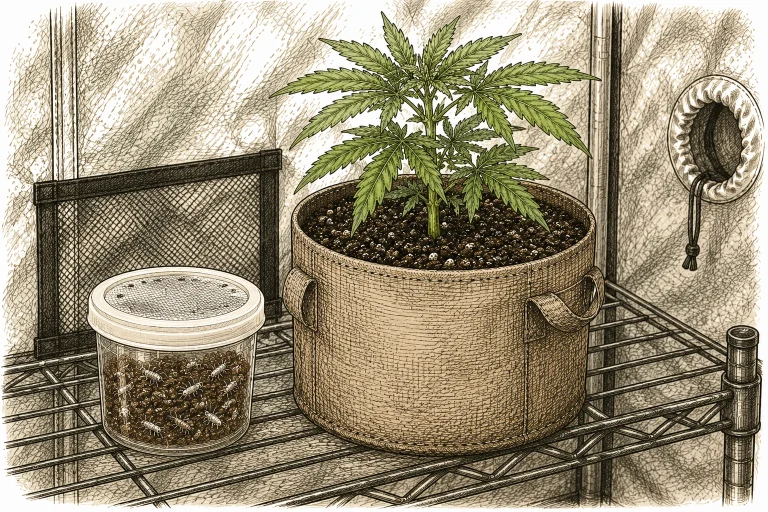
Many experienced living soil growers don’t just tolerate springtails — they actively buy them as beneficials. Specialized suppliers sell springtail cultures that you simply add to the growing medium. The critters keep mold in check on their own, eat algae mats on the soil surface and prevent the growing medium from crusting over. In a balanced ecosystem pot, they keep soil life active together with earthworms and mycorrhizal fungi.
If you want to use springtails as beneficials, don’t keep the soil too wet and avoid synthetic pesticides, which would destroy the entire microbiology of the growing medium. A combination of springtails and predatory mites (e.g. Hypoaspis miles) has proven to be an extremely effective biological prevention team in many living soil grows — the predatory mites eat fungus gnat larvae and at the same time keep excessive springtail populations in check.
The key difference between a “beneficial population” and a “problem infestation” simply comes down to numbers: up to a few dozen springtails per pot are completely harmless and even desirable. But if you literally see hundreds of them jumping out of the soil when you water, it’s time to act — not because of the springtails themselves, but because of the wet conditions that allow this population to exist.
- Springtail cultures available from specialty suppliers (usually Folsomia candida)
- Ideal for living soil setups and organic grows
- Together with Hypoaspis miles: an effective soil life duo
- Requirement: no synthetic pesticides in the growing medium
- The growing medium must not stay wet all the time (harmful to beneficials too)
- A few dozen springtails per pot = a healthy balance
Preventing Springtails in Your Grow Tent: Prevention From Day One
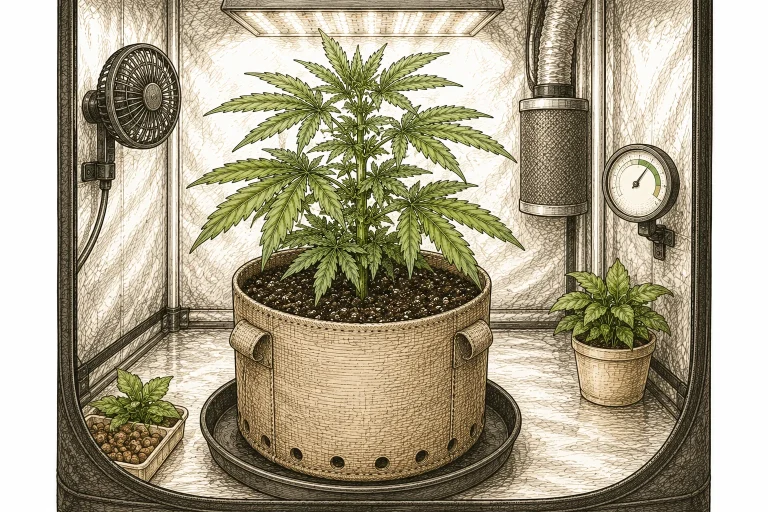
The best strategy against an unwanted springtail mass infestation is prevention. Start by using only high-quality, sterile or fully composted growing medium. Fresh compost or organic materials that haven’t fully broken down are the most common way springtails get in. Also avoid bringing garden soil into your indoor grow — it can harbor not only springtails but also fungus gnats, mites and other pests.
Make sure all your pots drain perfectly. Drainage holes that are big enough, possibly combined with a layer of perlite at the bottom of the pot, effectively prevent waterlogging. Check the pH for cannabis regularly and keep it in the optimal range so that organic matter in the growing medium breaks down evenly and no moist, undecomposed material is left behind as a food source for springtails.
In the grow tent itself, regular hygiene helps: remove dead leaves from the pot right away, clean your tent thoroughly between grow cycles and make sure no algae mats form on the inside walls of the pots or on the surface of the growing medium. If you see yellow cannabis leaves or other stress symptoms, track down the exact cause — a weakened plant is more vulnerable to all kinds of pest infestations, including problem-level numbers of springtails.
- Use sterile or fully composted growing medium
- Don’t bring garden soil into your indoor grow
- Ensure good drainage (perlite, enough drainage holes)
- Check and correct the pH regularly
- Remove dead leaves from the pot right away
- Clean and disinfect the grow tent thoroughly after every grow cycle
- Optimize air circulation and keep humidity under control
A fact sheet from the Bavarian Garden Academy (German) lists springtails among the common companions of houseplants and classifies them together with other soil-dwelling pests.
If the critters move right at the roots instead of on the surface and visibly damage them, you’re more likely dealing with root aphids.
Frequently Asked Questions
Are springtails harmful to my cannabis plant?
In small numbers, springtails are completely harmless and even beneficial — they break down organic matter and keep fungi in check. Only during a mass infestation in constantly wet growing medium can they start feeding on live root hairs. Even then, the real problem is usually the wet medium itself, not the springtails.
Where do the springtails in my grow tent come from?
The most common source is the growing medium itself, especially when it contains fresh compost or organic material that hasn’t fully broken down. Garden soil or contaminated fertilizers can also bring in springtails. Once they’re in your tent, they multiply explosively in moist conditions.
How can I tell springtails apart from fungus gnats?
Springtails are smaller (0.02–0.12 in, or 0.5–3 mm), have no wings and jump in a characteristic way using their springing organ. Fungus gnat larvae are whitish, longer and wormlike, while adult fungus gnats are visible as flying insects. Springtails stay exclusively in the growing medium or on its surface.
What’s the fastest way to deal with too many springtails?
The fastest and most effective step is to cut back on watering drastically and let the growing medium dry out well. Spreading diatomaceous earth on the surface of the medium also helps. Within a few days to two weeks, the population drops sharply.
Can I buy springtails and use them on purpose?
Yes, springtails are sold as beneficial insects by specialty suppliers and can be used deliberately in living soil grows. They help keep mold and algae mats in check. Make sure not to overwater the medium and don’t use chemical pesticides, since these kill the beneficials too.
Do I need to replace the growing medium completely if I have springtails?
In most cases, replacing the medium completely isn’t necessary. First cut back on watering, apply diatomaceous earth and watch how things develop over a week. Only if the population stays extremely high despite drier conditions or you see root damage does repotting into fresh medium make sense.
Conclusion
In most cases, springtails in cannabis soil are no reason to panic — they’re a sign of a living growing medium. The deciding factor is the size of the population: a few dozen springtails are harmless, while a mass infestation is a warning sign of chronically wet growing medium. If you correct your watering habits, ensure good drainage and let the medium dry out well between waterings, you’ll usually get the problem under control quickly. In living soil grows, springtails can even be used as valuable beneficials — as long as the conditions in the pot are right.
