

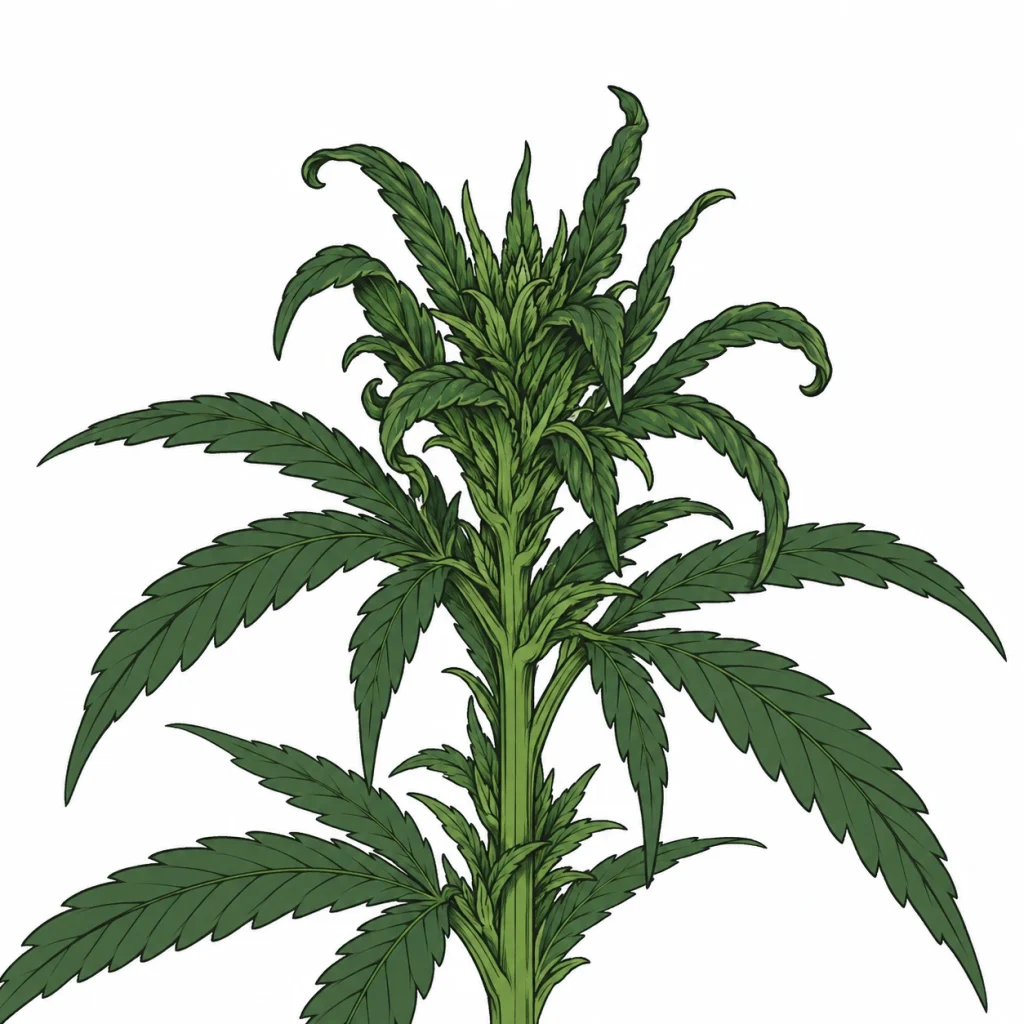
Cannabis zinc toxicity is one of the most often overlooked nutrient problems. Its symptoms start out subtle and are easy to mistake for other deficiencies. Too much zinc in your nutrient solution or growing medium blocks the uptake of other key trace elements like iron, manganese, and copper, and that can set off a whole chain of follow-up problems. If you catch cannabis zinc toxicity early, you can stabilize your plant fast and avoid bigger yield losses. In this article, you’ll learn how to reliably identify zinc toxicity, understand what causes it, and fix it step by step. You’ll find every diagnosis at a glance in the Cannabis Plant Diagnosis Hub.
What Is Cannabis Zinc Toxicity and What Causes It?
Zinc is an essential trace element for cannabis. It supports enzyme activity and protein production, and it plays a role in chlorophyll synthesis. Here’s the key point: your plant only needs zinc in very small amounts. Even a slightly elevated concentration can turn toxic and throw the plant’s entire nutrient balance off.
Cannabis zinc toxicity usually isn’t caused by one single mistake. It’s typically several factors working together. The most common cause is overfeeding with multi-nutrient blends that contain a lot of zinc. Many standard cannabis nutrients include trace elements across the board in high concentrations, and with ongoing use they can build up in the growing medium. Galvanized pots, zinc-coated gear, or certain water pipes can also leach zinc into your water and quietly push levels too high.
Another major factor is the pH of your growing medium. When the pH is too low, zinc becomes overly soluble, and the roots take up far more of it than they should. The availability of zinc in soil drops significantly as pH rises. That’s why zinc toxicity in cannabis often goes hand in hand with a pH problem. If you don’t check your cannabis pH regularly, you’re risking exactly this scenario.
- Zinc is only needed in trace amounts – even small overages can be toxic
- Overdosing with complex multi-nutrient products is the most common cause
- Zinc-coated gear or tap water can be hidden sources of zinc
- Low pH drastically increases zinc availability and uptake
- Zinc toxicity blocks the uptake of iron, manganese, and copper
How to Spot Cannabis Zinc Toxicity Symptoms
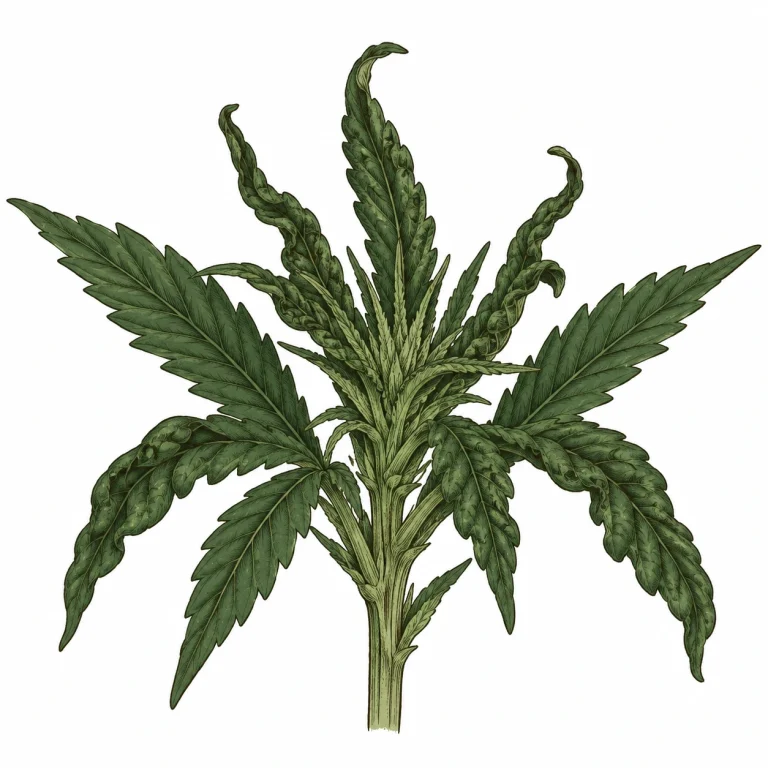
Cannabis zinc toxicity symptoms show up first on new growth and the upper leaves. That’s because high zinc levels inhibit the uptake of other elements and trigger indirect deficiency symptoms. The tricky part: the primary symptoms look a lot like iron deficiency or interveinal chlorosis, since zinc directly blocks iron uptake.
Some of the clearest signs of cannabis zinc toxicity are dark green, leathery leaves that curl downward. Leaf tips and edges start to turn brown or die off (necrosis). At the same time, young leaves get lighter between the veins while the veins themselves stay dark – a classic sign of induced iron deficiency. Growth slows down noticeably, and new shoots look stunted and misshapen.
As it progresses, the chlorosis spreads from the leaf edges toward the center of the leaf. With severe zinc toxicity, the roots can suffer too: they may look brown and become less efficient at taking up nutrients. In advanced cases, the whole plant can show stress symptoms like slower bud development and higher susceptibility to pests and diseases.
Key for an accurate diagnosis: if interveinal chlorosis appears on young leaves while older leaves stay dark green, that strongly points to iron deficiency induced by zinc toxicity. A true primary iron deficiency shows the same pattern, but it’s usually caused by pH problems. If you’re not sure, check out the article Yellow Cannabis Leaves – All Causes at a Glance to rule out overlap with other causes.
- Dark green, leathery, downward-curling leaves – especially on older leaves
- Brown leaf tips and necrotic leaf edges
- Interveinal chlorosis (yellowing between the leaf veins) on young leaves due to induced iron deficiency
- Slower growth, stunted and misshapen new shoots
- Brown root discoloration in severe cases
- Stalled bud development in the flowering stage
How to Tell Cannabis Zinc Toxicity Apart from Similar Problems
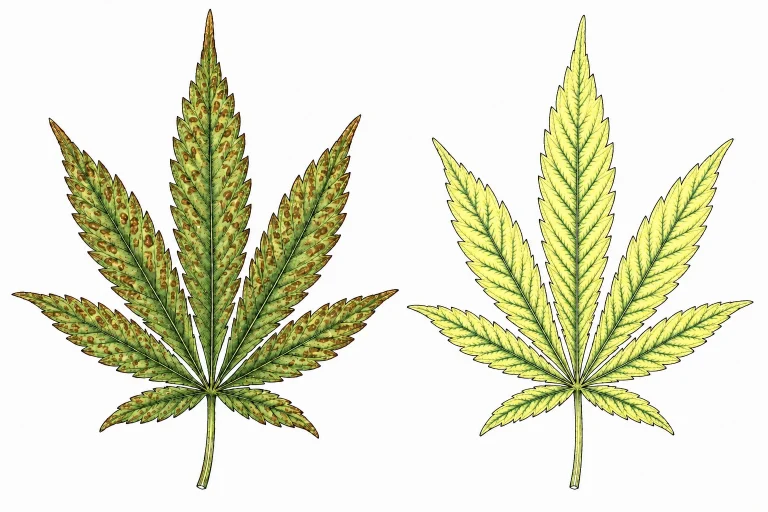
Zinc toxicity in cannabis triggers several indirect deficiencies, so you need to rule out look-alikes carefully. The most common mix-up is with a true iron deficiency, which can look almost identical. The difference is the cause. With a plain iron deficiency, the pH is often too high, so the plant can’t take up iron. With zinc toxicity, the excess zinc blocks iron uptake directly, no matter what the pH is.
General overfeeding can show similar leaf symptoms too. If you’re wondering whether you’re dealing with broader cannabis nutrient burn, check whether you overdosed several nutrients at once. Zinc toxicity, on the other hand, mainly shows up as a combo of dark green leaves, chlorosis on new growth and brown leaf tips. You usually won’t see the overall wilting that can come with full-on nute burn.
It’s also easy to confuse zinc toxicity with a calcium deficiency, which can cause dead (necrotic) leaf tips and slower growth as well. The key is where the symptoms show up. A calcium deficiency mostly hits the newest leaves with clawing and small spots. Zinc toxicity causes interveinal chlorosis while the older leaves stay dark green.
- Mix-up with iron deficiency: both show interveinal chlorosis, but the cause is different
- Telling it apart from general nutrient burn: zinc toxicity follows a more specific symptom pattern
- No overall wilting like with overwatering or underwatering
- Older leaves stay dark green while young leaves show chlorosis – a classic sign of zinc toxicity
- Measuring pH helps: a pH that’s too low makes more zinc available and points to zinc as the cause
What Causes Zinc Toxicity in Cannabis? A Quick Overview
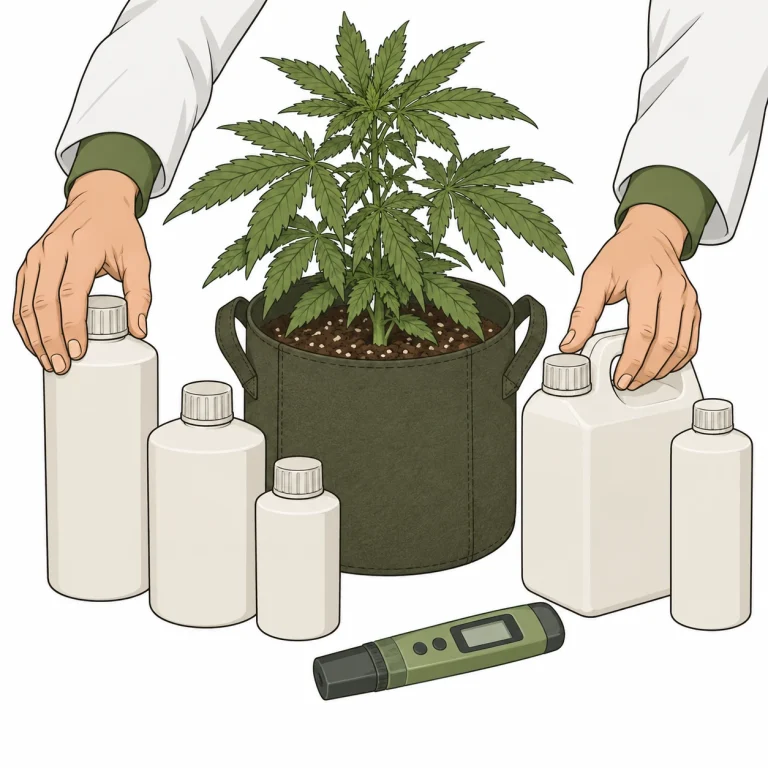
The main cause of zinc toxicity in cannabis is simply feeding too much zinc through your nutrients. Many cheap all-in-one nutrients and starter kits for cannabis contain micronutrients in one-size-fits-all doses that don’t match what the plant needs. If you use them for weeks or months without flushing regularly, zinc builds up in the growing medium until it crosses the plant’s tolerance limit.
One factor that often gets overlooked is zinc leaching from your grow gear. Galvanized grates, galvanized pots or older metal fittings in your irrigation setup can release measurable amounts of zinc into your water. If you’re hunting for the source of zinc toxicity you can’t explain, take a hard look at all your equipment for anything that contains zinc.
As mentioned above, pH plays a key role. A pH below 5.5 in the root zone makes zinc extremely available. Even if there’s only a moderate amount of zinc in the growing medium, acidic pH can lead the roots to take up toxic levels. On the flip side, keeping your soil pH in the right range of 6.0 to 7.0 helps hold zinc uptake at a safe level.
- Overfeeding with zinc-containing micronutrient products or all-in-one nutrients
- Zinc buildup in the growing medium from skipping regular flushes
- Galvanized grow gear as a hidden source of zinc
- Low pH sharply increases zinc availability and uptake
- Tap water with high zinc levels (rare, but possible)
How to Fix Zinc Toxicity in Cannabis: First Steps and Step-by-Step Guide
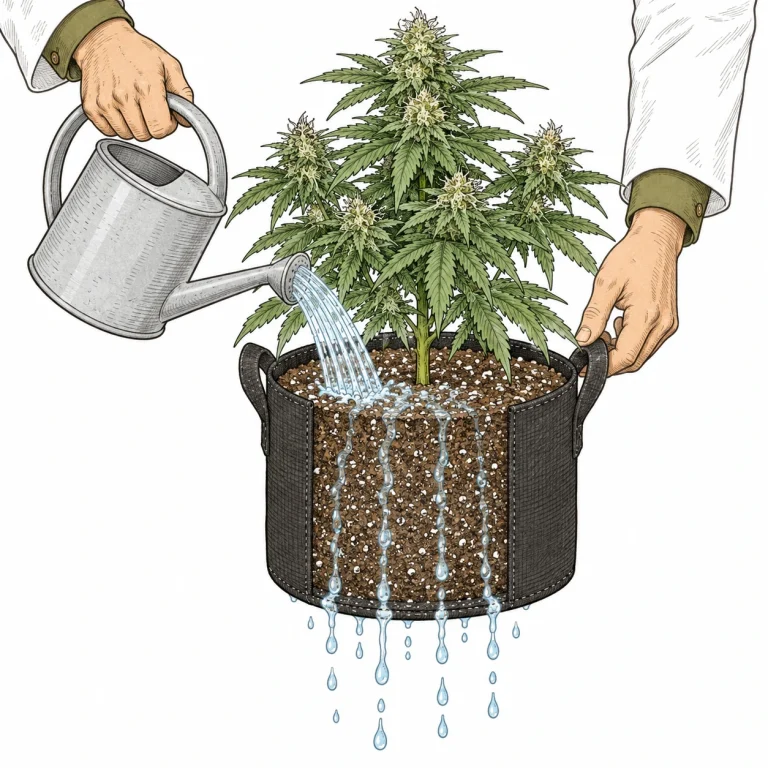
Once you’ve confirmed zinc toxicity, the first and most important step is to stop all zinc-containing nutrients right away. Pause feeding completely and give the growing medium a thorough flush. Use pH-adjusted water (pH 6.0–6.5 for soil, pH 5.8–6.2 for hydro) and run two to three times the pot volume through the medium to wash out the excess zinc. Make sure the runoff can drain freely.
After flushing, it’s crucial to keep the pH of your water stable. A slightly higher pH of 6.5 to 7.0 (soil) lowers zinc availability in the medium and takes extra pressure off the plant. Test the pH of your runoff after the flush to see where the medium’s pH is at. The basics of watering cannabis the right way matter even more here: the right watering and flushing volume is key to success.
Once the medium is flushed and the pH is stable, you can carefully start feeding again with a balanced nutrient that’s zinc-free or low in zinc. Start at half strength and watch the plant for at least a week before you bump up the dose. Leaves that are already damaged won’t fully recover, but new growth should come in healthy and strong – that’s the most reliable sign the treatment is working.
For hydroponics systems: swap out the entire nutrient solution right away. Clean the system thoroughly, check every component for zinc sources and mix the new nutrient solution with micronutrient levels cut in half. In DWC or NFT systems, a full reservoir change is easy and the fastest way to bring zinc levels down.
- Stop all zinc-containing nutrients right away
- Flush the growing medium with 2–3 times the pot volume of pH-adjusted water
- Raise the pH to 6.5–7.0 (soil) and keep it stable
- Wait at least 24–48 hours before you go back to feeding at half strength
- In hydro: swap out the whole nutrient solution and clean the system
- Watch new growth to see whether the treatment is working
How to Prevent Zinc Toxicity in Cannabis Long-Term
Prevention starts with picking the right nutrients. If you go with quality single-part or two-part nutrients instead of cheap all-in-one products, you stay in full control of the micronutrient levels in your medium. Look for clear, transparent nutrient labels and choose products that contain zinc in moderate, plant-friendly amounts.
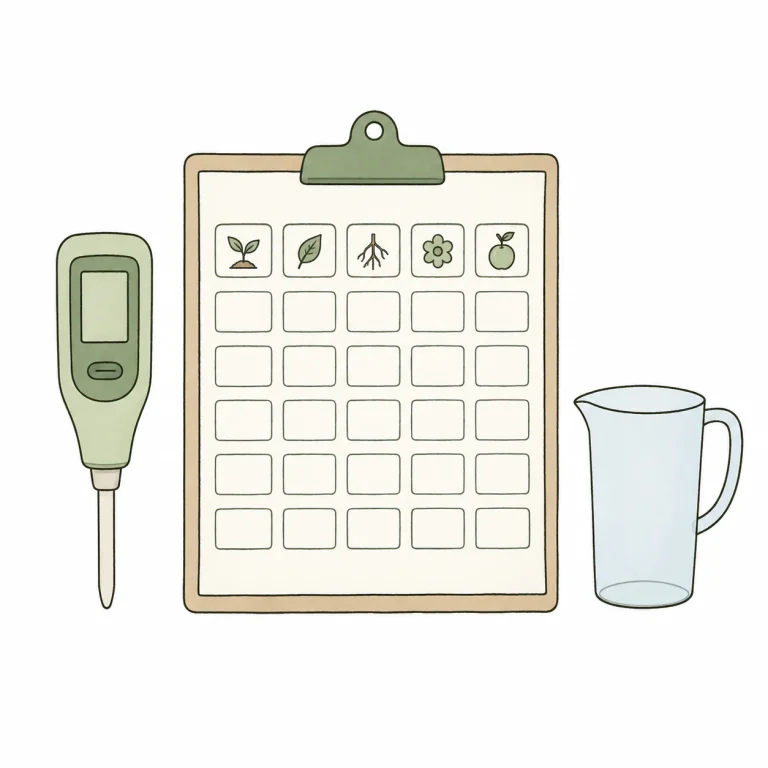
Flushing your medium regularly is one of the easiest and most effective ways to prevent zinc toxicity. A scheduled flush every two to four weeks, depending on how heavily you feed, keeps micronutrients from building up and keeps your medium fresh. Use that day to check the pH of your runoff too, so you can catch imbalances early.
Check all your grow gear for materials that contain zinc. Use pots and containers made of plastic, ceramic or food-grade stainless steel. Galvanized metal has no place near your cannabis plants. If you use tap water, a water test is worth it so you know your baseline zinc level. In areas with old water pipes, elevated heavy metal levels in tap water can be a real problem.
- Choose quality single-part nutrients with transparent micronutrient labels
- Flush the medium with pH-adjusted water every 2–4 weeks
- Keep galvanized gear out of your grow, no exceptions
- Check pH regularly in your medium and your water
- Have your tap water tested for heavy metals if needed
- Keep an eye on the EC (electrical conductivity) of your nutrient solution and don’t overfeed
Zinc Toxicity in Cannabis During the Flowering Stage: What to Watch For
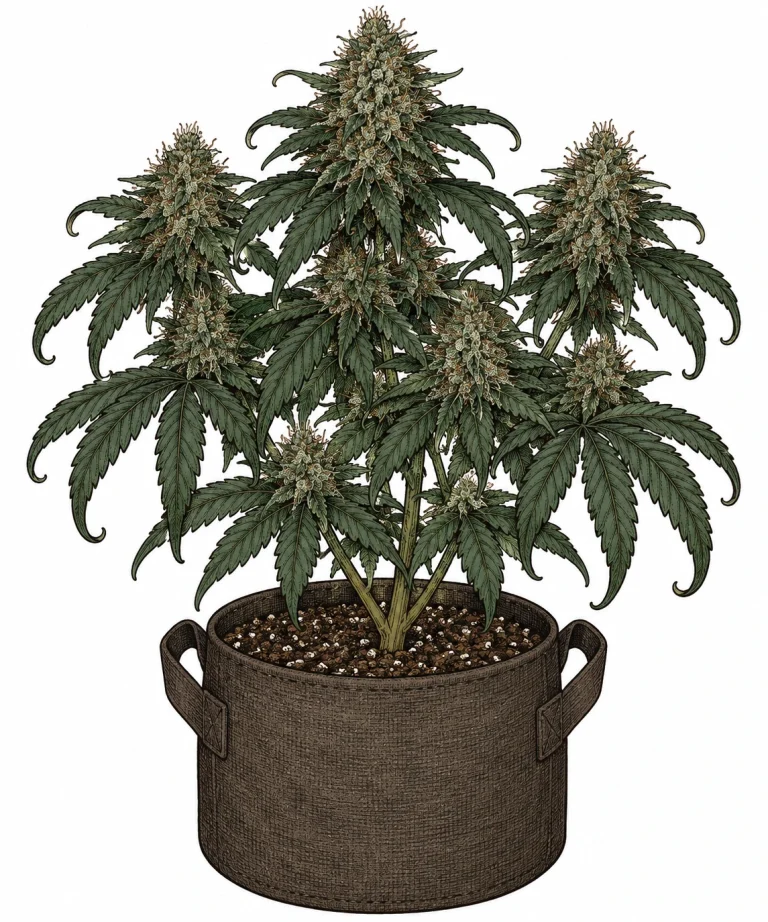
If zinc toxicity shows up during the flowering stage, acting fast matters even more. Your plant recovers less easily in this stage, and every stress factor can hit the quality and size of your buds directly. Flushing is still the most effective quick fix. Just do it carefully, so you don’t add new stress through cold water or flooding the pot.
In flower, it’s tempting to feed hard to push bud development. But that’s exactly where the biggest risk of micronutrient buildup lies. Cut back on micronutrients on purpose in the second half of flower, and do a final flush shortly before harvest anyway. That not only protects against zinc toxicity, it can also improve the taste of your harvested buds.
If signs of zinc toxicity appear in the last two to three weeks before your planned harvest, it often makes more sense to flush right away and finish the plant without further feeding instead of starting a full treatment cycle. The remaining time usually isn’t enough to fix all the damage anyway. Focus on ideal growing conditions instead, so you still get a high-quality harvest.
- In the flowering stage, acting fast is especially important
- Flushing is still the main fix, but do it gently
- Cut back on micronutrients in late flower
- A final flush 1–2 weeks before harvest is also a good preventive step
- Symptoms right before harvest: flush and finish without nutrients
Besides zinc, boron toxicity can cause similar symptoms. Both micronutrients are especially unforgiving at high doses.
Frequently Asked Questions
How fast will I see improvement after treating zinc toxicity in cannabis?
Existing leaf damage can’t be reversed and won’t fully heal. The first signs of improvement show up in new growth: if it comes in healthy and strong within 5–10 days after flushing, with no interveinal chlorosis or brown tips, the treatment is working. You can remove badly damaged older leaves once the plant has stabilized.
Can I add chelated iron to fight the iron deficiency caused by zinc toxicity?
Adding chelated iron can ease the induced iron deficiency in the short term, but it doesn’t fix the root cause. As long as there’s too much zinc in your medium, it will keep blocking iron uptake. Always flush and correct the pH first. You can add chelated iron as a supplement once the zinc problem is under control.
Can zinc toxicity kill your cannabis plant?
Usually not, as long as you catch it early and treat it. In extreme cases, though, severe zinc toxicity can damage the roots so badly that the plant collapses. Acting fast is what counts: take the first symptoms seriously, stop feeding and flush before the toxicity gets worse.
Which nutrients cause zinc toxicity in cannabis most often?
Common culprits are cheap all-in-one nutrients loaded with trace elements, aggressive clone nutrient solutions and some soil conditioners with added zinc oxide. Check the nutrient profile before you buy, and pick products that list zinc at moderate levels. Quality cannabis-specific nutrients are usually better matched to what your plant actually needs.
Can I reuse the same pot after zinc toxicity?
Yes, in most cases. After flushing and testing the medium thoroughly, you can refill the pot with fresh growing medium. Make sure you replace all of the old medium, since zinc can stay behind in it. Check the pot itself for zinc-containing materials – plastic and ceramic pots are safe.
How do I tell zinc toxicity apart from a zinc deficiency?
A zinc deficiency mainly shows up as small, misshapen new leaves that are white or pale yellow, with short internodes – the plant looks squished. Zinc toxicity, on the other hand, shows up as dark green older leaves, interveinal chlorosis on young leaves and brown leaf tips. The opposite symptoms on old vs. new leaves help you tell them apart.
To keep an eye on your feeding strength going forward, an EC (electrical conductivity) meter from our recommended gear comes in handy.
Bottom Line
Zinc toxicity in cannabis is a serious problem, but it’s very treatable if you catch it in time. Dark, leathery older leaves, interveinal chlorosis on new growth and brown leaf tips together are the classic signs of zinc toxicity. Stop feeding right away, flush thoroughly and correct your pH, and your plant can stabilize within a few days. In the long run, carefully chosen nutrients, regular flushing and consistent pH checks help keep zinc toxicity from coming back.
