
Other Cannabis Symptoms: How to Identify Them
These cannabis symptoms — foxtailing, white spots, hermaphrodites or HLVd — don’t always fit neatly into one category. Here you’ll find answers on symptoms that don’t belong anywhere else.
What is your plant showing?
Cannabis symptoms that don’t fit any category
Most cannabis problems can be clearly traced to a pest, a fungal disease or a nutrient deficiency. Some cannabis symptoms are borderline cases, though: they affect bud structure, plant genetics or invisible pathogens that don’t fit any of the classic categories. This hub collects exactly those topics — from foxtailing and hermaphrodites to the sneaky HLVd viroid.
Foxtailing shows up as unusually long, wispy bud tips — genetically normal in some strains, a stress signal from heat or intense light in others. White spots on leaves can be harmless calcium crystals or point to an early pest infestation. Hermaphrodites usually develop from stress and can put your entire harvest at risk through self-pollination. HLVd (hop latent viroid) is an invisible viroid pathogenthat slowly cuts growth and yield without clear outward symptoms.
The most important first step with any of these borderline symptoms: observe before you act. Many of these issues are purely cosmetic or genetic and need no treatment. Only when growth noticeably slows down, several plants are affected at once or the symptom gets worse over weeks do you need to step in.
Not sure whether your symptom belongs in this category or is a classic pest, fungal or nutrient problem after all? Our Plant Diagnosis Tool helps you narrow it down.

“Not every oddity is an emergency. In some strains, foxtailing is even genetically normal — watch first whether your plant really looks stressed before you step in.”
Symptoms in detail
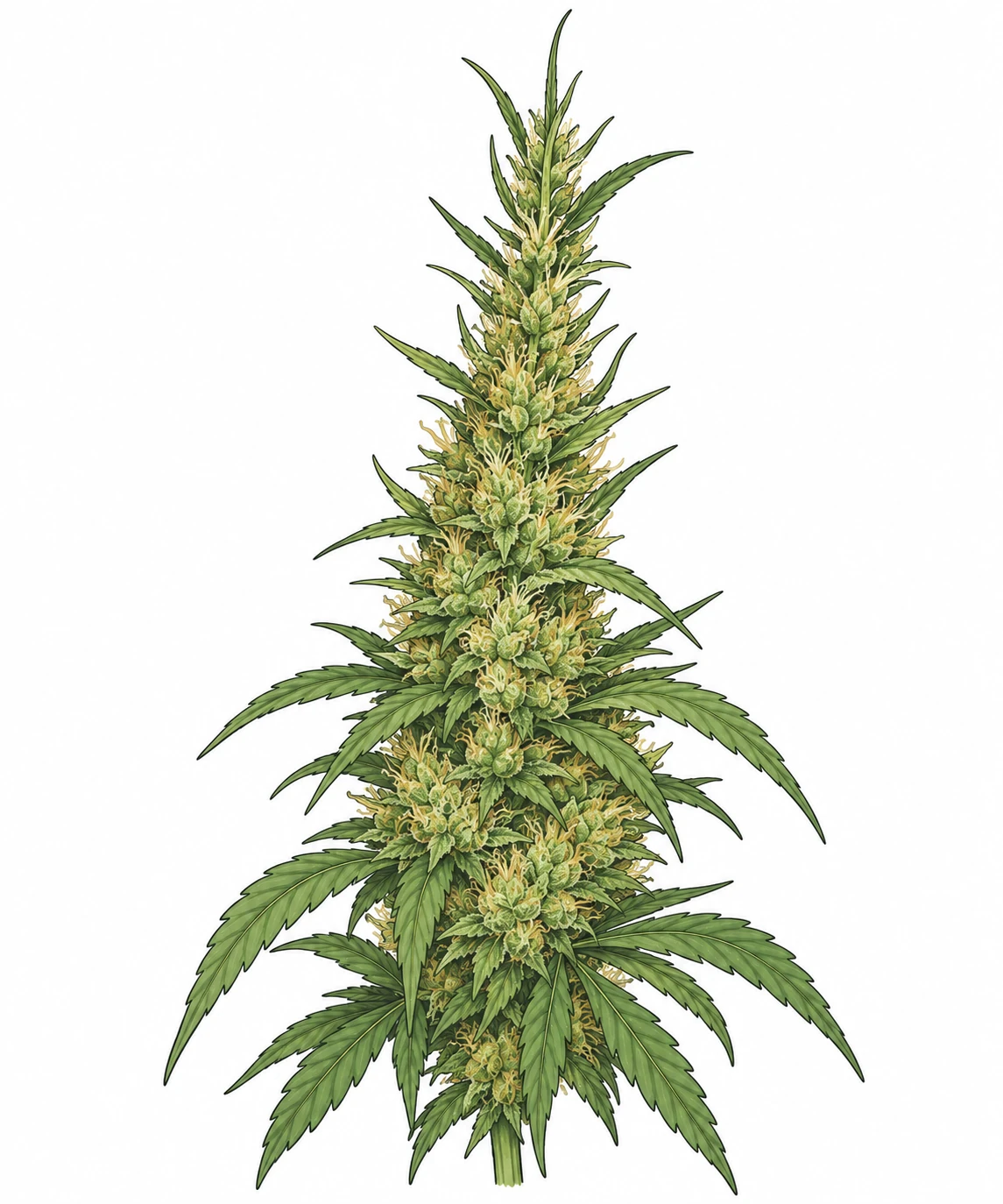
How to Identify Cannabis Foxtailing
Genetic or stress-related? Heat stress and too much light are the most common triggers — here’s how to tell them apart and fix them.
Read article →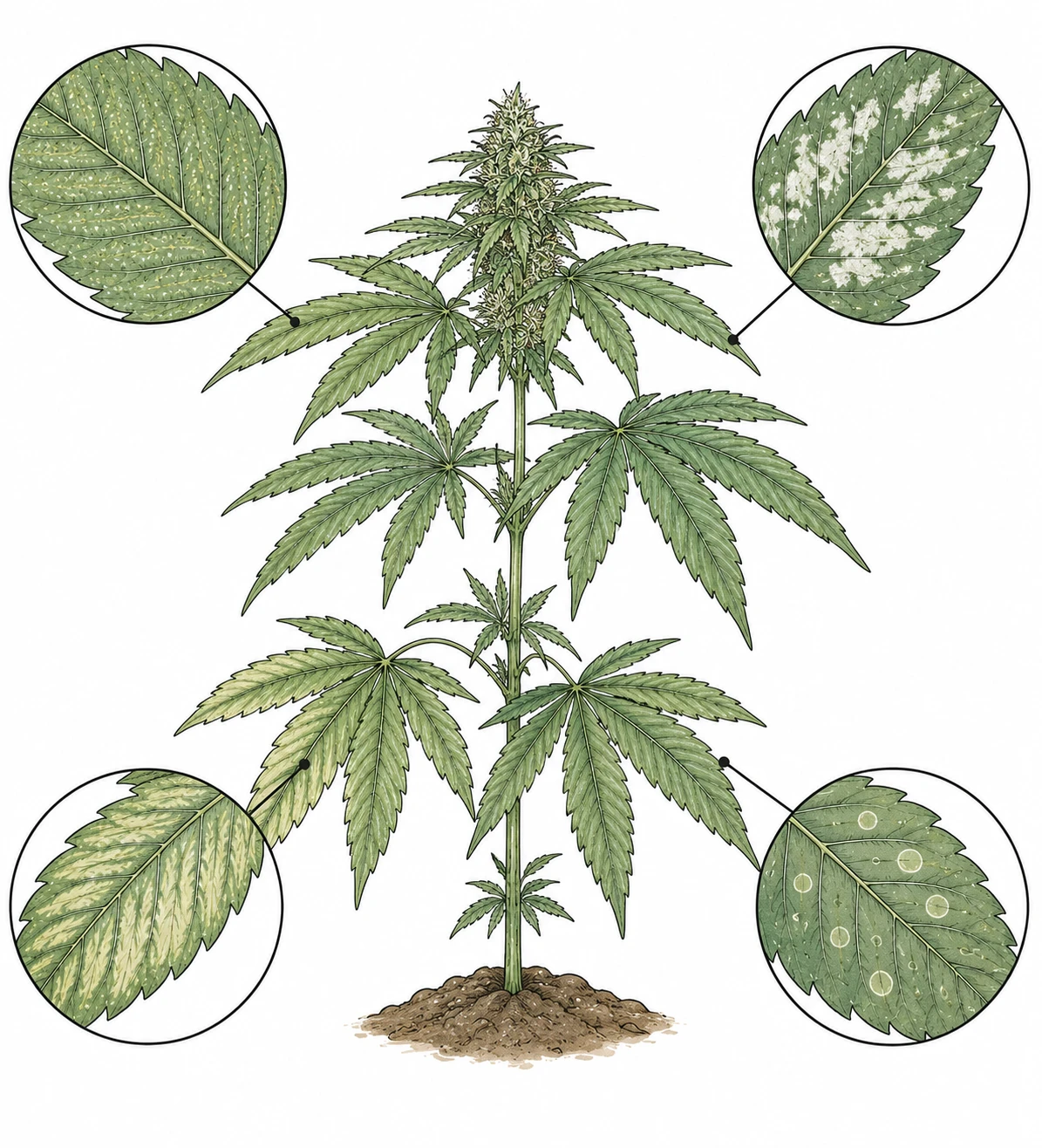
White Spots on Leaves
Spider mites, powdery mildew, thrips or water spots — how to reliably tell four possible causes apart.
Read article →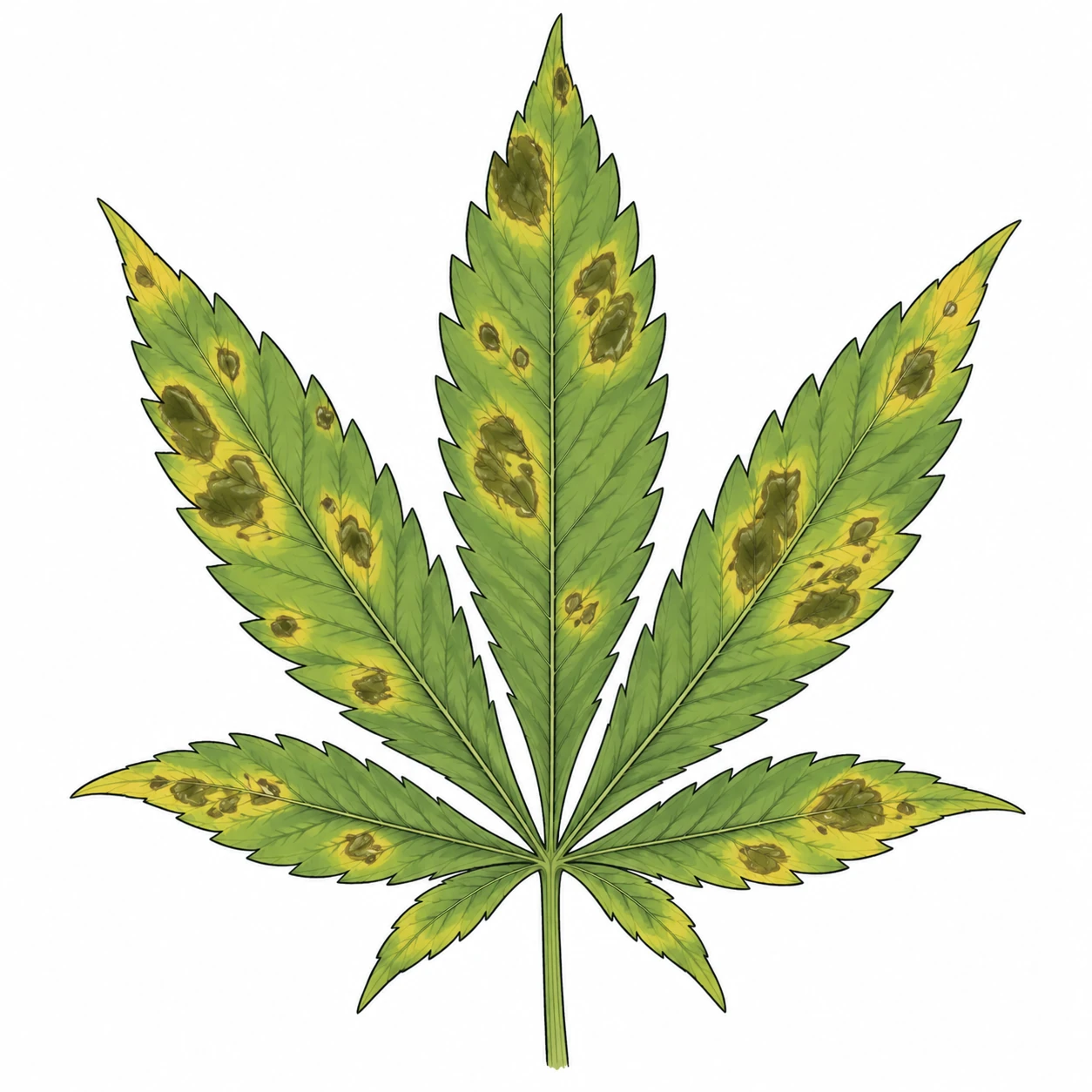
How to Identify Bacterial Leaf Spot
Watery, fast-spreading spots — how to tell bacteria apart from fungi and nutrient deficiencies.
Read article →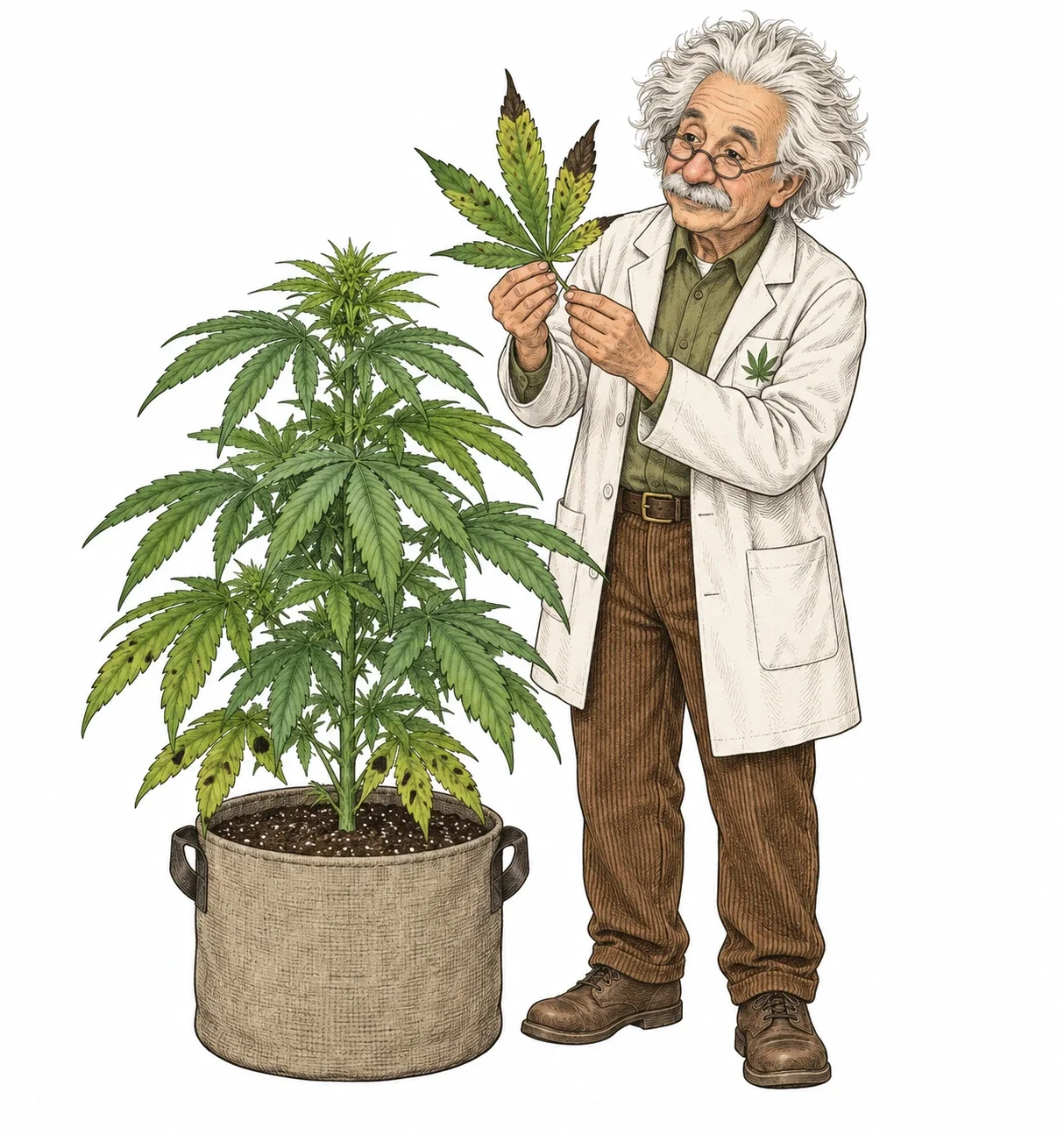
How to Identify Black Leaves on Cannabis
Dark spots or blackened leaf areas? How to reliably narrow it down to fungus, cold stress, nutrient problems or pests.
Read article →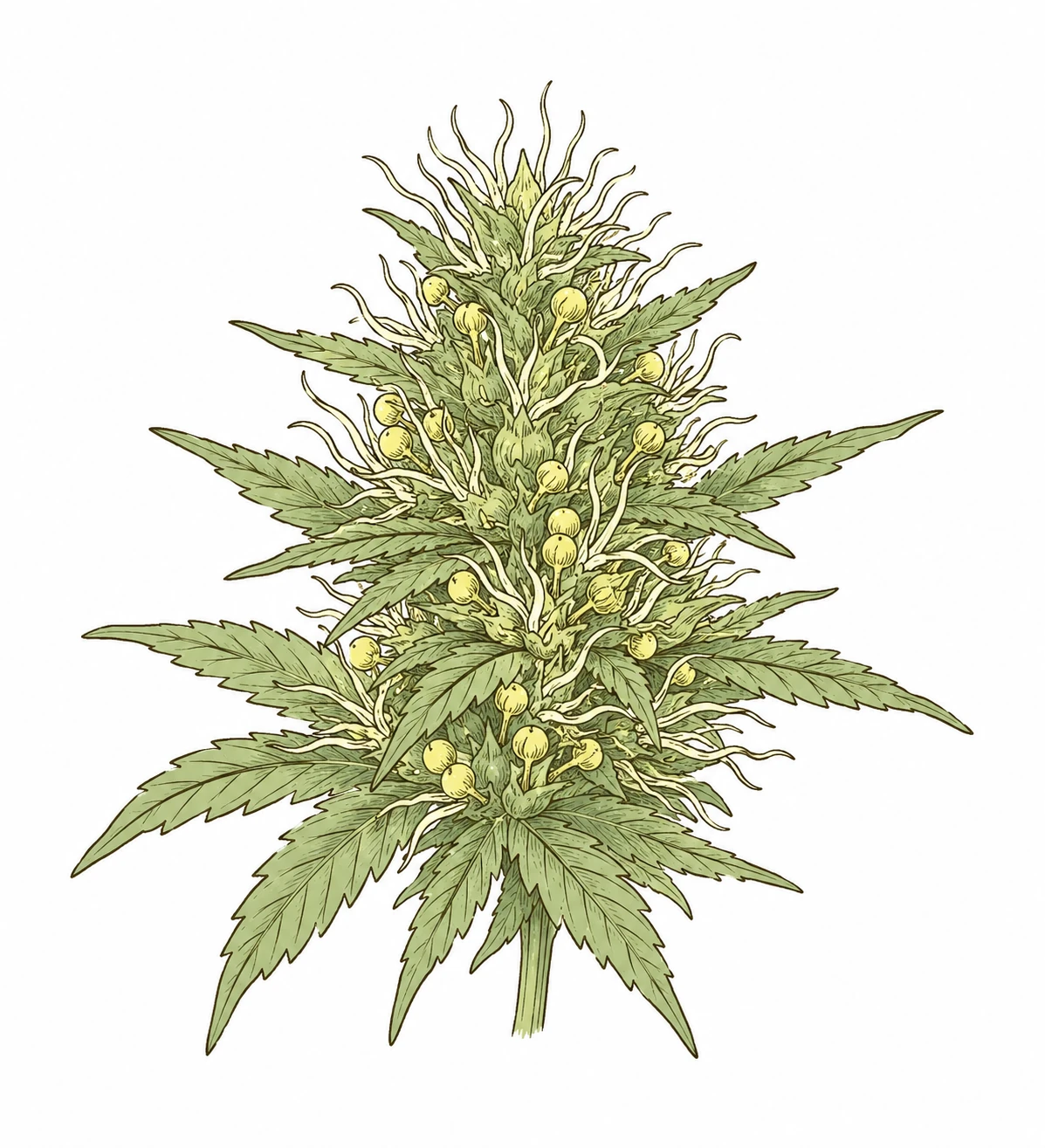
How to Identify Cannabis Hermaphrodites
Stop hermaphroditism before pollen is released — causes from light leaks to genetics, plus the right immediate steps.
Read article →
How to Sex Cannabis Plants
How to use pre-flowers and nodes to reliably tell whether your plant is male or female – before it pollinates.
Read article →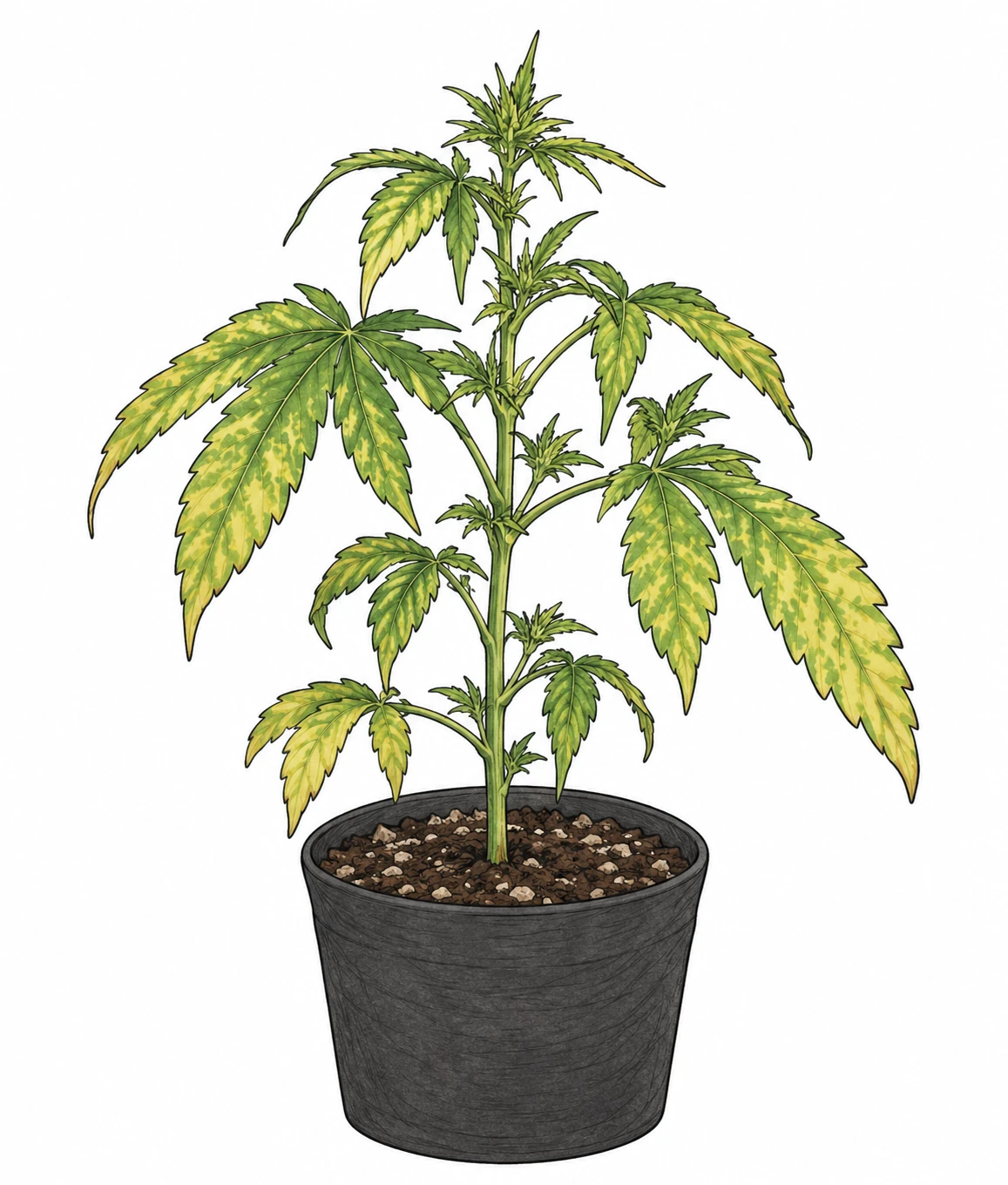
How to Identify HLVd in Cannabis
This sneaky viroid spreads through tools and clones, survives normal disinfection and often goes unnoticed for months.
Read article →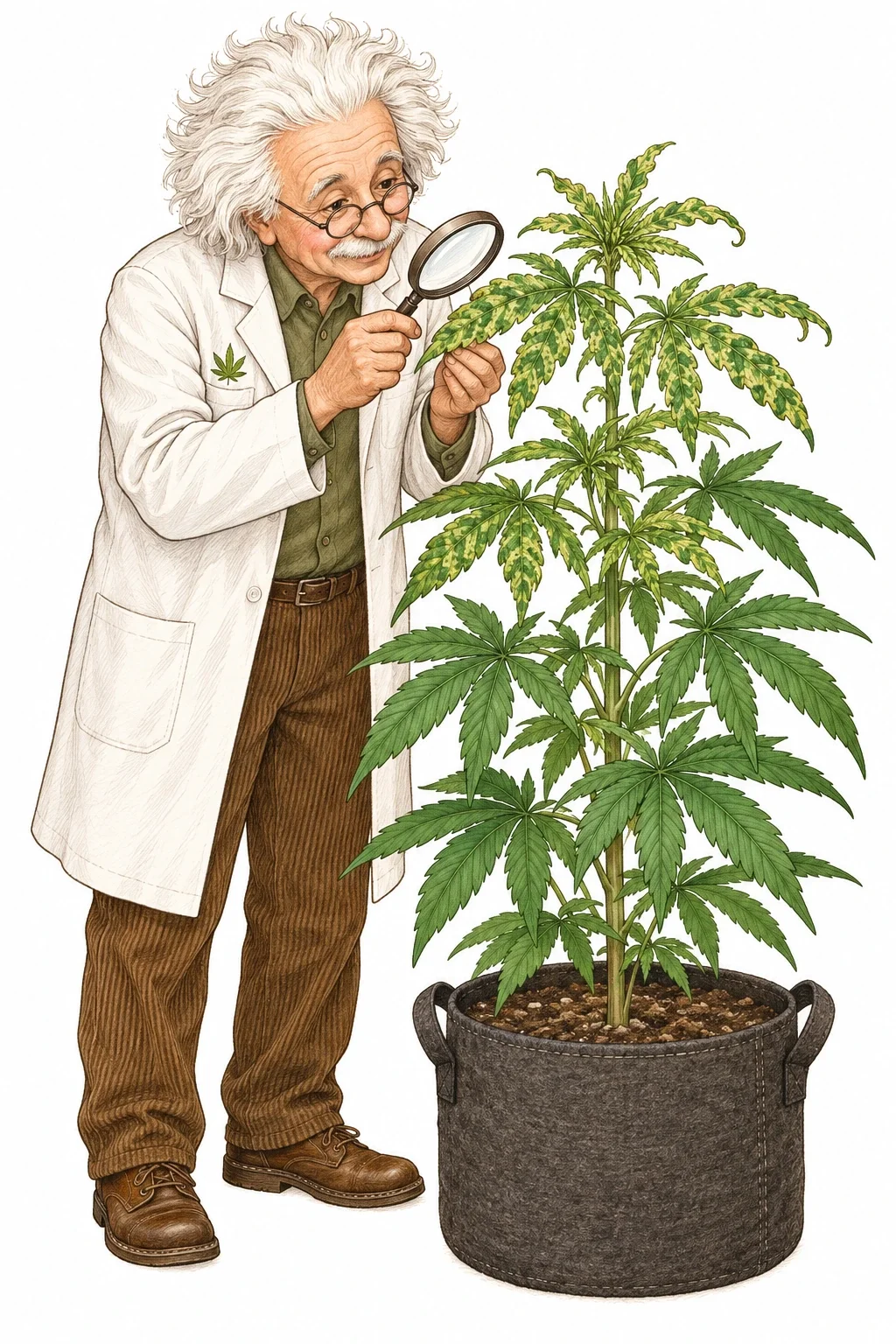
How to Identify a Cannabis Virus
Reliably tell tobacco mosaic virus & other viruses apart from deficiencies or pests and respond correctly before the virus spreads.
Read article →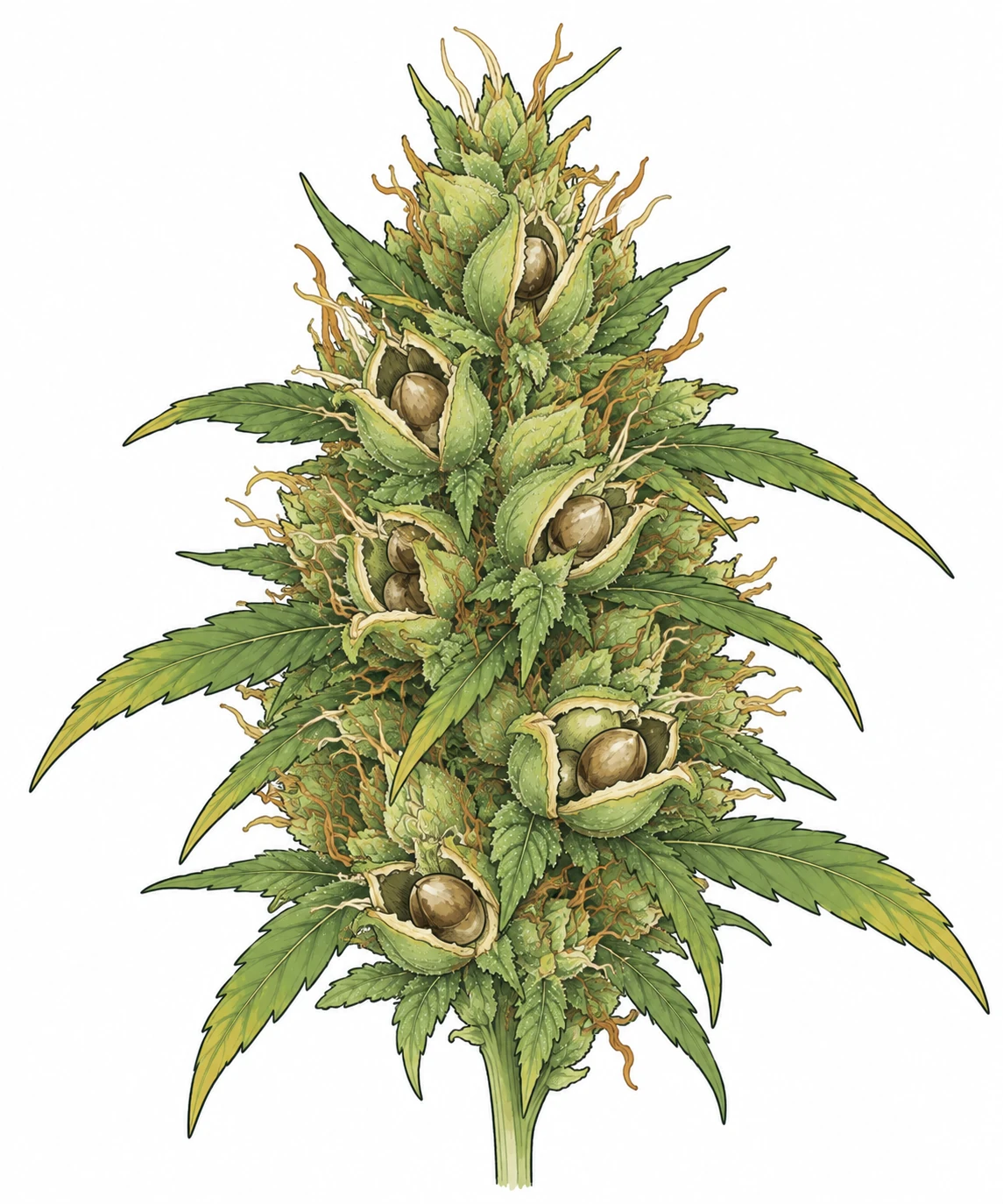
How to Spot Seeds in Buds
Plump, oval bodies between the calyxes — usually caused by a hermaphrodite or unwanted pollination. Here’s how to deal with it.
Read article →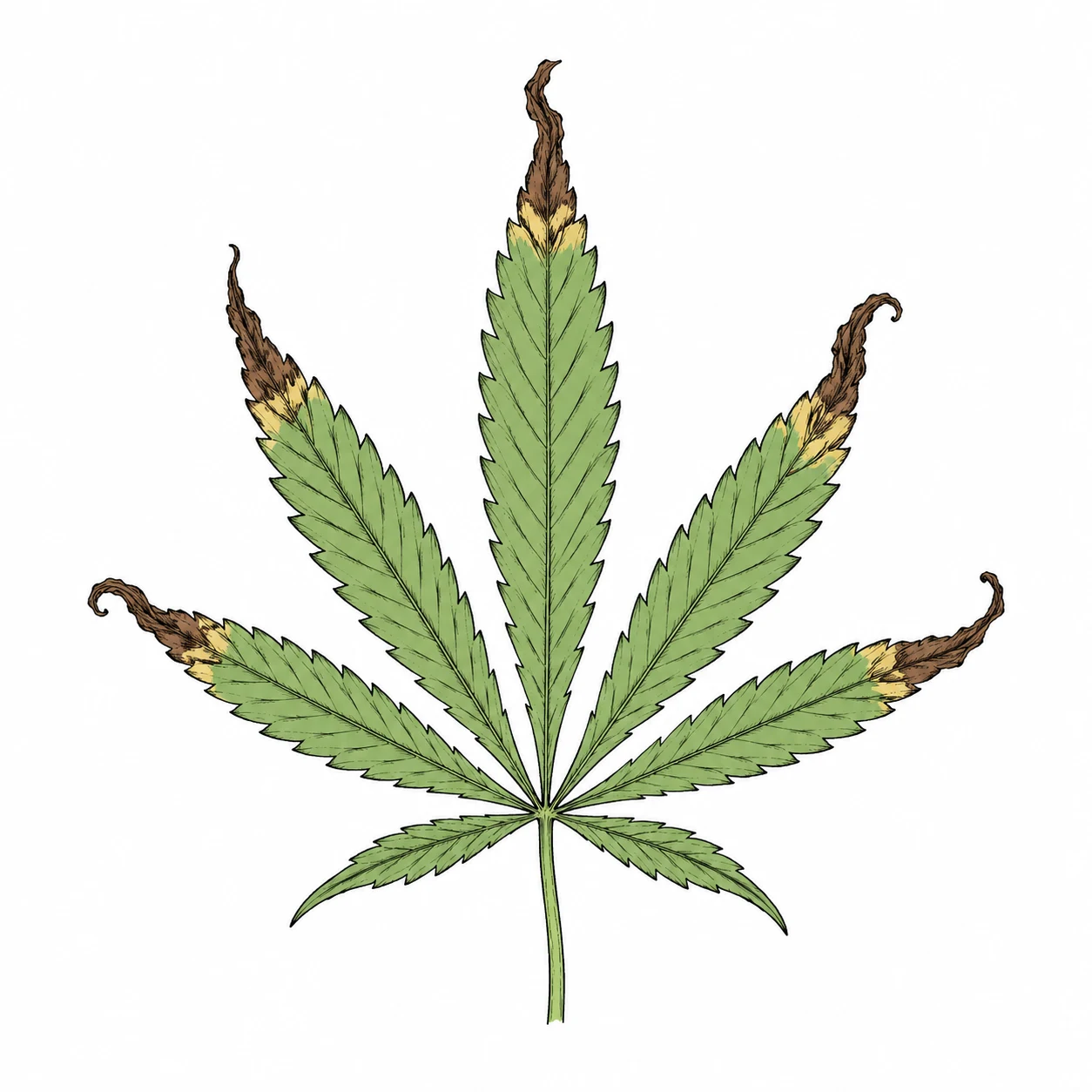
How to Identify Brown Leaf Tips
Nutrient burn, a pH problem or potassium deficiency? The most common causes of brown leaf tips side by side.
Read article →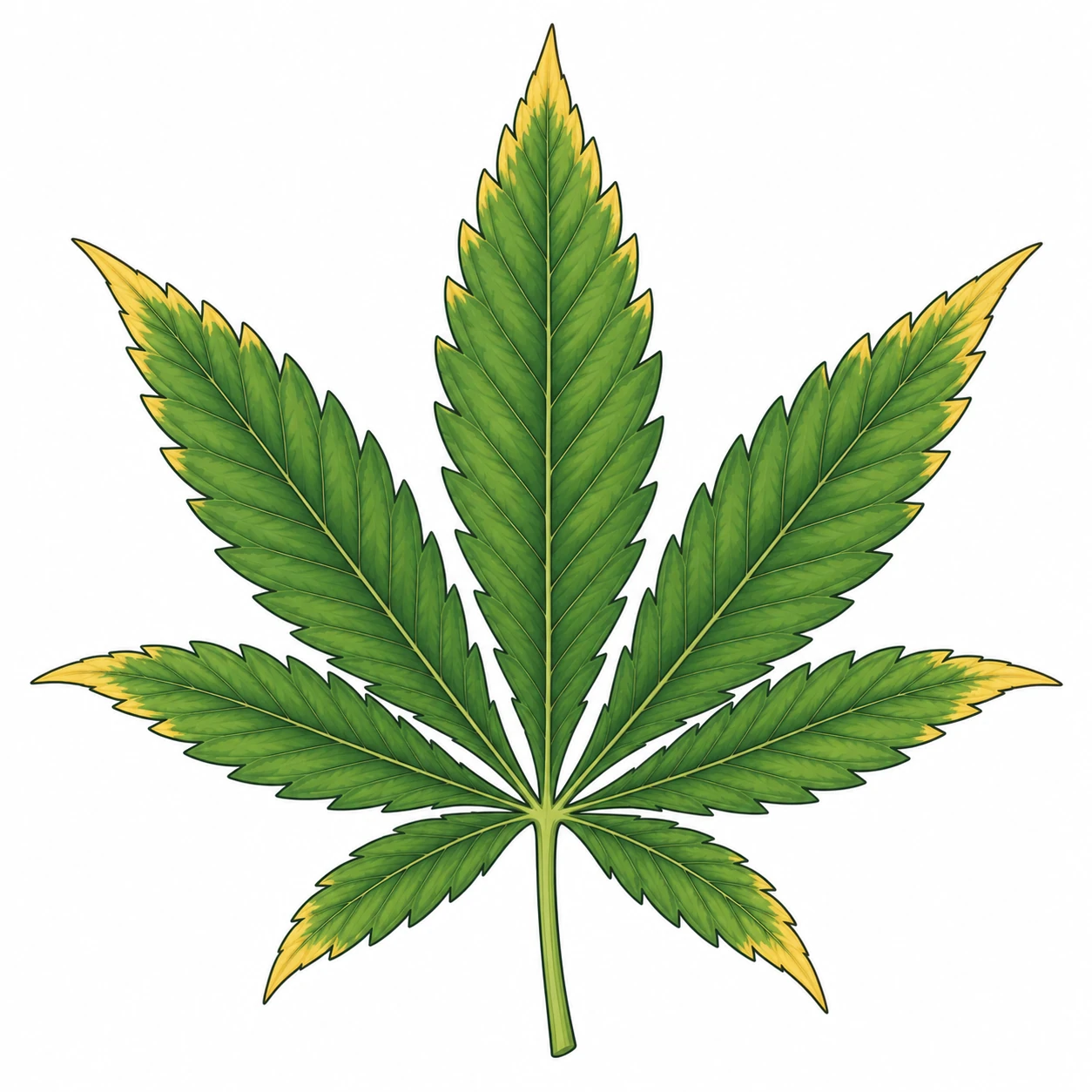
How to Identify Yellow Leaf Tips
Nutrient burn, pH, heat or a deficiency? How to correctly pin down the 4 most common causes of yellow leaf tips.
Read article →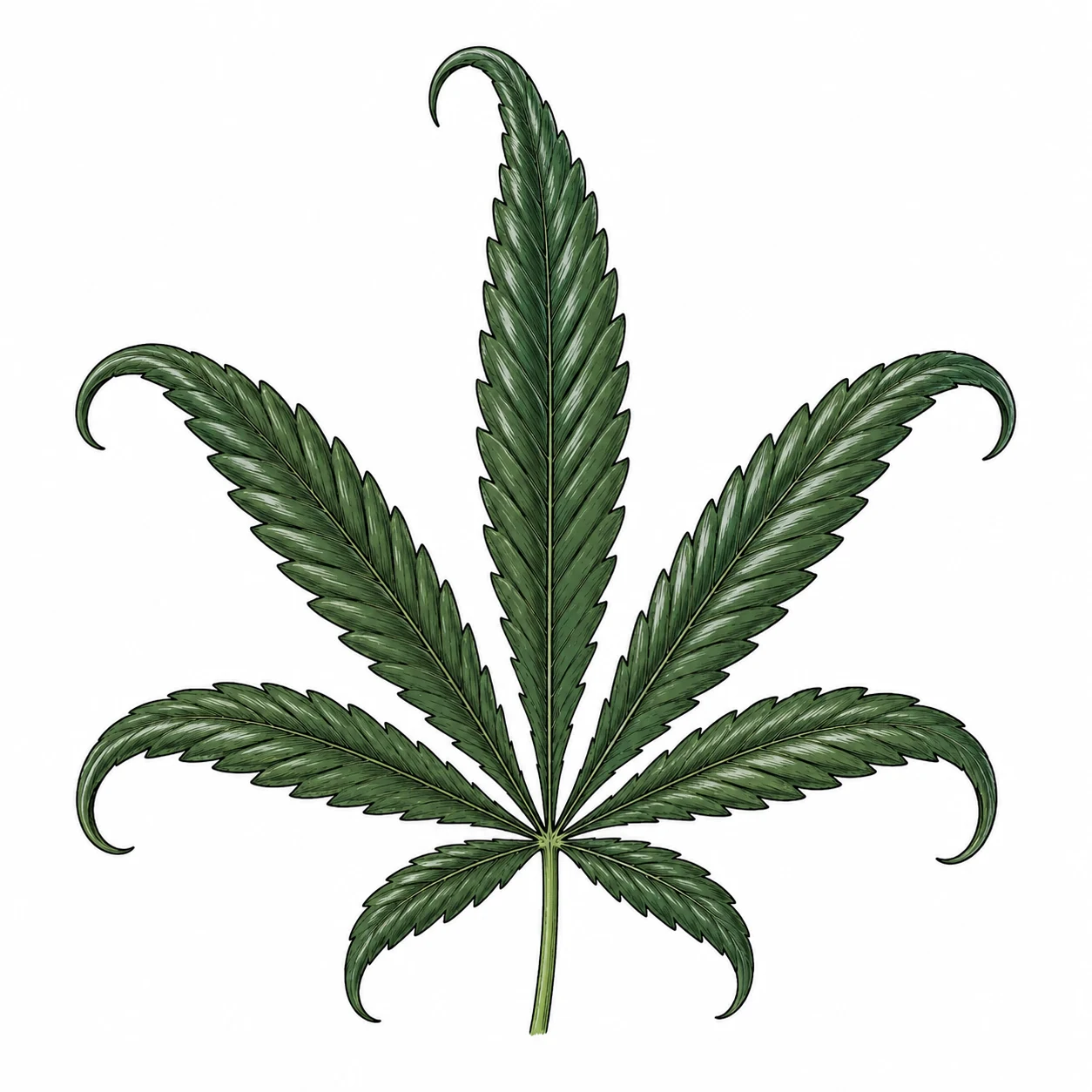
How to Identify Cannabis Leaf Claw
Leaf tips bending downward: how to tell nitrogen toxicity apart from overwatering and other causes.
Read article →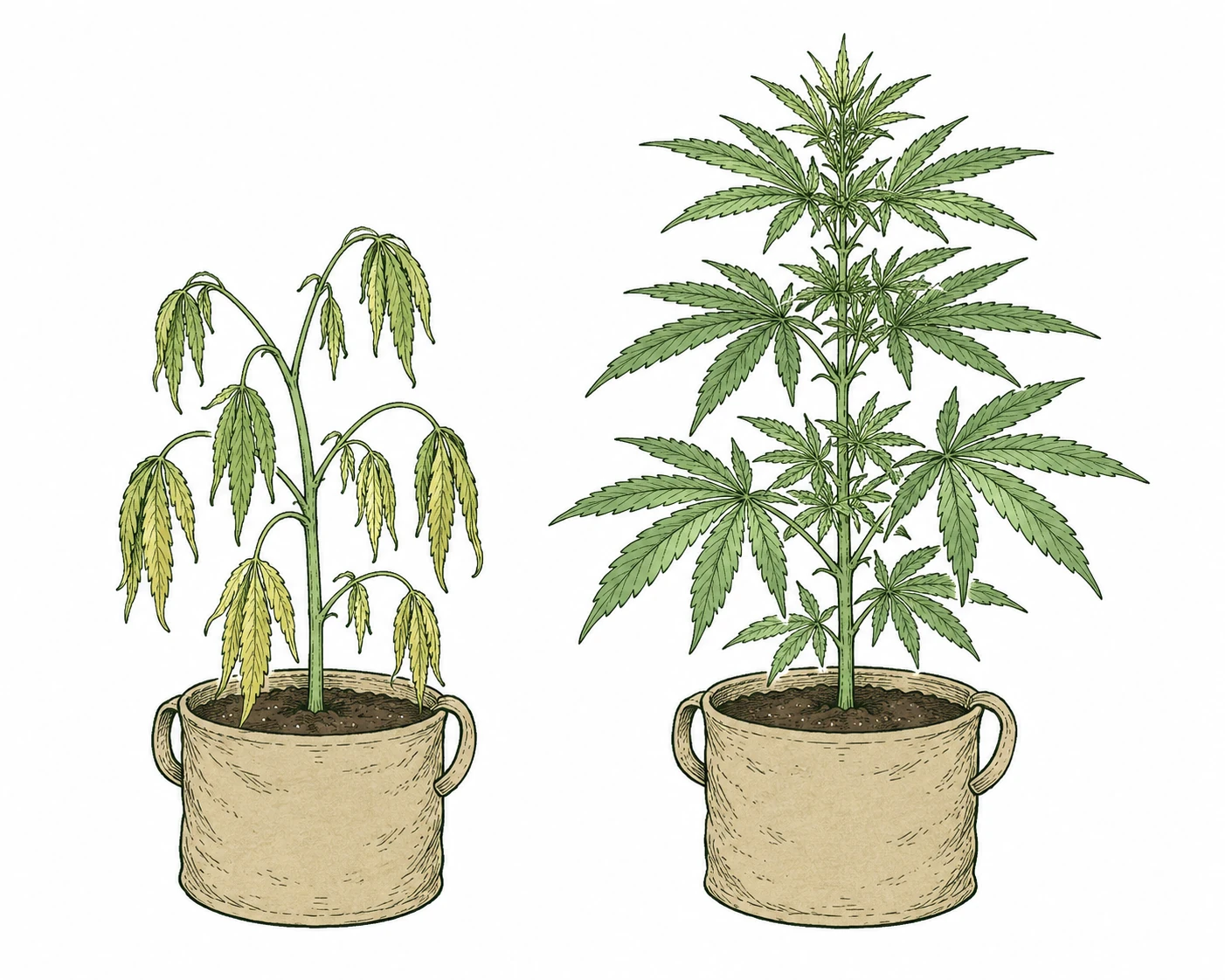
How to Save Wilting Cannabis Plants
Too wet or too dry? How to find the cause of droopy, wilting plants and stabilize them right away.
Read article →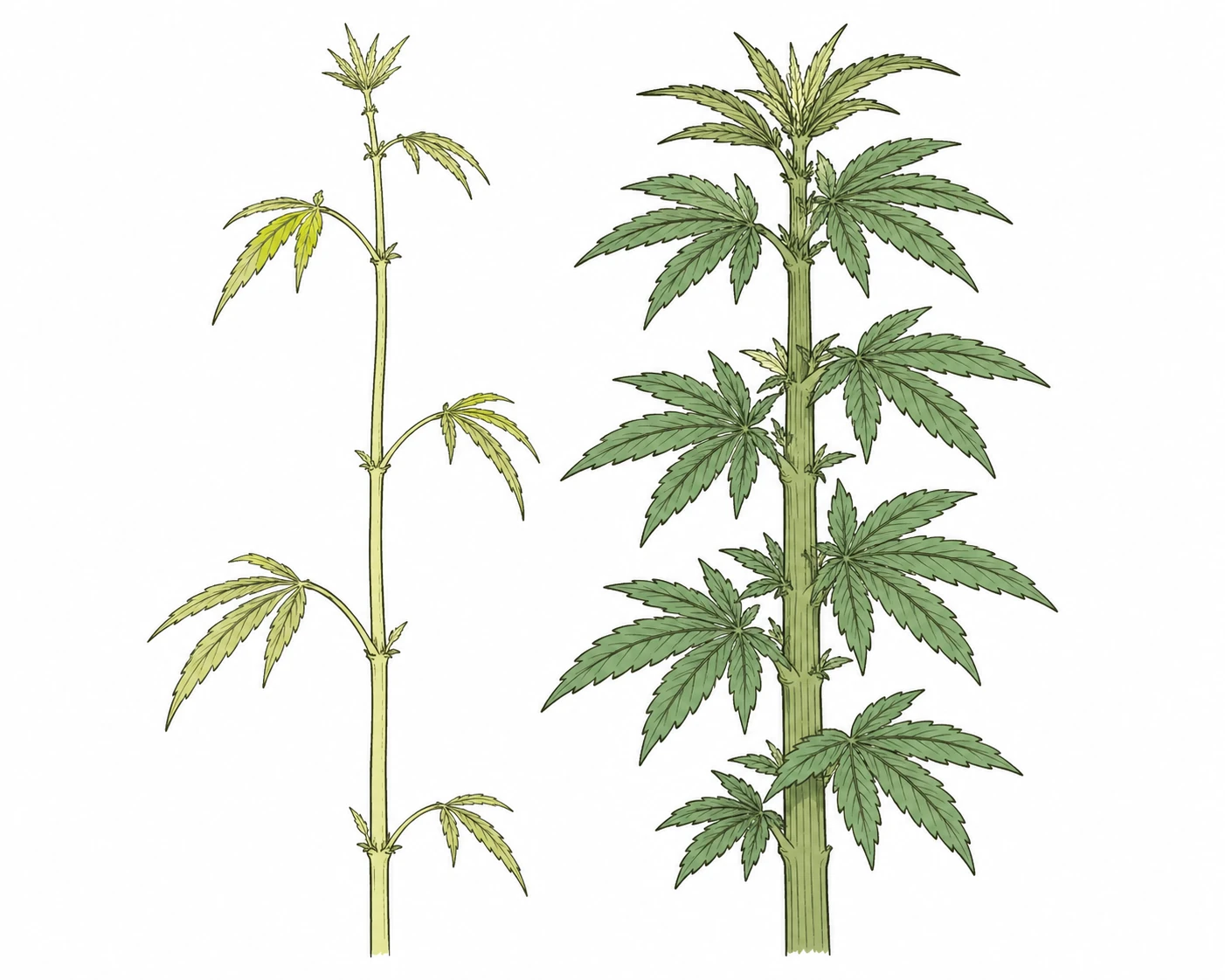
How to Identify Thin Cannabis Stems
Too little light, lack of movement or overfeeding: the most common causes of weak stems and how to strengthen them.
Read article →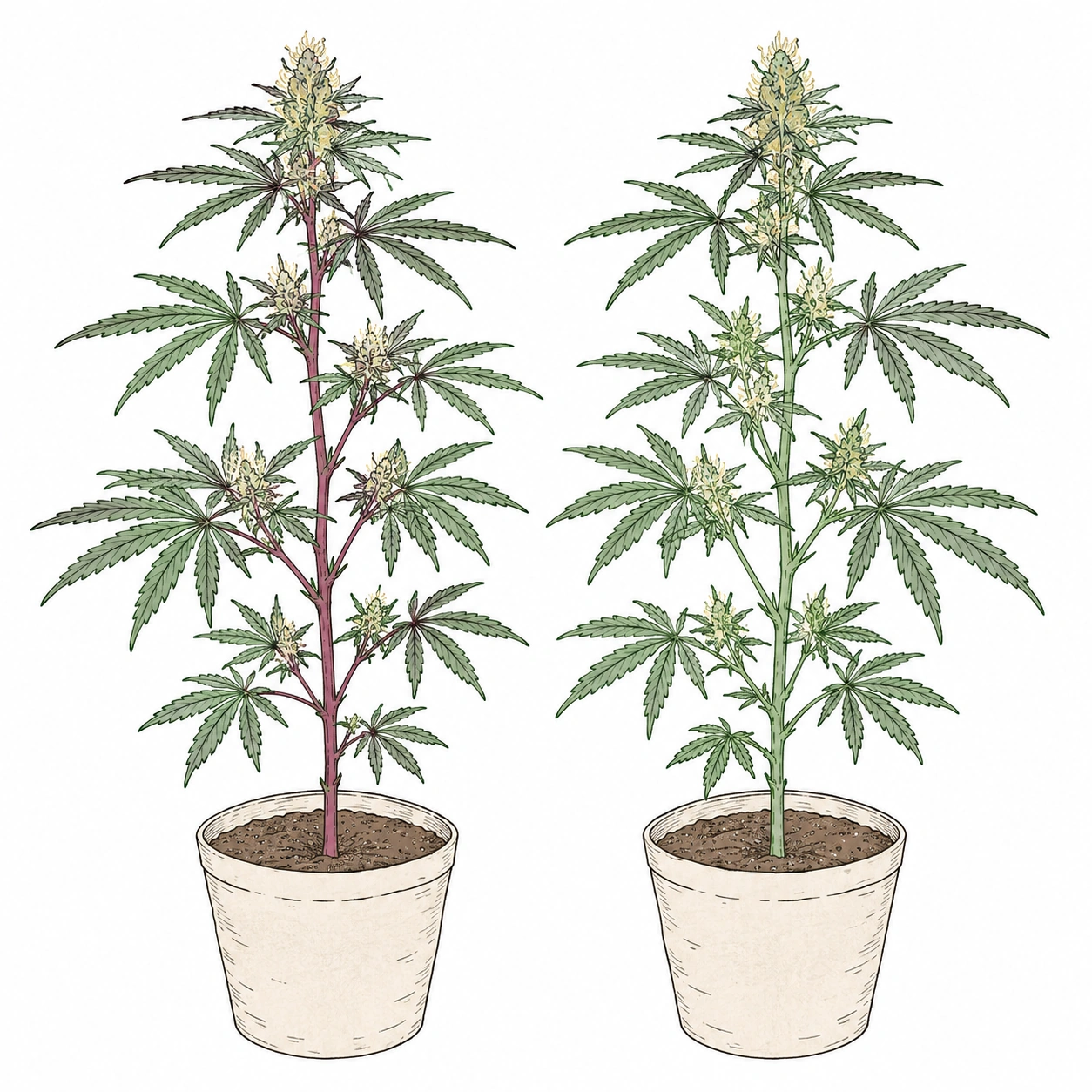
How to Identify Red Cannabis Stems
Genetics, cold stress or phosphorus deficiency? How to tell whether red stems are harmless or point to a problem.
Read article →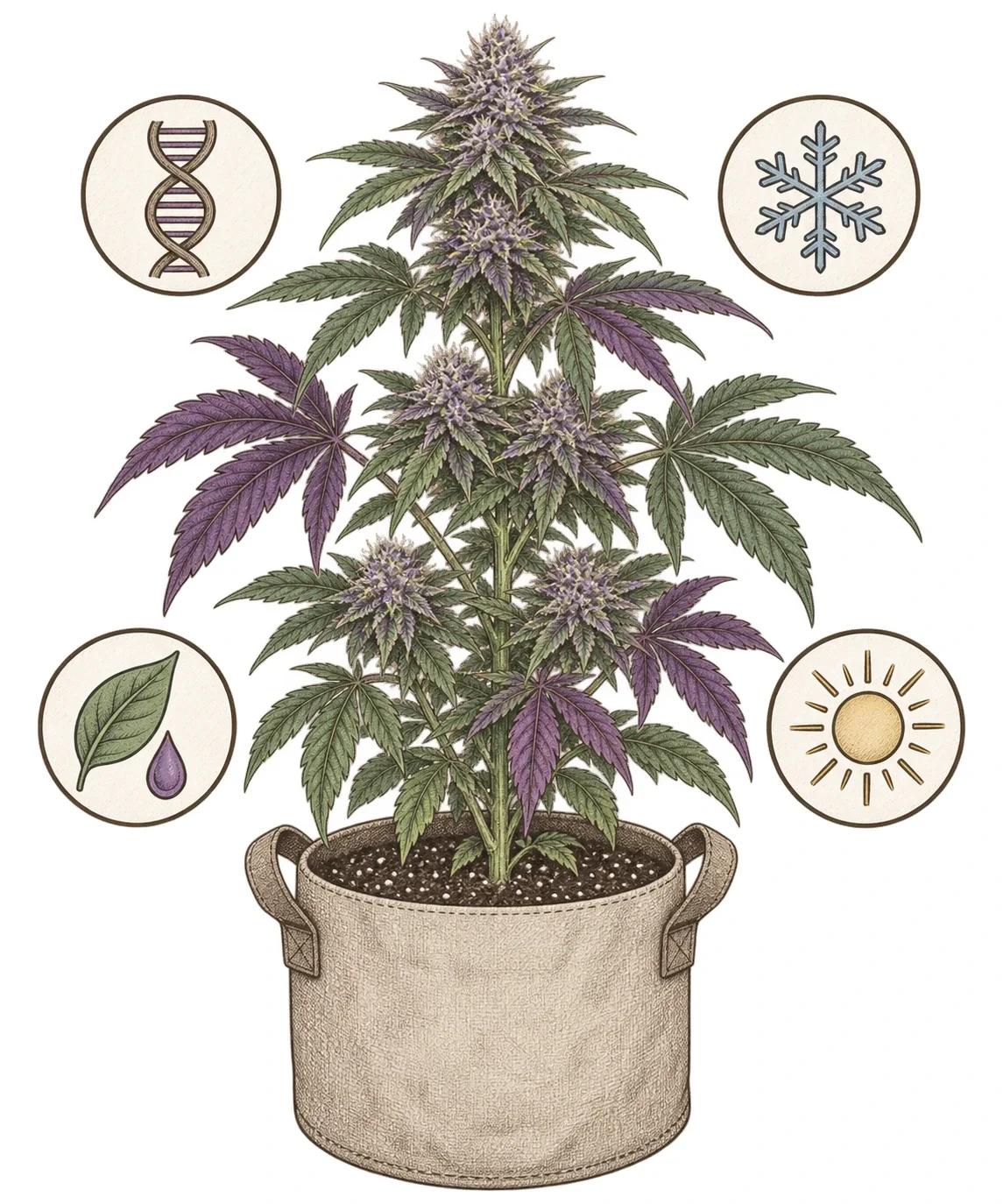
How to Identify Purple Cannabis Leaves
Strain, cold stress, phosphorus deficiency or light? How to correctly read purple leaves and know when you need to act.
Read article →
Cannabis Not Flowering
Light leaks, the wrong light cycle or too much nitrogen? The 5 most common causes for photoperiod and autoflower strains.
Read article →Frequently asked questions about other cannabis symptoms
Is foxtailing in cannabis always a problem?
No, in some strains foxtailing is genetic and completely normal. But if it suddenly shows up in a strain that normally doesn’t do it, it usually points to stress from heat or overly intense light.
What do white spots on cannabis leaves mean?
They can be harmless calcium crystals that need no treatment, or an early sign of a pest infestation such as spider mites. Check with a magnifying glass whether the dots move or webbing is visible — if so, you’re dealing with pests.
What causes hermaphrodites in cannabis, and how dangerous are they?
Hermaphrodites usually develop from stress (light during the dark period, extreme temperatures, injuries). They are dangerous because male flowers can fill your entire harvest with seeds through self-pollination — isolate affected plants or remove the male flowers.
What is HLVd, and how do I recognize it?
HLVd (hop latent viroid) is an invisible pathogen that slowly reduces growth, yield and resin production, often without clear outward symptoms. Suspect it when growth is unexplainably weak despite ideal conditions — a reliable diagnosis is only possible with a lab test.
Do I need to step in right away with every unusual symptom?
No, many borderline symptoms are purely cosmetic or genetic. First watch whether growth slows down or the symptom gets worse — only then does it make sense to step in.
How do I tell these cannabis symptoms apart from classic nutrient or pest problems?
The cannabis symptoms collected here usually affect bud structure, plant genetics or invisible pathogens rather than showing clear deficiency or infestation patterns. If you’re unsure, our Plant Diagnosis Tool helps you sort them into the right category.
