

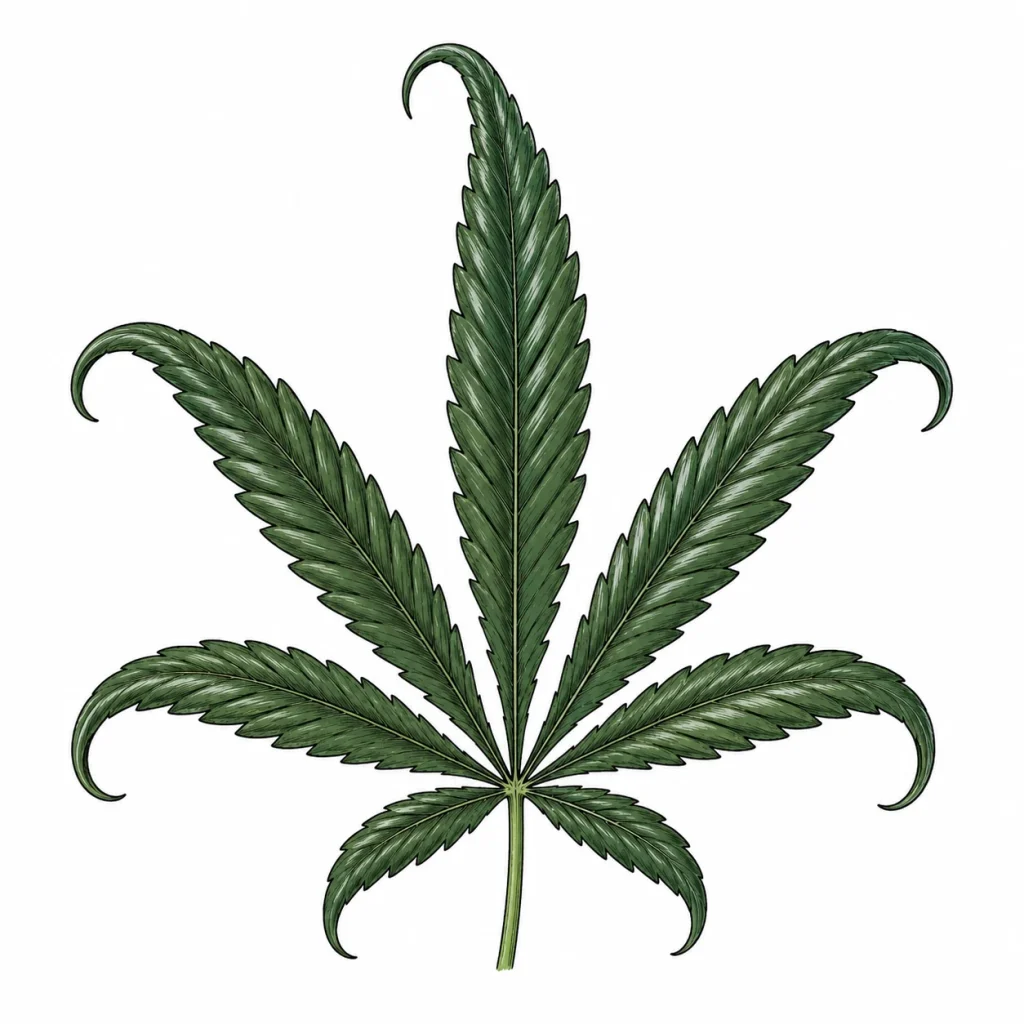
Knowing what causes cannabis claw leaves is crucial when the leaf tips on your plant curl downward and the leaves look like eagle talons. This symptom, known as clawing, is one of the most common problems growers run into, and it can have several very different causes. Whether it’s nitrogen toxicity, heat stress, root problems or the wrong watering habits, each cause calls for a different response. In this article, we explain step by step how to identify the right cause and take targeted action.
What are cannabis claw leaves and how do you recognize them?
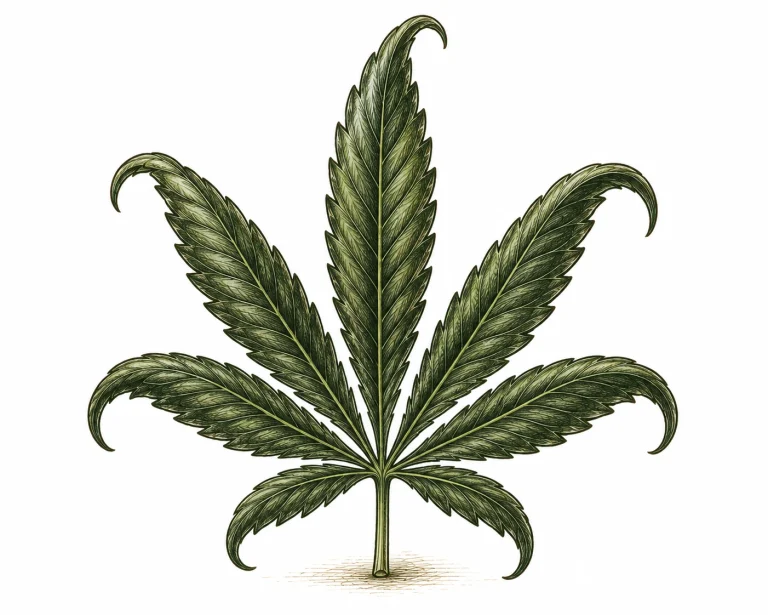
Cannabis claw leaves, a symptom growers call “clawing,” describe leaf tips and edges that curl or bend downward. Unlike a slight droop of the whole leaf, clawing mainly affects the fingertips of the serrated leaflets. They curve down toward the ground while the rest of the leaf can stay relatively flat.
The look really does resemble a grasping claw or an eagle’s talon, hence the name. It’s important to tell claw leaves apart from other symptoms like general limpness from underwatering or leaves curling upward (which points to other problems). With claw leaves, the plant usually stays upright and doesn’t look wilted, but the leaves themselves are structurally changed.
The symptom can start on individual shoots or affect the whole plant at once. If it only shows up on the upper, young leaves, that points to different causes than if only the lower, older leaves are affected. This distribution is an important first clue for your diagnosis.
- Leaf tips bend downward: the classic clawing pattern
- The plant stays upright, no general wilting
- Upper leaves affected: often heat, nutrient burn or nitrogen toxicity
- Lower leaves affected: often a nutrient deficiency or root problems
- Whole plant affected: watering mistakes or environmental stress
Cannabis claw leaves cause #1: nitrogen toxicity
You’ll find a detailed diagnosis and treatment guide specifically for this cause in our article on nitrogen toxicity in cannabis.
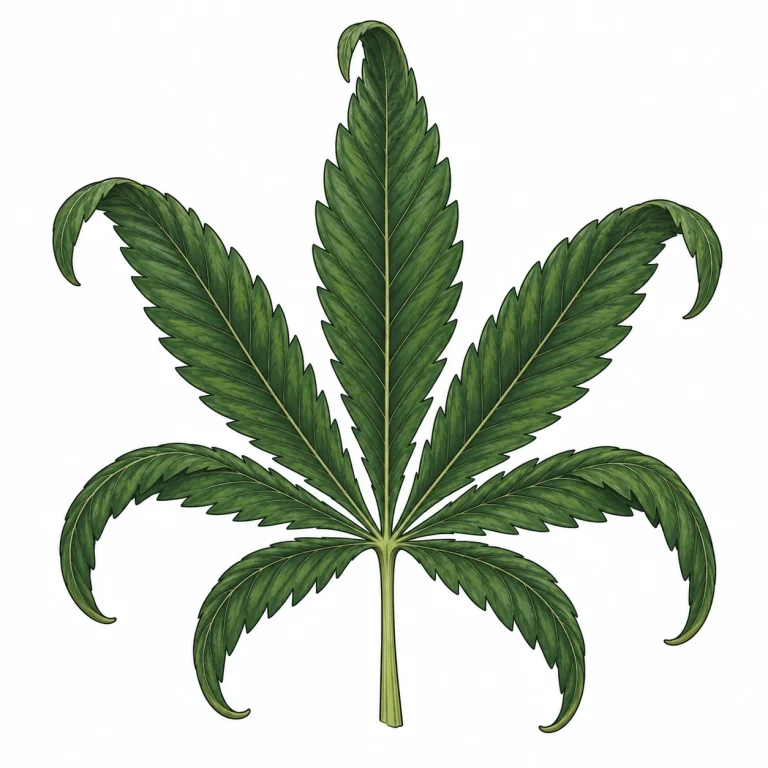
By far the most common cause of cannabis claw leaves is an excess of nitrogen, also called nitrogen toxicity. When your plant takes up too much nitrogen (N), it can’t process it properly. The result is excessive cell division and altered water pressure in the leaf tissue, which causes the characteristic claws. At the same time, the leaves often grow very dark green to almost blackish green. This deep, almost unnatural green is a clear warning sign.
Nitrogen toxicity often happens when growers overfeed or use pre-fertilized soil with a high nutrient content without adjusting their extra feeding. Beginners especially tend to overdo it with nitrogen-heavy nutrients in the vegetative stage. The “more is better” mindset is a disaster when feeding cannabis. Too much nitrogen also blocks the uptake of other nutrients and can lead to follow-up deficiencies.
The fix for nitrogen toxicity is to reduce the nitrogen supply or pause it completely. In soil, you can also do a one-time flush with plenty of pH-adjusted water (flushing) to wash out excess nutrient salts. After that, patience is key: leaves that are already damaged usually won’t fully recover, but new leaves will grow in healthy. Also read our article on how to spot and fix cannabis nutrient burn fast.
- Symptom: very dark green leaves, tips claw downward
- Cause: too much nitrogen-heavy nutrients or overly nutrient-rich soil
- Common in the vegetative stage with overly aggressive feeding
- Fix: reduce feeding, flush the growing medium if needed
- New leaves grow in healthy once the problem is fixed
Cannabis claw leaves caused by heat stress and poor ventilation
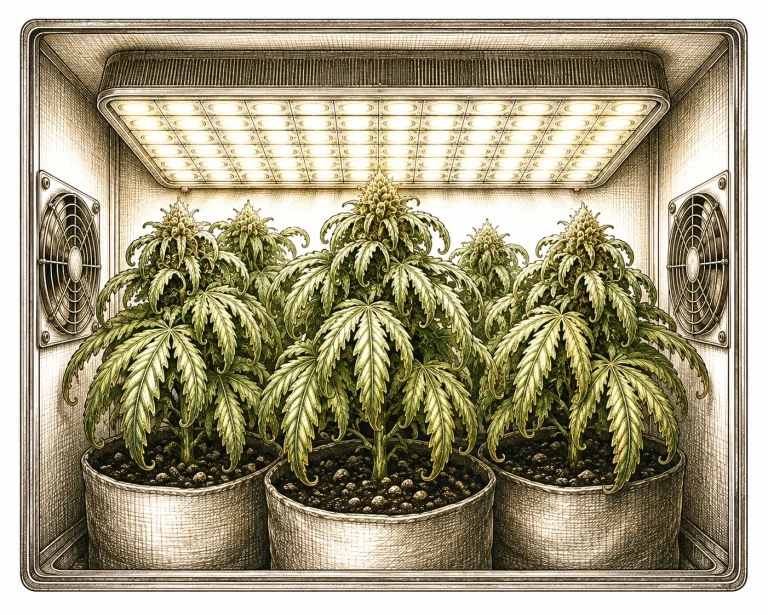
Another very common cause of cannabis claw leaves is heat stress, especially in indoor grows. When temperatures in the grow tent stay above 82 to 86 °F (28 to 30 °C), especially directly under the lamp, the plant responds by curling its leaves. This is a protective mechanism: by reducing its leaf surface, the plant cuts down on transpiration and protects itself from further overheating.
Heat-related claw leaves typically affect the upper leaves and growing tips most, since they’re closest to the heat source. The plant can also look slightly wilted at the same time but recovers quickly once temperatures drop. Check the distance between the lamp and the top of the canopy: with LED lamps, it should be at least 16 to 24 in (40 to 60 cm), and even more with HPS lamps.
Besides the lamp distance, air circulation and fresh air supply play a crucial role. If warm, stale air sits in the grow without enough exchange, the heat keeps building. Make sure you have a working exhaust, intake and a fan that moves the air in the grow. Extreme heat can also trigger clawing in an outdoor grow in summer; shade cloth and enough watering help here.
- Temperatures above 82–86 °F (28–30 °C) in the grow as the main trigger
- Mainly the upper leaves closest to the lamp are affected
- Check the lamp distance and increase it if needed
- Make sure exhaust, intake and fan are working
- Outdoors: use shade cloth in extreme heat
Overwatering: an underestimated cause of cannabis claw leaves
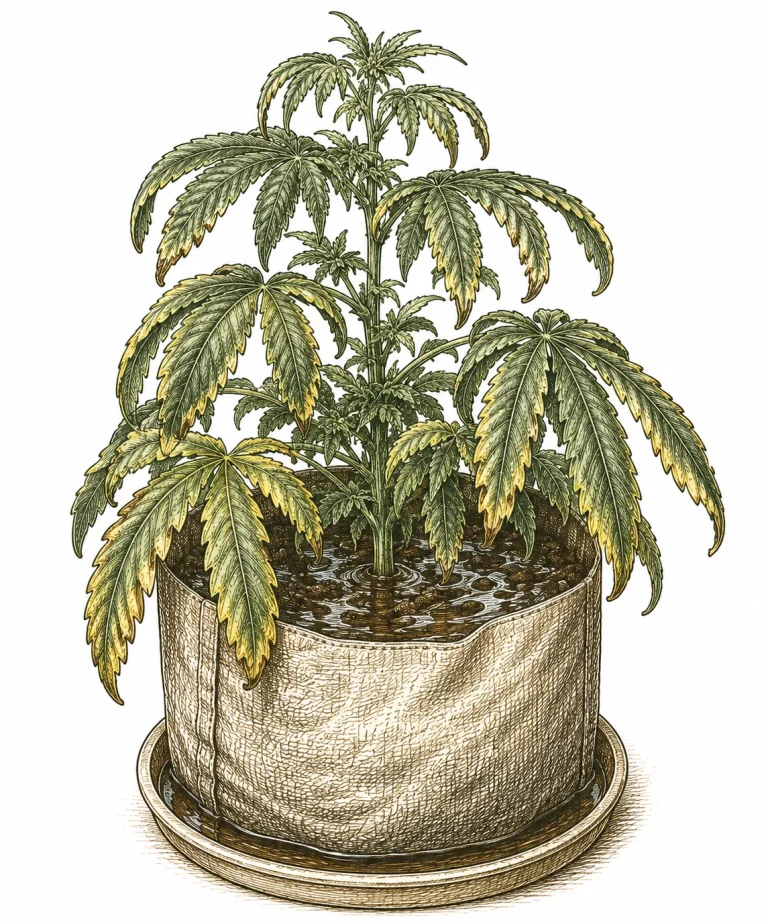
Overwatering is one of the most frequently overlooked causes of claw leaves in cannabis. When the roots sit in growing medium that’s constantly too wet and low in oxygen, they can’t take up water or nutrients efficiently. The result is disrupted turgor pressure in the leaf cells, which shows up, among other things, as leaf tips curling downward.
Unlike with plain underwatering, an overwatered plant often looks heavy and droopy even though the growing medium is moist. The leaves can also turn slightly yellowish and feel firm and swollen, the opposite of the limp, light feel of a dry plant. An important test: lift the pot. If it feels heavy, the plant still has enough water and doesn’t need another watering.
The fix is to adjust your watering schedule: let the growing medium dry out more between waterings until the pot feels noticeably lighter. Then water thoroughly, but not every day. Also make sure your pot has enough drainage holes and use a growing medium with good aeration (e.g., by adding perlite). You’ll find all the details on the right watering schedule in our guide How to water cannabis the right way.
- The plant looks heavy and droopy despite moist growing medium
- Leaves curl downward and can turn yellowish
- Pot weight test: heavy pot = still enough water
- Let the growing medium dry out more between waterings
- Mix perlite into the growing medium for better aeration
pH problems as a trigger for cannabis clawing
Always keep an eye on the EC of your nutrient solution too. Learn more in how to measure and adjust EC for cannabis.
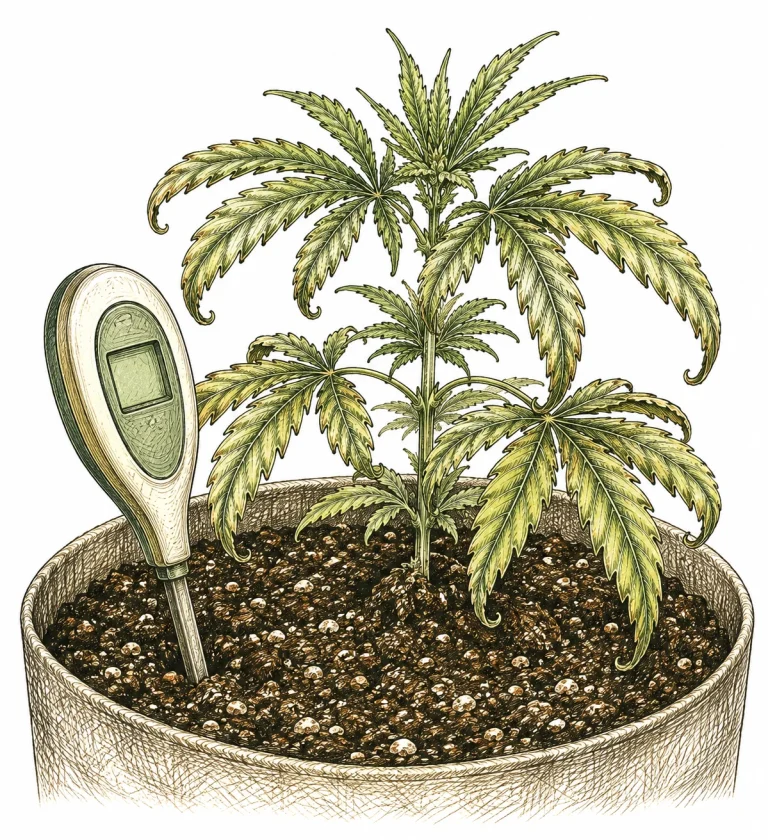
The wrong pH in the growing medium or water can indirectly cause claw leaves by blocking nutrient uptake. If the pH is outside the optimal range, the roots can’t take up nutrients, even when they’re present in sufficient amounts. This condition is called nutrient lockout . As a result, the plant suffers from deficiencies even though it’s actually being fed enough.
For soil, the optimal pH range is 6.0 to 7.0, with the sweet spot at about 6.5. In hydro grows and coco, the pH should be between 5.5 and 6.5. If the pH is way off, you get mixed symptoms from different deficiencies that muddy the picture. Nitrogen uptake is severely limited especially at a pH below 5.5 or above 7.5, which in turn encourages claw leaves.
Regularly measure the pH of your water and growing medium. Inexpensive pH meters or drop tests are good enough and quickly pay for themselves. If the pH is in the wrong range, correct it slowly with pH Up or pH Down solutions, never too aggressively all at once. You’ll find detailed information on pH control for cannabis in our article How to adjust pH for cannabis.
- Optimal pH in soil: 6.0–7.0 (ideally 6.5)
- Optimal pH in hydro/coco: 5.5–6.5
- The wrong pH blocks nutrient uptake despite sufficient feeding
- Mixed symptoms from different deficiencies as a clue
- Correct pH slowly, never too aggressively
Root problems and pot size as a cause of cannabis claw leaves
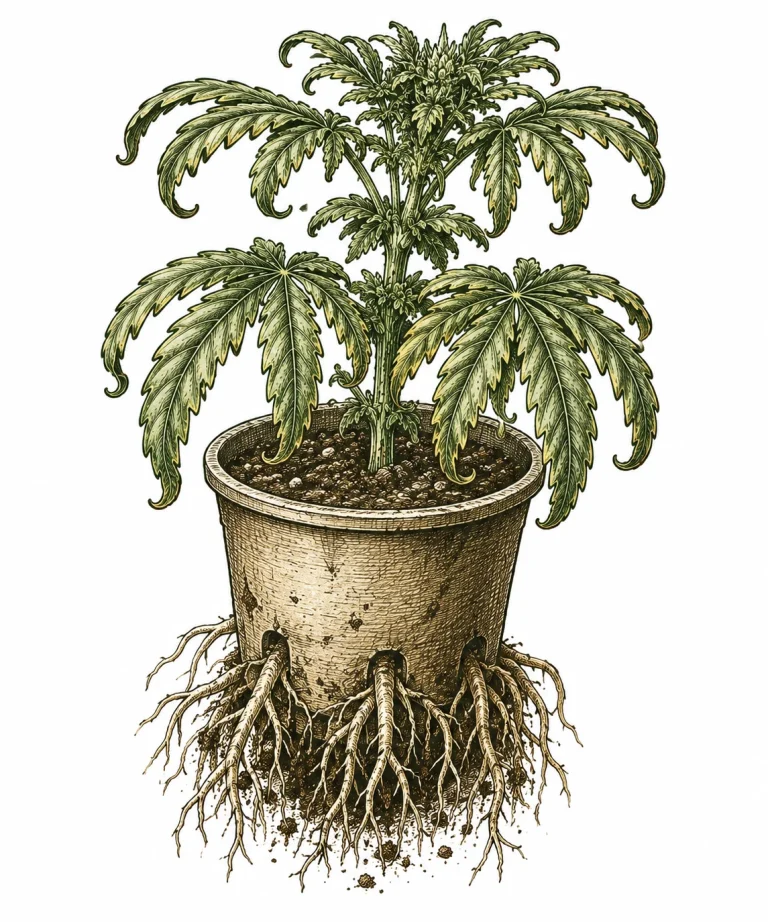
When your plant’s roots no longer have enough room in the pot, it’s called being “root-bound” or “pot-bound.” The roots grow in circles along the pot walls, tangle up and lose their ability to take up water and nutrients efficiently. A sure sign is roots growing out of the drainage holes. The limited nutrient supply leads to stressed plants with claw leaves.
Besides pots that are too small, root diseases like pythium root rot can cause similar symptoms. Infected roots turn brown, slimy and smell rotten. They can no longer transport nutrients, which leads to general stress symptoms, including clawing. Pythium is usually caused by overwatering, poor drainage or root temperatures that are too warm in hydro setups.
For a root-bound plant, the fix is transplanting into a bigger pot, ideally in the vegetative stage before the plant switches to flowering. As a rule of thumb: about 1 to 1.5 gal (4 to 6 L) of pot volume per month of veg time. Root rot calls for immediate treatment: remove infected roots, replace the growing medium, adjust your watering schedule and use trichoderma-based biological fungicides if needed.
- Root-bound: roots have run out of room and grow out of the drainage holes
- Rule of thumb: 1–1.5 gal (4–6 L) of pot volume per month of veg time
- Root rot (pythium): brown, slimy, foul-smelling roots
- Pythium is caused by overwatering and poor drainage
- Fix: transplant (root-bound) or replace the growing medium and use fungicides (pythium)
Wind stress and mechanical stimuli as a cause of clawing
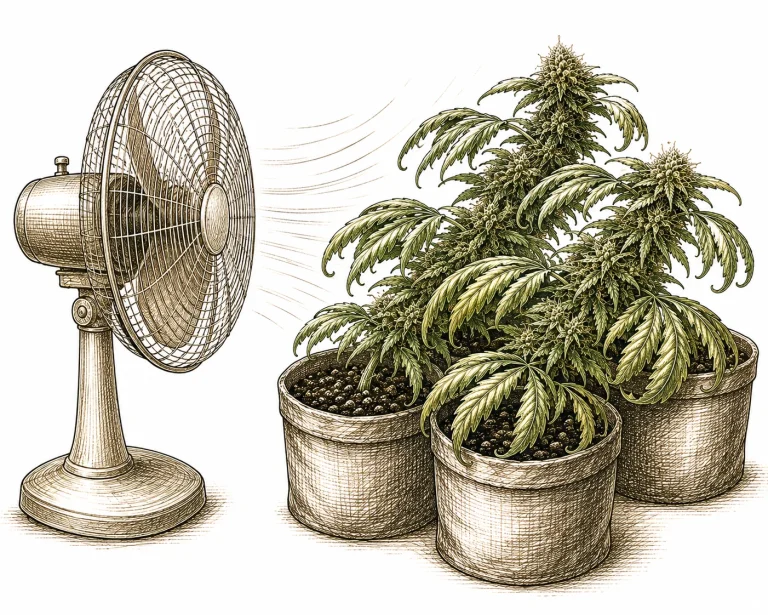
An often overlooked trigger for clawing is excessive wind stress. Many growers know that air movement is important for sturdy stems and good ventilation, but they overdo it with a fan that’s too strong or aimed too directly. When a fan constantly blows at full power directly on the plants, they respond by curling their leaves as a mechanical protective reaction.
You can spot wind stress because the affected leaves are always on the side facing the fan and the plant is growing vigorously overall, meaning it shows no signs of nutrient deficiency. The leaves are dark green and healthy; only the tips claw. Once you move the fan or reduce its intensity, the leaves return to normal within a few days.
The fan should never be aimed directly and constantly at a single plant. It’s better to move the air indirectly, for example by pointing the fan at a wall so the air flows back spread out. Changing airflow that makes the plant sway gently without constantly pounding on it is ideal. Slight movement of the stems is desirable, but leaves that are constantly pushed in one direction are a warning sign.
- Fan too strong or aimed too directly at the plants
- Affected leaves are always on the side closest to the fan
- The plant grows vigorously with no deficiency symptoms: an important difference
- Fix: move the fan, reduce intensity, move the air indirectly
- Leaves return to normal within a few days after the correction
Other causes of cannabis claw leaves: cold, light problems and more
For more background, see the Landwirtschaftskammer NRW (German agricultural chamber, in German).
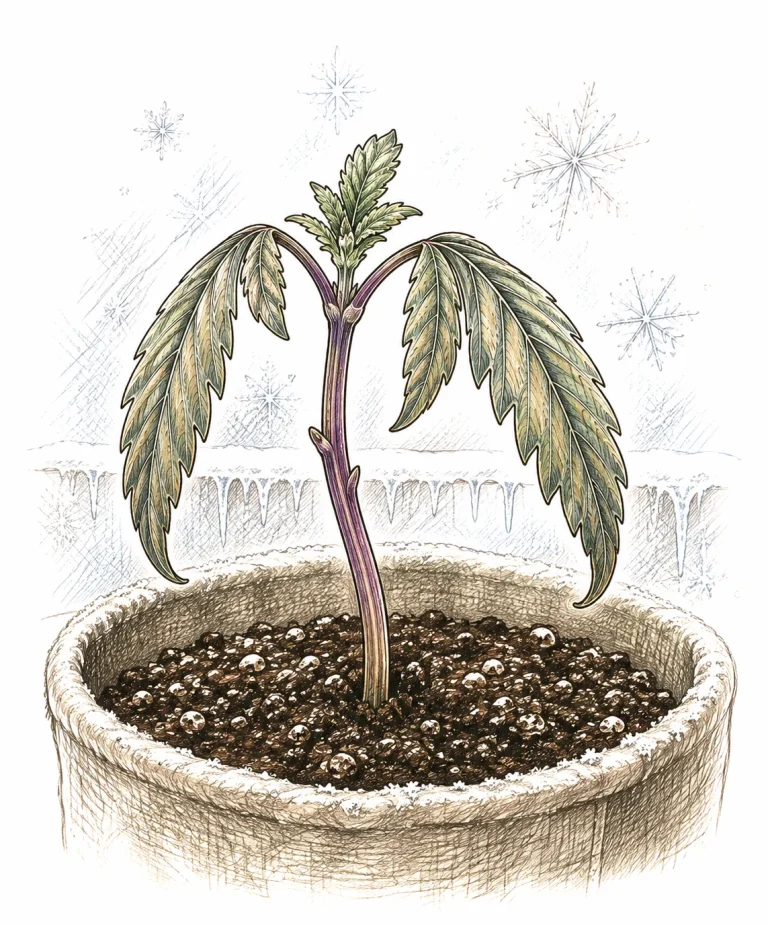
Besides the main causes already mentioned, other factors can trigger clawing. Temperatures that are too low, below 64 °F (18 °C), slow down the plant’s metabolism and impair nutrient uptake. The result can be claw leaves combined with a slight purple or red color on the stems, since cold also limits phosphorus uptake. Indoor grows in poorly insulated rooms or without heating during the dark period are especially vulnerable.
Lighting that’s too intense can also cause light burn and clawing, even without significant heat buildup. Modern LED lights have a very high light intensity (PPFD) that can lead to light stress even without producing heat if the distance is too short. In this case, the upper leaves show clawing without the temperature being in the critical range. The fix here is also to raise the lamp or dim the light output.
Finally, certain pests or pathogens in their early stages can also cause claw leaves by disrupting sap flow in the plant. Spider mites, thrips or mold on the roots can put the plant under stress. Regularly check the undersides of the leaves for pests and the growing medium for signs of mold or rot. You’ll find a complete overview of all possible cannabis problems in the Plant Diagnosis overview on PlantClue.
- Cold below 64 °F (18 °C): slowed metabolism, impaired nutrient uptake
- Cold often combined with purple/red stems due to limited phosphorus uptake
- Overly intense LED lighting without heat: light stress is possible
- Fix for light stress: raise the lamp or dim the output
- Pests and root diseases as rare but possible triggers
Quick diagnosis: what’s causing your cannabis claw leaves?
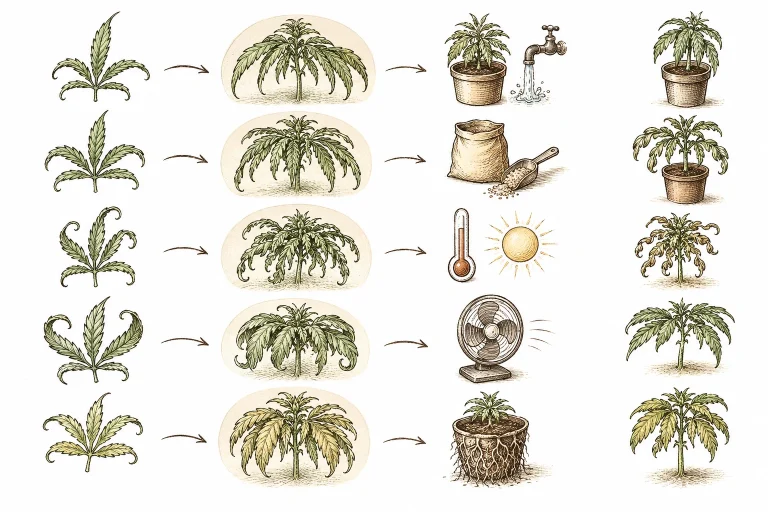
A systematic approach helps you quickly narrow down the right cause of cannabis claw leaves. First, ask yourself these questions: Which leaves are affected: upper, lower or all of them? What color are the leaves: dark green, light green or yellowish? How does the growing medium feel: wet, moist or dry? What are the environmental conditions: temperature, lamp distance, fan position?
Dark green leaves with clawing on the upper shoots almost always point to nitrogen toxicity. Clawing on upper leaves with a normal green color and high temperatures suggests heat stress. Drooping, heavy leaves with moist growing medium indicate overwatering. Clawing on lower leaves combined with discoloration points to pH problems or a nutrient deficiency, such as calcium deficiency in cannabis, which often occurs together with other deficiencies.
Write down your observations and work systematically: always change only one variable at a time so you know for sure what made the difference. Take a photo in natural light (not under the grow light, which distorts the colors) so you can judge the true leaf color. Also log temperatures, pH values and watering amounts in a simple grow journal. That helps enormously with quickly diagnosing future problems.
- Dark green + clawing at the top = nitrogen toxicity (most likely cause)
- Normal green + clawing at the top + heat = heat stress
- Drooping + wet growing medium + clawing = overwatering
- Clawing at the bottom + discoloration = pH problem or nutrient deficiency
- Clawing only on the fan side = wind stress
- Always change only one variable at a time for a clear diagnosis
If you see white instead of yellowish spots, read our article on white spots on leaves.
Frequently asked questions
Why are my cannabis leaves clawing even though I’m not overfeeding?
Claw leaves can show up despite correct feeding if the pH of the growing medium is off. The wrong pH prevents nutrient uptake, which causes stress and clawing. Overwatering, heat stress, too much wind from the fan or a pot that’s too small (root-bound) are also possible causes. Check all the factors systematically.
Do clawed cannabis leaves recover?
Leaves that are already damaged and clawed usually don’t fully recover and stay in that shape permanently. However, new, healthy leaves grow in once the cause is fixed. Remove badly damaged leaves if more than 50 percent of them is damaged so they don’t put unnecessary strain on the plant.
How do I tell clawing from nitrogen toxicity apart from clawing caused by heat stress?
With nitrogen toxicity, the leaves are strikingly dark green, almost blackish green, and the clawing often affects the whole plant. With heat stress, the leaves are normal to light green, and the claws mainly appear on the upper shoots closest to the lamp. Heat stress also usually causes slight wilting of the upper leaves, while plants with nitrogen toxicity look strong and vigorous overall.
How long does it take for cannabis claw leaves to go away after treatment?
New leaves grow in healthy after 5 to 10 days once the cause has been properly fixed. Leaves that are already clawed keep their shape and won’t straighten out again. In fast-growing plants in the vegetative stage, recovery is visibly faster than in flowering, when growth is slower.
Can you still harvest good buds from plants with claw leaves?
Yes, as long as the cause is fixed in time and the plant stays healthy overall, claw leaves won’t permanently affect the quality or amount of buds. Chronic stress throughout the whole flowering period, on the other hand, can reduce yield and resin production. That’s why acting quickly is always a good idea.
Is cannabis clawing a sign of nutrient burn?
Very often, yes, especially when you also see a dark green leaf color. Nitrogen toxicity from overfeeding is the most common single cause of cannabis clawing. But as described, there are many other causes. You’ll find detailed information on the symptoms of nutrient burn and how to fix it in our article on how to spot and fix cannabis nutrient burn fast.
Conclusion
Knowing what causes cannabis claw leaves is the first and most important step toward saving your plant, because without a correct diagnosis, you risk treating the wrong problem and making things worse. The most common cause is nitrogen toxicity, followed by heat stress and overwatering, but pH problems, root problems and wind stress can also trigger clawing. Work systematically, always change only one factor at a time and write down your observations. With a little experience, you’ll quickly recognize the pattern and can see a visible improvement within a few days.
