

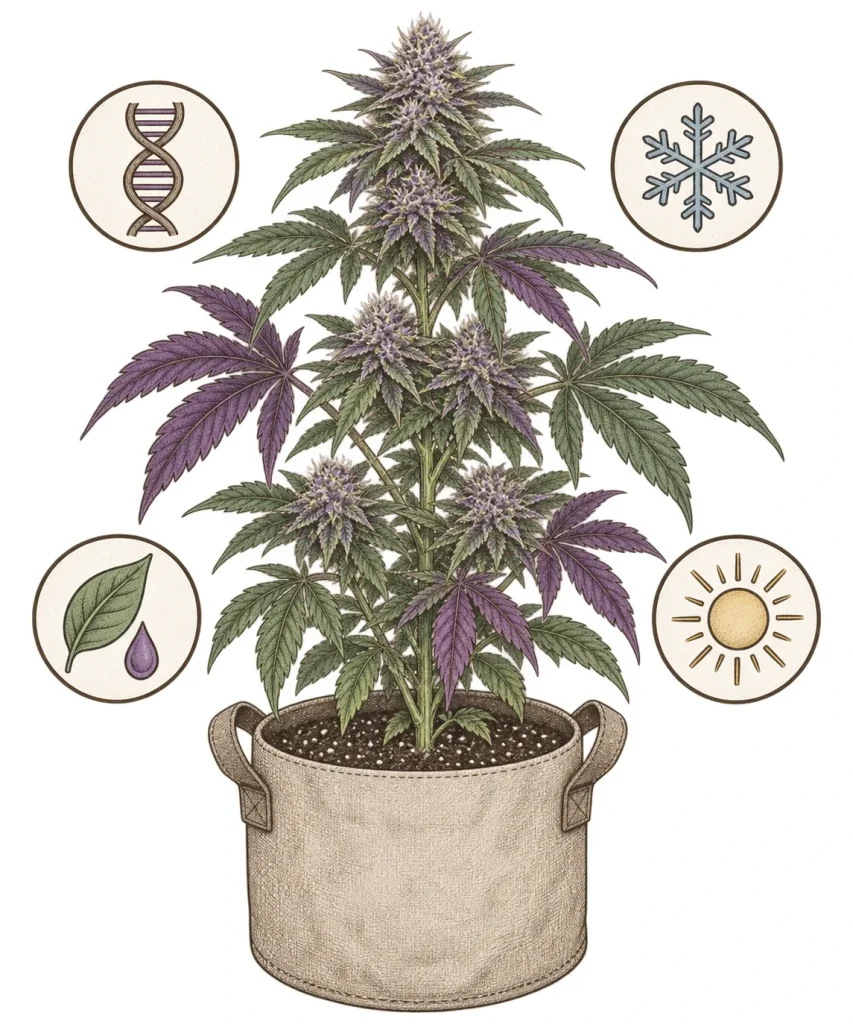
Purple cannabis leaves are one of the most common visual changes that make growers nervous, because purple can point to healthy genetics or to a real problem. To read purple discoloration correctly, you need to tell apart genetic anthocyanin expression, cold stress, phosphorus deficiency and a few other causes. The good news: if you look closely at timing, pattern and other symptoms, you can usually narrow down the cause within a few minutes. This article walks you step by step through spotting the most common causes, judging them and taking the right action.
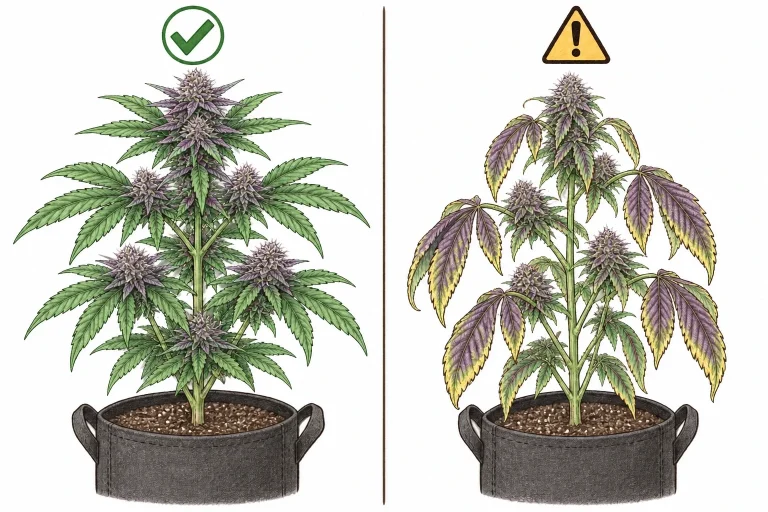
Purple Cannabis Leaves: What’s Behind the Color Change?
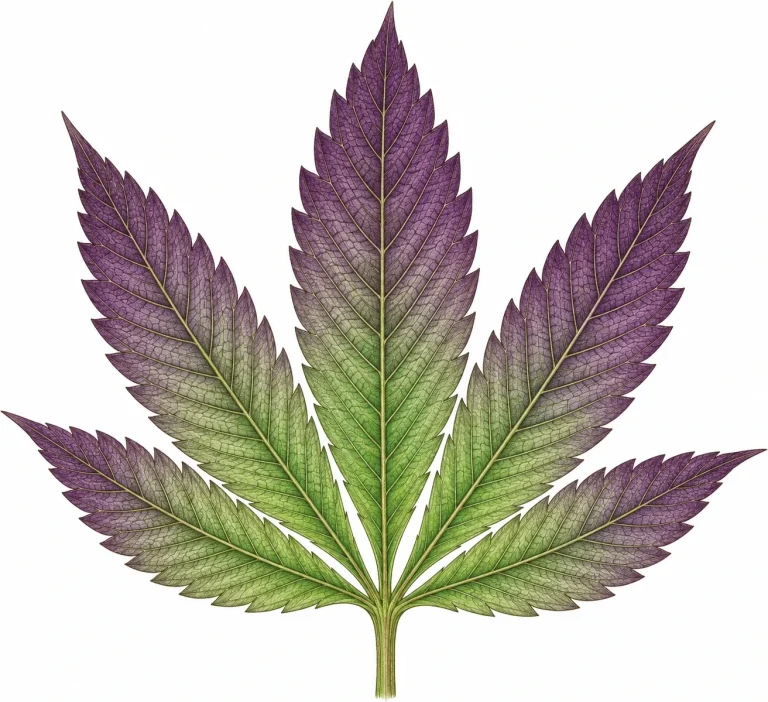
The violet or purple color in cannabis comes from anthocyanins, water-soluble plant pigments that look red, blue or purple depending on the pH of the cell sap. Some strains have these pigments locked into their genetics, but plants can also produce them as a stress response to cold, nutrient deficiencies or other environmental factors. The key to your diagnosis: is the whole plant turning purple evenly, or does the color only show up on certain parts of the leaves, the stems or the calyxes?
Genetic purple usually shows up symmetrically. It either starts early in veg or kicks in during flowering, and the plant otherwise looks perfectly healthy. Stress-related purple, on the other hand, often appears unevenly and comes with other symptoms like stunted growth, yellow leaf edges or slow bud development. Watching your plant closely over several days is often more useful than a snap diagnosis.
- Anthocyanins are natural plant pigments that can look purple, red or blue
- Genetic cause: symmetrical, even coloring, plant otherwise healthy
- Stress cause: uneven coloring, often paired with other symptoms
- When the color shows up is a key clue to the cause
- The pH of the cell sap affects whether anthocyanins look more red, purple or blue
Cause 1: Genetics – Purple Cannabis by Strain Choice
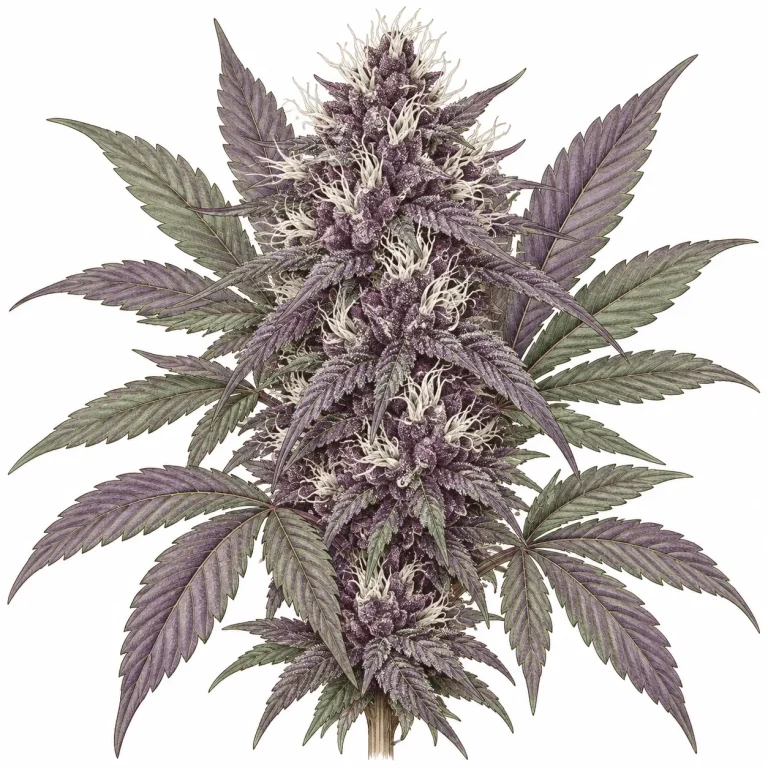
Many modern strains have been bred specifically for anthocyanin production. Well-known examples include Purple Kush, Granddaddy Purple, Black Domina and Blueberry. In these strains, purple isn’t a deficiency. It’s a desired trait, and cooler nighttime temperatures during flowering can make it really pop. You’ll see deep violet calyxes, purple stems and slightly purple leaf veins, while the rest of the leaves stay a rich green.
Here’s the key difference from a problem: in genetically purple strains, growth, trichome development and overall vigor are completely normal. So if you’re growing a strain known for strong color and the purple shows up in flowering without any other symptoms, genetics is very likely your answer. Cool nights between 59 and 64 °F (15 and 18 °C) in late flowering can intensify this genetic expression, and many experienced growers use it on purpose.
- Strains like Purple Kush, Granddaddy Purple or Blueberry are bred to turn purple
- The color change usually kicks in around weeks 5–7 of flowering
- Cool night temps of 59–64 °F (15–18 °C) bring out genetic purple even more
- No action needed as long as growth and trichome production look normal
- Calyxes and stems often turn a deeper purple than the leaf blades
Cause 2: Cold Stress Turning Cannabis Leaves Purple
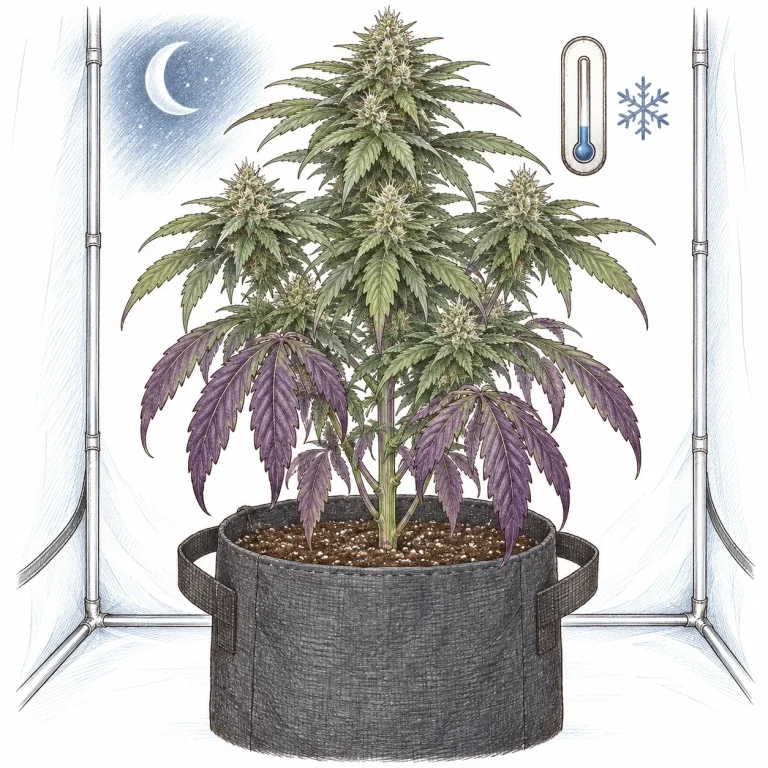
Cold stress is the most common non-genetic reason cannabis leaves turn purple. When temps drop below 59 °F (15 °C) – especially at night or from drafts – your plants start producing anthocyanins as protective pigments. This can happen with any strain, not just ones bred for purple. The tricky part: cold stress often creeps in slowly, and the purple color can look great at first glance while it’s actually hiding real stress.
Along with the color change, cold stress often brings other symptoms: leaves may curl, stems turn reddish-purple, growth slows down noticeably, and the whole plant looks sluggish. Outdoor plants in early fall are especially at risk, and so are indoor grows with poor insulation or cold drafts along the floor. Cold stress in cannabis is easy to confirm with a simple min-max thermometer – always check your nighttime temps too, not just daytime.
- Temps below 59 °F (15 °C) trigger anthocyanin production as a protective response
- Can affect any strain – including non-purple genetics
- Common side effects: curled leaves, red stems, slower growth
- Watch out most for: night temps and the area near the floor in indoor grows
- Quick fix: set up a min-max thermometer, adjust your heat mat or space heater
Cause 3: Phosphorus Deficiency – Purple Cannabis from a Nutrient Problem
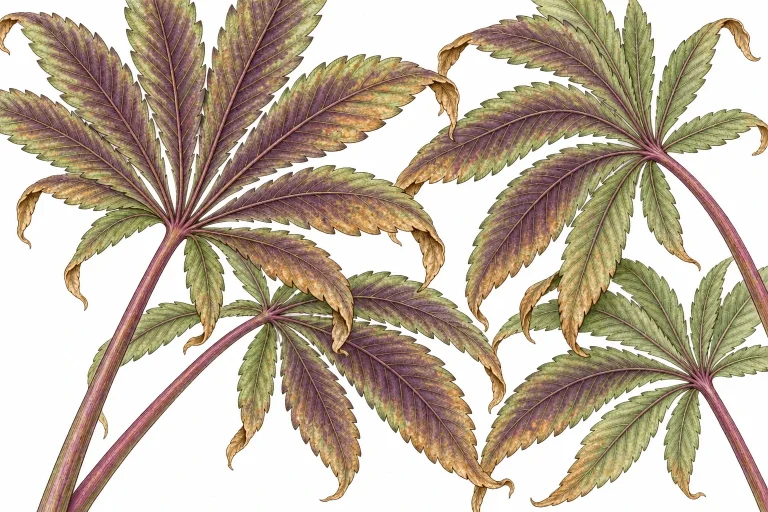
Phosphorus deficiency is the classic nutrient-related cause of purple cannabis leaves, and it often gets mixed up with genetic purple or cold stress. The key difference is the pattern: with a phosphorus deficiency, the discoloration usually starts on the older, lower leaves and slowly works its way up. The undersides of the leaves often turn a telltale purple to reddish-brown, while the tops look dark green to brownish.
Phosphorus is a mobile nutrient – when it runs short, the plant pulls it out of older leaves and moves it to new growth. That’s why older leaves get hit first. The most common trigger is pH that’s too low: below pH 6.0 in soil grows and below pH 5.5 in hydro, phosphorus becomes hard to dissolve and your roots can’t take it up anymore. Check the pH of your water and your growing medium first, before you add more phosphorus nutrients. For dialing in your feeding through every growth stage, take a look at the cannabis NPK chart.
- Phosphorus deficiency starts on the lower, older leaves
- Leaf undersides turn purple to reddish-brown, tops stay dark green
- Most common trigger: pH too low (below 6.0 in soil)
- The plant pulls phosphorus from old leaves – which is why it spreads from the bottom up
- Quick fix: correct your pH first, then add phosphorus-rich nutrients
Cause 4: Nitrogen Deficiency and Other Nutrient Deficiencies
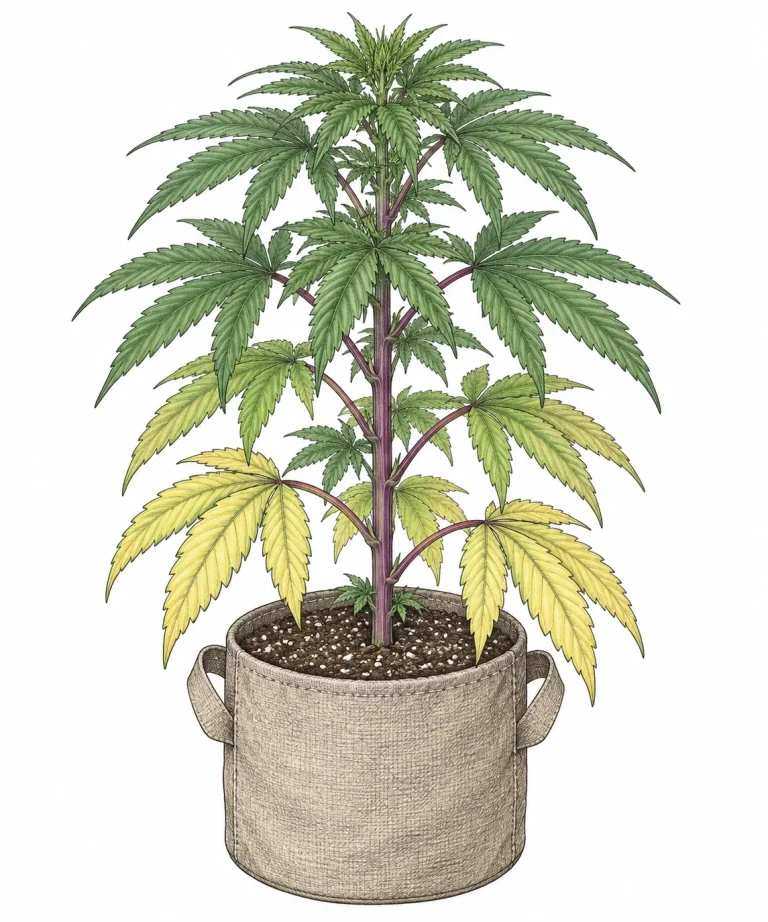
A severe nitrogen deficiency can also cause purple tints when it teams up with other stress factors, mostly on the stems and leaf veins. As chlorophyll breaks down, other pigments show through more clearly, including anthocyanins. This effect is usually milder than with a true phosphorus deficiency or cold stress. It typically shows up together with the classic signs of nitrogen deficiency: yellowing lower leaves that drop off.
Other possible nutrient causes are magnesium deficiency (shows up as interveinal chlorosis, sometimes with purple stems) and a calcium imbalance: too much calcium can bind phosphorus in the growing medium and slow down uptake. Not sure if you are dealing with a nutrient problem? Always check the pH and EC of your growing medium and your water first. Many apparent deficiencies are really pH-related nutrient lockouts. If you are fighting a Cal-Mag deficiency in cannabis, keep in mind that calcium and magnesium directly affect phosphorus uptake.
- Nitrogen deficiency can make anthocyanins more visible as chlorophyll breaks down
- Stems and leaf veins can turn purple with a severe N deficiency
- Magnesium deficiency shows interveinal chlorosis, sometimes with discolored stems
- Always measure pH and EC before you adjust your nutrients
- Several deficiencies at once are more common than a single one
Cause 5: Light Intensity and UV Stress as Triggers
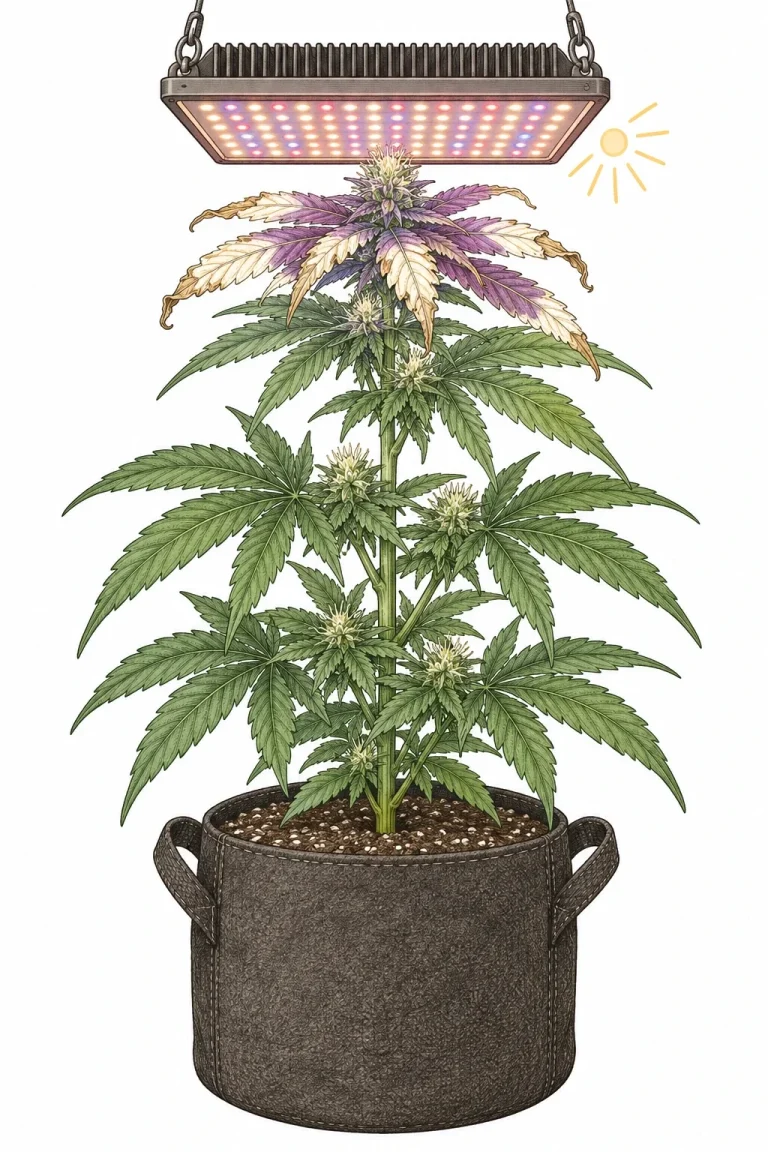
Too much light intensity or too much UV can also trigger anthocyanin production. You will see this most often with LED grow lights that put out a lot of UV-B, or with lights hung very close to the canopy. The plant produces anthocyanins as a UV shield, much like human skin tans after too much sun. The top leaves and calyxes are hit hardest, because they get the most light.
How to tell it apart from real sunburn: light-related purple shows no brown necrosis or bleached spots, just an even violet tint. If you want to rule out cannabis sunburn and light burn, check for pale, washed-out spots or dry, crispy areas at the same time. Those would point to heat damage. Purple from light stress, on the other hand, looks even and has no necrosis.
- LED grow lights with lots of UV can stimulate anthocyanin production in the plant
- Mainly affects the top canopy leaves and calyxes
- No brown necrosis, which sets it apart from heat damage
- Quick fix: raise the light or turn down the UV intensity
- Usually not a serious problem if the plant is otherwise healthy
How to Diagnose Purple Cannabis Leaves the Right Way
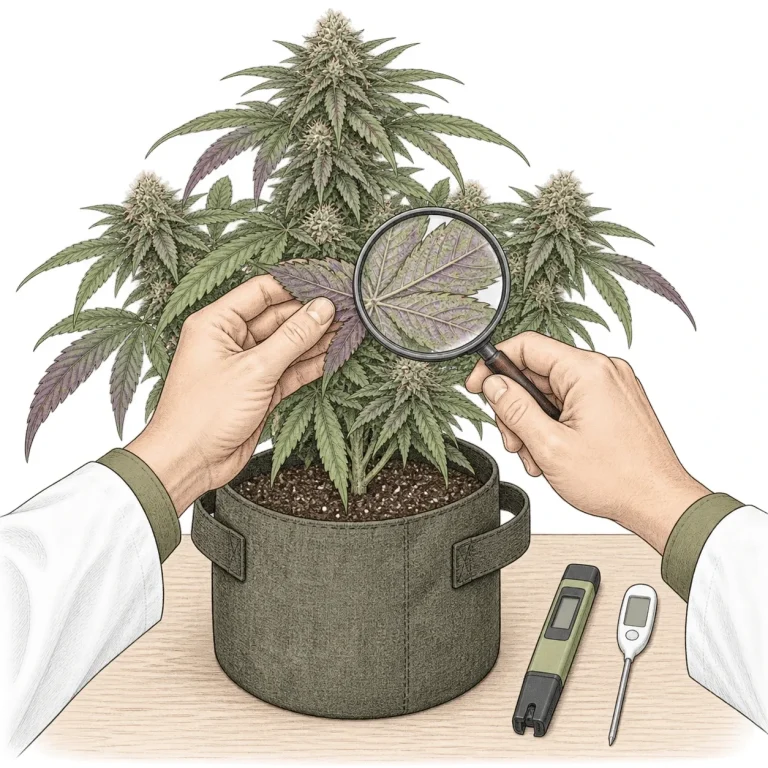
To figure out what’s behind purple cannabis leaves, work through a simple diagnosis routine. Start with four basic questions. First: What strain am I growing, and is it known for purple coloring? Second: What are my temps, especially at night? Third: Where does the discoloration start – top or bottom, old leaves or new growth? Fourth: Are there other symptoms like stunted growth, deformed leaves or necrosis?
Answer these four questions and you can narrow down the cause in most cases, without reaching for nutrients or other fixes right away. Only act once you’ve narrowed it down. Blind fixes without a diagnosis can often make things worse. If you suspect basic nutrient problems, a look at common cannabis diseases and how to spot them can help you see the bigger picture. You can also use the checklist below for quick orientation, or let our interactive Plant Diagnosis Tool walk you step by step to the most likely cause.
- Step 1: Identify the strain – is purple part of its genetics?
- Step 2: Check your min-max thermometer – nighttime temps below 59 °F (15 °C)?
- Step 3: Track the discoloration – bottom-up (phosphorus), top-down (light) or even all over (cold/genetics)?
- Step 4: Look for other symptoms – necrosis, curling leaves, stunted growth?
- Step 5: Measure pH and EC before you change your nutrients
- Step 6: Act only after your diagnosis – don’t just add more nutrients blindly
Fixes for Purple Cannabis Problems
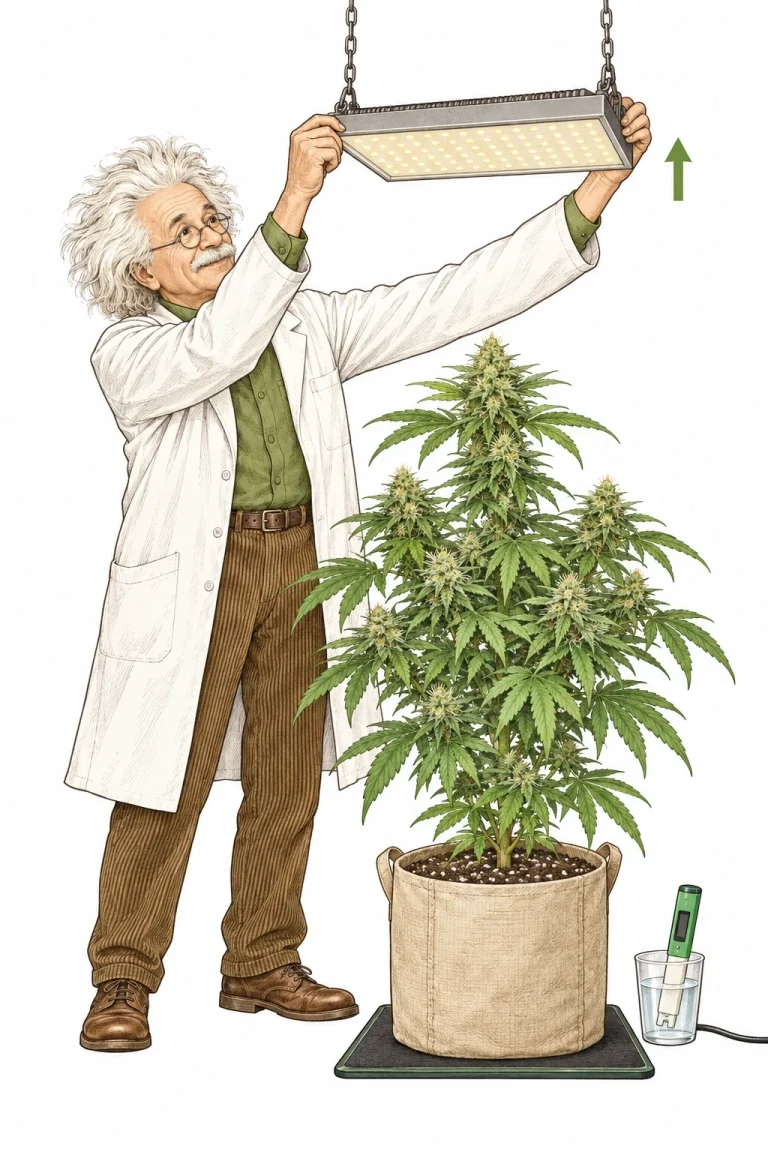
The fix depends directly on the cause. If the purple comes from genetics, there’s nothing to fix. If you like, you can drop your nighttime temps to 59–64 °F (15–18 °C) on purpose to bring out even more color. For cold stress, keep temps stable above 64 °F (18 °C), even at night: a heat mat under your pots, a timer-controlled night fan or a small space heater in your grow room can help. Also check whether cold drafts are getting in through cracks or vents.
With a phosphorus deficiency, your first step is always correcting the pH. Our pH Calculator shows you how much pH Down or pH Up you need. For soil: pH 6.0–7.0, ideally 6.5. For hydro/coco: pH 5.8–6.2. Only once your pH is dialed in can the plant actually take up the phosphorus that’s available. Then carefully add a phosphorus-heavy bloom nutrient or an organic P booster. For light stress, raise your light by 4–6 in (10–15 cm) and watch how the plant responds over 5–7 days. Our article on how to dose cannabis nutrients the right way covers proper feeding for every stage.
- Genetic purple: no action needed, cooler nights can intensify the color
- Cold stress: keep nighttime temps above 64 °F (18 °C), eliminate drafts
- Phosphorus deficiency: correct pH first (6.0–6.5 in soil), then add a P nutrient
- Light stress: raise your light by 4–6 in (10–15 cm), reduce UV intensity
- Combined with nitrogen deficiency: reintroduce a balanced NPK nutrient
- Observation time after any fix: wait at least 5–7 days
Frequently Asked Questions
Are purple cannabis leaves always a sign of a problem?
No. Purple leaves can be completely normal and even desirable if the strain is genetically prone to producing anthocyanins. Strains like Purple Kush or Granddaddy Purple often show intense purple coloring without the plant being stressed in any way. It only becomes a problem when the discoloration comes with other symptoms like stunted growth, deformed leaves or necrosis.
How can I tell whether the purple comes from a phosphorus deficiency or from cold?
The key difference is the pattern. Phosphorus deficiency starts on the lower, older leaves and often shows a reddish-purple to bronze tint, especially on the undersides. Cold stress usually hits the whole plant more evenly, or colors the leaf undersides across the board. It shows up most often when night temperatures drop below 59 °F (15 °C). Check your temps with a min-max thermometer and test the pH of your growing medium. That answers most diagnosis questions.
Can I bring out more purple by cooling my plant on purpose?
Yes, this is a well-known technique for strains with anthocyanin genetics. In the last 2–3 weeks of flowering, you can drop night temperatures to 59–64 °F (15–18 °C) to deepen the purple color. Important: this only works if the strain has the genetics for it. With non-purple strains, you just risk cold stress without getting the color you want.
What should I measure first when I spot purple leaves?
Start with the temperature in your grow space at different times of day, especially at night. Next, check the pH and EC (electrical conductivity) of your water and, if you can, your growing medium. Finally, take a close look at the affected leaves: top or bottom of the plant, upper or lower leaf surface, with or without other symptoms. In most cases, these three steps give you a clear diagnosis.
Can I just feed more nutrients for phosphorus deficiency?
Not right away. That’s a common mistake. If your pH is off, the plant can’t take up phosphorus, no matter how much you feed. First correct the pH to 6.0–6.5 (soil) or 5.8–6.2 (hydro/coco), water the plant thoroughly, and only then add a phosphorus-rich bloom nutrient at half strength. Watch how the plant responds for a week before you adjust the dose.
Purple stems – is that the same as purple leaves?
Purple or red stems are related to purple leaves, but they’re not the same thing. Stems often change color earlier and faster with phosphorus deficiency, cold stress or certain genetics. In some strains, slightly red or purple stems are completely normal. It gets serious when the stems turn deep dark red or almost black while the leaves turn purple and growth stalls.
Do purple leaves affect the THC content or flavor of your harvest?
No. Purple coloring that comes from genetics doesn’t measurably change THC content, terpene profile or flavor. Anthocyanins are pure color pigments and have no effect on cannabinoid production. It’s a different story if the purple comes from a real phosphorus deficiency or severe cold stress. Then the underlying stress can cut into your yield. The cause isn’t the color itself but the disrupted nutrient supply.
The Bottom Line
Purple cannabis leaves aren’t an automatic red flag. They can be a sign of beautiful genetics or a clear stress symptom that calls for quick action. The key is to look closely at the pattern, the timing and any other symptoms. Does the color start at the bottom (phosphorus deficiency), at the top (light stress) or evenly across the plant (cold or genetics)? Measure first, then act. With a thermometer, a pH meter and a systematic look at your plant, you’ll get the diagnosis right almost every time. The steps in this article help you narrow down the cause with confidence and fix it in a targeted way, without stressing your plant even more with guesswork.
