

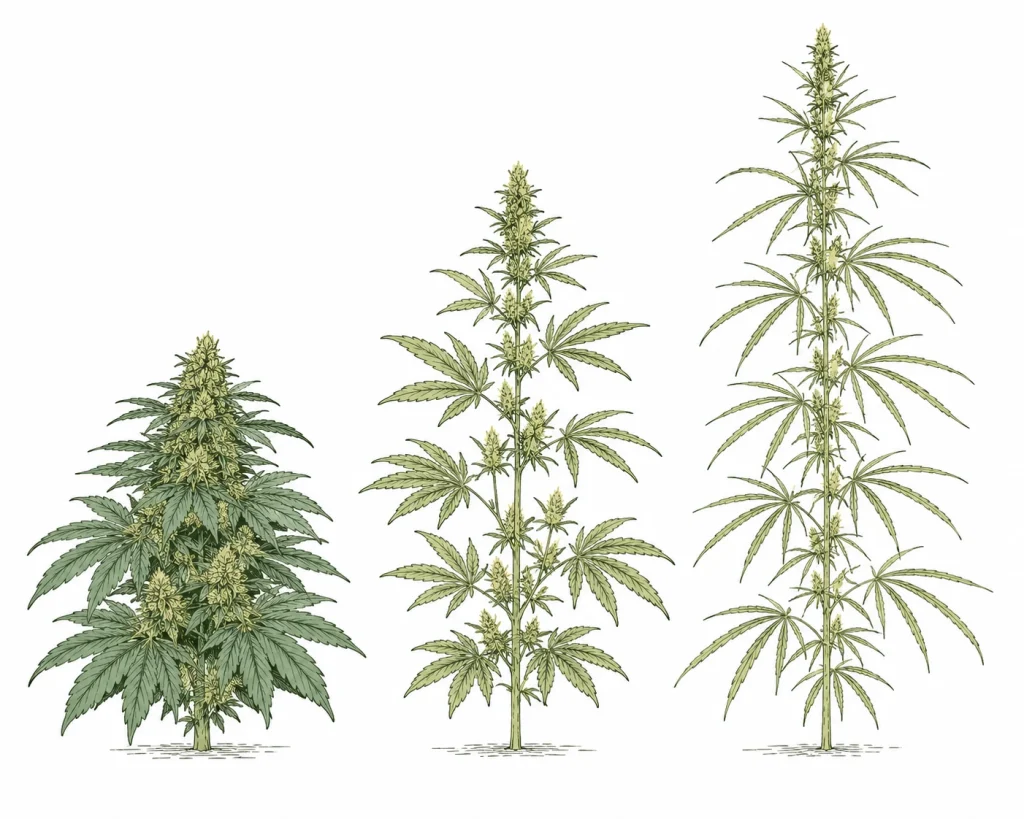
Indica vs. sativa vs. hybrid is one of the most-asked questions among new growers, and also one of the most misunderstood. Whether you’re picking your very first strain or fine-tuning your grow, knowing these three cannabis types helps you make smarter growing decisions. In this article, you’ll learn what’s really behind these terms, which differences actually matter when you grow, and why almost every modern strain has been a hybrid for a long time. If you ever need to figure out what’s wrong with your plant, our Plant Diagnosis overview has all the tools you need.
Indica vs. Sativa vs. Hybrid: The Basics Made Simple
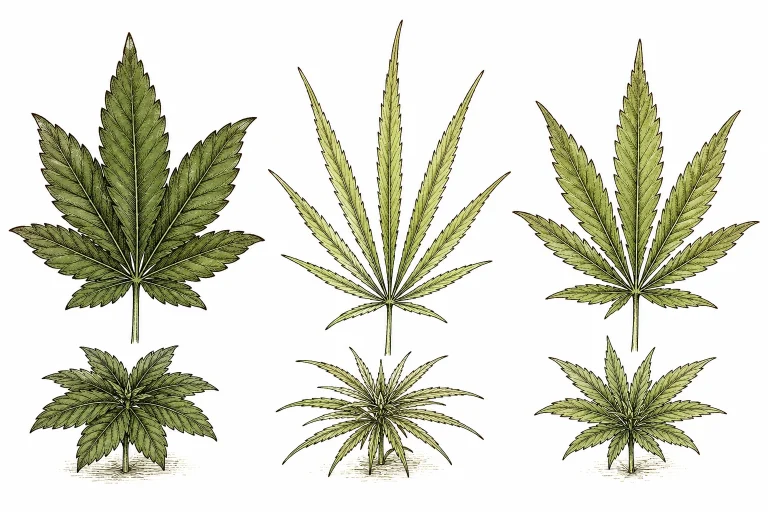
Cannabis has traditionally been split into three categories: indica, sativa and hybrid. This classification goes back to 18th-century botany and has stuck in the grow scene ever since. Botanically, all cannabis plants belong to the genus Cannabis sativa L. So the labels “indica” and “sativa” describe less a hard biological line and more a phenotype: how a plant looks and behaves when you grow it. A recent taxonomic study backs this up: both types belong to the same species, and a strict dividing line doesn’t really hold up to scientific scrutiny.
Cannabis indica refers to plants that originally come from the mountain regions of Central Asia, such as Afghanistan, the Hindu Kush or Pakistan. They’re compact and bushy, with broad, dark green leaves. Their flowering time is short, usually 8 to 9 weeks, and the buds are dense and resinous. Cannabis sativa, on the other hand, comes from tropical and subtropical regions like Southeast Asia, Colombia or Mexico. These plants grow tall and lanky, have long, narrow leaves and a much longer flowering time of 10 to 14 weeks.
Hybrids, meaning crosses of indica and sativa genetics, dominate the market today. Most commercially available seeds, whether from well-known seed banks or small local breeders, are hybrids. Breeders deliberately combine the best traits of both types by pollinating plants on purpose and making their own seeds. One example: the short flowering time of an indica paired with the vigorous growth of a sativa. Or the dense buds of an indica with the fruity aroma of a sativa.
- Indica: compact, short flowering time, broad leaves, high resin content
- Sativa: tall, long flowering time, narrow leaves, airy buds
- Hybrid: a mix of both, usually indica- or sativa-dominant
- Autoflowering strains often contain ruderalis genetics, a third subspecies
- No modern strain is “pure” indica or sativa anymore
Growing Differences: Indica, Sativa and Hybrid in the Grow Room
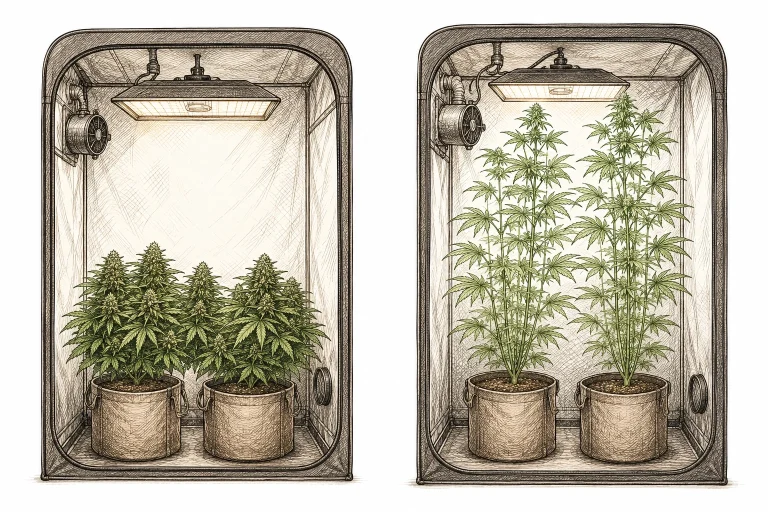
For growing at home, indoors or outdoors, the indica vs. sativa vs. hybrid question matters most when you plan your space and your timing. Indica-dominant strains are the classic pick for smaller grow rooms or tents. They stay compact, branch out a lot and give you mature buds in a short time. If you’re growing in a 32 x 32 in (80 x 80 cm) tent, an indica hybrid will almost always serve you better than a sativa.
Sativa-dominant strains take more patience and, above all, more space. They can triple or even quadruple in height during flowering, which growers call the “stretch.” If you don’t plan for it, you can suddenly end up with plants growing right into the light, which can lead to light burn. Training techniques like LST (low stress training), topping or SCROG (screen of green) help you keep growth in check. A well-planned indoor grow always starts with picking the right strain, so take a look at our indoor cannabis grow guide.
Hybrid strains often give you the best of both worlds: manageable growth, a reasonable flowering time and solid yields. Depending on whether a hybrid is indica- or sativa-dominant, it will lean more toward one side or the other. A 70/30 indica hybrid is a lot more laid-back in the grow than a 60/40 sativa hybrid, which can still stretch quite a bit. When you buy seeds, always check the seed bank’s info on flowering time, plant height and dominance.
Another growing difference is how much they like to eat. Indica plants are usually lighter feeders and can be more sensitive to too many nutrients. Sativa strains, on the other hand, can often handle more nitrogen during the vegetative stage. For both, pH plays a key role in whether your plants can take up nutrients at all. If your leaves show deficiencies even though you’re feeding correctly, pH is often the culprit. Learn more on our page about pH for cannabis.
- Indica: ideal for small grow spaces, short flowering, little stretch
- Sativa: needs height, time and training techniques
- Hybrid: a compromise – traits vary depending on dominance
- Always check the stated plant height and flowering time
- Indica tends to be more sensitive to nutrient burn
- Sativa tolerates more nitrogen in veg
Indica, Sativa, Hybrid and the Effects: What’s Really Behind It?
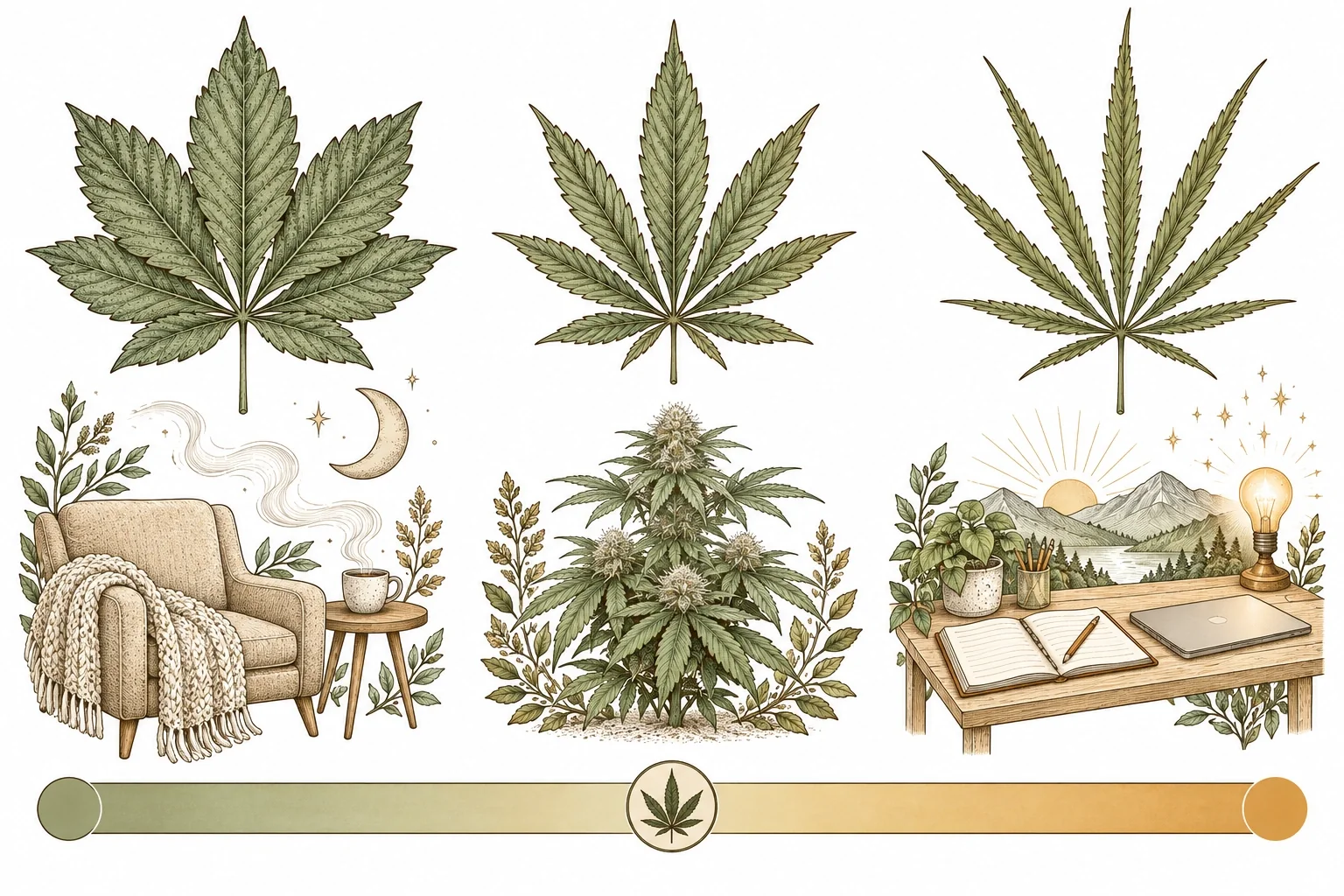
Lots of people pick their strain based on the effects they expect: indica for deep relaxation, sativa for creativity and energy, hybrid somewhere in between. These rules of thumb are popular, but the science isn’t quite that clear-cut. How cannabis actually affects you depends less on the phenotype (indica or sativa) and more on the cannabinoid profile – and above all on the terpenes of each strain.
Terpenes are the aromatic compounds in cannabis. They don’t just shape taste and smell – they also modulate how THC works, which is known as the entourage effect. Myrcene, for example, is common in indica strains and is considered relaxing and sedating. Limonene and terpinolene, more typical of sativa profiles, tend to be uplifting and mood-boosting. That means two hybrids with similar THC levels can feel completely different if their terpene profile is different.
For growers, this matters most during curing and storage: terpenes are volatile and can be lost through poor drying or temperatures that run too high. If you want to keep the full flavor and full effect profile of your harvest, choosing the right strain is only half the job – you also need to take care with drying, curing and storage.
Bottom line: indica, sativa and hybrid are useful reference points for effects, but they’re not reliable promises. What really counts is the strain’s full chemical profile – and with hybrids, that’s especially diverse. If you’re looking for strains with specific terpene profiles, check detailed lab analyses or the breeder’s specs.
- Indica: often relaxing for the body, couch-lock possible
- Sativa: often mentally stimulating, creative, euphoric
- Hybrid: depends on dominance and terpene profile
- Terpenes shape the effects more than the indica/sativa label
- THC and CBD content matter too
- Lab tests tell you more than marketing copy
Common Mistakes When Growing Indica, Sativa and Hybrid Strains
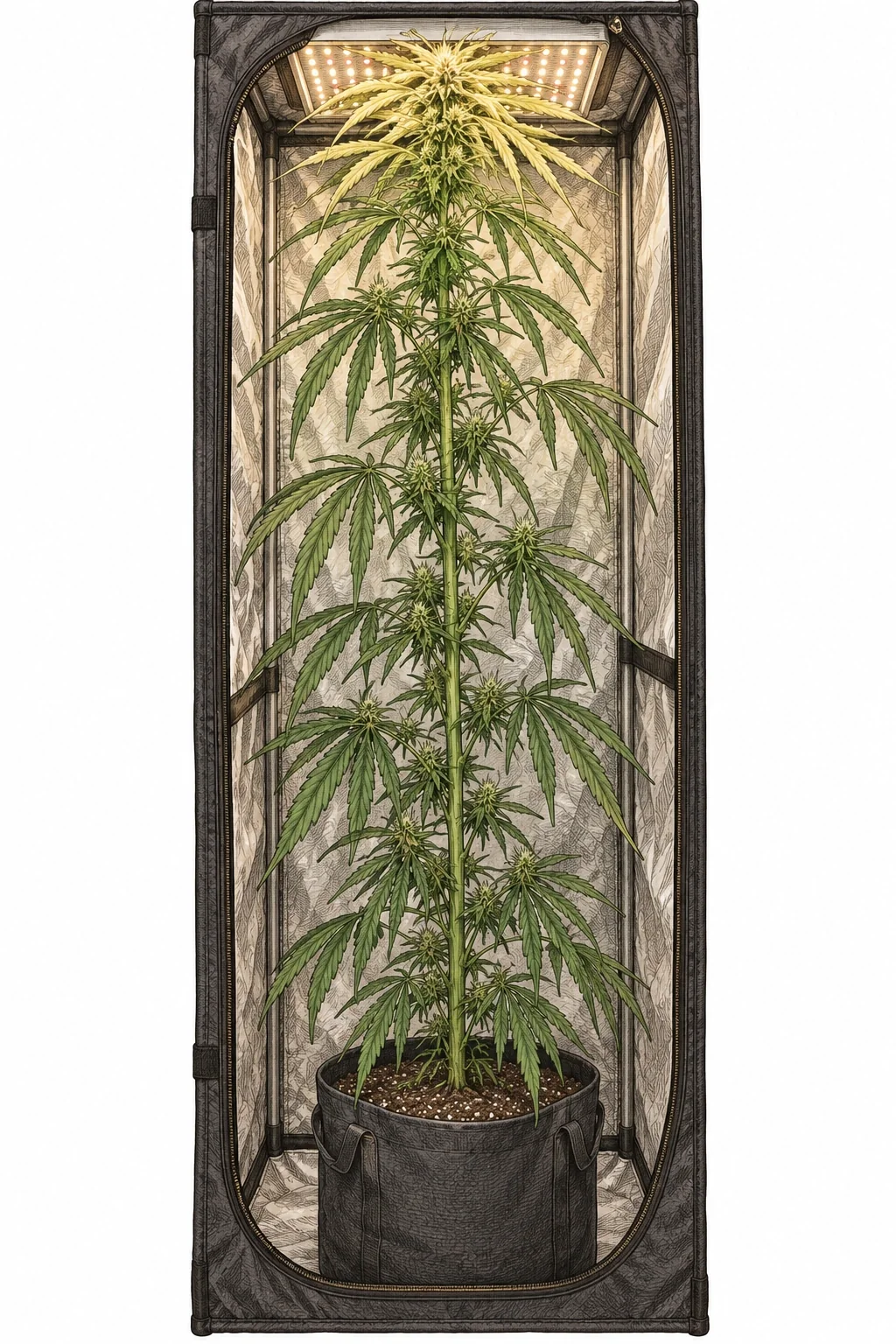
One of the most common beginner mistakes is picking the wrong strain for the space you have. A sativa-dominant strain in a 2.5 x 2.5 ft (80 x 80 cm) tent with 63 in (1.6 m) of height is a recipe for trouble: light burn, poor airflow in the canopy and stressed plants are the result. Always check the expected plant height before you buy, and choose strains that fit your setup.
Another mistake is assuming indica strains are automatically “easier.” Sure, they’re hardier and handle cooler temps better, but they often react more sensitively to overfeeding. Nitrogen toxicity in the flowering stage often shows up faster in indica hybrids than in sativa strains. Are your plants developing dark green, clawed leaves, or are the leaf tips curling? That can be a sign of too many nutrients. Learn more in our article on cannabis nutrient burn.
Timing the flowering stage trips up a lot of beginners, too. Sativa-dominant strains need more time to ripen, and many growers harvest too early because they go by the seed bank’s numbers, which are often optimistic. Always check the trichomes with a loupe or microscope – clear trichomes mean too early, milky white means prime time, and amber points to overripe buds.
Finally, many growers underestimate the difference in watering needs. Sativa plants, with their looser medium-to-root ratio, dry out more slowly, while compact indica plants in dense growing media are more prone to root problems if you water too often. Watering right is an art – and a key factor for healthy growth.
- Don’t put sativa strains in grow spaces that are too small
- Don’t overfeed indica – it’s more sensitive than many think
- Check trichomes instead of trusting breeder specs for harvest time
- Sativa plants have different watering rhythms than indica
- Read breeder strain info critically and question it
- Hybrids behave very differently depending on dominance
Autoflowers: The Third Path Beyond Indica and Sativa
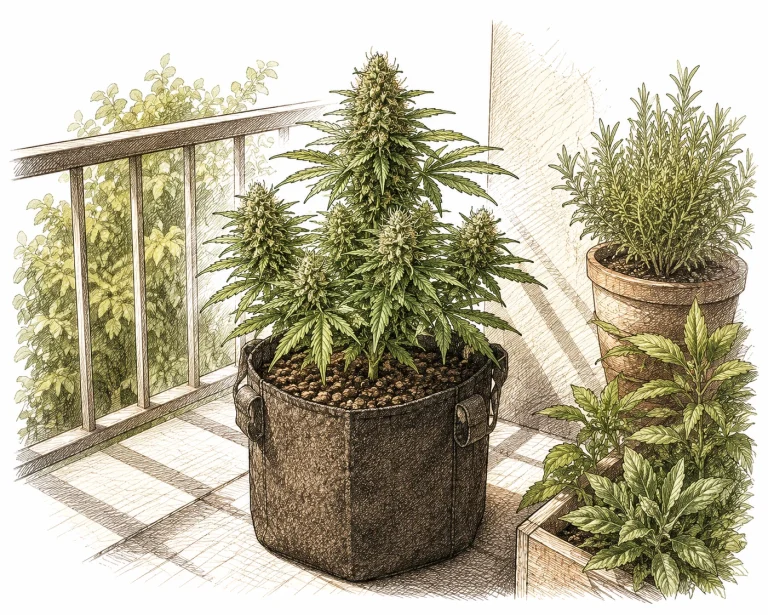
Once you dig into the differences between indica, sativa and hybrids, you’ll run into a third category sooner or later: autoflowering strains. These plants are based on Cannabis ruderalis, a subspecies originally native to Siberia and Central Asia. Ruderalis plants don’t flower based on the light cycle. They flower automatically after a certain number of weeks. That’s where the name “autoflowering” comes from.
Breeders have improved autoflowering strains over decades by crossing them with indica and sativa genetics. Modern autos deliver very good yields and solid potency, even if they can’t yet match classic photoperiod strains in every respect. Their advantages are obvious: a fast life cycle of 60 to 75 days from seed to harvest, simple light management and compact growth.
Autoflowering strains are especially appealing for beginners and outdoor growers. They’re usually more forgiving, stay small and discreet, and let you pull several harvests per season outdoors. If you’re short on space or want to keep your first grow as simple as possible, autos are well worth a serious look. We explain exactly how autoflower genetics differ from feminized strains in Autoflower or Feminized?. Keep one thing in mind, though: autoflowering plants are less forgiving of watering mistakes than photoperiod strains, because they don’t have time to recover.
- Autoflowers are based on Cannabis ruderalis
- Flowering doesn’t depend on the light cycle – it starts automatically with age
- Total cycle: 60–75 days from seed to harvest
- Ideal for balconies, small grow spaces and outdoor growing
- Modern autos deliver good quality and yields
- Less forgiving of watering mistakes than photoperiod plants
Once you’ve picked a strain, the next step shows you how to germinate cannabis seeds.
Frequently Asked Questions
What’s the most important difference between indica and sativa when growing?
The biggest practical difference is growth habit and flowering time. Indica strains stay compact and flower in 8–9 weeks. Sativa strains grow tall, stretch a lot and need 10–14 weeks until harvest. In small grow spaces, indica-dominant strains are much easier to handle.
Are there still true pure indica or sativa strains?
Hardly any. Almost every strain you can buy is a hybrid, the result of decades of breeding. When seed banks label a strain “indica” or “sativa,” they’re describing the dominant direction of the phenotype, not a biologically pure line.
Why doesn’t a hybrid always deliver the effect it promises?
Because the effect of cannabis doesn’t depend on the indica/sativa ratio alone. Terpenes, cannabinoids (THC, CBD, CBG, etc.) and the individual consumer all play a key role. The indica/sativa label is a rough guide, not a reliable promise of how a strain will feel.
Which strain is best for beginners?
Indica-dominant hybrids or autoflowering strains are the best choice for beginners. They stay compact, flower fast and usually handle minor care mistakes better. Classics like Northern Lights, White Widow or Easy Bud are popular beginner picks. You’ll find a detailed overview of hardy beginner strains in Best Cannabis Strains for Beginners.
Does the strain type affect how much I need to feed?
Yes. Indica strains are usually more sensitive to too many nutrients and show signs of nutrient burn faster. Sativa strains tolerate a bit more nitrogen in the vegetative stage. The general rule: start low and go slow, no matter which strain type you grow.
Can I grow indica and sativa in the same grow tent?
It can be done, but it’s tricky. Different flowering times and plant heights make planning your lighting complicated. If you want to grow several strains at once, pick strains with similar flowering times and heights, or stick to hybrids of one type.
What does “indica-dominant” or “sativa-dominant” mean?
“Indica-dominant” or “sativa-dominant” tells you which parent makes up most of a hybrid strain’s genetics, usually given as a rough ratio like 70/30 or 80/20. An indica-dominant strain tends to grow compact and flower faster. A sativa-dominant strain stretches more and needs more time until harvest. These percentages usually come from the seed bank and are based on breeding history, not lab analysis. So treat them as a rough guide, not an exact measurement.
Bottom Line
The difference between indica, sativa and hybrids is simple at its core, but surprisingly nuanced in the details. Indica means compact growth and short flowering times. Sativa means height, stretch and long flowering stages. Hybrids combine both traits in different ratios. Once you know the basics, you can pick strains smarter and tailor your grow to the space and conditions you have. Keep in mind: the label alone isn’t enough. Look at flowering time, plant height and terpene profile, and you’ll rarely be disappointed. If your plants still run into problems even with the right strain, the PlantClue Plant Diagnosis overview can help you track down the cause fast. Still not sure which type suits you? Our Strain Finder (German) helps you narrow it down with a few quick questions about effect, experience and grow location.
