

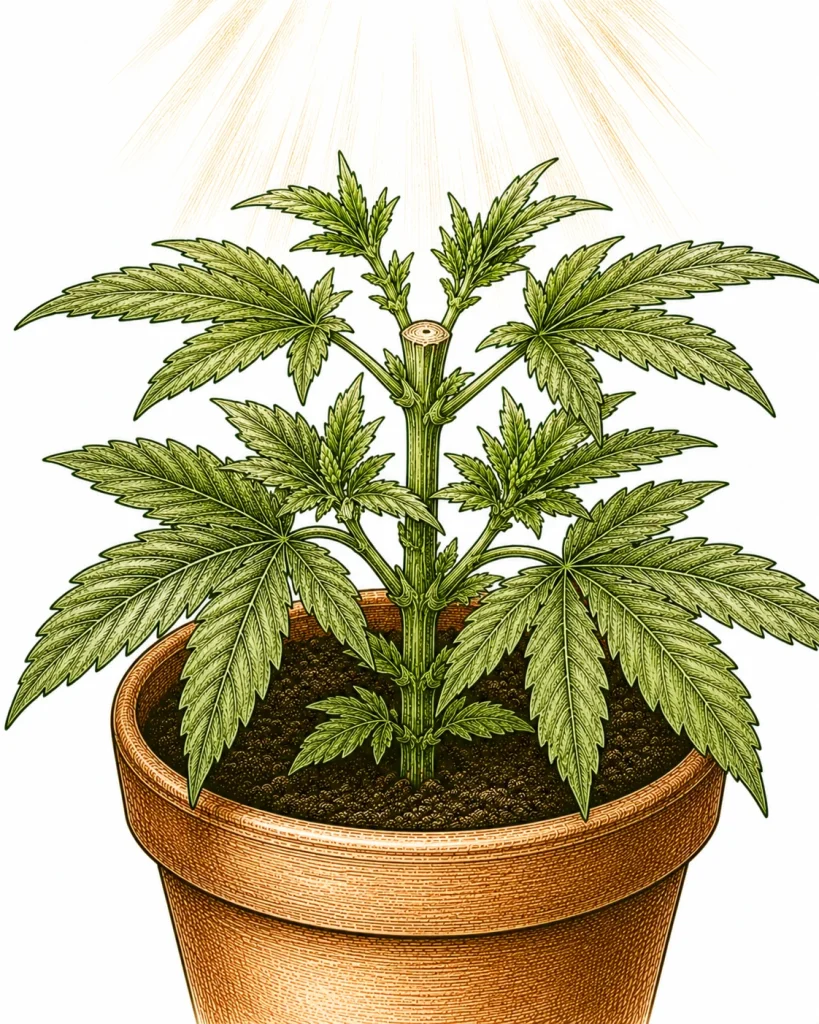
The FIM method is one of the most fascinating high stress training techniques in cannabis growing. With a single cut, you can get up to four new main colas from one plant at the same time. FIM originally stands for “F*** I Missed” – a lucky mistake that became a standard part of serious cannabis growing. Unlike classic topping, FIMing doesn’t remove the whole growth tip. You only snip off about 70 to 80 percent of the new top. The result is explosive branching with several colas forming at once, which can noticeably boost your yield.
What Is the FIM Method in Cannabis Growing?
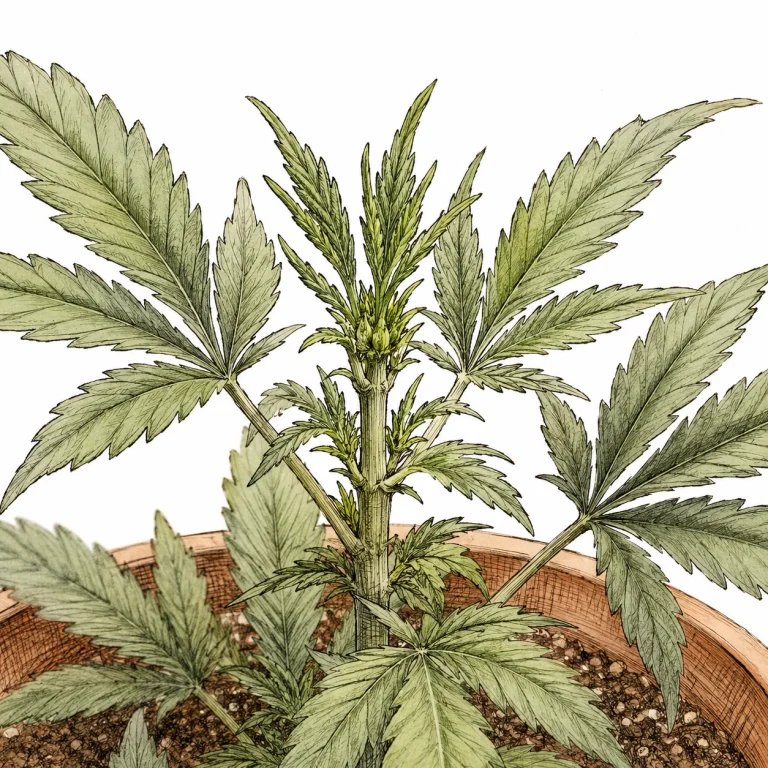
The FIM method is an HST (high stress training) technique in which you deliberately cut away most of the growth tip – about 70 to 80 percent of the new shoot – with sharp scissors or a scalpel. The part of the tip that’s left responds with heavy branching and usually puts out two to four new main shoots. In especially good cases, you can even get up to six new shoots, which is what makes this technique so attractive for yield-focused grows.
The key difference from classic topping is the tissue left behind. When you top, you remove the tip completely, and you get exactly two new main shoots – a predictable but limited result. When you FIM, a small stub of the growth tip stays on the plant. That stub redirects growth and creates the typical multi-branch effect. For a full rundown of every training technique out there, check out the overview of all cannabis growing techniques.
- FIM stands for “F*** I Missed” – it started with an accidental, incomplete cut
- You cut off 70–80 % of the new growth tip, not the entire tip
- Typical result: 2–4 new main shoots, up to 6 in ideal cases
- Classified as high stress training (HST) – more stressful than LST (low stress training)
- Works on photoperiod strains and, with limits, on autoflowers
FIM Method for Cannabis: The Best Timing
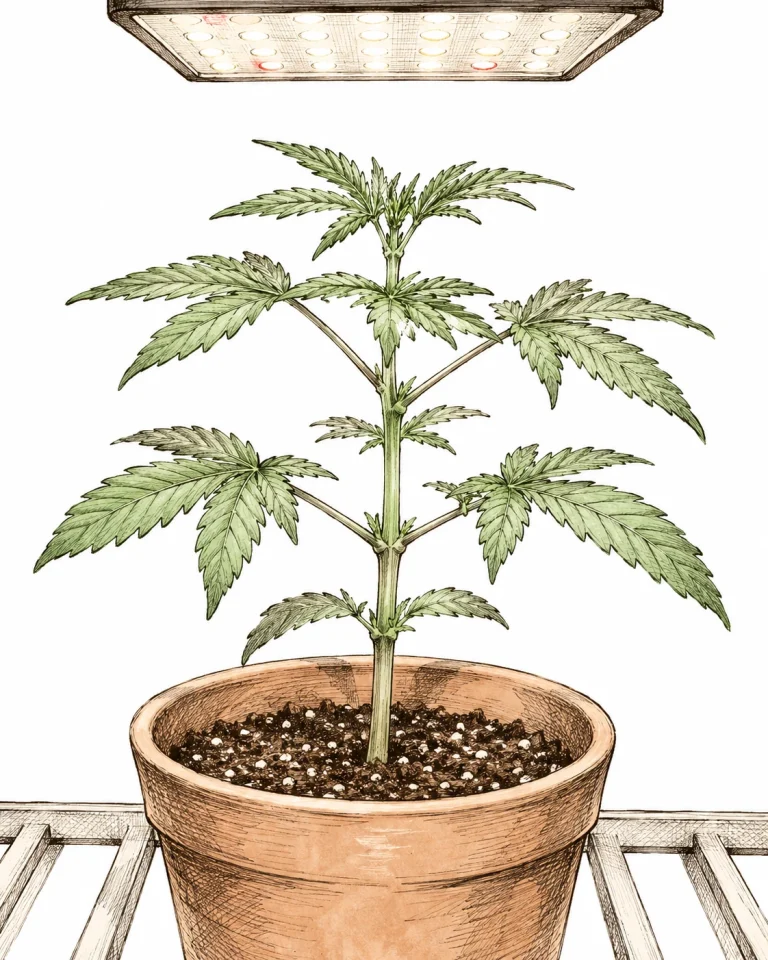
Timing can make or break the FIM method. Ideally, you FIM during the vegetative stage, once the plant has 3 to 5 pairs of nodes. Your plant should be healthy and vigorous before you make the cut. A common mistake is cutting too early – seedlings with fewer than three node pairs are still too young and too vulnerable to handle the stress.
The sweet spot is when you can clearly see the new growth tip – the small, funnel-shaped, rolled-up leaves pushing out of the meristem. This new tip should still be young and soft, but big enough for a precise cut. In practice, that usually means a plant that’s 3 to 4 weeks old and in active veg. Autoflowering strains are generally less suited to HST techniques like FIM because they have less time to recover from the stress.
- Best point in veg: 3–5 node pairs developed
- Plant age: no earlier than 3–4 weeks after germination
- The plant must be healthy and free of nutrient deficiencies
- The growth tip should be young and soft, but easy to see
- Autoflowering strains: only with great care and as early as possible
- Never FIM during the flowering stage – veg only
Step-by-Step Guide: How to FIM the Right Way
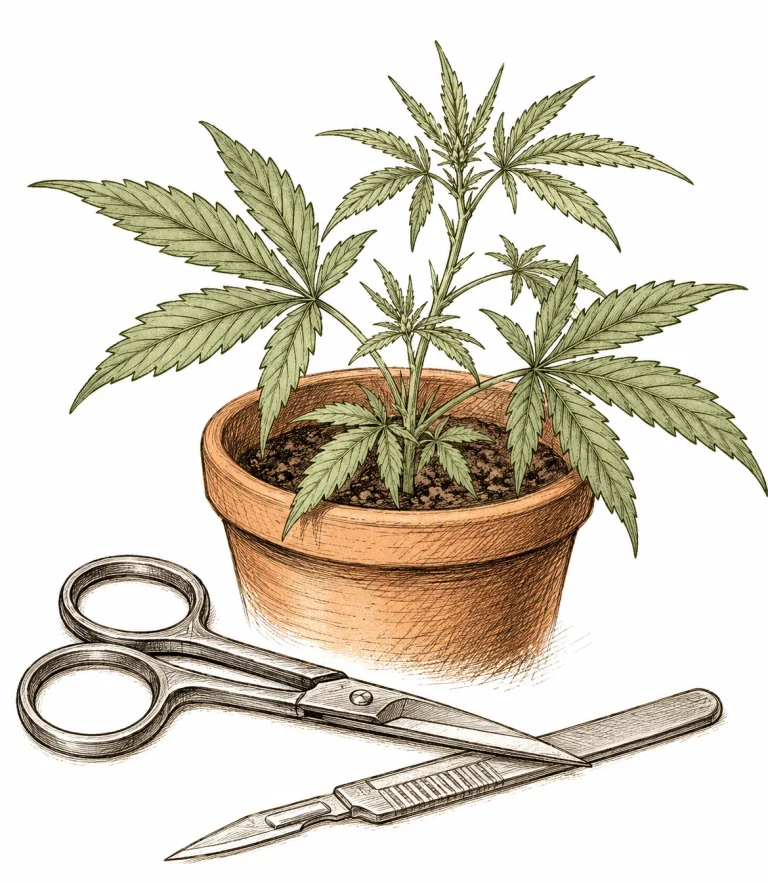
Good prep is what makes FIMing work. First, make sure your cutting tool (scissors, scalpel or razor blade) is razor sharp and disinfected. Isopropyl alcohol or a similar disinfectant does the job. Dull or dirty tools leave bigger wounds than necessary, raise the risk of infection and slow down healing. Water and feed the plant well before the cut, because a stressed or thirsty plant recovers much more slowly.
You make the actual FIM cut at the newest, youngest growth tip of the plant. Find the meristem, the small new tip made of several tightly curled baby leaves, and cut away about 70 to 80 percent of it from the top. Cut horizontally, and make it quick and clean. Be careful not to damage the stem below. Only trim the upper part of the new growth tip.
After the cut, keep a close eye on your plant for the next 3 to 7 days. At first, the remaining tip may discolor slightly or curl up. That’s normal and doesn’t mean you made a mistake. After about 5 to 10 days, you should see the new shoots growing out. If you like, you can do a second round of FIMing on one of the new main shoots once they’re strong enough. Just keep in mind that FIMing more than once can stretch the recovery time quite a bit and puts more stress on the plant.
- Step 1: Sharpen your tool and disinfect it with isopropyl alcohol
- Step 2: Water the plant well the day before and check that it’s healthy
- Step 3: Find the youngest growth tip (the meristem)
- Step 4: Remove 70–80 % of the new tip with one clean, horizontal cut
- Step 5: Don’t damage the stem or the surrounding tissue
- Step 6: Watch the plant for 5–10 days and wait for the new shoots
- Step 7: Optional: repeat FIMing on the new main shoots
Cannabis FIM Method vs. Topping: The Key Differences
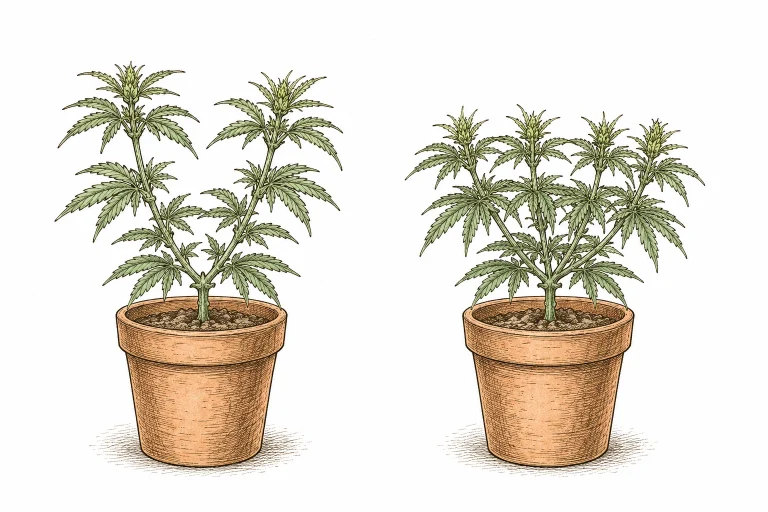
Should you go with the FIM method or classic cannabis topping? That depends a lot on your grow goals. Topping removes the entire growth tip, which gives you a controlled, symmetrical result with exactly two new main shoots. It’s more precise, easier to repeat and works especially well for training techniques like mainlining, where you’re aiming for a perfectly symmetrical plant.
FIMing, on the other hand, can give you more new shoots, but the result is harder to control. How many new shoots you get depends on the strain, the plant’s health and how precise your cut is. Recovery time is another big difference: plants often bounce back faster after FIMing, because part of the meristem stays intact and the hormonal shift is less abrupt. Still, both methods are HST (high stress training) techniques, and both need a healthy, well-fed plant.
In practice, many experienced growers combine both techniques. They top the main plant first for a clean basic structure, then FIM individual branches to push the number of bud sites even higher. If you only want to pick one method, here’s the rule of thumb: topping for control and symmetry, FIMing for the most shoots in the shortest time.
- Topping: removes the whole tip → exactly 2 new shoots, very controllable
- FIMing: removes 70–80 % of the tip → 2–4 (up to 6) new shoots, less predictable
- FIMing tends to have a shorter recovery time than topping
- Topping is the better fit for symmetrical training styles like mainlining
- FIMing works well for fast branching without a long growth stall
- You can combine both techniques, and experienced growers recommend it
The Cannabis FIM Method and Its Effect on Yield
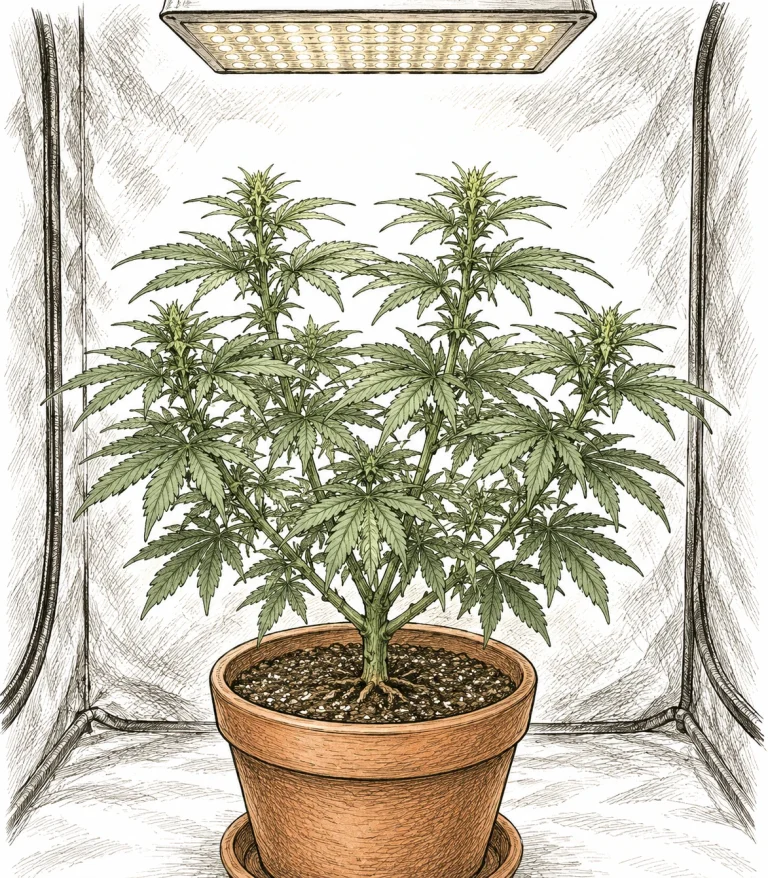
The main reason growers use the FIM method is a bigger yield from more colas. Left alone, a cannabis plant mostly grows one dominant main shoot (the cola), while the side branches put on much less bud mass. FIMing breaks apical dominance (German), so the plant spreads its energy and growth hormones more evenly across several shoots. The result: several equal main shoots that can all reach their full bud potential.
Pair FIMing with other training techniques like Low Stress Training (LST) and your results can get a lot better. Once FIM gives you new shoots, you can use LST to pull them outward and build an even, flat canopy. This combo gets the most out of your light, because every cola sits at the same height under the lamp. Growing with a SCROG screen? FIMing first is a big plus, since you get more shoots to spread evenly through the net.
Let’s be realistic about yield: FIMing alone won’t double your harvest. How much extra you get depends on the strain, light intensity, nutrient supply and your overall grow strategy. That said, a clean FIM combined with other tweaks, like the right pH and a solid feeding plan, can noticeably boost your harvest in an indoor grow.
- Breaks apical dominance: energy gets redirected to several shoots
- More colas mean more bud mass per plant
- Combine with LST: train shoots outward for a flat canopy
- Ideal before setting up a SCROG screen
- Yield gains depend on strain, light, nutrients and overall strategy
- Good feeding and the right pH are key for recovery
Common FIMing Mistakes and How to Avoid Them
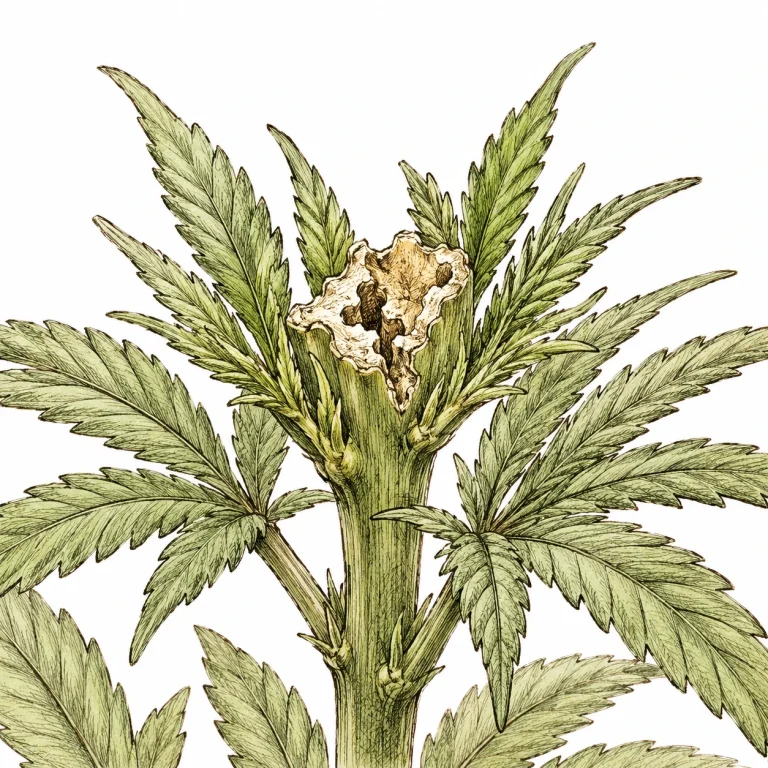
The most common FIMing mistake is an imprecise cut – you take off either too little or too much of the growing tip. Cut less than 60 percent of the tip and you’ll often get just two new shoots, like with topping, or only a slightly delayed single top. Cut more than 85 percent and you’re basically topping the plant, so you lose the specific benefit of FIMing. Judging the right spot comes with experience – if you’re a beginner, practice on a single plant first.
Another critical mistake is FIMing a weak or sick plant. Fix deficiencies like a calcium deficiency or pH problems before you cut. A plant that’s already stressed can recover much more slowly from the extra hit and may then run into growth problems or become more prone to infections. Also make sure you don’t use dull or unsterilized tools, since they can carry bacteria and fungi into the open wound.
Finally, a lot of beginners overfeed the plant after FIMing, thinking it will speed up recovery. Often the opposite happens: right after the cut, your plant mainly needs rest and enough water. Nutrient burn at this point can add a lot of stress and slow recovery down. Keep feeding moderate for the first few days after FIMing and watch closely how your plant responds.
- Wrong cut angle or amount: under 60 % = no FIM effect, over 85 % = topping
- FIMing a sick or nutrient-stressed plant
- Using dull or unsterilized tools → risk of infection
- FIMing too soon after germination – the plant doesn’t have enough reserves yet
- Piling on nutrients after the cut – does more harm than good
- Trying to FIM in the flowering stage – it doesn’t really work
FIM Technique for Cannabis: Does It Work for Every Strain?
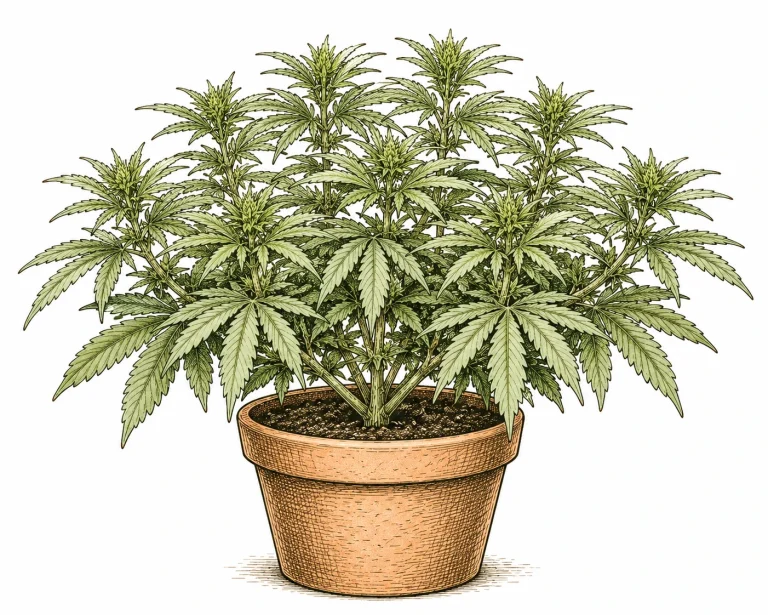
In general, you can use the FIM technique on most photoperiod strains – both indica- and sativa-dominant genetics respond well to it. Sativa-dominant strains benefit the most, since they tend to grow tall anyway and FIMing helps you keep them in check. Indica plants naturally grow bushier, but they also respond well to the extra branching FIM triggers.
With autoflowering strains, though, be careful with FIM. Autoflowers bloom regardless of the light cycle and have a short, genetically fixed vegetative stage, so the stress from FIM can hurt your whole harvest. The plant simply may not have enough time to fully recover and develop the new shoots before flowering kicks in. If you FIM an autoflower at all, do it only once and very early – within the first two weeks after germination.
If you’re growing indoors with limited space, compact, indica-dominant strains combined with FIMing and then LST (low stress training) are a very efficient strategy. For outdoor growers, FIMing gives you a way to keep very large plants under better control and get a more even spread of buds. Want to dial in your whole indoor grow? The Cannabis Indoor Grow Guide (German) covers all the basics on environment, lighting and plant care.
- Photoperiod strains (indica & sativa): a great fit
- Sativa strains: benefit the most thanks to better height control
- Autoflowering strains: only once and very early, with a high risk
- Outdoor plants: FIMing for size control and more even buds
- Indica strains indoors: excellent when combined with LST
- Hybrid strains: each one reacts differently, but most handle it well
Frequently Asked Questions
What does FIM mean in cannabis growing?
FIM stands for “F*** I Missed.” It’s an HST (high stress training) technique where you remove about 70–80% of the new growth tip. The goal is to trigger several (2–6) new main colas at once instead of letting just one dominant main stem take over.
How is FIMing different from topping?
With topping, you remove the entire growth tip, which always gives you exactly two new shoots. With FIMing, you only cut off 70–80% of the tip and leave the rest. That can produce 2–4 or even up to 6 new shoots. FIMing is less predictable, but it can deliver a bigger yield.
When is the best time to FIM?
The sweet spot is during the vegetative stage, once your plant has 3 to 5 nodes – usually after 3–4 weeks of growth. Your plant should be healthy and well fed. During the flowering stage or with autoflowering strains, you should use FIM very sparingly or skip it altogether.
How much of the growth tip should I cut off when FIMing?
When FIMing, you cut off 70 to 80% of the new growth tip. The lower part of the meristem stays intact. If you cut too little (under 60%), you’ll barely see a difference from normal growth. If you cut too much (over 85%), you’ve basically topped the plant.
Can I combine FIMing and LST?
Yes, combining FIMing with low stress training (LST) is a very effective strategy. After FIMing, several new shoots grow in, and you can then use LST to train them outward horizontally. That creates a wide, even canopy – ideal for indoor grows with limited height.
How long does recovery take after FIMing?
A healthy plant usually shows visible recovery within 5 to 10 days. You can often spot the first new shoots after about a week. Full recovery and normal growth typically return after 7 to 14 days, depending on the strain, temperature and feeding.
Is FIMing good for beginners?
FIMing takes a bit more skill than LST because the cut has to be precise. It’s still less invasive than complex techniques like mainlining. If you’re new to growing, get the basics of plant care down first. Then try FIMing on a single plant before you use it on your whole grow.
The Bottom Line
The FIM technique is a powerful HST method. With one precise cut, it creates several new main colas and can seriously boost your plant’s yield potential. The keys to success are the right timing during the vegetative stage, a sharp and sterile tool, and a healthy, well-fed plant. Combine it with techniques like LST and FIMing really shines – it helps you make the most of your space and light. Once you’ve tried FIMing carefully, you’ll likely find it a valuable addition to your grow toolbox.
