

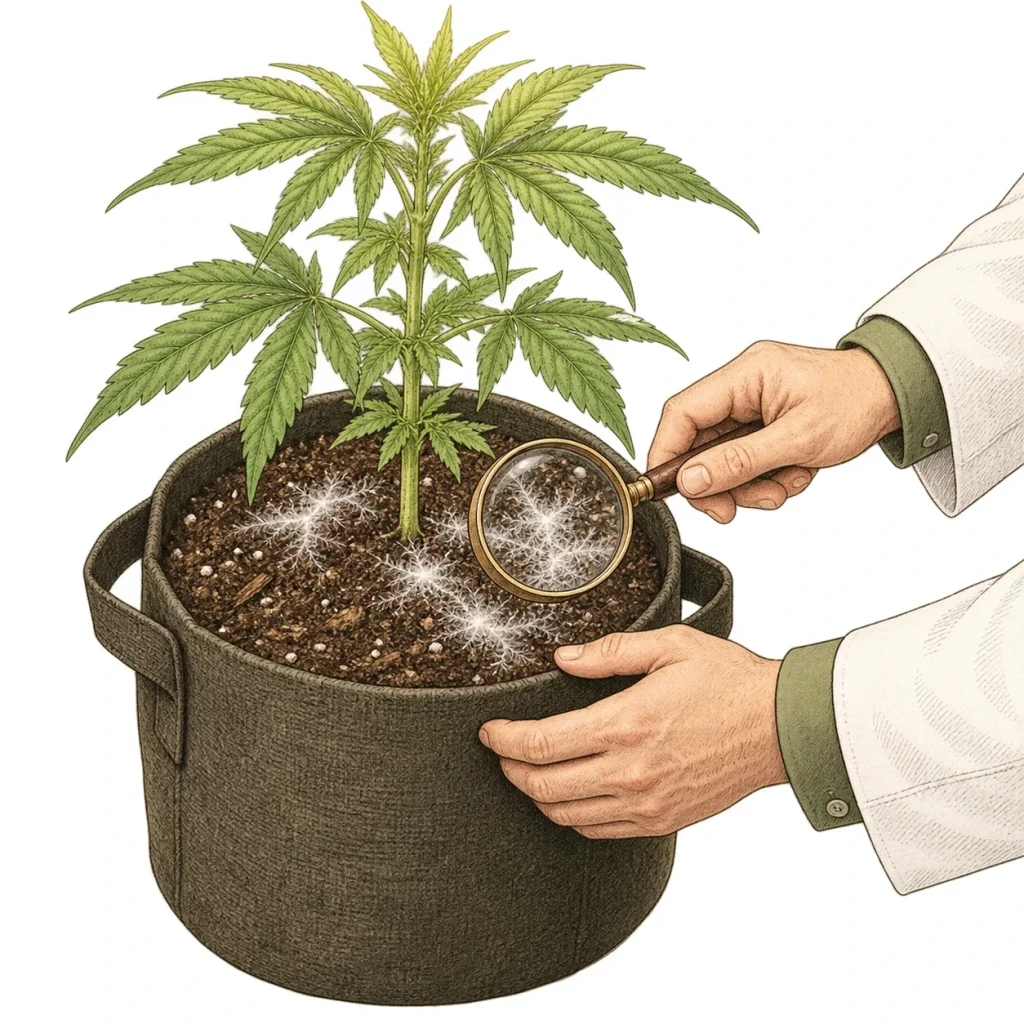
If you searched for “white mold on soil,” you probably just spotted a fuzzy layer on top of your cannabis plant’s soil. It looks alarming, but it’s not always a reason to panic. Often it’s just harmless mineral deposits or saprophytic fungi that break down organic matter. In some cases, though, white mold can point to too much moisture, poor airflow or early root problems. This article shows you how to tell the difference and what to do about it.
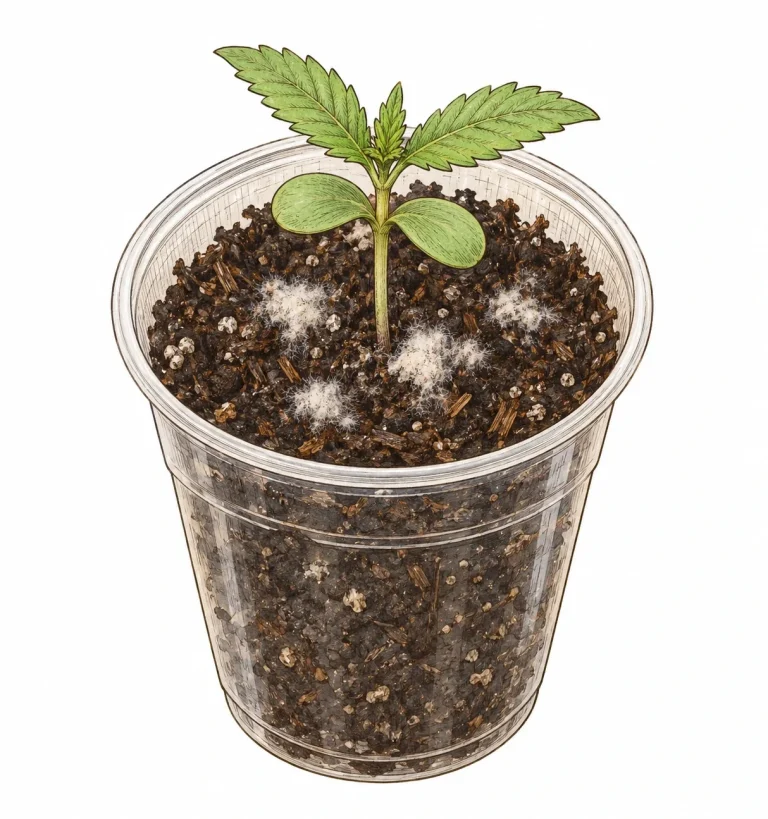
How Can You Tell If It’s Really White Mold on Your Soil?
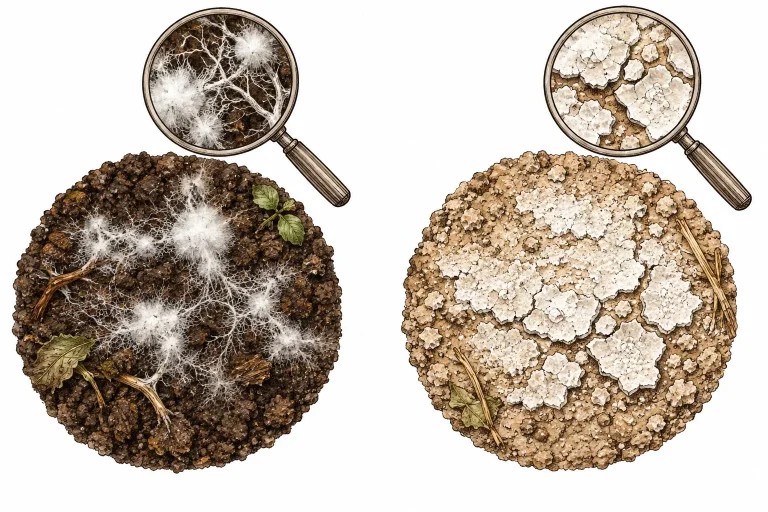
Not every white spot on your growing medium is mold. True white mold looks like a cottony, fuzzy web that spreads across the soil surface and falls apart easily when you touch it. In most cases it’s saprophytic fungi breaking down dead organic matter in the soil, much like the mold you see on compost.
White mold often gets confused with mineral salt buildup. That buildup comes from hard tap water with a high mineral content. It shows up as a thin, crusty, sparkly layer that doesn’t feel fuzzy and crumbles as it dries instead of spreading. A quick test helps: rub a bit of it between your fingers. If it feels gritty and hard, it’s most likely lime or salt deposits. A drop of vinegar will also make lime fizz slightly. If it’s soft and fibrous and keeps spreading over the next few days, you’re dealing with real mold.
Smell is another clue. Mineral deposits have no real odor, while mold often gives off a slightly musty, earthy, rotten smell, especially when the soil stays wet all the time.
- Cottony, fuzzy texture = real mold
- Thin, sparkly crust that crumbles = mineral buildup
- A musty smell points to active fungal growth
- Finger test: minerals feel gritty, mold feels soft and fibrous
White Mold on Soil: The Most Common Causes
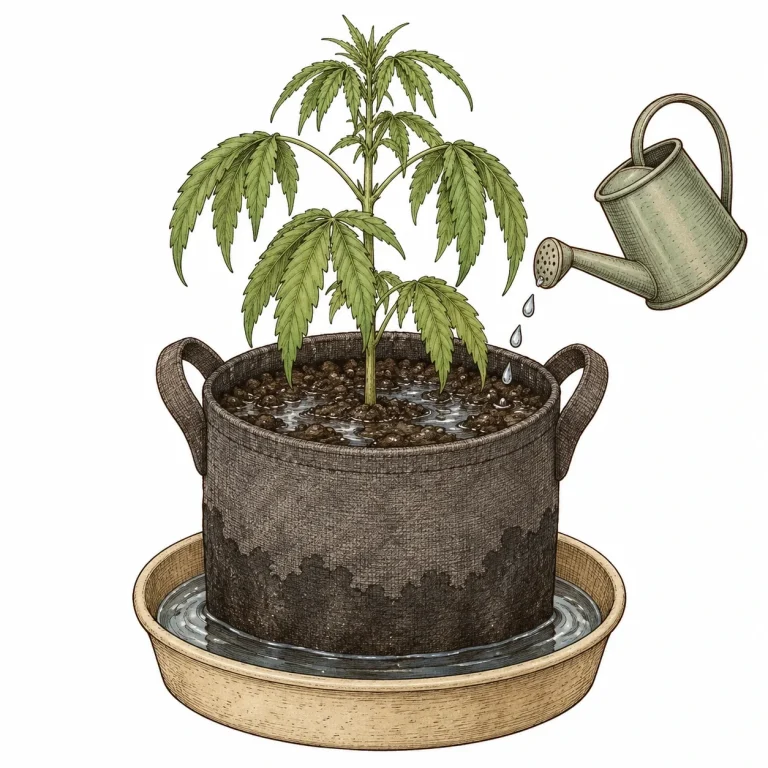
White mold almost always comes from a mix of moisture, lack of oxygen and organic matter. Cannabis soils often contain compost, guano or other organic fertilizers, and those make an ideal food source for fungal spores once conditions are right.
The most common cause is overwatering combined with poor drainage. When the top layer of soil stays damp and never gets a chance to dry out, fungal spores love to move in. Poor airflow around the pot can make things worse, because it slows evaporation and lets moisture build up. If you’re not sure whether your plant is getting too much water in general, check out the typical signs of oxygen-starved cannabis roots, since both problems often show up together.
Other factors include high room humidity, poor ventilation in the grow tent, and a growing medium that’s too fine, compacted or heavily organic, with hardly any air pockets. Soil reused from previous grows can also already carry fungal spores that wake up fast in damp conditions.
- A constantly wet soil surface from overwatering
- Poor drainage in the pot or no air holes
- Humidity that’s too high in the grow tent
- Organic nutrients like guano feeding the spores
- Old, reused growing medium with spores already in it
Is White Mold Dangerous for Your Plant?
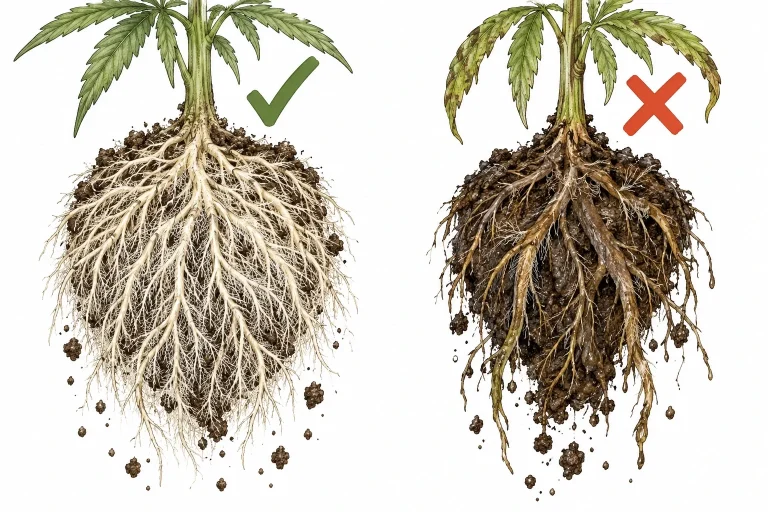
In most cases, white mold on the surface won’t kill a healthy, vigorous plant right away. Saprophytic fungi feed on dead organic matter and usually don’t attack living plant tissue directly. Still, mold is always a warning sign of a damp, poorly ventilated environment, and that can set you up for more serious problems down the road. For background on preventing fungal diseases, check out the plant protection brochure from LWG Bayern (German).
Things get critical when those surface conditions turn into root rot. A growing medium that stays wet with little oxygen weakens the roots, leaves them open to pathogenic fungi like pythium root rot or fusarium wilt, and can lead to stunted growth, wilting leaves and brown, slimy roots. If your plants are already looking droopy or limp, read up on how to save wilting cannabis plants so you can turn things around fast.
Mold isn’t great for the rest of your grow space either. Spores can drift through the air in your tent and, under the wrong conditions, settle on other parts of the plant. That’s especially true if you also spot critters like springtails in cannabis soil, which are another sign that things are too wet.
- Surface mold is usually harmless to healthy plants
- A warning sign of a growing medium that’s too wet and low on oxygen
- Risk of root rot if conditions stay wet
- Spores can spread through your grow tent
White Mold on Soil: Remove It Right Away
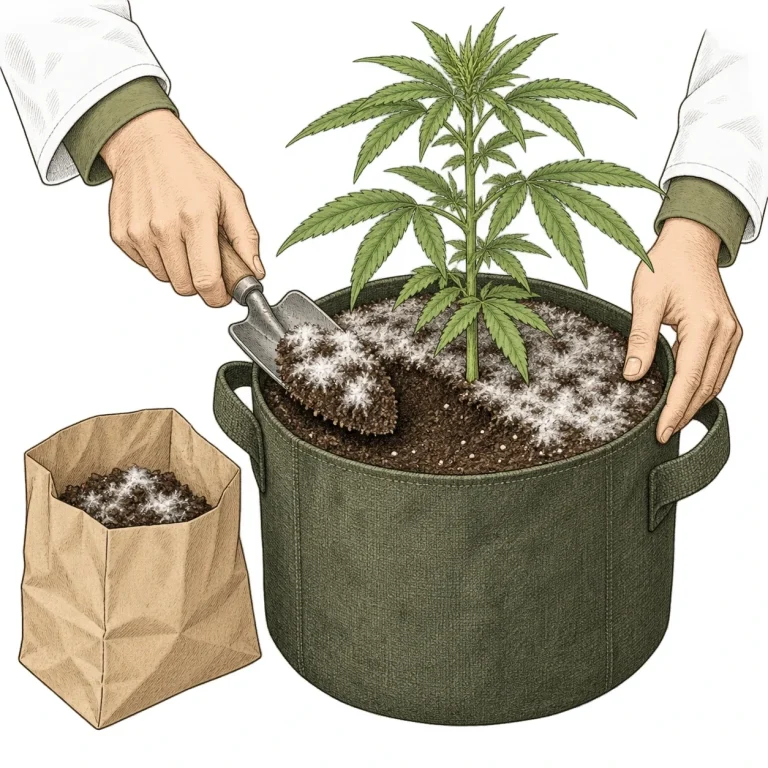
Once you’ve confirmed it’s real white mold, act fast before the spores spread any further. Step one is mechanical: carefully remove the top 0.5–1 in (1–2 cm) of infected soil with a clean spoon or tool and toss it outside your grow room.
Next, adjust your watering and give the soil surface time to dry out before you water again. A thin layer of dry, sterile growing medium, sand or cinnamon on top can help keep the mold from coming back, since cinnamon has mild antifungal properties. Skip any extra organic nutrients on the surface for now.
Also boost air circulation with a small fan that gently moves air across the soil surface, and keep an eye on the humidity in your tent. Our guide to grow tent ventilation for cannabis helps you set up great conditions for the long haul instead of just treating the problem in front of you.
- Scrape off the infected top layer of soil
- Water less often and let the surface dry out
- Add a thin layer of cinnamon or dry growing medium
- Improve air circulation with a fan
- Hold off on organic top dressings for a while
How to Prevent White Mold for Good
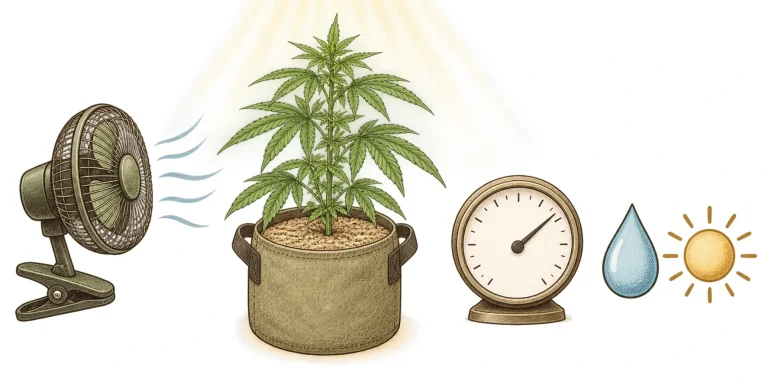
To keep white mold away long term, your choice of growing medium is key. A well-draining mix with plenty of perlite or lava rock lets excess water drain fast, so the surface doesn’t stay wet all the time. Want to make your own soil mix? Our guide on mixing your growing medium has recipes with great drainage.
A smart watering routine matters just as much. Only water again once the top inch (2–3 cm) of soil feels dry. Avoid topping up with small amounts all the time – that keeps the surface constantly damp. Pots with enough drainage holes help water run off, too. A layer of clay pebbles at the bottom of the pot (German), on the other hand, does less than most growers think: it tends to push the wet zone in the medium higher up. An evenly airy mix all the way through works better.
Also keep a regular eye on the relative humidity (RH) in your grow tent. Values above 60% combined with stagnant air are perfect for mold. In damp rooms or during the flowering stage, a dehumidifier can make all the difference: it keeps your microclimate under control and helps prevent mold on your buds at the same time.
- Use a well-draining medium with perlite or lava rock
- Only water once the top layer of soil is dry
- Use pots with enough drainage holes
- Keep humidity below 60%
- Make sure there’s steady air circulation in your tent
Frequently Asked Questions
Can I save plants with white mold on the soil?
Yes, in most cases your plant can be saved if you act fast. Remove the affected layer of soil, adjust your watering and improve ventilation. As long as the roots are still healthy, the plant will usually make a full recovery.
Is white mold on soil harmful to humans?
Some mold spores can irritate the airways in sensitive people, especially with longer exposure in poorly ventilated rooms. To be on the safe side, wear a mask while removing it and air out the room well.
How can I tell mineral deposits from mold?
Mineral deposits from hard water form a thin, sparkly crust that crumbles as it dries and dissolves when it gets wet. Real mold is fluffy, keeps spreading and often smells musty.
How often should I check the soil surface for mold?
A quick look every two to three days is enough to catch early signs. It’s worth taking a closer look right after watering or when humidity runs high.
The Bottom Line
White mold on your soil is usually harmless as long as it stays on the surface and you deal with it quickly. Still, never ignore it. It almost always points to too much moisture and too little air exchange around the roots. Adjust your watering, improve drainage and give your plants enough ventilation, and you can usually get the problem under control within a few days and keep it from coming back. If your plant also shows symptoms on its leaves or roots, our Plant Diagnosis overview can help you narrow down the cause.
