


Many growers only spot calcium excess in cannabis once the plant is already clearly struggling. At first glance, the symptoms look a lot like other nutrient problems. Too much calcium doesn’t just block the uptake of other essential minerals. It can also slow down overall plant growth noticeably. In indoor growing, this problem shows up more often than most people think, especially with hard tap water or heavy Cal-Mag use. If you read the signs early and act decisively, you can still protect your harvest.
What Is Calcium Excess in Cannabis and Why Does It Happen?
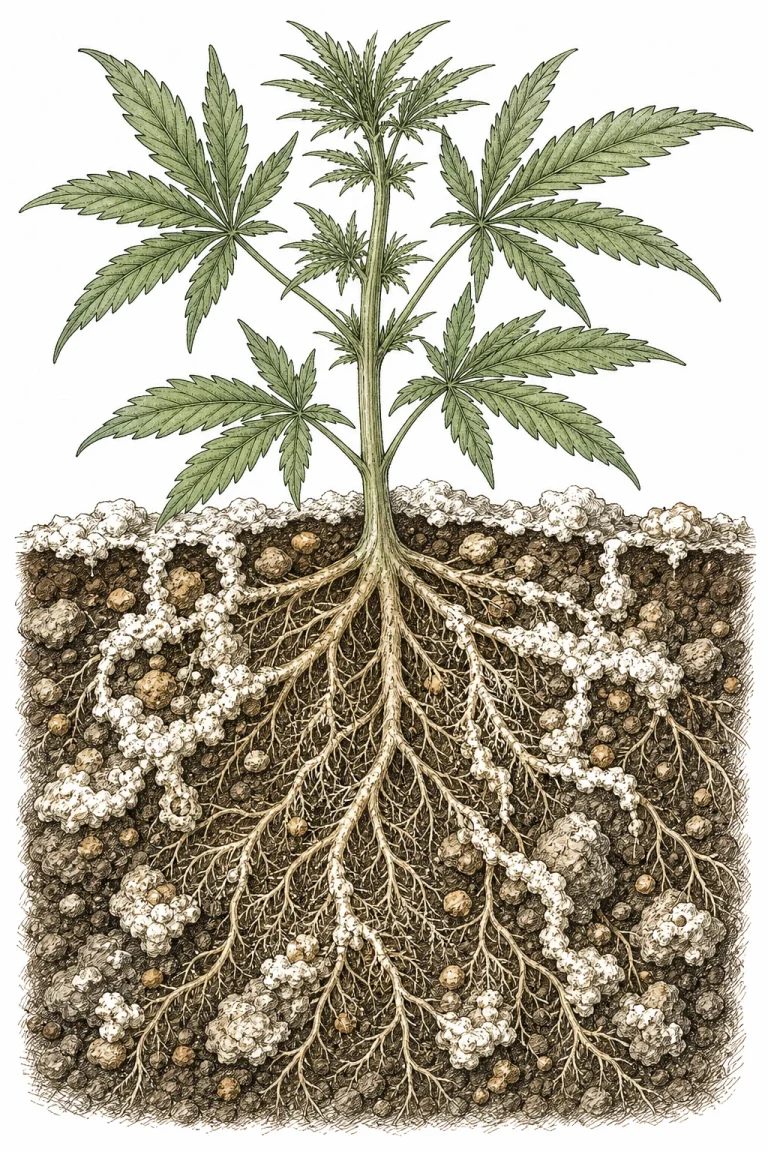
Calcium is an essential macronutrient for cannabis. It strengthens cell walls, supports root development and helps enzymes do their job. The catch: in real-world grows, calcium is often overdosed. The usual culprits are hard tap water with a high calcium content, too much Cal-Mag, or lime-rich growing media like certain soil mixes.
So calcium excess in cannabis rarely has a single cause. Most of the time, several factors add up. If your water is hard (an EC above 200 ppm (0.4 mS/cm) from the water alone) and you add Cal-Mag on top, you can quickly push past what your plant can handle. The risk is often underestimated in the flowering stage, when the plant needs less calcium and more phosphorus and potassium.
On top of that, there’s nutrient antagonism. Too much calcium actively blocks the uptake of magnesium, potassium and iron. That can trigger secondary deficiency symptoms, even though the soil actually has plenty of those nutrients. Many growers then treat a magnesium deficiency by mistake and never fix the real cause: the calcium excess.
Another trigger people often overlook is a pH that’s too high in the growing medium. With a pH above 7.0, calcium can build up in the root zone, while other nutrients drop out and your plant can’t take them up anymore.
- Hard tap water with a high calcium content (>100 mg/L)
- Overdosing Cal-Mag supplements
- pH too high in the growing medium (above 7.0)
- Calcium-rich growing media or added lime
- Several calcium sources combined at the same time
How to Spot Calcium Excess in Cannabis: The Typical Symptoms

Symptoms of calcium excess in cannabis creep in slowly. They often start on the middle to upper leaves. That’s different from many deficiencies, which show up first on the old, lower leaves. The reason: calcium is an immobile nutrient, and it tends to build up in actively growing areas.
The most obvious sign is an unnaturally dark green leaf color that turns leathery and glossy over time. The leaves feel hard and unusually stiff. Brown to bronze necrotic spots form on the leaf tips and edges. As the excess gets worse, they spread further into the leaf.
Leaves often curl down or inward at the edges. That’s a sign your plant is under osmotic stress. At the same time, growth slows down a lot: internodes get shorter, and new shoots come in slowly and stunted. In severe cases, the leaf tissue between the veins turns yellow. That’s a clear sign that calcium is blocking magnesium or iron uptake.
Down at the roots, constantly high calcium levels can cause brown, slimy root tips, and overall nutrient uptake gets less efficient. If you check your EC when watering regularly, you’ll find a clue there too: your runoff EC is clearly higher than your input EC. That points to nutrient buildup in the growing medium.
- Dark green, leathery leaves, mainly on middle and upper shoots
- Brown necrotic spots on leaf tips and edges
- Leaf edges curling down or inward
- Much slower growth and short internodes
- Interveinal chlorosis (yellowing between the leaf veins) from a secondary magnesium deficiency
- Dull, slow-growing new shoots
- Higher EC in your runoff when watering
Calcium Excess vs. Calcium Deficiency: How to Tell Them Apart
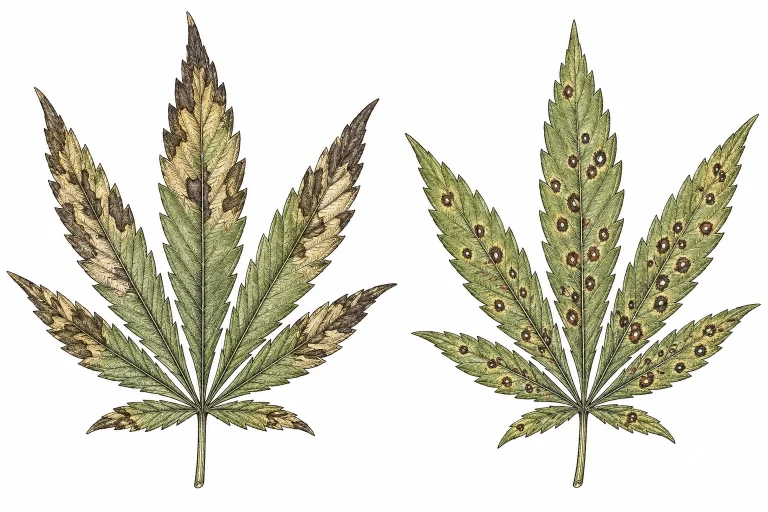
It’s easy to mix up calcium excess and calcium deficiency, because both can cause brown spots on the leaves. The key difference is where the symptoms show up and what they look like. A calcium deficiency in cannabis usually hits young, new leaves with irregular, rust-brown spots, because the plant can’t move calcium out of older leaves. Calcium excess, on the other hand, mainly shows up on the middle to upper leaves. It tends to cause more even leaf discoloration, with dead (necrotic) tissue along the edges.
Another difference: with a calcium deficiency, the plant often keeps growing fairly strong despite the problem (as long as only this one nutrient is missing). Calcium excess, by contrast, can noticeably slow down overall growth. With a deficiency, leaves are soft and may fold inward. With an excess, they’re firm, leathery and stiff.
Your plant’s history matters too. What are you feeding? How hard is your water? What’s the pH in your growing medium? These questions help you quickly tell too much from too little. When in doubt, flush the medium with pH-adjusted water and watch how the plant responds.
- Deficiency: brown spots on young leaves. Excess: necrosis on middle and upper leaves
- Deficiency: soft, curled leaves. Excess: hard, leathery, stiff leaves
- Deficiency: growth barely affected. Excess: clearly slower overall growth
- Deficiency: often with soft water and low pH. Excess: often with hard water and high pH
Quick Fixes: How to Treat Calcium Excess in Cannabis
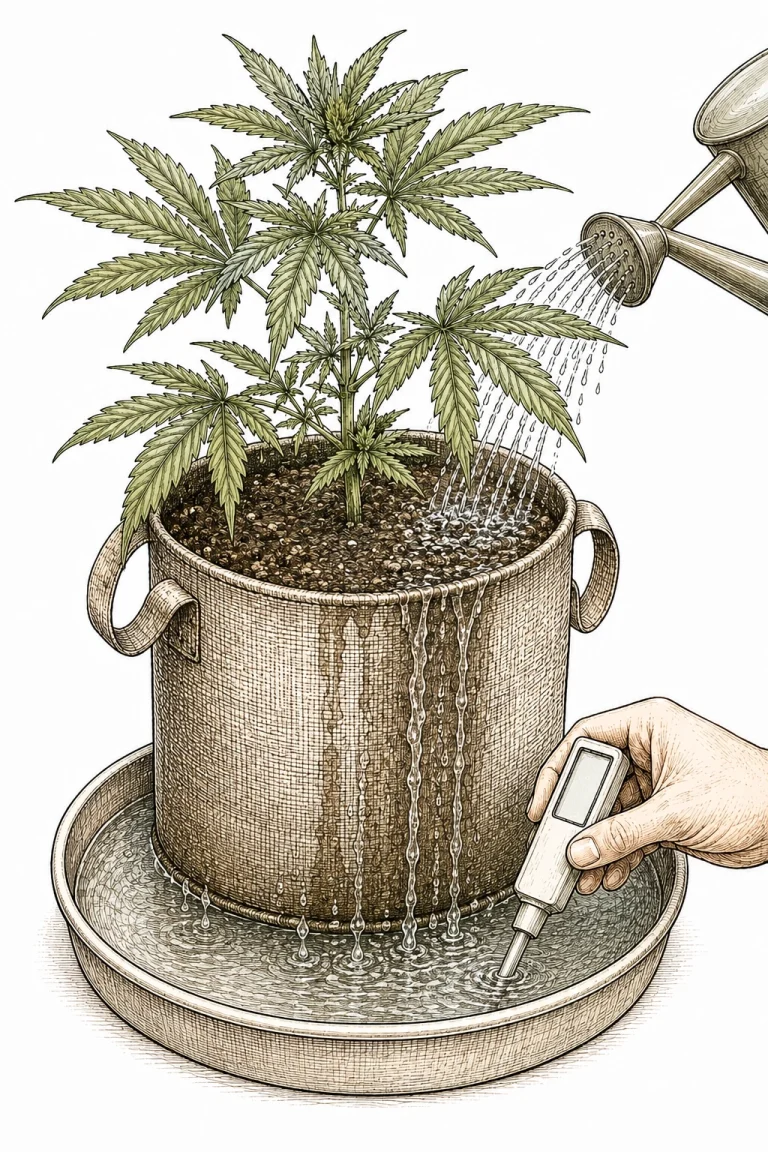
Once you’ve spotted calcium excess in your cannabis plant, act quickly but carefully. The first and most important step is a thorough flush: run two to three times the pot’s volume of clean, pH-adjusted water through the medium. In soil, aim for a pH between 6.0 and 6.8. This washes excess calcium ions out of the medium and frees up the nutrient binding sites again.
After the flush, wait at least 48 hours and keep an eye on your plant before you feed again. When you start feeding again, keep your EC (electrical conductivity) as low as possible and skip Cal-Mag products completely. Check your pH at the same time, because a pH that’s too high can make calcium build up much faster.
Test your tap water for calcium, too. If your plain water reads above 200 ppm (0.4 mS/cm), reverse osmosis (RO) or filtered water is a smart alternative. With RO water, you get full control over your nutrient mix and can work with a softer base water.
For the next few weeks, avoid lime-based fertilizers, dolomite lime and soil amendments high in calcium. Measure the EC of your runoff regularly. If it stays above the EC of what you’re putting in, there are still too many nutrients locked up in the medium. If you’ve ever brought a plant back from nutrient burn, you know the drill: during recovery, less is always more.
- Flush the medium with 2–3 times the pot volume of pH-adjusted water (pH 6.0–6.8)
- Wait 48 hours before your next feeding
- Cut the EC of your nutrient solution way down
- Pause Cal-Mag supplements completely
- Test your tap water for calcium and switch to RO water if needed
- Bring the pH of your medium back into the ideal range
- Measure and log your runoff EC regularly
Prevention: How to Avoid Calcium Excess in Cannabis Long Term
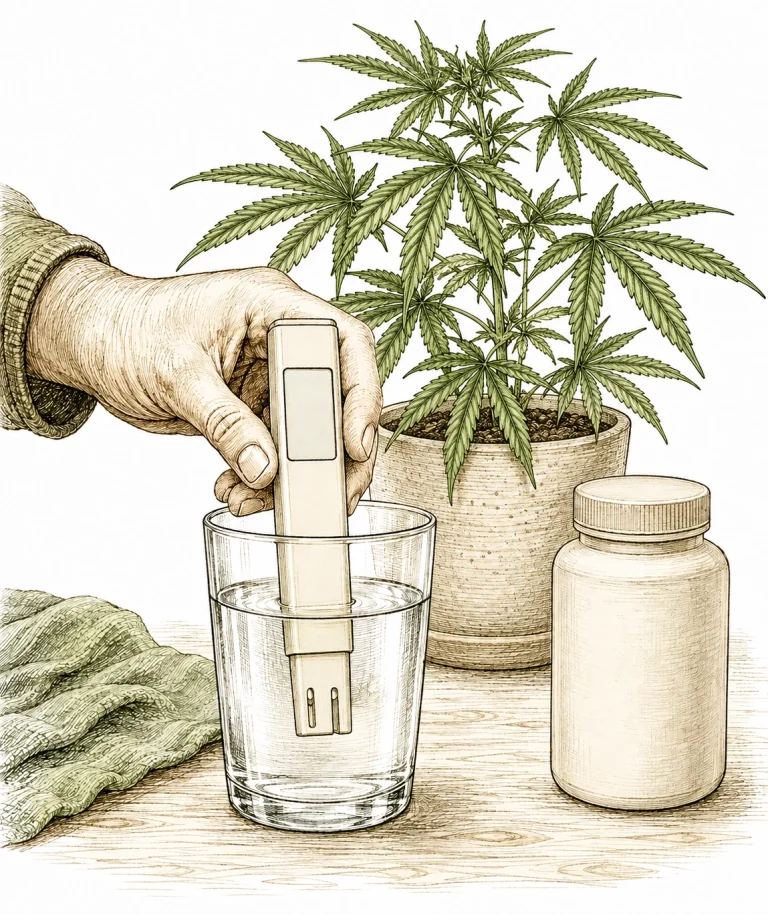
When it comes to calcium excess in cannabis, prevention is easier than the cure. The most important step is testing your water regularly. Once you know how much calcium your tap water already contains, you can adjust your supplements to match. Many local water utilities post this data online in their annual water quality report. Rule of thumb: if your tap water contains more than 80 mg/L of calcium, skip Cal-Mag products completely.
A well-planned feeding schedule also keeps calcium from building up unchecked. Stick to the manufacturer’s recommendations and cut back on Cal-Mag once flowering starts, since your plants need less calcium then. Water on a strict rhythm using the finger test: only water once the top 1 in (2–3 cm) of growing medium is dry. That way you avoid both overwatering and nutrient salt buildup.
Check the pH of your growing medium and the EC (electrical conductivity) of your runoff regularly. A monthly mini-flush with plain water (no nutrients) can help dissolve salt buildup before it turns into a real problem. In indoor growing with a closed system, nutrient salts tend to build up faster than outdoors.
When choosing a growing medium, go for low-calcium mixes, or cut lime-heavy soils with neutral material rich in perlite. Skip lime amendments like dolomite lime if you’re already using hard water. These simple steps keep your calcium levels in the safe zone for good and protect your plants from growth problems.
The North Rhine-Westphalia Chamber of Agriculture (Landwirtschaftskammer NRW) also points out that feeding based on what your plants actually need, rather than adding supplements across the board, is the most effective way to prevent nutrient excess.
- Test your water for calcium content regularly
- Only use Cal-Mag products with soft water (under 40 mg/L Ca)
- Reduce your Cal-Mag dose from flowering onward, or drop it completely
- Check runoff EC every time you water
- Do a monthly mini-flush to clear out salts
- Keep pH steady between 6.0 and 6.8
- Choose low-calcium growing media and avoid dolomite lime with hard water
Spotting Cannabis Calcium Excess in Hydroponics and Coco
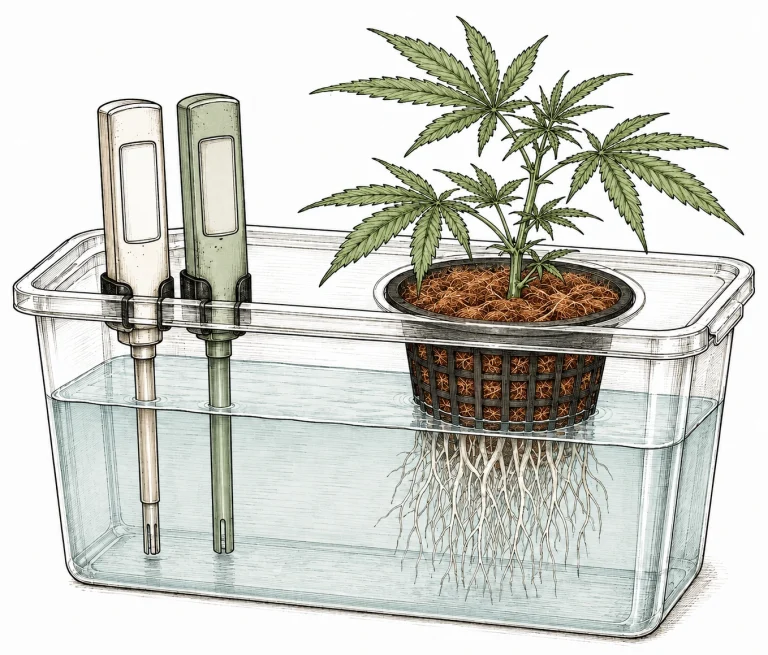
Spotting calcium excess in hydroponics (hydro) and coco grows follows its own rules. Coco coir is known as a calcium-hungry medium because it naturally contains very little calcium, which is why many growers automatically supplement with Cal-Mag. But that’s exactly the setting where hard tap water plus Cal-Mag products can quickly lead to calcium overload.
In hydro systems, you can see the calcium concentration directly in your nutrient solution: an EC well above 1,000 ppm (2.0 mS/cm) in veg or above 900 ppm (1.8 mS/cm) in flower should be a warning sign. Measure the EC and pH of your nutrient solution regularly, and swap out the whole solution if you suspect calcium excess. Flushing a hydro system is easier and faster than flushing soil.
Keep this in mind when watering cannabis the right way in hydro and coco systems: you’ll need to water more often, which speeds up nutrient buildup. Checking runoff EC daily or every other day is a must in these systems so you can catch building calcium excess early.
- Coco: only supplement Cal-Mag if your source water is soft (under 40 mg/L Ca)
- Hydro: check your nutrient solution’s EC every day
- At EC above 1,000 ppm (2.0 mS/cm) in veg or 900 ppm (1.8 mS/cm) in flower, replace the nutrient solution completely
- Frequent watering in hydro/coco raises the risk of buildup
- RO water is recommended as your base water for full control
Similar lockout effects from hard water or overfeeding can also show up with iron toxicity.
Frequently Asked Questions
How can I tell calcium excess apart from magnesium deficiency?
Calcium excess often blocks magnesium uptake, so you can see both sets of symptoms at the same time. The key is the backstory: have you been adding Cal-Mag or using hard water? Then calcium excess is the more likely culprit. With a pure magnesium deficiency, the chlorosis typically shows up between the veins of older leaves, without the leathery texture or stalled growth.
Can I keep using Cal-Mag if I have hard tap water?
Usually not. With hard tap water (calcium above 80 mg/L, or water EC above 200 ppm (0.4 mS/cm)), you should generally skip Cal-Mag products. Your water already supplies enough calcium. Test the calcium content of your tap water first, then decide whether you really need to supplement.
How long does it take plants to recover from calcium excess?
After a thorough flush and an adjusted feeding schedule, you’ll usually see the first improvements within 5 to 10 days. Leaves that are already damaged won’t fully bounce back, but new growth should come in healthy and strong. Be patient, and don’t jump back to heavy nutrient doses too soon.
Which pH works best to prevent calcium excess?
In soil, a pH between 6.0 and 6.8 is ideal. In coco or hydro, aim for a pH between 5.5 and 6.2. In these ranges, calcium is readily available without building up to excess. A pH that runs too high (above 7.0) actively encourages calcium buildup.
Can you still save your harvest from a calcium excess?
Yes, if you step in early enough. A flush, a pH correction and an adjusted feeding schedule can stabilize your plant. In early flower, a full recovery is possible. In late flower, weigh whether an aggressive fix still makes sense. Sometimes it’s smarter to limit the damage and nurse the plant through to harvest.
Can a calcium excess kill a cannabis plant?
In extreme cases, yes. A severe, long-lasting calcium excess can lock out other nutrients completely, and that can kill the plant. In most cases, though, a calcium excess is fixable if you spot it and treat it in time. Early diagnosis is key.
To keep an eye on your feeding strength going forward, an EC meter from our recommended gear is a big help.
Bottom Line
Spotting a calcium excess in cannabis is tricky for a lot of growers, because the symptoms start out subtle and are easy to mistake for other nutrient problems. Dark green, leathery leaves with dead, crispy edges, slowed growth and secondary deficiencies caused by nutrient lockout are the clearest warning signs. With a targeted flush, a pH correction and an adjusted feeding schedule, you can limit the damage in most cases. In the long run, regular water testing, a disciplined feeding schedule and consistent EC and pH checks can keep calcium from building up again.
