

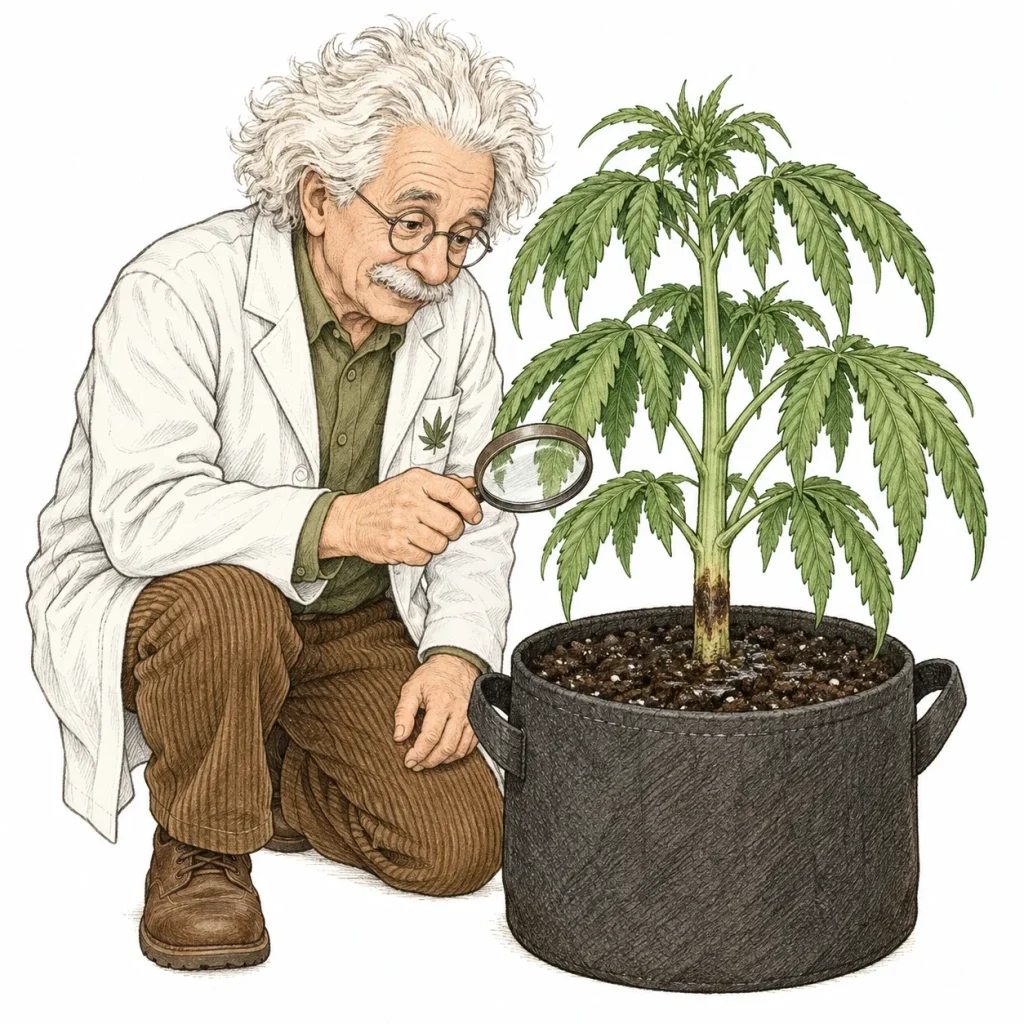
Stem rot is one of the most dangerous problems you can run into in your grow, because it attacks the water and nutrient supply of the whole plant. If you don’t catch stem rot in time, it can kill your plant within just a few days. In this article, you’ll learn how to reliably spot cannabis stem rot, what causes it, and how to react right now to save your harvest.
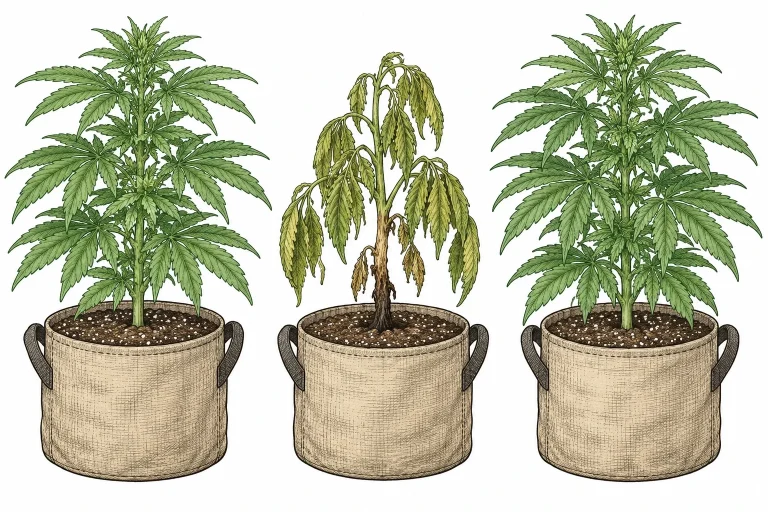
What Is Cannabis Stem Rot and What Causes It?
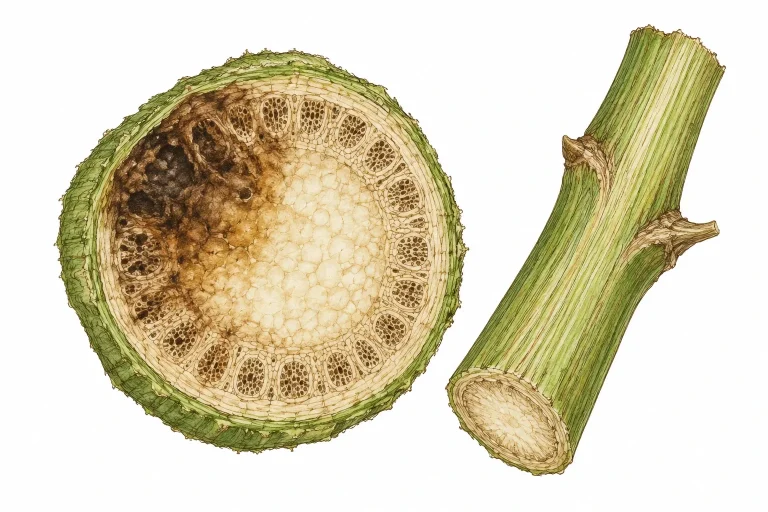
Cannabis stem rot is a disease caused by fungi and fungus-like pathogens that attack the main stem or side branches of your plant. Botanically, Pythium isn’t a true fungus – it belongs to the water molds (oomycetes). In most cases, pathogens like Fusarium, Pythium or Botrytis (gray mold) are behind the rot on the stem. These pathogens enter the plant tissue through wounds, pruning cuts or straight from wet soil, and destroy the vascular tissue from the inside – the pathways that carry water and nutrients.
What makes stem rot so sneaky is that it often develops out of sight before you see any outside symptoms. Once large parts of the stem are infected, the plant can no longer seal off the damaged areas, and the rot can spread fast. Unlike many nutrient problems that build up slowly over weeks, cannabis stem rot can go from the first signs to a dead plant in just a few days.
- The main culprits are Fusarium, Pythium and Botrytis cinerea (gray mold)
- Fungal spores are often already in the growing medium or in the air
- They usually get in through wounds from training or pests
- Moisture and poor ventilation give their growth a huge boost
How to Spot the Symptoms of Cannabis Stem Rot
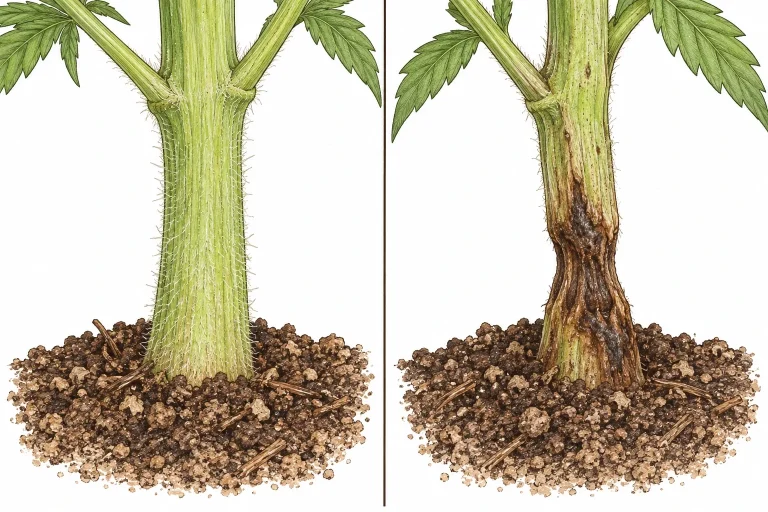
To catch cannabis stem rot early, check your plants’ stems for changes on a regular basis. The first and most obvious sign is a dark discoloration on the stem, often brown to blackish, that usually spreads in a ring around the stem. This spot feels soft and mushy, unlike the healthy, firm tissue above and below it.
Another clear warning sign is sudden wilting of single branches or the whole plant, even though the growing medium is moist enough. Because the rot cuts off the water supply, the leaves above the infected spot wilt – even if the roots are perfectly healthy. You’ll often notice an unpleasant, musty smell at the affected spot, too. That’s a sign the plant tissue is breaking down.
- Dark, ring-shaped discoloration on the stem, often near the soil line
- Soft, sunken or slimy tissue where the stem is infected
- Sudden wilting even though you are watering enough
- Musty, rotten smell at the lesion
- In advanced spots, sometimes visible white or gray fungal threads
The Most Common Causes of Stem Rot
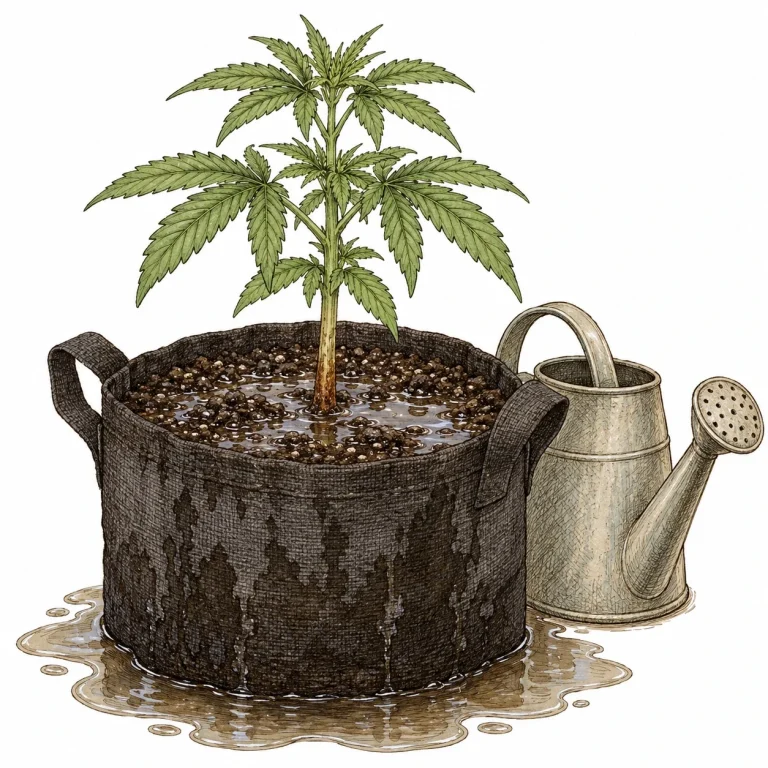
The main cause of cannabis stem rot is almost always a mix of too much moisture and poor airflow. If the stem or the soil right around it stays wet all the time, for example from overwatering or splashing while you water, fungal spores get the perfect place to settle in. Plants packed too tightly without enough ventilation have the same problem: moisture around the lower part of the plant just can’t dry off. The Royal Horticultural Society on gray mold explains how much botrytis in particular thrives on standing moisture and open wounds.
Another common cause is physical damage to the stem from aggressive training like low stress training, topping or careless transplanting. Fungal spores can get in through these open wounds especially easily. Pests like fungus gnats and their larvae can also chew on the stem and create extra entry points, which raises the risk of infection.
- Overwatering and constantly wet growing medium around the roots
- Plants spaced too close together and poor air circulation
- Wounds from training, topping or rough transplanting
- Existing damage from pests, such as fungus gnat larvae
- Contaminated growing medium or reused pots that weren’t cleaned
What to Do Right Away When You Spot Stem Rot
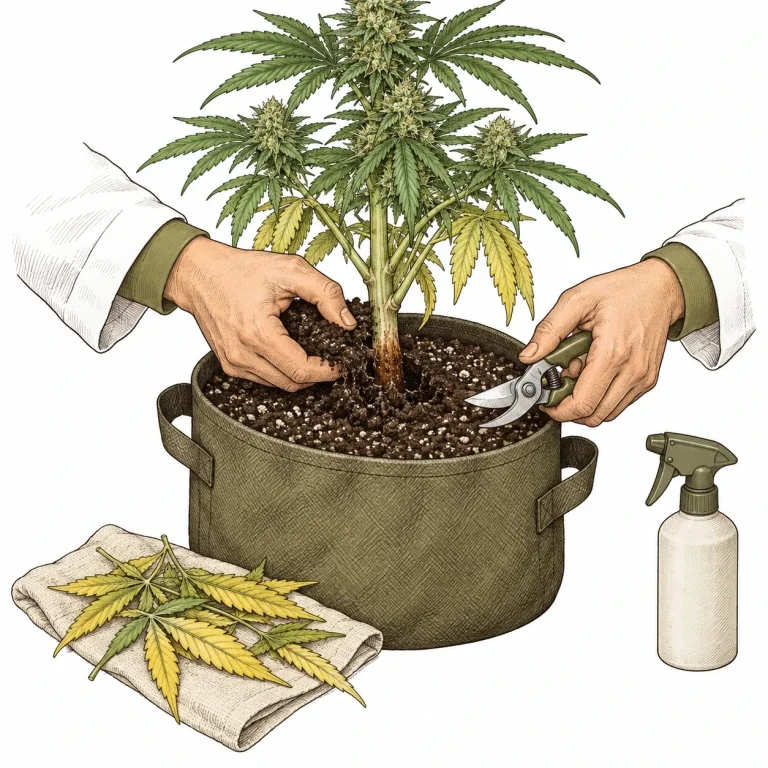
As soon as you notice signs of cannabis stem rot, every hour counts. Your first step: cut back on watering right away and let the growing medium dry out. That takes away the moisture the fungus needs. Also check that your pot drains well, because standing water around the roots makes the problem even worse.
With a light to moderate infection, you can try to cut out the infected tissue generously with a sterilized, sharp knife until you only see healthy, firm tissue. Then treat the cut with a copper-based fungicide or with cinnamon powder, which is said to have a mild antifungal effect. During the flowering stage, it’s better to skip copper products so no residue ends up in your buds. If the stem has already rotted all the way through, or the plant is wilting hard above the lesion, saving it often isn’t possible anymore. In that case, remove the plant so the rot can’t spread to its neighbors.
- Cut back on watering right away and let the growing medium dry out
- Generously remove infected tissue with sterile tools
- Treat cuts with copper fungicide or cinnamon powder
- Improve air circulation immediately with extra fans
- If the infection has taken over, isolate or toss the plant
How to Prevent Stem Rot Long-Term
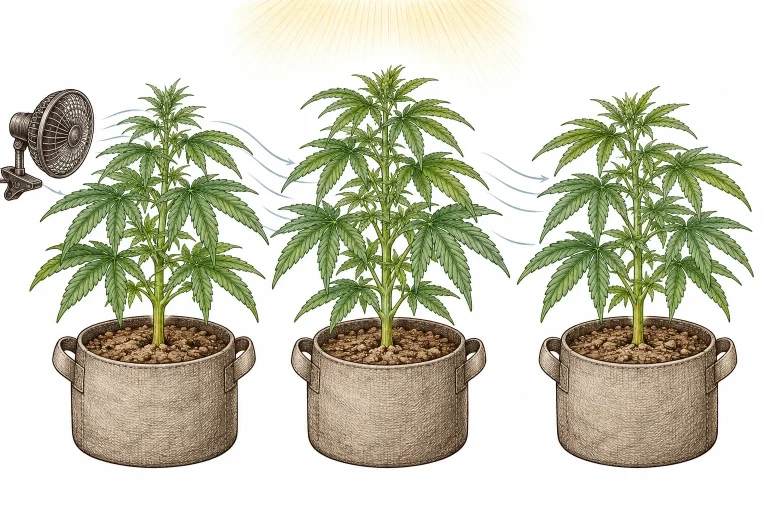
Your best weapon against cannabis stem rot is consistent prevention. Once the rot has progressed, there’s usually not much left to save. Base your watering on what the plant actually needs, and always let the growing medium dry out a bit between waterings. Good drainage in the pot, for example by mixing in perlite, reliably prevents waterlogged roots.
Give your plants enough space and keep a constant airflow going, so moisture on the lower stem can dry off quickly. If you use training techniques like topping or tie-downs, always work with disinfected tools and treat larger cuts as a precaution. Checking for pests should also be a fixed part of your routine. Many pests can indirectly open entry points for fungal pathogens – scale insects, for example, feed right on stems and shoots.
- Water when the medium is dry, not on a fixed schedule
- Use perlite or other drainage material for better aeration
- Make sure you have enough plant spacing and active air circulation
- Disinfect your tools thoroughly before every training cut
- Make regular pest checks part of your care routine
Frequently Asked Questions
Can a plant survive cannabis stem rot?
Yes. If you catch it early and cut out the infected tissue right away, the plant can recover, especially when only a small area is affected. But if the rot has girdled the whole stem or broken down large areas of tissue, the plant usually can’t be saved.
How is stem rot different from a plant that simply needs water?
An underwatered plant wilts evenly all over and perks back up after watering. With stem rot, the medium often stays moist, yet individual shoots wilt above a visible dark, soft spot on the stem, because the water-conducting tissue is cut off.
Which fungi most often cause stem rot in cannabis?
The usual suspects are Fusarium, Pythium and Botrytis cinerea (gray mold, the same fungus behind bud rot). All three love damp, poorly ventilated conditions and usually get into the plant through wounds or directly from the growing medium.
What is Sclerotinia (white mold) in cannabis?
Much rarer, but more serious, is white mold (Sclerotinia sclerotiorum), also known as hemp canker. It mostly hits outdoor plants during cool, wet weather in late summer and fall. The telltale sign is a cottony white fungal growth on the stem. Inside the pithy core, hard black resting bodies (sclerotia) form. The fungus blocks water transport, so shoots above the infected spot can suddenly wilt and die, even though the root ball is still moist.
Cut out infected stem sections generously, bag them and throw them in the trash instead of composting them. The sclerotia can survive in the soil for several years and sprout again as soon as it turns cool and damp.
Can stem rot spread to other plants in your grow?
Yes. Fungal spores in particular can spread to nearby plants through splashing water, tools, or air circulation. That’s why you should isolate infected plants and disinfect your tools after every contact.
Bottom Line
Cannabis stem rot is a serious threat. It develops when moisture, poor ventilation, and stem injuries come together. If you check your plants’ stems regularly and act fast at the first signs, like dark, soft spots, you can often still save them. Long term, the best way to protect your grow from cannabis stem rot is smart watering, good air circulation, and clean work during every training session. You’ll find more pathogens with similar symptoms in our overview of fungal diseases and mold in cannabis.
