


Automatic watering takes the daily chore of hand-watering off your plate and keeps your roots consistently supplied, whether you’re on vacation or just want to save time. With several plants or a grow tent on a strict schedule, a reliable system makes the difference between a stressful grow and a relaxed one. In this article, we compare the best-known systems, including Autopot, Blumat and classic drip irrigation, and show you which one fits your setup. We also walk you through setup and common mistakes. Check the cannabis laws where you live before growing.
Why Automatic Watering Makes Sense When Growing Cannabis
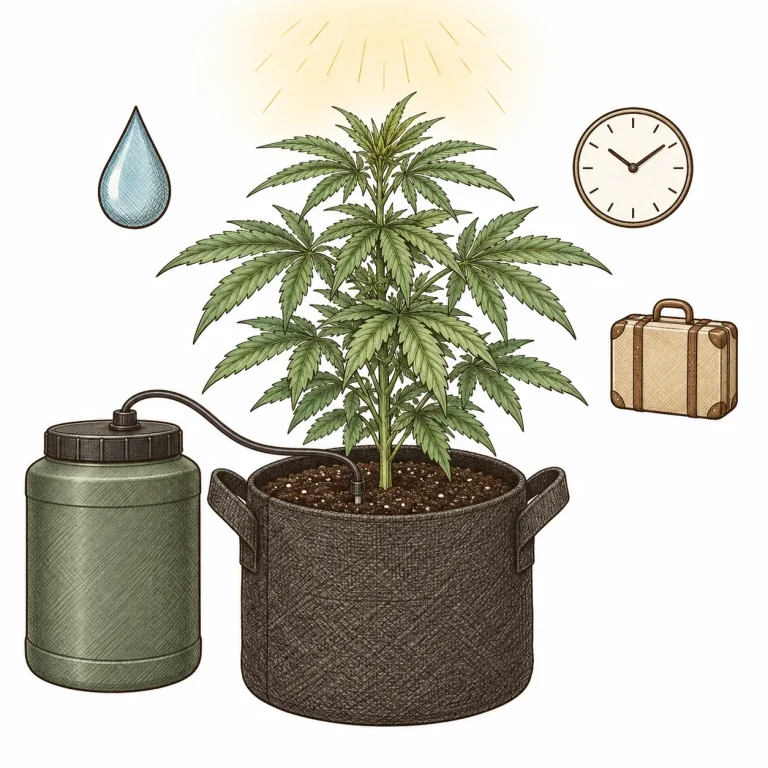
An automatic watering system makes sure your plants always get the right amount of water, either on a set schedule or exactly when they need it. That matters because irregular watering can stress your plants, and that stress can show up later as stunted growth or lower yields. If you’ve ever had to spot underwatering in cannabis, you know how fast drooping leaves and a bone-dry growing medium can set a plant back.
Many home growers want to keep their workload low without putting the quality of their harvest at risk. Automatic watering can greatly reduce the risk of overwatering and underwatering, because it relies on fixed physical or timer-based principles instead of a gut feeling for when to water. Check the cannabis laws where you live before growing.
A well-tuned system also promotes even root development and helps you avoid waterlogged soil, which often leads to oxygen-starved cannabis roots. If you plan to run several plants at once over the long haul, an automated system is hard to beat.
- Steady water supply, even when you’re away or on vacation
- Lower risk of overwatering and underwatering
- Saves time with multiple plants or large pots
- More even nutrient distribution with fertigation systems
The Autopot System: How It Works, Pros and Cons
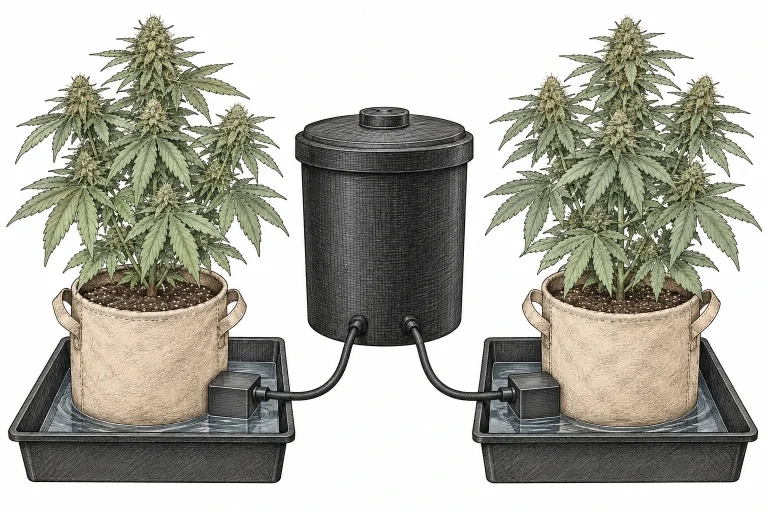
The Autopot system uses passive watering through a float valve. The valve only lets fresh water into the tray once the plant has drunk the tray dry. A central reservoir feeds several connected trays by gravity, so you don’t need any power for pump cycles as long as the tank sits higher than the trays. That makes Autopot especially attractive if you want to rule out power outages or pump failures as a risk.
One big advantage is self-regulation: the plant pulls water whenever it needs it, which lowers your risk of overwatering a lot. The system works well with soil, coco coir or hydroponic growing media, and you can run liquid nutrients through it so you water and feed in one step. The downsides are a slightly higher upfront cost per plant site and the need to check the valve for clogs on a regular basis.
Before you set it up, take a look at our cannabis growing medium comparison. Not every medium plays equally well with the capillary action of an AutoPot system. Coco and light soil mixes are usually the most reliable.
- Passive watering with no power needed in a gravity-fed setup
- Self-regulating valve reliably prevents overwatering
- Works with liquid nutrients for automatic fertigation
- Higher upfront cost and regular valve checks needed
Blumat Watering System: Clay Cone Technology Explained
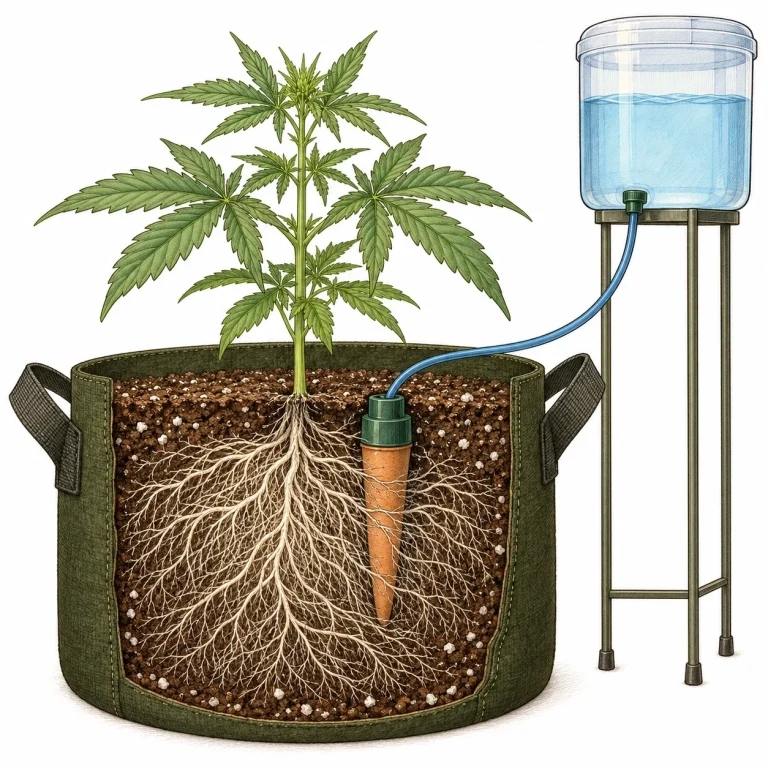
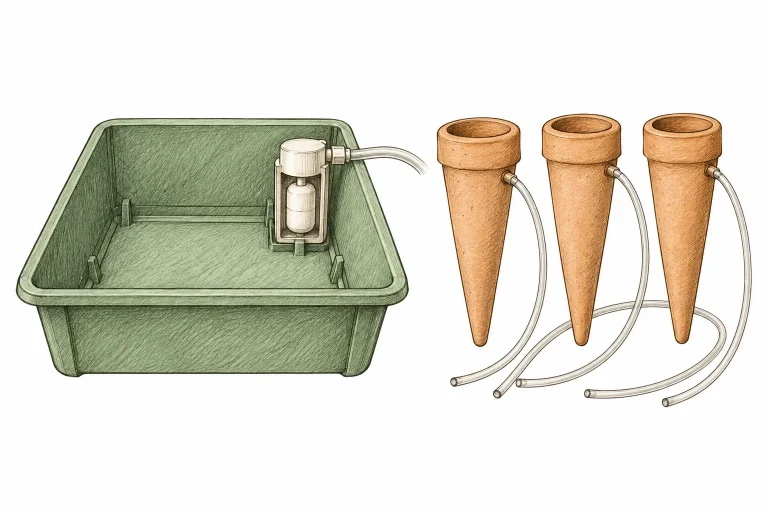
The Blumat system uses porous clay cones that you push into the growing medium. They use the moisture gradient in the soil to control how much water flows in. When the soil dries out, the cone builds up suction and pulls water from a connected reservoir. This works completely without power or electronics, which makes Blumat one of the toughest options for small to mid-size grows.
A clear plus of Blumat is how easy it is to use and how little it costs to get started compared to electronic systems. You will need to clean the cones now and then, though, because mineral buildup or roots growing into them can clog the pores. Dosing is also harder to fine-tune than with timer-controlled pump systems, so you can see small differences between plants of very different sizes.
If you are just getting started with setting up a grow tent, Blumat is a budget-friendly way to get your first experience with automated watering before you invest in more complex systems.
- Power-free clay cone technology with natural moisture control
- Low entry price for small grows and single pots
- Cones need regular cleaning to remove mineral buildup and roots
- Less precise dosing when plant sizes vary a lot
Drip Irrigation with a Timer: Flexible for Any Grow Tent Size
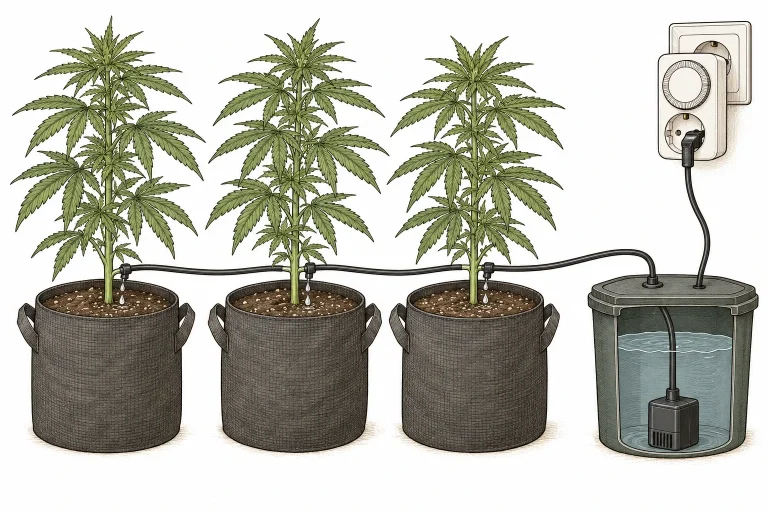
A timer-controlled drip system is made up of a pump, a timer and tubing with an individual dripper for each plant. Its big strength is flexibility: you can dial in intervals and watering amounts exactly for the growth stage, growing medium and pot size. Especially when you switch from the vegetative stage to flowering and your plants’ water needs change a lot, a timer system is quick to adjust.
These systems do need a reliable power supply and a pump that you maintain regularly. If the power goes out or a dripper clogs, your plants can quickly run dry. Adding a soil moisture sensor in the growing medium makes things much safer, because the system then waters based on actual need instead of the clock alone.
Getting the nutrient strength right also matters if you feed through the same system. Our cannabis NPK chart helps you set the right concentration for each growth stage, so you can avoid nutrient burn or underfeeding through your irrigation setup.
- Precisely adjustable intervals and watering amounts for each growth stage
- Works with moisture sensors for need-based watering
- Depends on a power supply and a working pump
- Drippers need regular checks for clogs
System Comparison: Which Watering System Fits Your Grow
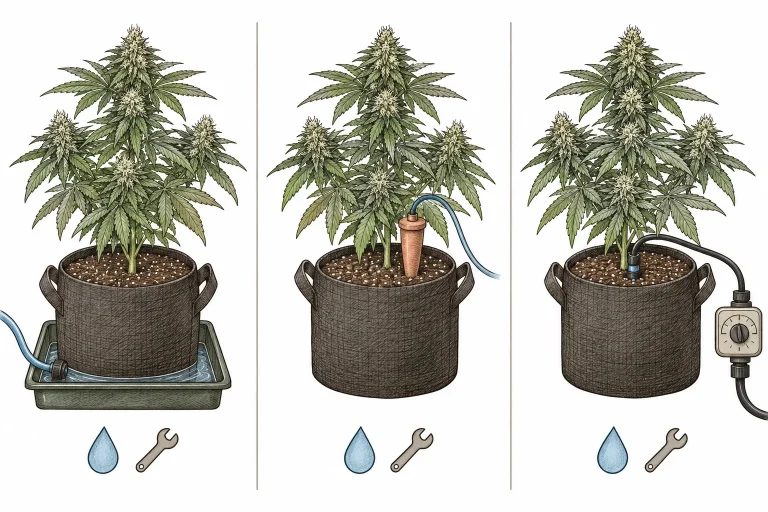
The right system depends a lot on how many plants you run, your budget and how much automation you want. To see how these upfront costs fit into the total cost of growing cannabis, check out our cost overview. For one to three plants, a simple Blumat setup is often all you need, while bigger setups with several grow tents benefit from how easily an Autopot or timer system scales. Check the cannabis laws where you live before growing.
If you already run CO2 in your cannabis grow or a highly dialed-in indoor setup, a precise timer-driven drip system with sensors is usually worth the investment. If you want a relaxed, low-maintenance grow without a lot of tech, Autopot or Blumat is the better pick.
Keep in mind that every system needs a break-in period before the settings are tuned to your growing medium and plant size. Watch closely how your plant responds during the first few weeks, and adjust intervals or valve settings as needed.
- Blumat: best choice for small grows and beginners without a power outlet
- Autopot: ideal for medium to larger setups if you want fertigation
- Timer drip system: maximum precision for pro-level indoor grows
- Plan a 1–2 week break-in period to dial in your system settings
Avoid Common Automatic Watering Mistakes
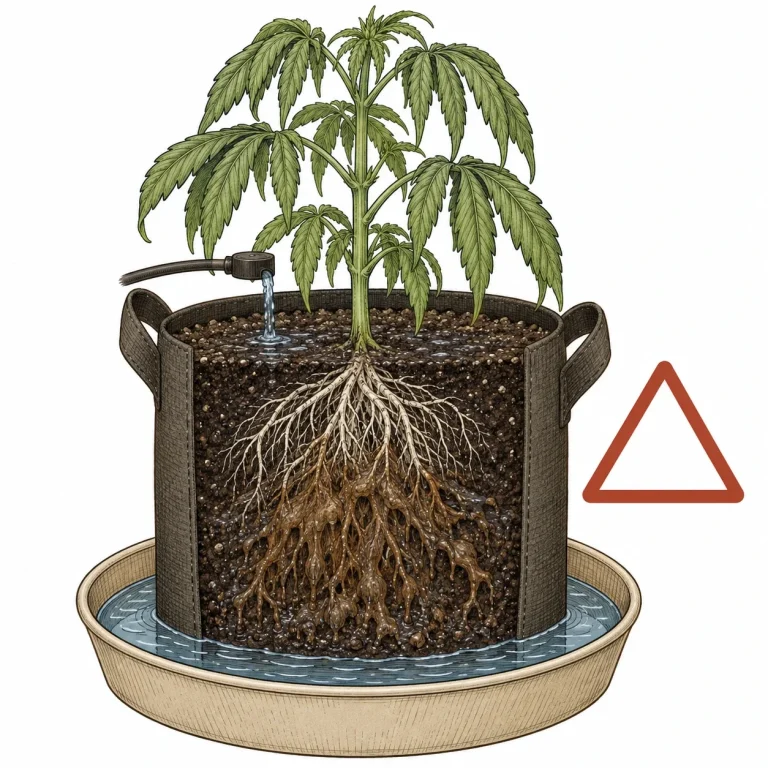
Automatic systems can go wrong too if the basic settings are off. The most common mistake is too much water or intervals that are too short, which keeps the growing medium constantly wet. That sets the stage for root rot and creates perfect conditions for pests like fungus gnat larvae, which multiply especially fast in moist soil.
Another mistake is placing drippers or ceramic cones too far from the main root zone. Part of the root ball then stays dry while other areas get soaked. So check regularly by eye that the medium is evenly moist. You can also find the basics of watering potted plants based on their needs in the irrigation brochure from LWG Bayern (German).
Water quality matters too: hard tap water can clog Blumat cones and drippers faster. A pre-filter or softer water, for example cut with RO or rainwater, can make your components last a lot longer and gives you more consistent results over the whole grow.
- Avoid too much water or intervals that are too short
- Place drippers and ceramic cones close to the main root zone
- Filter or pre-treat hard water
- Check the moisture of your medium by eye on a regular basis
Frequently Asked Questions
Is automatic watering a good fit for beginners?
Yes. Blumat systems in particular are beginner-friendly because they run without power or complicated programming. Autopot and timer systems take a bit more learning, but with clear instructions they work well for beginners too.
Does automatic watering still work during a power outage?
Autopot and Blumat work passively without electricity, so they keep running reliably even during a power outage. Timer-controlled drip systems, on the other hand, need power for the pump and stop working when the power goes out.
How often do I need to maintain an Autopot or Blumat system?
Usually, a quick check every one to two weeks is enough to make sure the valves and clay cones aren’t clogged. If you have hard water, plan on cleaning them a bit more often.
Can I combine automatic watering with liquid nutrients?
Yes. Both Autopot and timer-based drip systems work easily with liquid nutrients in the reservoir, so watering and feeding happen at the same time. With Blumat it’s possible too, but you have less precise control.
How many plants am I allowed to grow?
That depends on where you live, so check the cannabis laws in your area before growing. For a small home grow with just a few plants, smaller watering systems like Blumat or a basic Autopot kit are all you need.
The Bottom Line
Automatic watering doesn’t just cut down on daily chores. A steady water supply also gives you more even, healthier plants. Whether Autopot, Blumat or a timer drip system is the right choice depends on your budget, how many plants you run and how much automation you want. Either way, proper setup and regular checks are key, so you can catch overwatering or clogs early. With the right system, you save valuable time and set up ideal conditions for a successful grow. For a side-by-side comparison of all six systems with manufacturer specs and where to buy them, check out our cannabis watering system comparison (German).
