

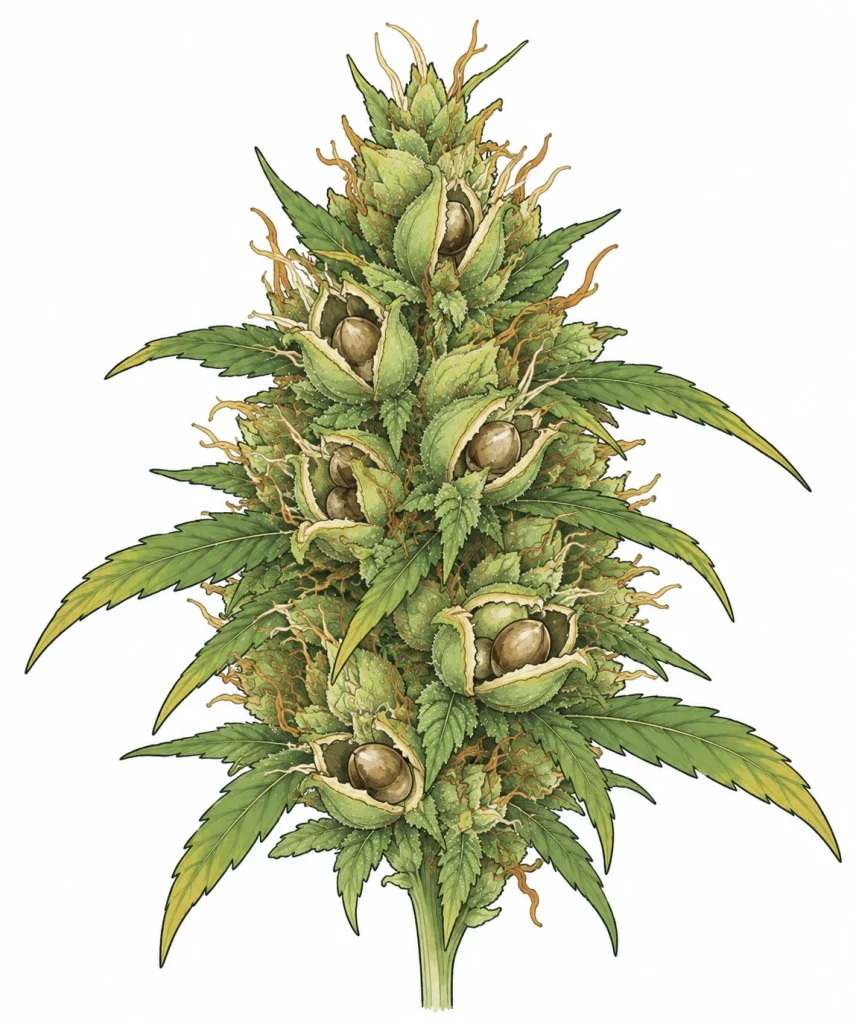
Finding cannabis seeds in your buds is a gut punch for a lot of growers. You put in weeks of work, and suddenly fat seeds are poking out of your flowers. Growers call this “seedy buds.” It happens when pollen lands on the pistils and fertilizes the plant. The causes range from a male plant you missed to hermaphrodites to genetic stress. In this article, you’ll learn why cannabis forms seeds in your buds, how to spot the signs early, and what you can do to prevent it in your next grow.
How Do Seeds End Up in Cannabis Buds?
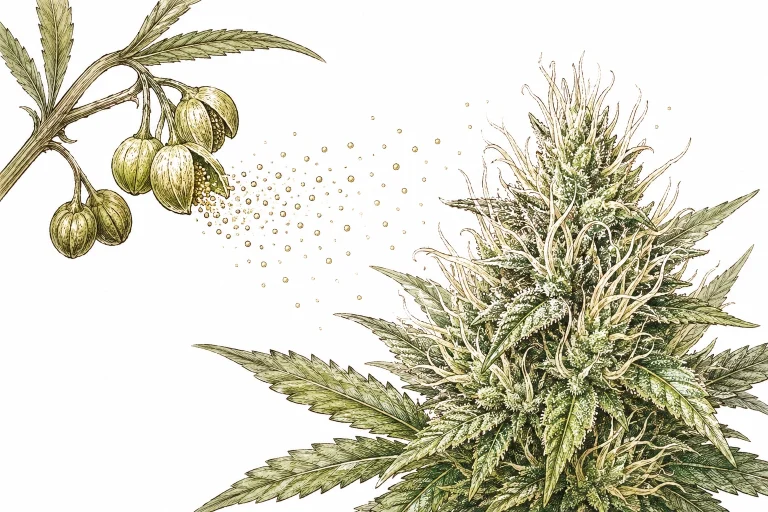
Cannabis is naturally a dioecious plant. That means there are male and female plants. Females produce the resin-rich flowers you’re after, while males form pollen sacs. To learn how to sex your plants in time, check out the article How to Sex Cannabis Plants. As soon as pollen from a male lands on the white hairs (pistils) of a female, fertilization begins. Pollen and egg cell fuse, and the plant switches its whole metabolism over to making seeds. From then on, it puts its energy into seed production instead of resin. The result: seeds in your buds.
Besides the classic male plant, there’s another cause that often gets overlooked: hermaphrodites. Under certain conditions, a plant that’s actually female develops male structures. These can show up as classic pollen sacs or as so-called bananas (exposed stamens without a sac). Both release pollen and can seed your entire harvest. The tricky part: bananas often appear late in flowering and are easy to miss. If you want to understand how nutrient problems like a calcium deficiency in cannabis can add to the stress that leads to seeds, keep a close eye on how well your plants are fed.
Pollen also travels fast. A single open pollen sac can seed dozens of plants within hours, thanks to the airflow in your grow room. Outdoors, wind and insects can carry pollen over long distances. Even feminized seeds aren’t 100 percent safe from turning hermie, especially with unstable genetics or when your plants are under serious stress.
- A female plant gets hit with pollen from a male
- A hermaphrodite plant develops male structures (pollen sacs or bananas)
- Pollen from outside sources gets into your grow space
- Fertilization kicks off seed production and lowers resin content
How to Spot Seeds in Cannabis Buds: Symptoms and Early Signs
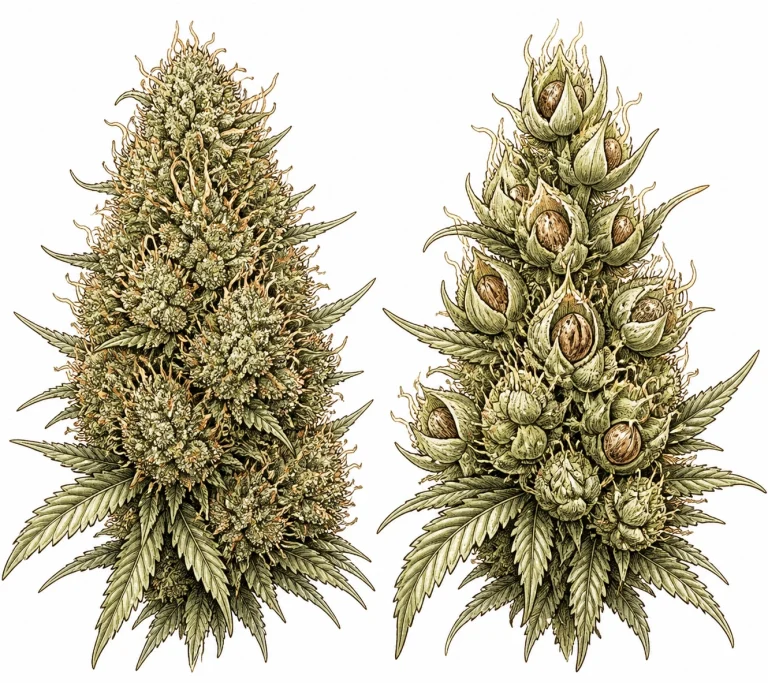
The most obvious sign of seeds in your buds is the seeds themselves: plump, oval to round bodies in green, gray, brown or with tiger stripes, sticking out of the calyxes. They can be scattered throughout the bud or clustered in certain spots, depending on when and where the pollen landed. Mature seeds pop out of the calyxes easily and have a hard shell.
Early signs are more subtle. Watch for calyxes that swell up more than usual. That’s often the first visible clue that a seed is forming inside. Overall, the buds start to look “airy” and less dense. After pollination, the pistils turn orange or brown faster than normal. If you see a few split calyxes with tiny green shapes poking out, those are immature seeds in the making. Yellow cannabis leaves can also show up alongside, when stress makes the plant go hermie and causes nutrient problems at the same time.
Pollen sacs and bananas have telltale features. Pollen sacs look like tiny clusters of green bananas or grapes that appear where the flower stems branch off. Bananas, also called “nanners,” are elongated, yellowish to orange stamens that grow straight out of the buds, often with no protective sac. They’re especially sneaky because they can appear in unstable genetics even without any obvious stress trigger.
- Plump, oval seeds sticking out of the calyxes
- Calyxes swelling up more than usual
- Pistils turning orange/brown faster than normal
- Visible pollen sacs or bananas on the flower stems
- Buds look airier and less dense than expected
- Split calyxes with tiny green shapes inside
The Most Common Causes of Seeds in Cannabis Buds
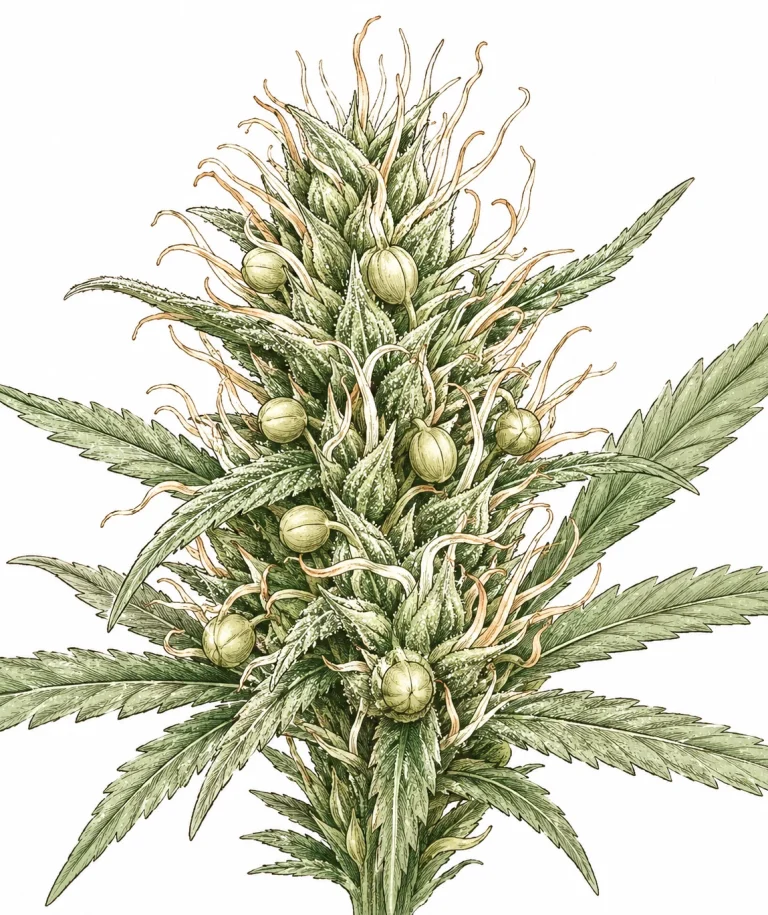
By far the most common cause is an undetected male plant in your grow room or somewhere close by. If you grow regular (non-feminized) seeds, you can expect roughly half of your plants to be male. Male plants develop pollen sacs early in flowering, often as early as week two or three. If you flip your lights from veg to 12/12 and don’t check your plants every day, you risk a silent disaster.
Stress is the second most common cause, and it can hit feminized strains too. When cannabis faces serious stress, it switches into survival mode: the plant tries to pollinate itself so it can pass on its genes. The linked article explains in detail how to spot and stop a hermaphrodite before it releases pollen. Several factors can trigger hermaphroditism. Light stress is especially critical. Any interruption of the dark period, whether from light leaks or lights switching on by accident, can put your plant on high alert. Temperature extremes, overfeeding (more on that in our article on cannabis nutrient burn) and water stress are common triggers as well. A poorly dialed-in pH for cannabis can also stress your plant for weeks and make hermaphroditism more likely.
The third major cause is unstable genetics. Not every seed bank breeds feminized strains with the same care. Feminized seeds are made with a chemical treatment (usually colloidal silver or rodelization) that gets female plants to produce pollen. If breeders use plants that already have hermaphrodite tendencies, those traits get passed on to the offspring. That’s why cheap or sketchy genetics are much more likely to throw seeds, even under ideal conditions. Stick with strains from reputable breeders.
In outdoor growing, there’s one more cause: cross-pollination. In areas with wild hemp or other outdoor grows nearby, wind can carry pollen for several miles. Insects can also spread pollen. Outdoors, you have a lot less control here, so you may want to plan an earlier harvest if needed.
- Undetected male plant in your grow space
- Light stress from an interrupted dark period (light leaks)
- Temperatures above or below the ideal range
- Nutrient burn or nutrient imbalances
- Incorrect pH
- Water stress from overwatering or underwatering
- Unstable or low-quality genetics
- Cross-pollination from outside pollen (outdoor)
What to Do If You Find Seeds in Your Cannabis Buds
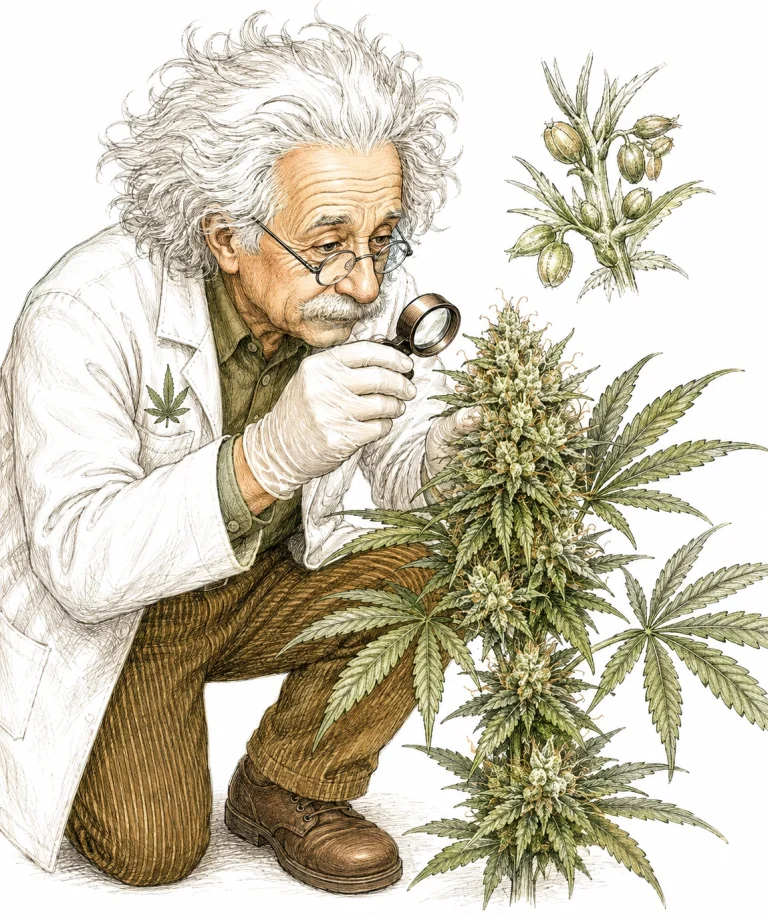
As soon as you spot seeds or pollen sacs in your grow, act fast. Your first step is a thorough inspection of every plant. Work your way systematically from the bottom up and check every bud site. Pollen sacs often show up first on the lower branches and deep inside the plant, where less light reaches. Use a magnifier or a headband magnifier for a better view. If you can, wear fresh gloves and take your time: rushing can damage pollen sacs and release pollen.
If you find a hermaphrodite, how you respond depends on how bad it is and when it shows up. If you spot just a few individual nanners (banana-shaped stamens) late in flowering, you can carefully pluck them with tweezers and dab the affected spots with a slightly damp paper towel to trap any leftover pollen. Moisture can make pollen nonviable. But if there are lots of pollen sacs, or the plant is in the early to middle flowering stage, isolating or removing the affected plant is the safer call.
A fully seeded harvest isn’t a total loss. Potency can be lower than in seedless buds, but seeds in your cannabis buds don’t mean your whole grow is worthless. The buds are still usable, and you can pick the seeds out. For future grows, track down the cause carefully. Check your lighting setup for light leaks, fine-tune your watering with our guide on how to water cannabis properly, and make sure all your environmental conditions stay steady in the ideal range.
As part of any complete indoor cannabis grow, it also pays to keep a log of which genetics showed hermaphrodite tendencies, so you can skip those strains next time. Your money is better spent on tested, stable genetics from reputable seed banks.
- Inspect every plant right away with a loupe for pollen sacs and nanners
- Isolate the hermaphrodite plant, or remove it if it’s heavily affected
- Carefully pluck single nanners with tweezers
- Trap pollen with a damp cloth, since moisture deactivates pollen
- Seal any light leaks in your grow room and check your lighting
- Find the sources of stress and eliminate them
- Replace unstable genetics with strains from reputable breeders on your next grow
How to Prevent Seeds in Your Buds on Your Next Grow
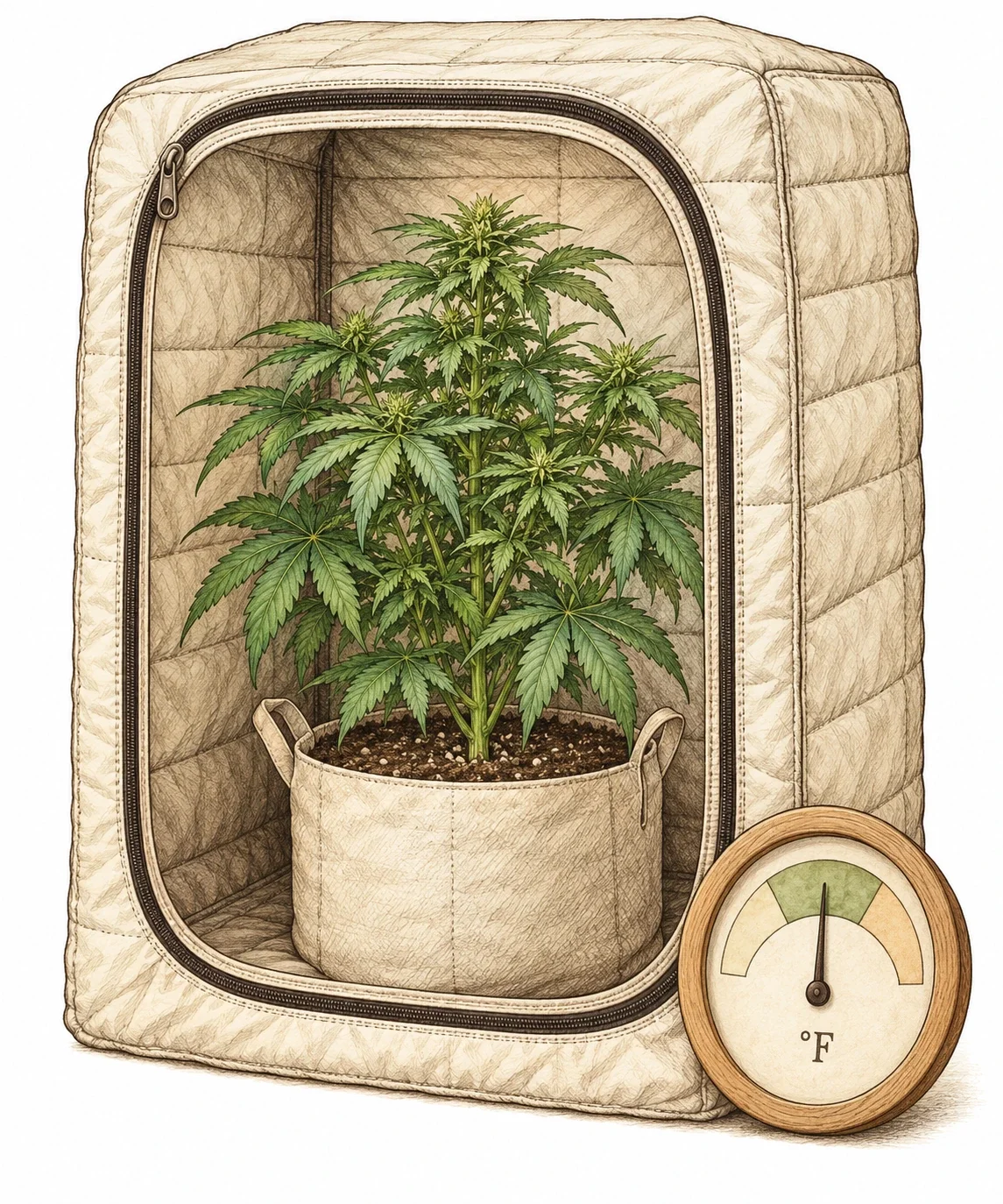
Prevention starts with genetics. Only buy seeds from reputable seed banks with proven quality control. Feminized seeds from a trusted source can greatly reduce the risk of hermaphroditism. Autoflowering strains are less prone to light-stress hermies because they flower differently, but they aren’t completely immune. If you’re growing from regular seeds, sex your plants early. Males usually show their preflowers about a week before females do.
Your second focus is cutting down on stress. Keep your environment steady: 68–82 °F (20–28 °C) during lights-on, humidity (RH) below 50% in flower, and consistent feeding without extremes. Make sure your grow space is completely light-tight during the dark period. In extreme cases, even the LED indicators on your gear can cause problems. Tape over every light source, then check the room with your own eyes after the lights go off.
Also set up a fixed inspection routine. From week two of flower, check every bud site for male structures at least twice a week. It only takes a few minutes, but it can save your whole harvest. To track down other possible problems in your grow, head over to our Plant Diagnosis hub, where you’ll find all the symptoms and causes at a glance.
- Only use seeds from reputable, quality-tested seed banks
- Sex regular-seed plants regularly from week 2 of flower
- Check that your grow room is completely light-tight during the dark period
- Keep temperature, humidity and nutrients steady in the optimal range
- Inspect systematically for pollen sacs at least twice a week
- Note down unstable genetics and avoid them in the future
- Rule out stressors like pH swings and nutrient burn
Frequently Asked Questions
Can I still use seeded buds?
Yes, seeded buds are still usable. Potency is lower than in seedless flowers because the plant put energy into making seeds, but the cannabinoids are still there. Pick out the seeds before use. When drying and curing, stick to the right conditions as usual.
Will the seeds from my buds germinate?
That depends on how mature they are. Fully mature seeds with a hard shell and tiger stripes often germinate. White, soft or immature seeds usually won’t. Keep in mind that seeds from a pollinated hermaphrodite often carry hermie tendencies too, so breeding with them calls for caution.
Why does only one plant have seeds when there was no male around?
That’s a clear sign of hermaphroditism. The affected plant developed male structures under stress and pollinated itself. Check for light leaks, temperature extremes, nutrient burn and pH problems as possible stress triggers. It’s best not to use this plant’s genetics on your next grow.
What are nanners in cannabis, and are they worse than pollen sacs?
Nanners (also called bananas) are exposed stamens that grow straight out of the buds without a protective sac. They release pollen right away, which makes them especially risky, since they’re often spotted late. Pollen sacs, on the other hand, have to burst open before they release pollen, which gives you a bit more time to react. Both should be taken seriously and removed immediately.
When should I start checking my plants for male structures?
Start checking right after you flip to a 12/12 light cycle. Male structures typically show up in weeks one to three of flower. From then on, check all bud sites at least twice a week, especially on the lower part of the plant and inside the canopy, where pollen sacs tend to appear first.
Can outdoor plants get pollinated by a neighbor’s plants?
Yes, that can happen. In dry weather, wind can carry cannabis pollen for miles (several kilometers). If there’s wild hemp or other outdoor grows nearby, your risk goes up. In that case, an earlier harvest can make sense. Greenhouses or covers give you extra protection.
A related problem is revegetation after harvest. Both issues are closely tied to stress and light cycle disruptions. You should also know how to spot true hermaphrodites: How to Spot Hermaphrodite Cannabis Plants.
Bottom Line
Seeds in cannabis buds come from pollination. That can be a male plant you missed, hermaphroditism triggered by stress, or unstable genetics. Your best defense: catch it early and prevent it with a stable environment, a light-tight grow space and genetics from reputable breeders. If you find seeds in your buds, act fast. Isolate affected plants, remove pollen sacs and figure out the cause for future grows. Seeded buds are less potent, but they aren’t a total loss. And what you learn from it makes you a better grower.
