
Growing Cannabis Outdoors — Guides & Troubleshooting
Everything for a successful outdoor grow: choosing strains, protecting plants from the weather, dealing with pests and spotting common problems.
Growing cannabis outdoors — what you need to know
Growing cannabis outdoors gives you natural sunlight, lower energy costs and often distinctive terpene profiles — but it also comes with its own challenges: weather, pests and mold are the biggest risks. Check the cannabis laws where you live before you plant. This hub shows you step by step how to succeed at growing cannabis outdoors and how to spot common problems early.
Timing makes or breaks the whole grow: in temperate climates of the Northern Hemisphere, plants usually go outside from mid-May on, once the last spring frosts (German) have passed and night frosts are no longer a threat, and harvest falls between September and October depending on the strain. Start too early when growing cannabis outdoors and you risk cold damage; harvest too late and you risk mold from fall rains.
Strain choice matters even more when growing cannabis outdoors than indoors: in cooler temperate climates, hardy, fast-flowering strains that are ready to harvest before the fall rains do best. A sunny, sheltered spot with good drainage further reduces the risk of waterlogged soil and fungal infections.
Watching the weather is a must for outdoor growers, not a nice-to-have: check your plants after every heavy rain, especially the buds as they get denser in late flowering. If your plant is already showing signs of pests or fungal infection, our Plant Diagnosis Tool helps you narrow it down fast.

“The biggest outdoor mistake: not checking your plants after rain. Mold can develop within 24–48 hours. Check your plants shortly after every rainfall — especially the buds.”
Outdoor guides & troubleshooting
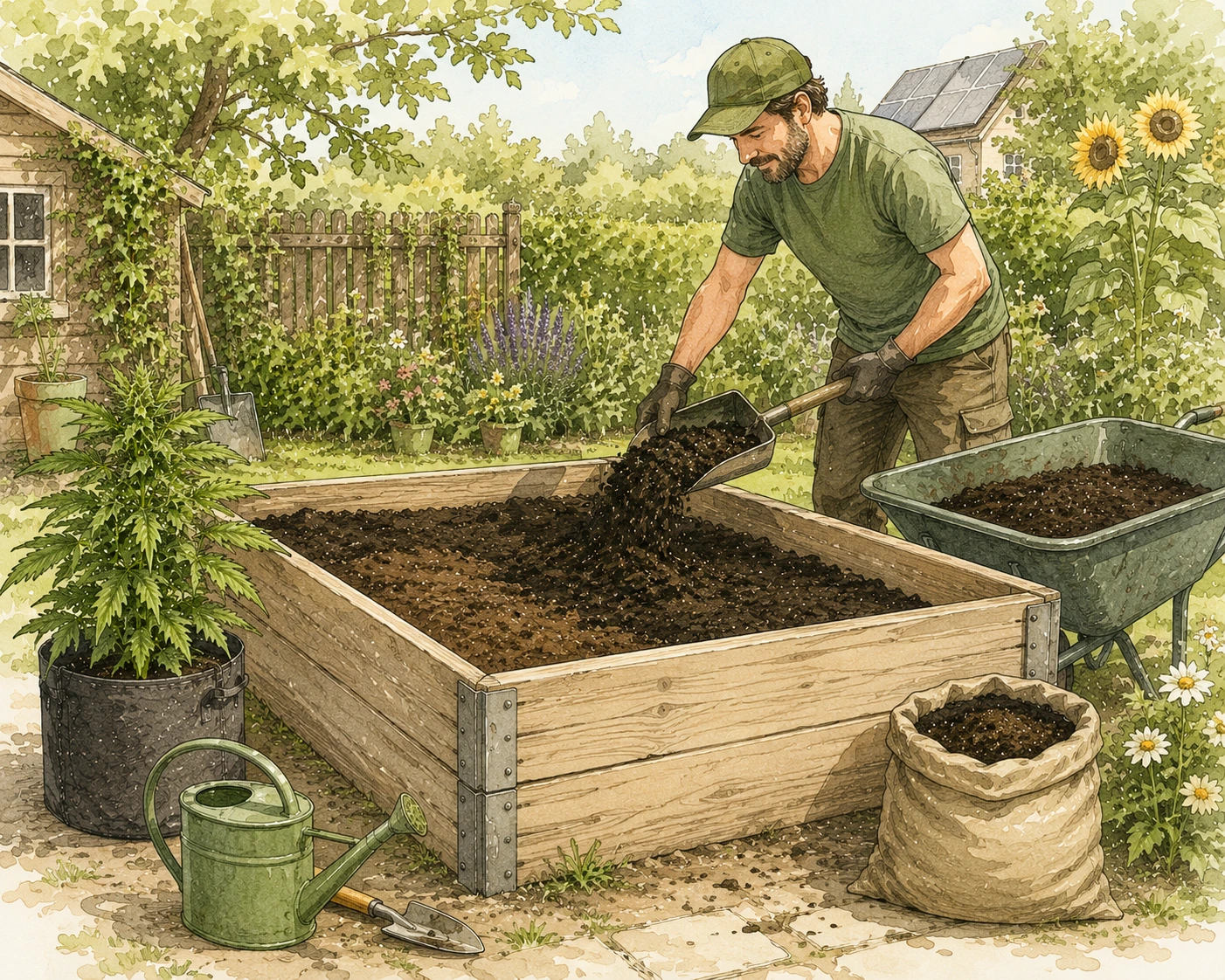
Growing cannabis outdoors — the complete guide
From seed to harvest: everything you need for a successful outdoor grow in a temperate climate.
Read article →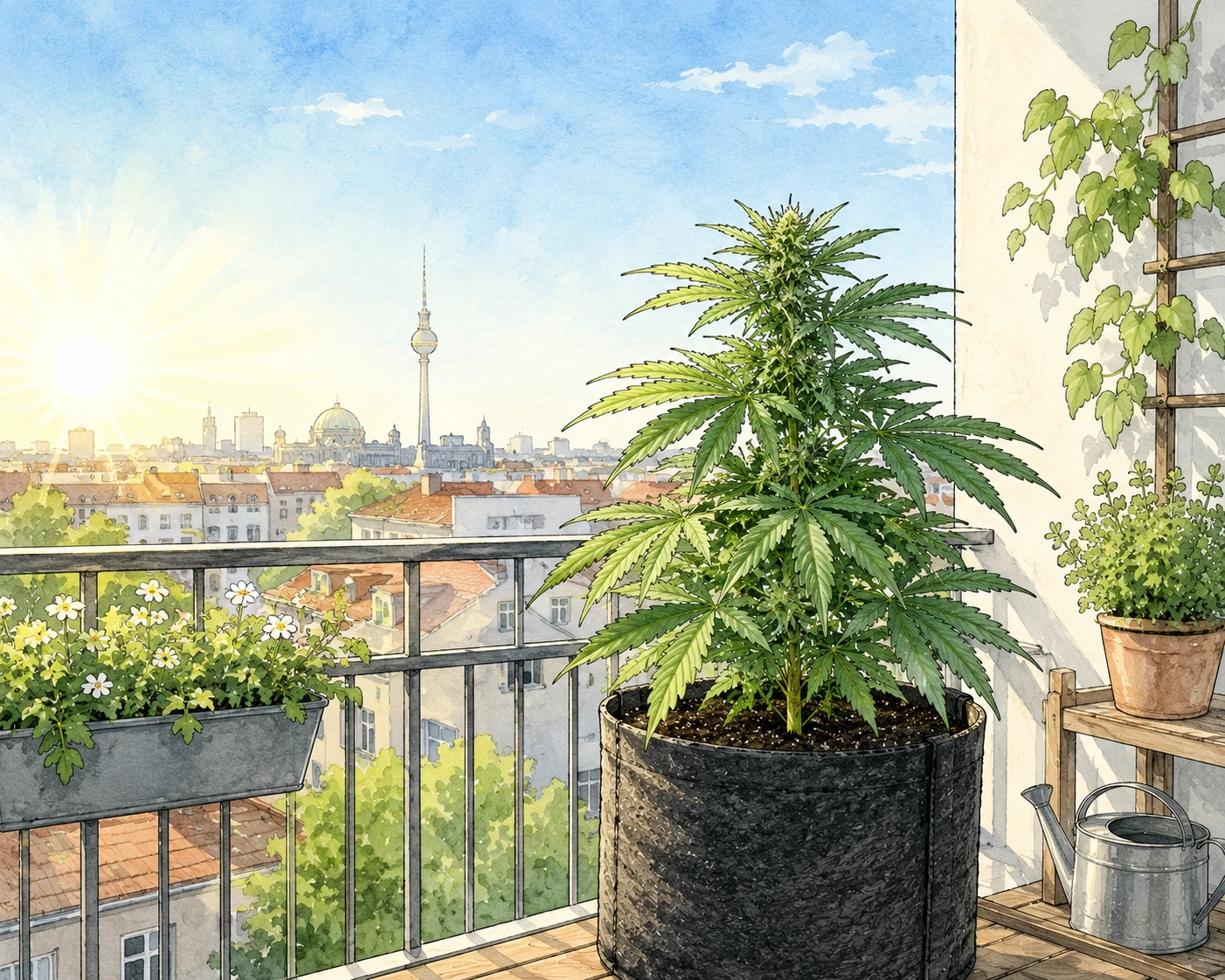
Growing cannabis on a balcony
Small space, big harvest — how to pull off a balcony grow with the right strain and care.
Read article →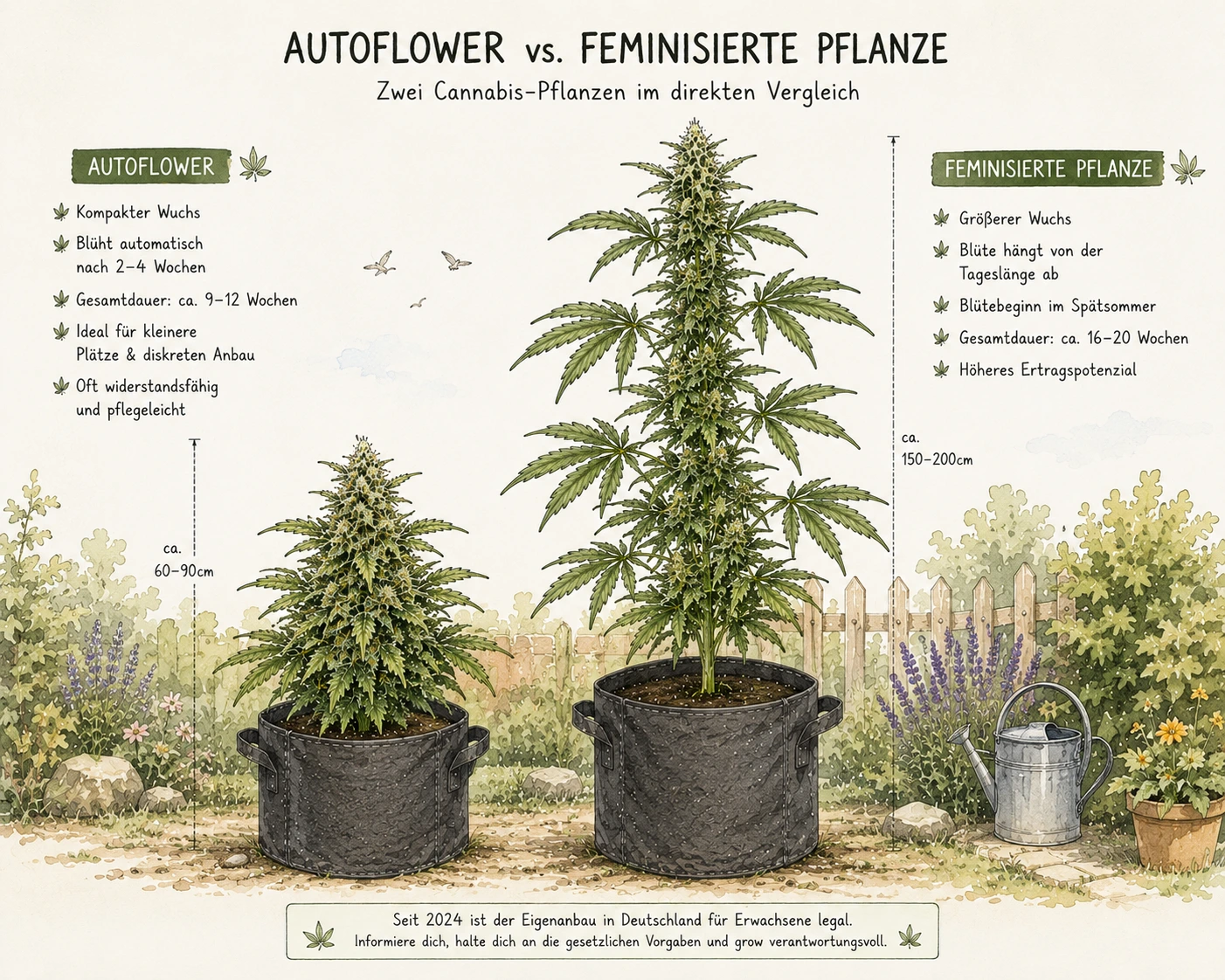
Best outdoor strains for cooler climates
Which strains can handle a cool, temperate climate? The best picks for short summers.
Read article →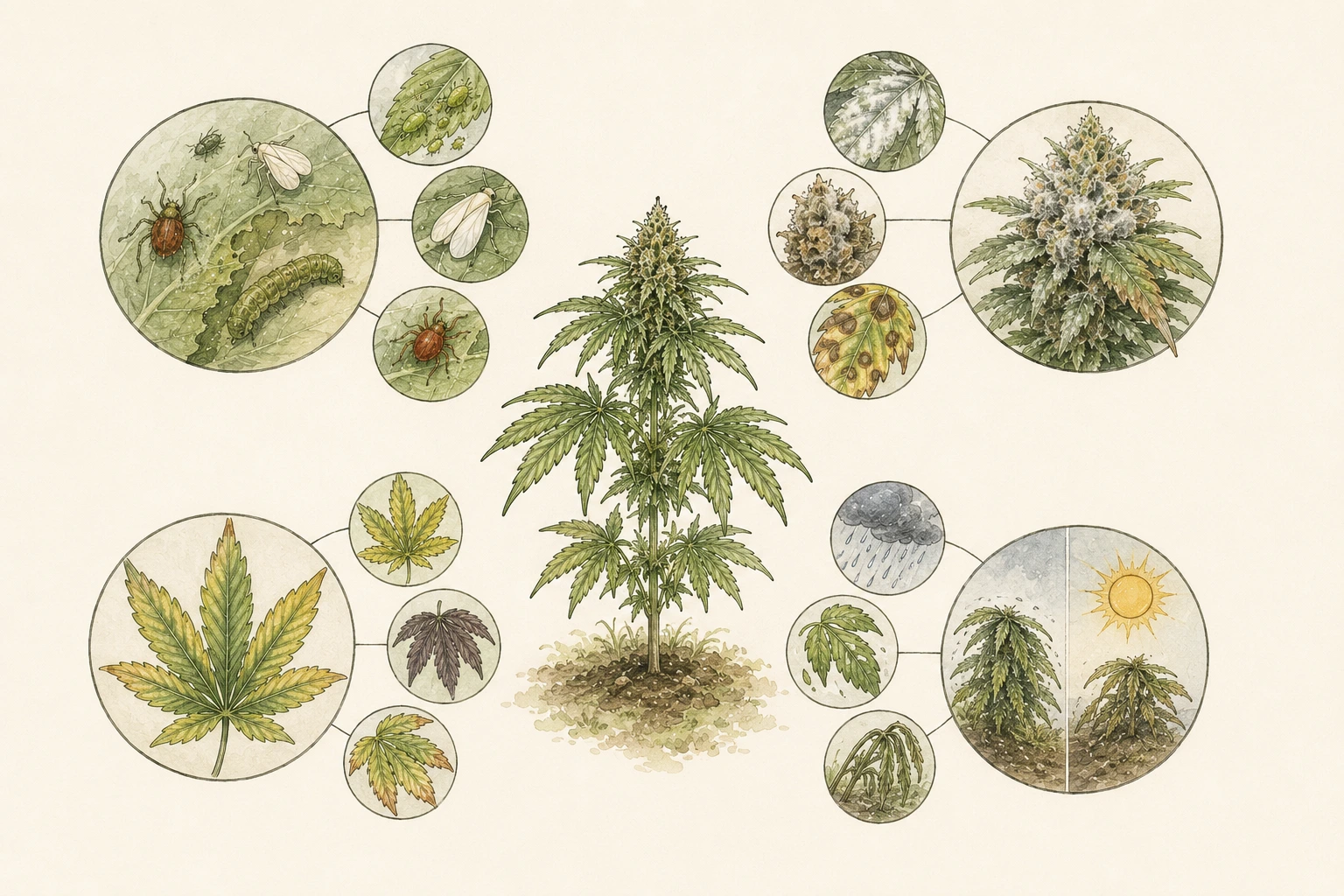
Spotting outdoor cannabis problems
An overview of all common outdoor problems: weather, pests, nutrients — and how to tell them apart.
Read article →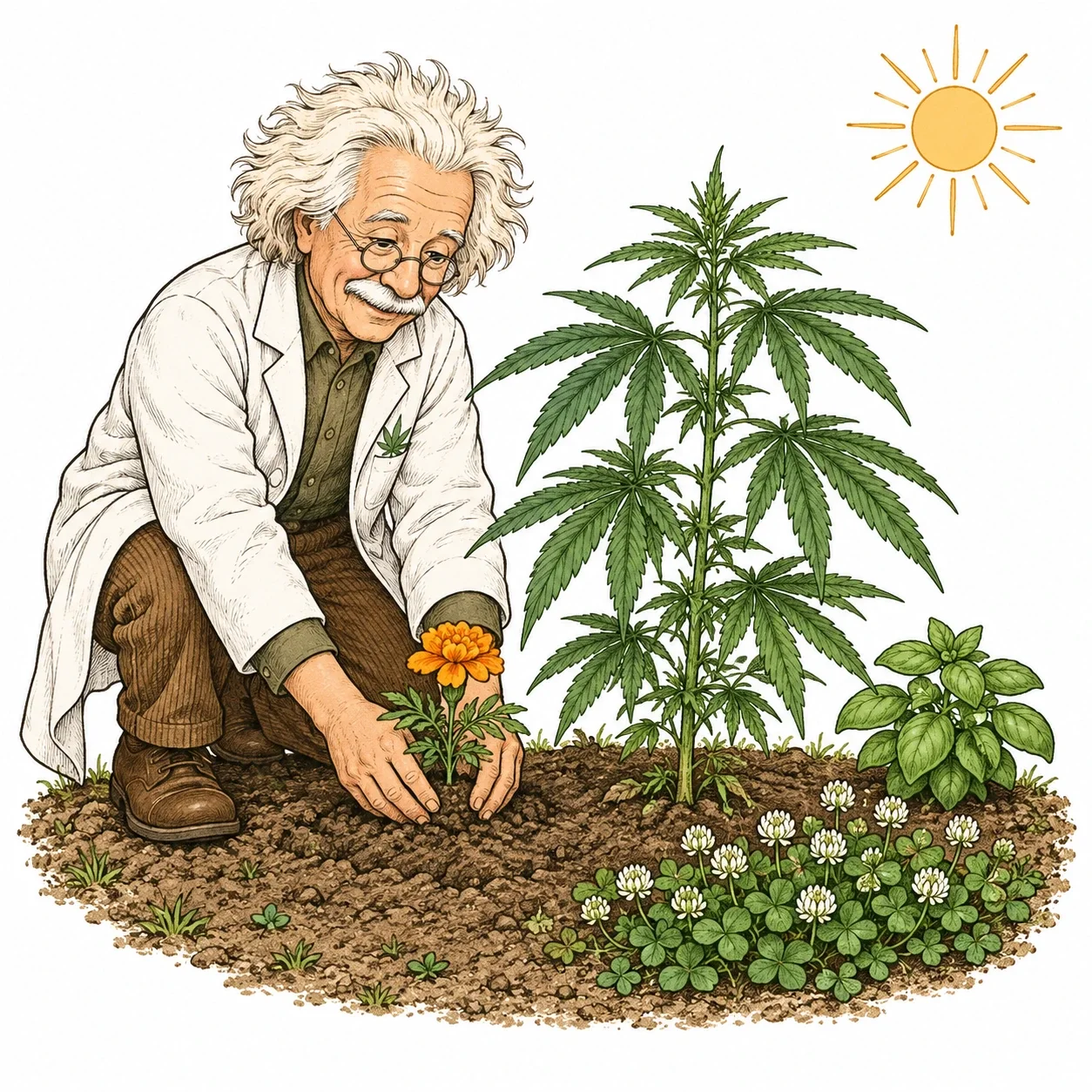
Companion plants for outdoor cannabis
Ten proven companion plants for your cannabis bed — how to attract beneficial insects and keep pests away.
Read article →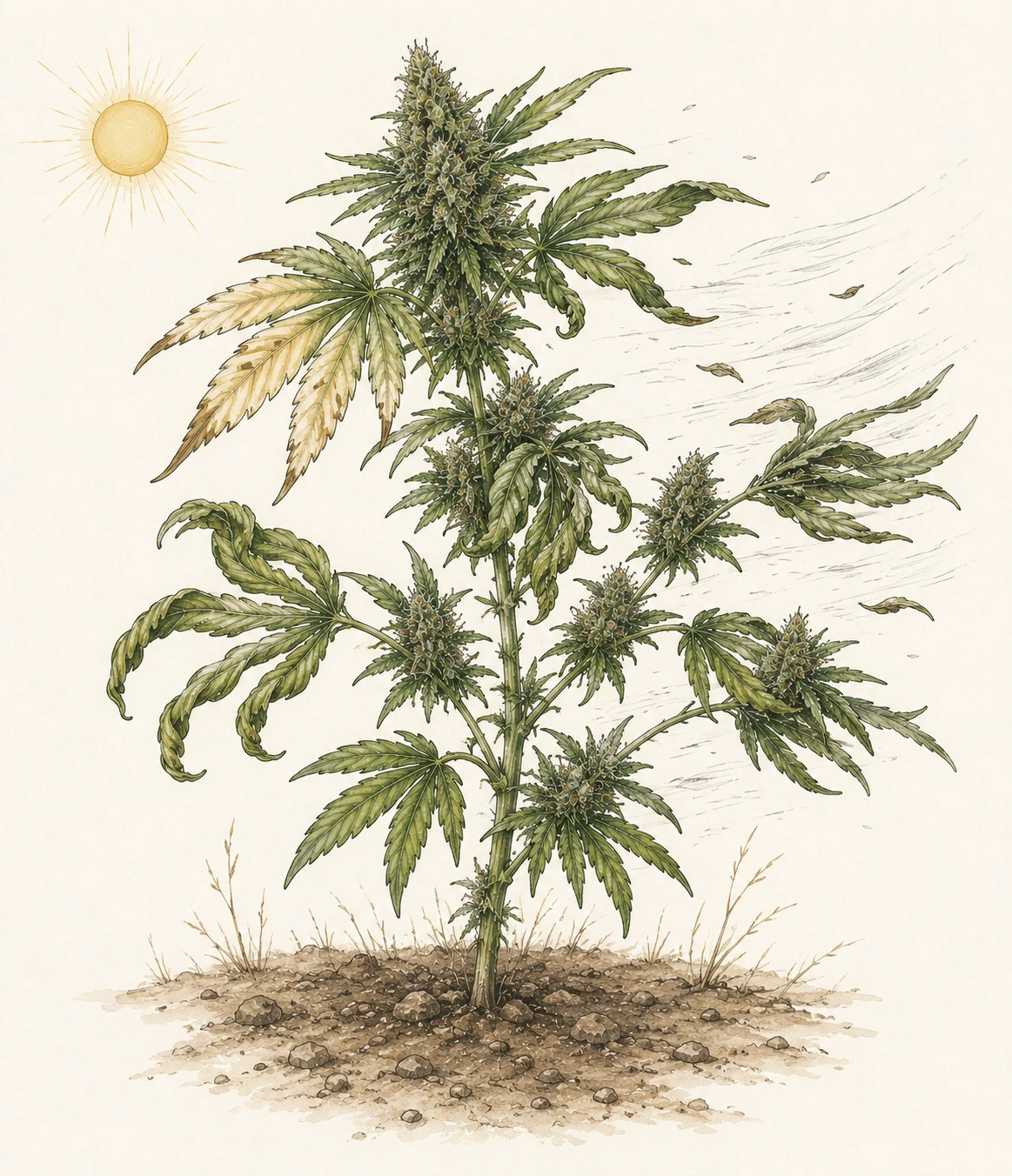
Rain protection for outdoor cannabis
How to protect your plants from rain, waterlogging and mold — simple solutions for any grow.
Read article →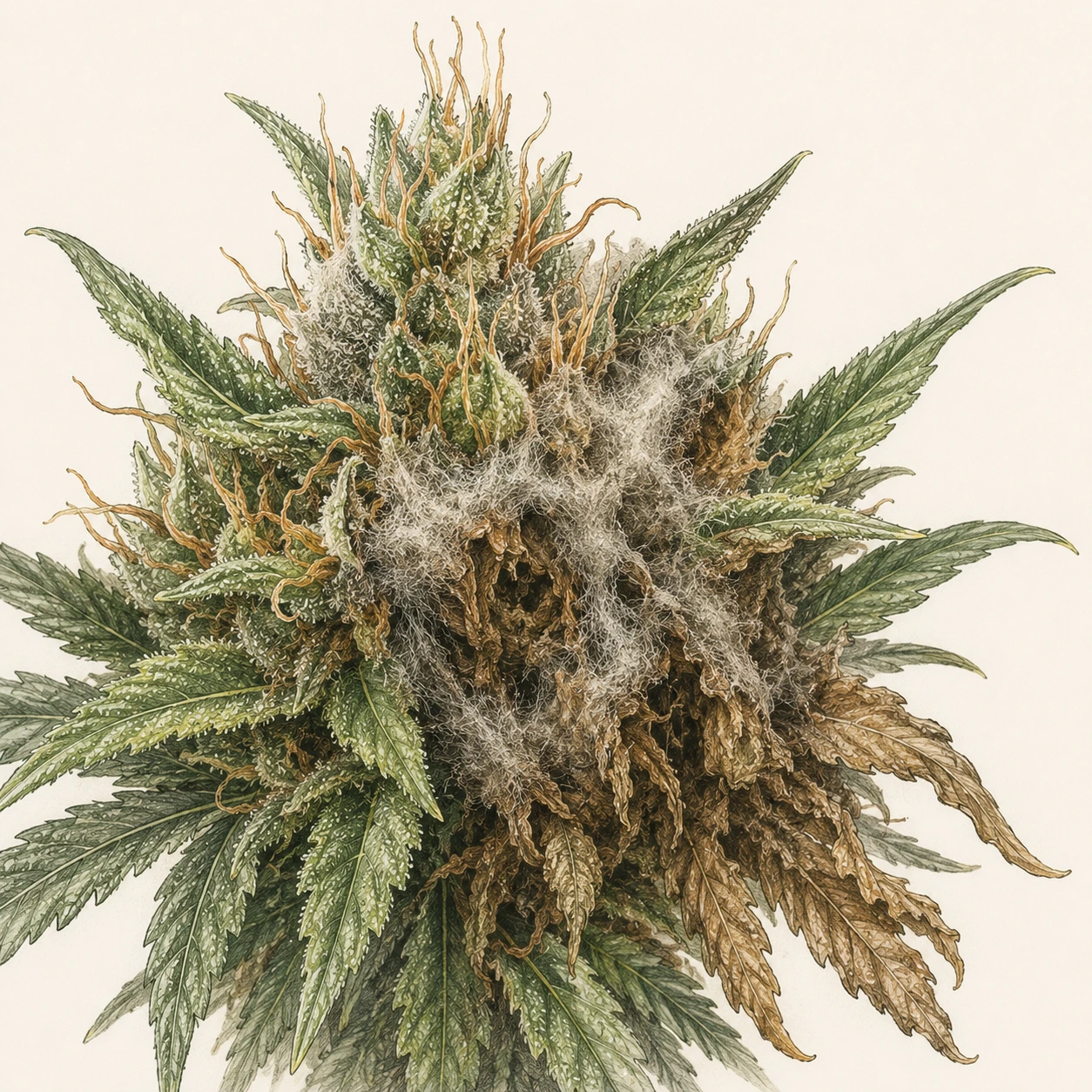 Act now
Cannabis mold after rain
Mold can develop within 24–48 hours. How to spot bud rot (botrytis, gray mold) early and save your harvest.
Read article →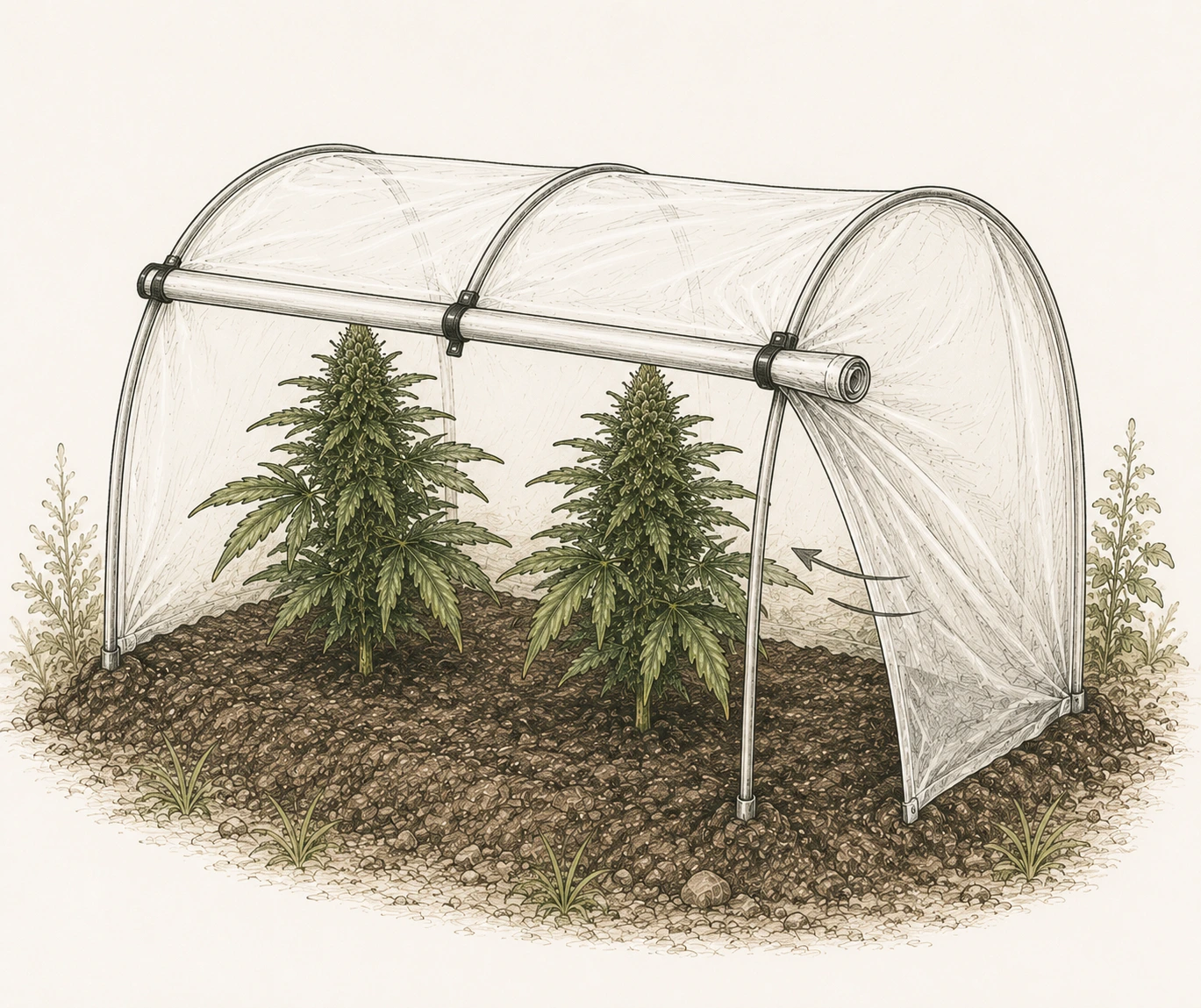
Spotting wind damage on cannabis
Broken branches, curled leaves, stress symptoms — how to spot and fix wind damage.
Read article →
Spotting cannabis sunburn
Whitish-yellow bleaching only on the upper leaves facing the light — how to tell sunburn from a nutrient deficiency.
Read article →Frequently asked questions about growing cannabis outdoors
When is the right time to plant cannabis outdoors?
In temperate climates of the Northern Hemisphere, usually from mid-May on, once night frosts are no longer expected. If you plant out too early, you risk cold damage to the young plant — when in doubt, keep it growing indoors for another week or two.
Which cannabis strains are best for growing outdoors in a temperate climate?
Hardy, fast-flowering strains are the best choice because they’re ready to harvest before the fall rains. Autoflowering strains have the added advantage that they grow independently of the light cycle and can make several harvests per season possible.
How do I protect my outdoor plant from rain and mold?
A sheltered, sunny spot with good drainage reduces the risk considerably. Check the buds after every heavy rain — mold can develop within 24–48 hours, especially in the denser buds of late flowering.
When is outdoor cannabis harvested in a temperate climate?
Depending on the strain, between September and October. Flowering starts in mid to late summer as the nights get longer – you harvest after roughly eight to ten weeks of flowering. Photoperiod strains follow the natural light cycle, while autoflowering strains follow their own internal schedule.
Which pests are especially common when growing outdoors?
Caterpillars, slugs and snails, and various aphids are more common outdoors than indoors, since there’s no controlled environment to keep them out. Regularly checking the undersides of leaves and acting fast at the first signs prevent bigger damage.
Is growing outdoors harder than growing indoors?
Not necessarily harder, but less predictable — you control neither the weather nor the temperature, but you save on electricity and often get stronger terpene profiles thanks to natural sunlight. The biggest difference is having to react to the weather instead of keeping everything constant.
