

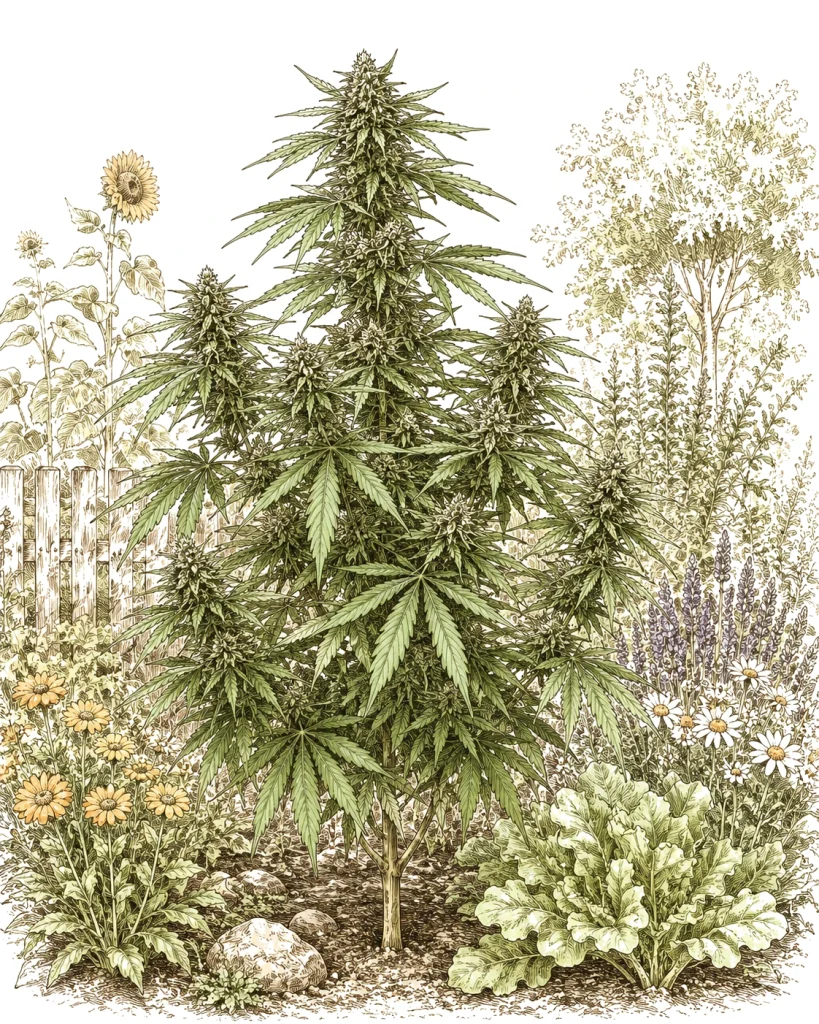
Growing cannabis outdoors can deliver amazing results if you do it right. Before you start, check the cannabis laws where you live. Natural sunlight, fresh air and a good growing medium give your plant everything it needs. This guide walks you through what really matters, step by step: picking the right spot, choosing the right soil and avoiding the most common mistakes. Garden, patio or raised bed, you’ll find everything you need for a successful outdoor grow right here. Only have a balcony? Our Cannabis Balcony Guide covers tight spaces and keeping your grow discreet.
Whatever you call it (weed, ganja or cannabis), the plant grows especially strong outdoors when the spot and the growing medium are right. The tips below apply either way.
Outdoor Cannabis Growing: Check Your Local Laws First
Rules for home growing vary a lot from place to place, so check the cannabis laws where you live before growing. A private spot like a garden, patio or raised bed works best, as long as kids can’t get to your plants. Only have a balcony? Check out our balcony growing tips. If neighbors or passersby can see your plants, a privacy screen helps you avoid trouble.
Good to know: local rules often cover how many plants you can grow and what you can do with your harvest. Read up on them and stick to them. Once that’s sorted, outdoor growing is a realistic and rewarding option for lots of home growers.
- Check your local laws before you plant
- Find out about plant limits where you live
- Know the rules for what you do with your harvest
- Keep plants out of reach of kids
- Shield plants from public view where possible
Choosing the Right Spot for Your Outdoor Grow
Where you put your plants is the single biggest decision in outdoor growing. Cannabis loves direct sun, ideally at least 6 to 8 hours a day. The more light your plant gets, the stronger it grows and the bigger your harvest can be. In the Northern Hemisphere, south-facing spots are best because they get the most hours of sun per day.
Wind protection matters too. Strong wind can snap branches, dry out your plant and make it more vulnerable to pests. A wall, a hedge or a garden fence as a windbreak is worth its weight in gold. At the same time, you still need enough airflow so damp, stagnant air doesn’t build up and invite mold.
If you grow on a balcony, pay attention to which way it faces. A south-facing balcony is ideal, and an east-facing one still works well. On a north-facing balcony, cannabis usually struggles: the plant gets too little direct light and stays weak.
- At least 6-8 hours of direct sun per day
- South-facing is best in the Northern Hemisphere
- Windbreak from a wall, hedge or fence
- Still make sure you have good airflow
- Balcony: go for south-facing, avoid north-facing
The Right Soil and Growing Medium for Your Outdoor Grow
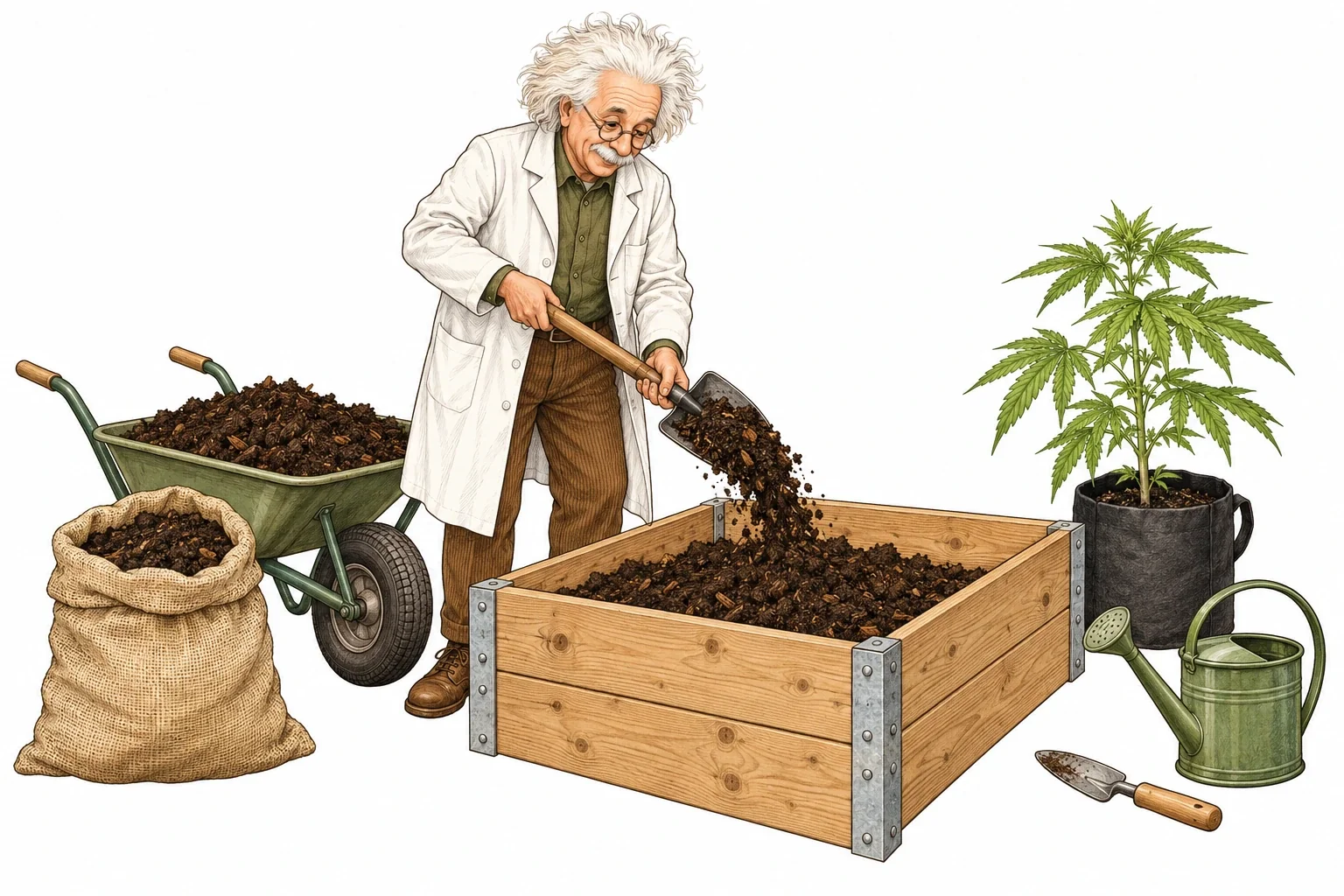
Cannabis is a tough plant, but it does best when the growing medium is right. For outdoor growing, go with a quality cannabis-specific soil or a good organic potting soil from the garden center, mixed with perlite at a 70 to 30 ratio. Perlite improves drainage and helps prevent overwatering, one of the most common causes of root problems.
For soil grows, the ideal pH is between 6.0 and 7.0. If the pH drifts too far, your plant can’t take up nutrients anymore, even if you feed plenty. That’s why it pays to check your pH regularly. You’ll find all the details in our article on pH for cannabis.
If you plant straight in the ground, loamy soil rich in organic matter works great. It holds water and nutrients well but still releases them in a controlled way. Heavy clay soil can be improved by mixing in sand and compost. Growing in containers gives you full control over the soil, and you can move your plant whenever you need to.
- Mix cannabis soil or organic soil with 30% perlite
- Aim for a pH between 6.0 and 7.0
- Avoid waterlogged soil at all costs
- In-ground: loamy soil rich in organic matter is ideal
- Containers give you more control and flexibility
Outdoor Cannabis Growing: Timeline and Season Planning
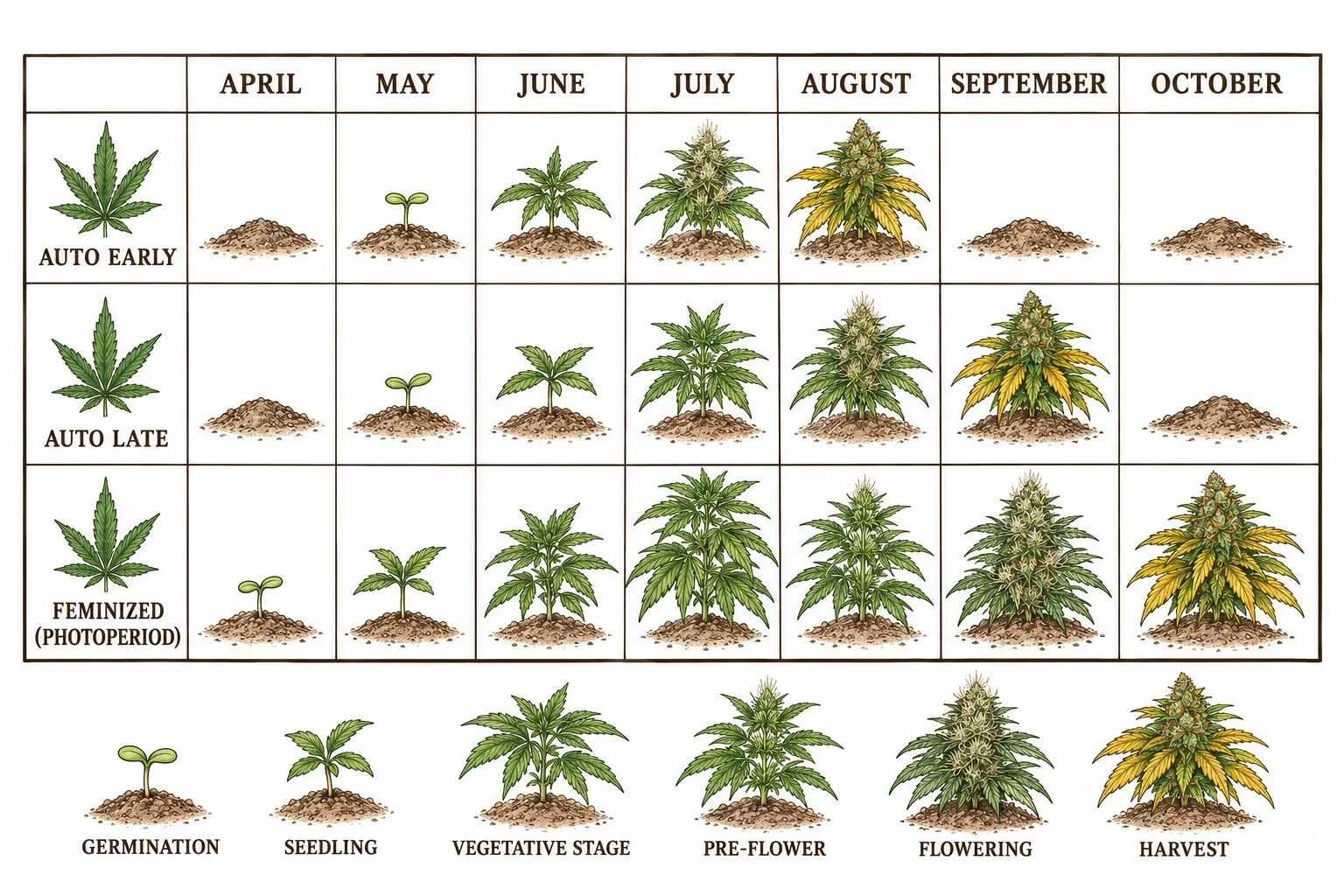
Timing is everything when you grow outdoors in a northern climate. Cannabis follows a natural flowering cycle that’s triggered by day length. Once the days get shorter and drop toward about 12 hours of light, most strains start to flower. In much of the northern US and Canada, that happens around August or September. We cover the best outdoor strains for cooler climates with short summers in a separate article. Harvest usually falls between September and October.
Pick the right start date. Don’t move seeds or seedlings outside until the risk of late frost is over. In many northern regions, that means sometime between mid-April and early June, depending on your local last frost date. If you germinate indoors in March or April and grow your plants under lights, you can stretch the vegetative stage (veg) a lot and boost your yield. Once your last frost date has passed, your plants are safe outside.
Autoflowering strains are a great fit for short summers. They flower no matter how long the days are and finish much faster, often in just 70 to 90 days. That can even get you two harvests per season. Choose strains bred for short summers to cut the risk of mold in a damp fall.
- Outdoor season in northern climates: May to October
- Plant out after your last frost date (often mid to late May)
- Starting seeds indoors in March/April is a smart move
- Flowering starts around August/September (shorter days)
- Autoflower strains: 2 harvests per season are possible
Hardening Off Seedlings: How to Get Them Ready for the Outdoors
If you start cannabis seedlings indoors under grow lights, don’t move them outside all at once. Going from steady room temperatures and even light to intense sun, wind and swinging temperatures can put young plants under heavy stress. Skip hardening off, and you can end up with burned leaves, drooping shoots and growth that stalls for several days.
Here’s how to do it:
- On day 1, put your seedlings outside for just 1-2 hours in a shady spot that’s sheltered from wind.
- Add 1-2 hours outdoors every day and slowly move them to sunnier spots.
- After 7 to 10 days, most seedlings can handle full sun and stay outside for good.
- While they’re still small, bring them back in if there’s a frost warning or heavy rain.
Only after this hardening-off period should you plant your seedlings in their final spot. Ideally, wait until after your last frost date, as described in the timeline above.
How to Water Outdoor Cannabis the Right Way
When you grow cannabis outdoors, rain does part of the watering for you. Sadly, you can’t always count on it. During dry summer spells, you’ll need to water regularly. After heavy rain, on the other hand, your plant can quickly end up waterlogged. The trick is finding the middle ground: the soil should stay evenly moist, but never soggy.
A simple test: stick your finger about 1-2 in (3-5 cm) into the soil. If it still feels moist at that depth, hold off on watering. If it feels dry, it’s time. With container plants, you can also use the weight of the pot as a guide. A light pot means your plant is thirsty. Learn more in our article on how to water cannabis.
Outdoor plants in the ground have a lot more buffer than plants in containers, thanks to all that surrounding soil. Still, you should water daily during heat waves. Morning is best, so the leaves can dry off during the day and leftover moisture doesn’t lead to mold. Avoid watering in the evening, since wet conditions overnight can encourage fungal diseases.
- Finger test: check the soil 1-2 in (3-5 cm) deep
- In hot weather, water in the morning, not at night
- Overwatering is just as harmful as letting the soil dry out
- Don’t rely on rain as your only water source
- Container plants need water more often than plants in the ground
Feeding Outdoor Cannabis: What Your Plant Really Needs
Well-prepared soil often gives your plant enough nutrients early on. Still, cannabis benefits from targeted feeding, especially if you grow in containers or didn’t prep your soil much. During the vegetative stage, cannabis mainly needs nitrogen (N) for leafy growth. In the flowering stage, the demand shifts to phosphorus (P) and potassium (K).
If you’re a beginner, organic nutrients are a good choice. They release slowly and rarely cause nutrient burn. Mineral (synthetic) nutrients work faster but come with a higher risk of nutrient burn, which you’ll spot by burned leaf tips. You’ll find all the symptoms and fixes in our article on cannabis nutrient burn.
Secondary nutrients like calcium and magnesium are often overlooked, but your plant can’t stay healthy without them. A calcium deficiency shows up as brown spots and wavy leaves. Rainwater or soft water in particular can lead to deficiencies, so it pays to catch them early. Our guide to calcium deficiency in cannabis explains the exact symptoms.
Rule of thumb for feeding: a little and often beats too much at once. Start at half the manufacturer’s dose and work your way up as needed. Always keep an eye on the pH of your water, because your plants can only take up every nutrient when the pH is in the right range.
- Veg: nitrogen-rich nutrients (NPK, e.g. 10-5-5)
- Flowering: phosphorus- and potassium-rich nutrients (e.g. 5-10-10)
- Organic nutrients are a great pick for beginners
- Don’t forget calcium and magnesium
- Start at half dose and increase as needed
Common Outdoor Grow Problems and How to Spot Them
Outdoor plants are exposed to the elements, so they face more risks than indoor plants. Our dedicated articles show you how to spot and fix typical outdoor problems and wind damage. The most common issues in outdoor cannabis growing are pests like spider mites, aphids and caterpillars, plus fungal diseases like powdery mildew and bud rot (botrytis, gray mold). During wet spells or after heavy rain, the risk of mold can climb fast. We cover how to protect your plants with rain protection and how to spot mold after rain in separate articles.
Yellow leaves are a common warning sign with lots of possible causes, from nutrient deficiencies to overwatering to pH problems. Our diagnosis article shows you how to pin down the real cause: When cannabis has yellow leaves.
Check on your plants every day and look closely at both the tops and undersides of the leaves. Pests you catch early are usually easy to handle with natural remedies like neem oil, insecticidal soap or beneficial insects like ladybugs. Cannabis companion plants like marigolds, lavender and calendula can also help prevent problems by keeping pests away and attracting beneficial insects. If you spot a fungal infection, remove the affected plant parts right away and improve air circulation. You’ll find a full rundown of possible plant problems in our Plant Diagnosis overview.
- Check regularly for spider mites, aphids and caterpillars
- Bud rot (botrytis) is especially dangerous in wet weather
- Investigate yellow leaves early and find the cause
- Use neem oil and insecticidal soap against pests
- Remove affected plant parts right away
Outdoor Cannabis Growing: How to Time Your Harvest
Harvest is the highlight of your outdoor grow, but only if you nail the timing. The classic indicator is the trichomes on the buds: when they look milky white, THC levels are at their peak. Once they turn amber, THC is already starting to break down and the effect can get heavier and more sedating. Clear trichomes mean your plant isn’t ripe yet.
An easier sign is the pistils (the little hairs on the buds): when 70-90% of them have turned from white to orange-red, your plant is usually ready to harvest. Ideally, use both methods together: pistils as a rough guide and trichomes under a jeweler’s loupe or pocket microscope for the precise call.
If you grow in a cool, rainy climate, keep a close eye on the fall weather forecast. Steady rain and temperatures below 59 °F (15 °C) can promote mold, so it’s better to harvest a little early than to lose your whole crop to bud rot. After harvest comes drying, which should happen slowly and evenly at 59-68 °F (15-20 °C) and 45-55% humidity.
- Trichomes: milky white = ideal harvest window
- Amber trichomes = THC is already breaking down
- Pistils: 70-90% orange-red = ready to harvest
- Watch the fall weather and the risk of mold
- Dry at 59-68 °F (15-20 °C) and 45-55% humidity
Only have a balcony instead of a yard? Our article on balcony growing shows you what matters.
How Much Does an Outdoor Plant Yield?
The yield of an outdoor plant depends heavily on the strain, the spot and the length of the season, but you can make a rough estimate:
- Photoperiod strains in containers (about 5-8 gal (20-30 L)): 100 to 300 grams of dry yield per plant.
- Photoperiod strains planted straight in the ground with a long vegetative stage: 300 to 600 grams are possible, even more in great conditions.
- Autoflowering strains: usually 50 to 150 grams per plant, but you can get up to two harvests per season.
The biggest levers for a high yield are a sunny spot with at least 6 to 8 hours of direct sunlight, plenty of pot or root space and feeding that matches your plant’s needs during flowering. Many places limit how many plants you can grow, so check the cannabis laws where you live before growing. With only a few plants, it pays to optimize the conditions for each one instead of going for numbers.
Frequently Asked Questions
When is the best time to start an outdoor grow?
The best time to plant cannabis outdoors is after your local last frost date, which varies a lot by region – check NOAA Climate Normals in the US or Environment and Climate Change Canada’s frost-date tables instead of relying on a fixed date. If you want a head start, you can germinate indoors from March on. Depending on the strain and your location, harvest usually falls between September and October.
Which strains are best for outdoor growing in cooler climates?
For short summers and wet falls, pick strains that finish fast and resist mold, like Early Skunk, Northern Lights, or autoflowering strains such as Royal Dwarf or Northern Lights Auto. Autoflowers bloom no matter how long the days are, so they’re ready sooner.
How many plants am I allowed to grow?
That depends on where you live. Check the cannabis laws in your state or province before growing, and always keep your plants out of reach of kids.
Do I need a grow tent or grow lights for outdoor growing?
No. Outdoors, your plants run on natural sunlight, and that’s plenty for cannabis, as long as your spot gets at least 6–8 hours of direct sun a day. A greenhouse or hoop house can stretch your season and keep the rain off, but it’s not a must.
Do I need to check pH in an outdoor grow?
Yes, pH matters outdoors too. In soil, aim for 6.0 to 7.0. If your pH is off, it can block nutrient uptake. Checking regularly pays off, especially if you grow in containers or use tap water.
How do I protect my outdoor plants from mold?
Pick mold-resistant strains, keep the air moving, water in the morning instead of the evening, and remove any affected plant parts right away. A rain cover or plastic canopy during the flowering stage can make a big difference, especially in a damp fall.
Can I grow cannabis in a raised bed?
Yes, a raised bed works great for outdoor growing. The extra height improves drainage and helps prevent waterlogged roots, and the soil warms up faster in spring than regular garden ground. That’s a real advantage if you want an early start after your last frost. Go for a depth of at least 16–20 in (40–50 cm) so the roots have room to spread, and mix some perlite into the soil, just like in containers, for good aeration. Important: check the cannabis laws where you live before growing, and keep your raised bed out of reach of kids.
Can I grow cannabis in a greenhouse?
Yes, a greenhouse is a smart upgrade for outdoor growing if you want protection from rain, wind, and chilly nights. You still get free sunlight, but you stretch your season: you can plant out earlier in the year and let your buds ripen longer in the fall, without steady rain turning them moldy.
Good ventilation is key, because heat and humidity can build up fast in a closed greenhouse and invite mold and other fungal diseases. On warm days, open the doors and vents, and keep a close eye on humidity, especially during the flowering stage. If you expect unpredictable fall weather anyway, you’ll find more tips in our article on rain protection for outdoor plants.
Are autoflower strains a good fit for outdoor growing in cooler climates?
Autoflower strains are especially handy for outdoor growing in regions with short summers, because they switch into flowering on their own after a few weeks, no matter how long the days are. That makes them easier to plan than photoperiod strains, which depend on the sun’s cycle. Most autoflowers are ready to harvest 8–10 weeks after germination, so even with a short summer you can sow them straight outdoors in May without starting them indoors first.
Tough, mold-resistant strains like Royal Dwarf or Northern Lights Auto have proven themselves. Both handle changeable weather and cooler nights well. Thanks to their short growing season, autoflowers usually stay more compact and low-profile than photoperiod strains, which also makes them a great pick for smaller balcony gardens. One downside: the yield per plant is usually smaller than with photoperiod outdoor strains.
Bottom Line
Outdoor growing is a great way to grow your own cannabis with little effort and free natural light. Check the cannabis laws where you live before growing. With the right spot, the right strain and a good feel for water, nutrients and pests, you can get excellent results even as a beginner. Check on your plants every day, react early to problems and plan your season well – then nothing should stand between you and a successful fall harvest. Stop by PlantClue regularly for the latest plant diagnosis tips and grow guides.
