

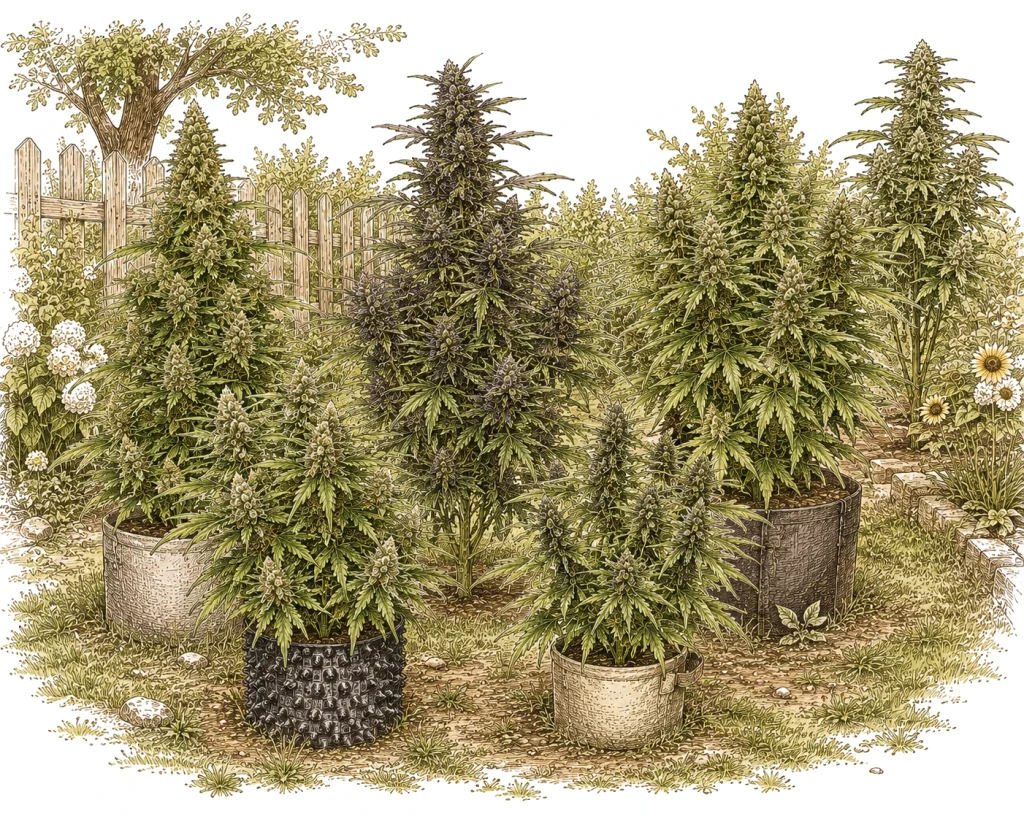
Picking the right outdoor cannabis strains for a short, cool summer is the single most important step toward a successful harvest. Not every strain can handle a short season, unpredictable weather and chilly September nights. If you just order random seeds, you risk losing your harvest to mold, frost or too little sunshine. Here at PlantClue, I’ll show you exactly which traits an outdoor strain needs for northern climates, from classic strains to the best autoflowering seeds for short summers. With the right strains, you can bring home a solid harvest even in an average northern summer. For the full process, from choosing your spot to harvest, check out our outdoor growing guide. Check the cannabis laws where you live before growing.
Why Outdoor Strains for Northern Climates Need Special Traits
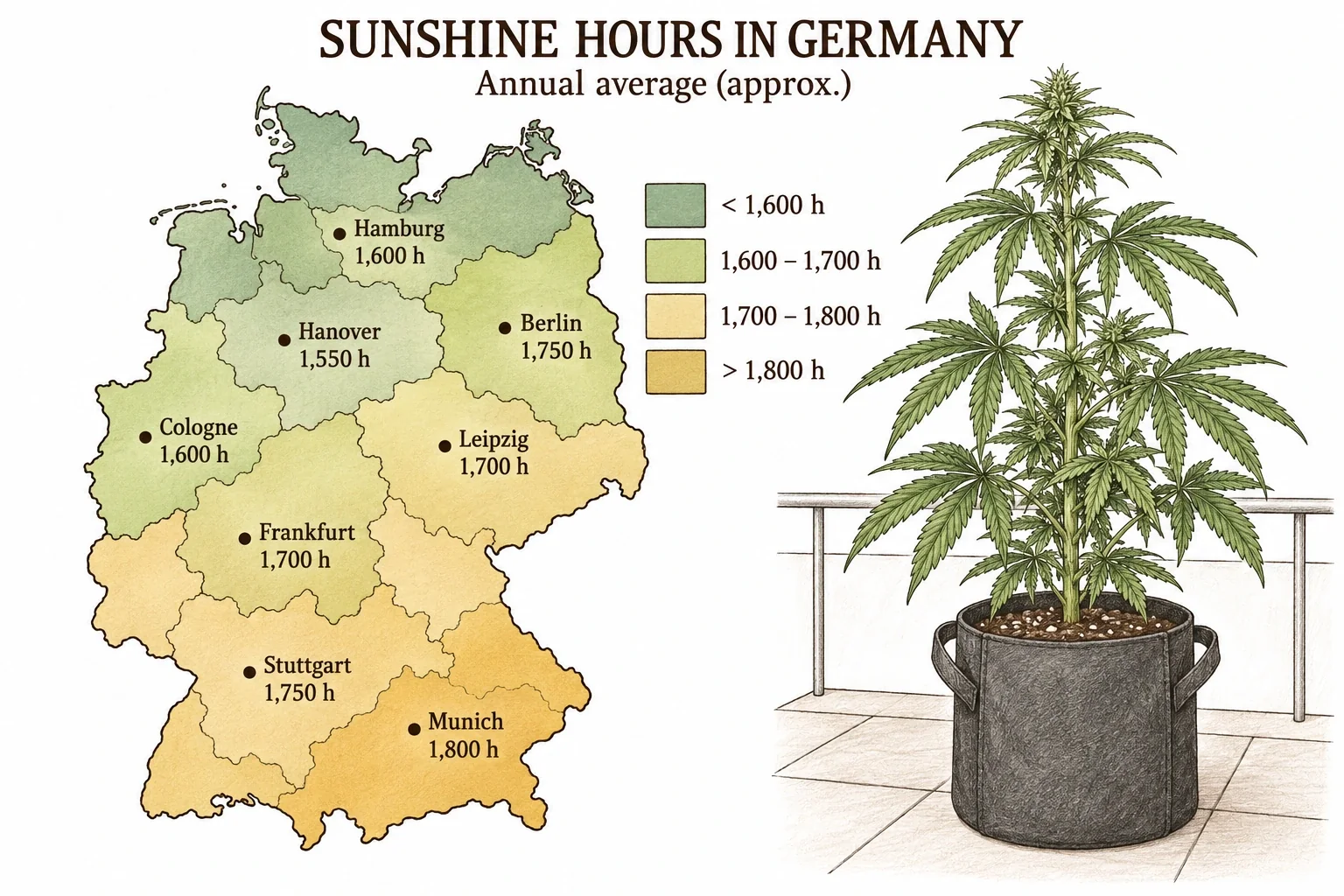
Short-season regions in North America stretch from the northern US states (the Pacific Northwest, the Upper Midwest, New England and Alaska) into southern Canada. Many of them get only 120 to 170 frost-free days a year, compared with 200+ in the southern US, and nighttime temps that can regularly drop below 50 °F (10 °C) by mid-September. Sativas from Colombia or Thailand simply aren’t built for these conditions. They flower too late and can get caught by the first fall frost.
On top of that, there’s typical fall weather: rain, high humidity (RH) and little wind in urban areas all favor botrytis, the dreaded bud rot (gray mold). If you grow outdoors, you need strains with compact yet airy buds and genetic mold resistance. In short, three traits matter most in a short-season climate: early finish, mold resistance and cold tolerance.
Flowering time plays a key role, too. A strain that needs 10 to 12 weeks of flowering and wouldn’t be ready until October has little chance of fully ripening before fall sets in. Ideally, you want strains you can harvest by late September at the latest, and mid-September is even better. Our recommendations below meet exactly these criteria.
- Typical outdoor season in northern climates: May to September (about 5 months)
- Common problems: early fall rain, bud rot (botrytis), night frost from October on
- Ideal harvest window: mid to late September
- Key strain traits: mold resistance, cold tolerance, early flowering
- Season length varies a lot: about 233 frost-free days in Seattle, 162 in Minneapolis, 123 in Edmonton
Know Your Frost Dates and Local Cannabis Laws
Frost dates vary a lot across the US and Canada, so don’t rely on a generic rule of thumb for your area. In the US, look up your last spring frost date and first fall frost date using the National Oceanic and Atmospheric Administration (NOAA) Climate Normals for your county. In Canada, Environment and Climate Change Canada publishes frost-date tables by region. Both give you a far more reliable planting and harvest window than a one-size-fits-all calendar.
Check Local Cannabis Laws Before You Plant
Home cultivation rules differ a lot by state and province, even where cannabis is legal overall. Under Canada’s Cannabis Act, adults can generally grow up to four plants per household – but Quebec and Manitoba have provincial laws that ban home cultivation entirely, regardless of the federal rule. In the US, several states that allow medical or recreational sales still don’t permit homegrown plants. Always confirm the current rules where you live before you put a single seed in the ground.
The Best Outdoor Cannabis Strains for Short Summers at a Glance
The following strains have proven themselves over many years in outdoor grows across the northern US and Canada. They aren’t perfect (no strain is), but they offer the best mix of early finish, hardiness and decent yield for northern latitudes. I’ll walk you through their key traits so you can decide which one fits your situation best.
Early Skunk and similar Skunk-based strains have been among the most popular outdoor genetics in the northern US and Canada for decades. They flower early, are fairly mold-resistant and deliver reliable yields. Crossing Skunk with early-flowering ruderalis or indica genetics makes them especially tough against cool temps.
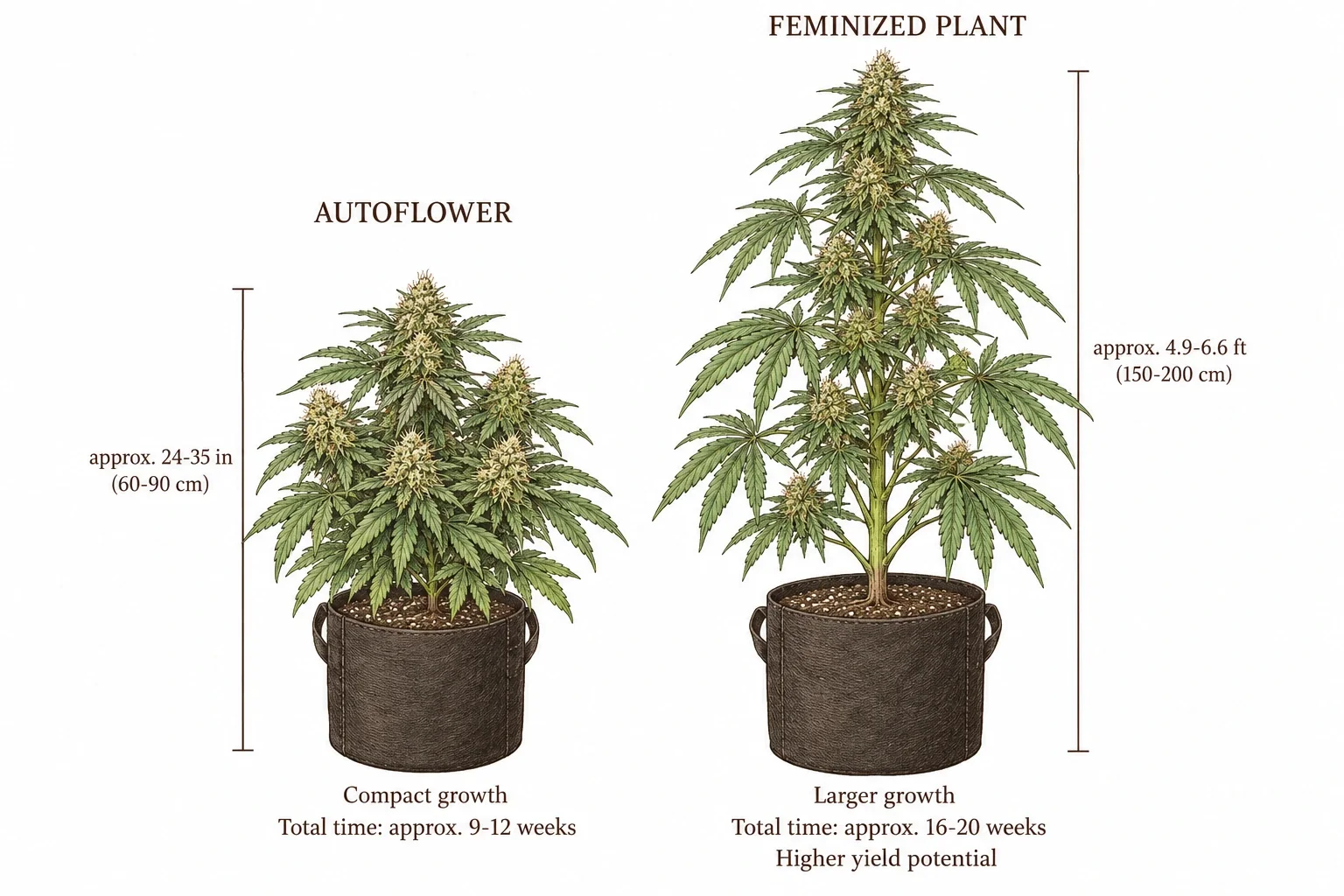
Royal Gorilla Auto (and other autoflower versions of well-known strains) are especially interesting for short summers because they flower regardless of the light cycle. You can germinate them as early as April or May and, depending on the strain, have a plant ready to harvest in 70 to 90 days, long before the fall rains kick in. That makes autoflowering cannabis one of the most valuable tools for short-season outdoor growing. Learn more about autoflowers in our article Growing Autoflower Cannabis.
Frisian Dew from Dutch Passion is another legend among European outdoor strains. It was bred specifically for cool, damp northern climates like the Pacific Northwest and southern Canada, produces airy, well-ventilated buds and is known for its outstanding mold resistance. It holds up well even during long stretches of wet September weather.
Cream Caramel and similar indica-dominant strains are also a solid pick. They have short flowering times of 6 to 8 weeks and grow compact. Just make sure there’s enough space between the buds to keep the air moving.
- Early Skunk: Early harvest, tough, mold-resistant, a classic for northern climates
- Frisian Dew: Bred for cool, damp northern climates, very mold-resistant (great for the Pacific Northwest, too)
- Northern Lights: Indica classic, short flowering stage, handles cold well
- Power Plant: Fast flowering, big yields, best for sunny spots
- Autoflower strains in general: Ready to harvest from mid-August, which keeps your mold risk low
- Critical Mass Auto: Big yields, early harvest, but watch for a loose, airy bud structure
Autoflower or Feminized: Which Is Better for Growing Outdoors in a Short Season?
Lots of beginners ask this – and the answer depends on your situation. In cooler, northern regions, autoflowering strains have one big advantage: They don’t care about the light cycle at all and start flowering after a genetically fixed time. That means you can start them early in the year and have them ready to harvest before the fall rains kick off mold season.
Feminized photoperiod strains, on the other hand, react to the shorter days in August and September. In northern regions like the northern US or southern Canada, plants naturally start flowering around early to mid-August. If your strain then needs another 8 to 10 weeks of flowering, your harvest lands in October – a risky time in a wet, cool climate. But if you pick early-flowering feminized strains with a 6 to 7 week flowering stage, that can work really well.
My tip for beginners: Start with autoflower strains. They’re more forgiving, easier to handle, and can even give you two harvests per year if you start early enough. Experienced growers chasing maximum yields can experiment with early-flowering feminized strains – but then your spot should be sunny and sheltered from wind to keep the mold risk low. We break down the basic differences between both seed types in detail in Autoflower or Feminized?
- Autoflower: Flowers regardless of light, harvest often as early as August
- Feminized photoperiod: Flowering starts naturally in August, harvest September–October
- For beginners: Autoflowers, hands down
- For experienced growers: Early-flowering feminized strains with 7 weeks of flowering max
- Two autoflower harvests per season are possible (start in April + June)
Outdoor Cannabis Strains for Cool Climates: Your Spot and Prep Matter Too
Even the toughest strain can fail in the wrong spot. Give your plants a place with at least 6 to 8 hours of direct sun every day. A south-facing spot is ideal – walls or fences on the north side also store heat and block the wind.
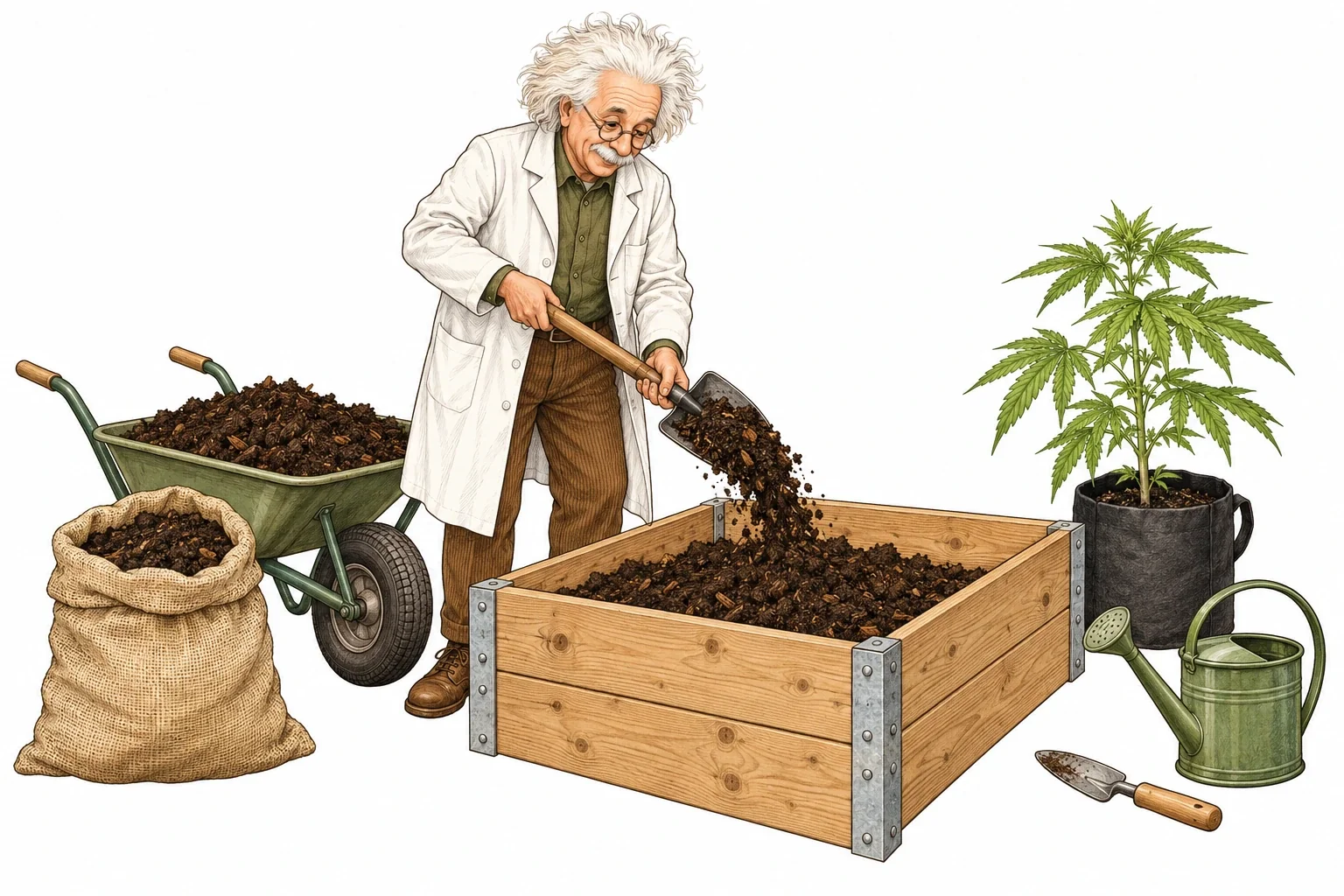
Your soil plays a huge role, too. Good drainage is a must, because waterlogged soil makes cannabis roots prone to root rot and invites mold. A mix of quality potting soil, perlite and compost has proven itself. Important: Check your pH regularly, because roots can only take up all nutrients properly at a pH between 6.0 and 7.0. I show you how to get it right in the article How to Adjust pH for Cannabis.
Wind protection is often underrated. Strong winds dry out your plant, and they can also snap stems and damage buds. A natural windbreak like hedges or shrubs helps without cutting into your sun hours. Also make sure air can move freely around the plant – that’s your best defense against bud rot (botrytis, gray mold) on outdoor plants.
Watering outdoors works the same as indoors: Only water when the top layer of soil has dried out. Rain is often not enough – or sometimes way too much – so adjust your watering to the weather. You’ll find more details in the article How to Water Cannabis the Right Way.
- At least 6–8 hours of direct sun per day
- South-facing spot with a windbreak on the north side is ideal
- Make sure your soil drains well
- Check pH regularly (target: 6.0–7.0)
- Airflow is your number one weapon against mold
- Water based on the weather, not on a rigid schedule
Mold Resistance in Outdoor Cannabis Strains for Cool Climates: The Underrated Factor
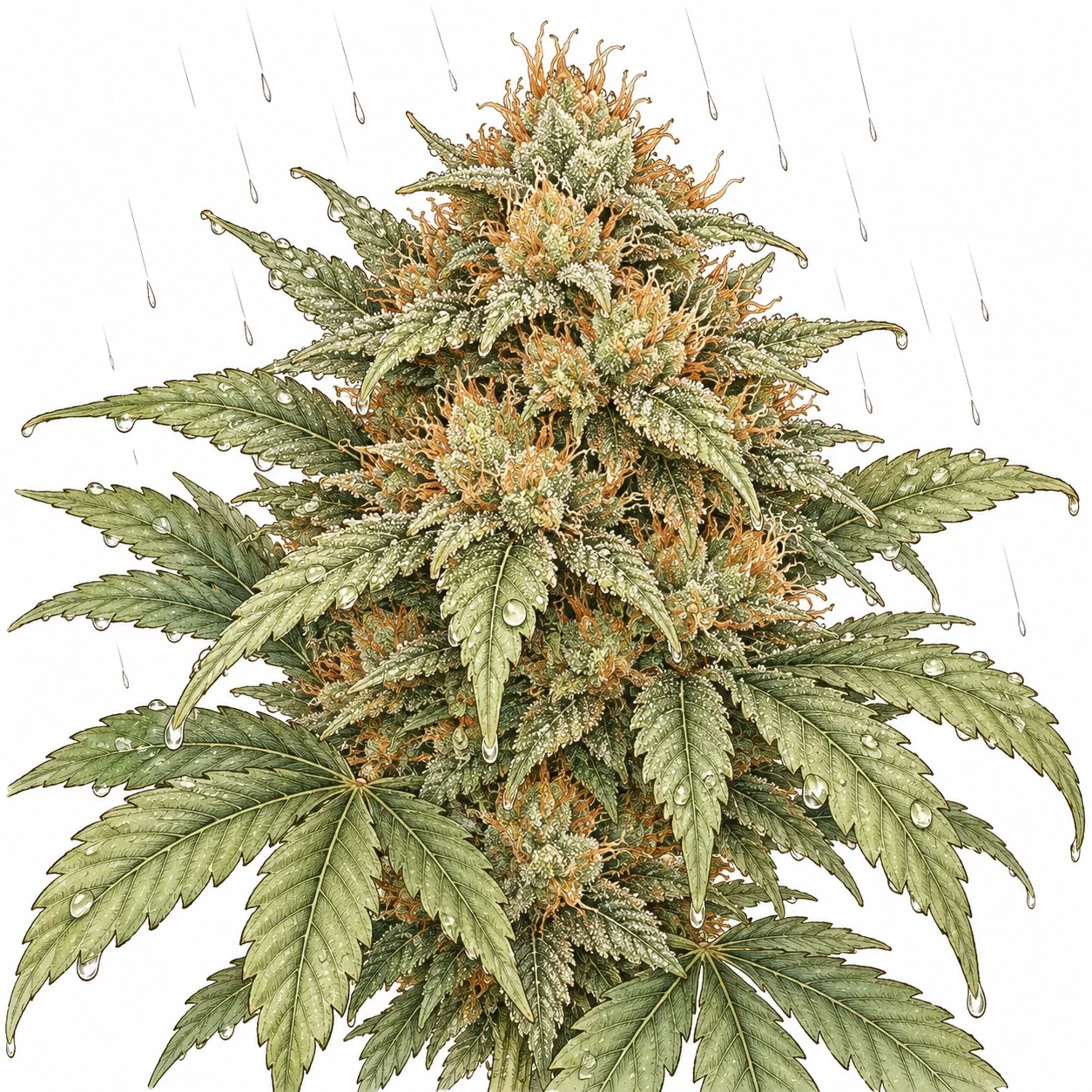
Botrytis cinerea, better known as bud rot or gray mold, is the biggest enemy of any outdoor harvest in cool, wet climates. It goes after dense, damp buds first and can wipe out a whole crop in just a few days. That’s why mold resistance isn’t a nice-to-have when you pick a strain for a short, rainy season. It’s a must.
Strains with an airy bud structure are naturally tougher, because moisture dries off faster and air moves through them more easily. Indica-dominant strains with very compact, dense buds are more vulnerable. They look impressive, but a rainy September can turn them into a mold disaster. Frisian Dew, Durban Poison and many autoflowering strains are known for strong mold resistance.
A few hands-on steps can help too: regularly remove extra leaves inside the plant to improve airflow. When the rain just won’t stop, a simple rain cover made of plastic sheeting can save a lot. I explain how it works in the article Outdoor cannabis mold from rain. If you’ve already found mold, act right away: cut out the affected spots generously and get them out of your garden.
One more tip: check your plants every day during harvest season. Mold you catch early can still be contained. If the leaves around a bud suddenly wilt or you spot brown, mushy patches, take action immediately. You’ll find more on common deficiencies and stress problems in the PlantClue Plant Diagnosis overview.
- Bud rot is the biggest risk for outdoor growers in cool, wet climates
- Airy bud structure = better mold resistance
- Top mold-resistant strains: Frisian Dew, Durban Poison, many autos
- Prevention: defoliation for better airflow
- A rain cover during flowering cuts mold risk a lot
- Check daily: brown, mushy buds = act right away
Harvest Calendar for Outdoor Cannabis Strains in Short-Season Climates
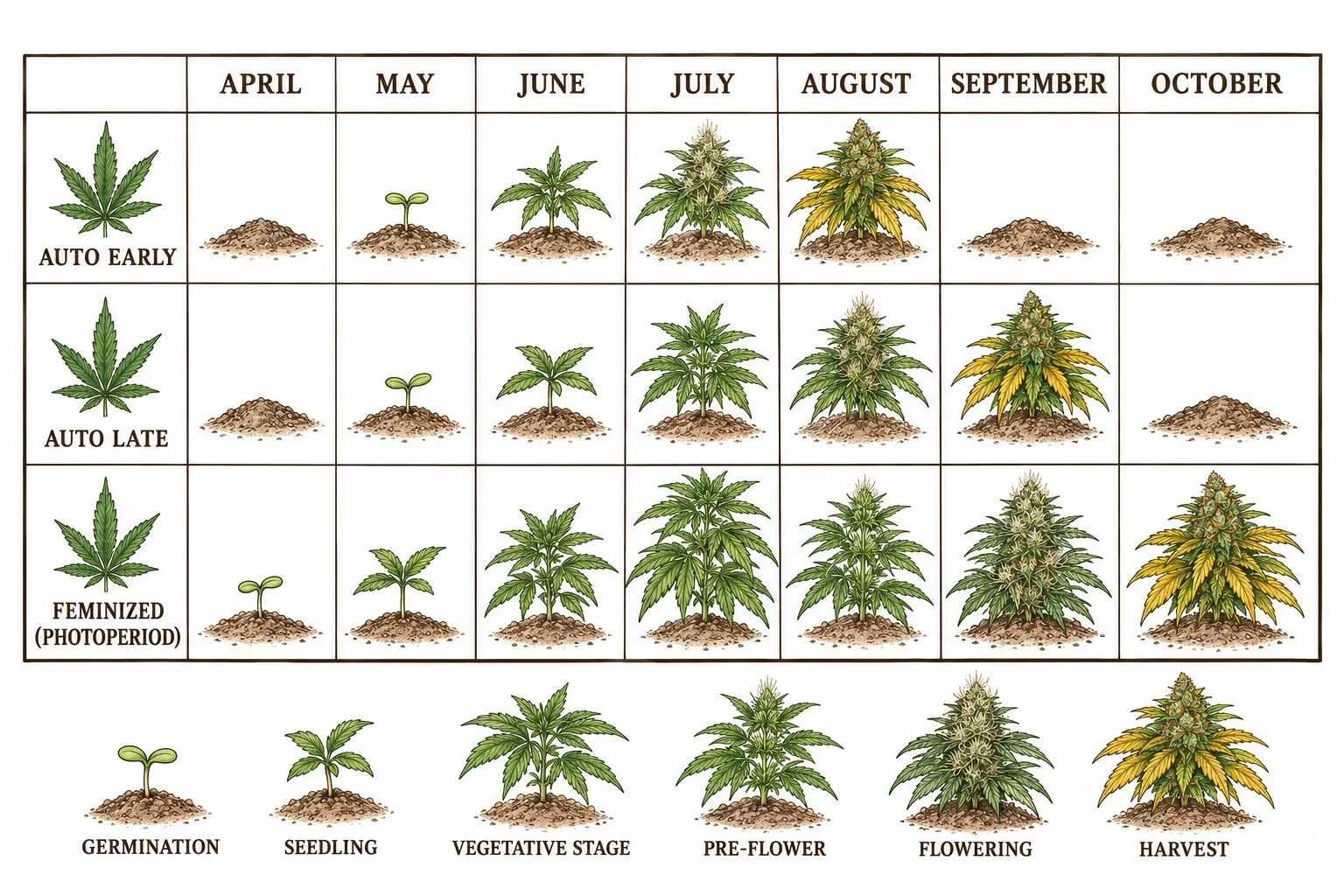
A realistic harvest calendar helps you start the right strain at the right time. Across the northern US, the last spring frost usually falls between late April and mid-May; in the Canadian prairies and at higher elevations it can be late May (see the frost-date section above). You can start autoflowers as early as mid-April if you raise the young plants on a windowsill or in a greenhouse first.
Here’s a rough overview: autoflowers started indoors in mid-April and moved outside after your last frost → harvest in July. Autoflowers started in early June → harvest in August. Early-flowering feminized strains (e.g. Early Skunk) → flowering starts in August, harvest mid to late September. Standard indica hybrids with 8 weeks of flowering → harvest late September to early October, which is risky in a short season. Photoperiod sativas → hard to recommend in cool northern climates, since they finish too late.
Running two autoflower rounds per year lets you spread the risk: one early harvest in summer and a second one in late summer. That way you never lose everything at once, even if weather or pests hit one run. The best way to tell when you’ve reached harvest time is to look at the trichomes. PlantClue has a detailed article on that.
Don’t forget storage after harvest, either: properly dried and cured buds keep for months with hardly any loss in quality. Good drying and curing matter almost as much as picking the right strain.
- Autoflowers started indoors in April → harvest July (two rounds possible)
- June-start autoflowers → harvest August
- Early-flowering feminized strains → harvest mid-September
- Standard indica hybrids → harvest October, risky
- Sativas → not a good fit for short, cool seasons
- Two autoflower rounds per season recommended to spread the risk
Outdoor Cannabis Strains for Cooler Climates: Avoid Common Beginner Mistakes
The most common mistake: buying a late-flowering strain because it looks amazing online, and then ending up with mushy, moldy buds in October. When in doubt, always go for the faster-finishing option. Half a harvest that’s dry and clean beats a full plant buried in mold.
The second common mistake: germinating too late. If you don’t pop your seeds until July, your plants will only just be starting to flower when fall rolls in. The rule is simple: start as early as you can, indoors first if you need to. You can raise your young plants on a windowsill as early as March or April.
Mistake #3: getting the feeding wrong. Lots of beginners feed too much or at the wrong time, and that can leave plants more prone to stress and disease. In the flowering stage, phosphorus and potassium matter most, while you dial nitrogen back. Learn more about common feeding mistakes and how to spot and fix nutrient burn in cannabis.
Mistake #4: skipping pest prevention. Outdoor plants deal with far more spider mites, aphids and caterpillars than indoor plants. Check your plants regularly, especially the undersides of the leaves, and step in at the first sign of an infestation.
- Late-flowering strains in short-season climates = mold risk
- Germinating too late is one of the most common mistakes
- Too many or the wrong nutrients can stress your plant
- Check for pests regularly, especially on leaf undersides
- Keep a constant eye on pH and your watering habits
- Watch the weather forecast and set up rain cover during long rainy spells
Short on space? You can still grow outdoors. Learn more in our article on balcony growing.
Frequently Asked Questions
Which outdoor cannabis strains work best in a short-season climate?
If your summers are short and your falls are wet, go for mold-resistant, early-finishing strains like Frisian Dew, Early Skunk, Northern Lights or autoflowering versions of popular hybrids. They’re ready to harvest before the fall rains set in.
Are autoflowers or feminized strains better for outdoor growing in cooler regions?
For beginners in short-season regions, autoflowers are the clear pick. They flower regardless of the light cycle, are often ready to harvest by August and can even give you two harvests per season. Feminized strains can work too if you choose early-flowering genetics with a flowering time of 7 weeks max.
When should I start my outdoor cannabis?
Move your plants outside only after your local last frost date: late April to mid-May across most of the northern US, late May in the Canadian prairies. Feminized photoperiod strains go out at the same time. Giving autoflowers an indoor head start from mid-April is highly recommended.
How can I tell if my outdoor plant has mold?
Bud rot (botrytis, gray mold) shows up as grayish-brown, cotton-like layers on the buds. Affected leaves can suddenly wilt with no other obvious cause. At the first sign, cut out the affected spots right away, leaving a generous margin, and improve airflow.
Can I get two outdoor harvests a year?
With autoflowering strains, you can. Starting indoors in mid-April and moving the plant outside after your last frost gives you a harvest in July. A second start in early June delivers a harvest in August. It’s a smart way to reduce your risk from cold, wet fall weather.
What is pH and why does it matter for outdoor strains?
Your soil’s pH decides which nutrients the roots can actually take up. For outdoor growing in soil, aim for a pH between 6.0 and 7.0. A pH that’s off is one of the most common causes of nutrient deficiencies, even when you’ve been feeding enough.
Which autoflowering seeds work best outdoors in a short, wet season?
For outdoor growing in cooler, wetter regions, autoflowering versions of proven genetics have really earned their spot, like Royal Gorilla Auto, Critical Mass Auto or auto versions of Northern Lights. They flower regardless of the light cycle and are ready to harvest after 70 to 90 days. That means you can harvest in late summer, long before fall rain and dropping temperatures push up the mold risk. When you pick a strain, look for a compact, airy bud structure so enough air reaches the buds even in damp weather. If you’re a beginner and not sure where to start, go with a tough, mold-resistant autoflower and plant it between late April and June.
Bottom Line
Choosing the right outdoor cannabis strains for your climate is the biggest factor in a successful harvest when summers are short and falls are wet. Go for mold-resistant, early-finishing genetics – either autoflowers or early-flowering feminized strains – and start your season as early as you can. Prep your spot carefully, keep an eye on pH and watering, and check your plants regularly for pests and the first signs of mold. With the right strain and a little attention, you can reliably harvest quality outdoor cannabis even in a tricky climate. Growing indoors instead? Our beginner strain recommendations list more tough genetics to get you started. Not sure yet which strain fits your grow best? Our Strain Finder (German) asks you a few quick questions about your growing conditions and experience, then shows you matching genetics.
