


Want to give your cannabis a natural boost? Try mycorrhizal fungi. These root fungi are one of the most effective tools for improving root growth and nutrient uptake in your plants. The fungus colonizes the roots and multiplies their surface area many times over. Used the right way, mycorrhizae can give you sturdier plants, better drought tolerance and often bigger yields. In this article, you’ll learn how to dose and apply mycorrhizae correctly, and which mistakes to avoid.
What Are Mycorrhizae and How Do They Work With Cannabis?
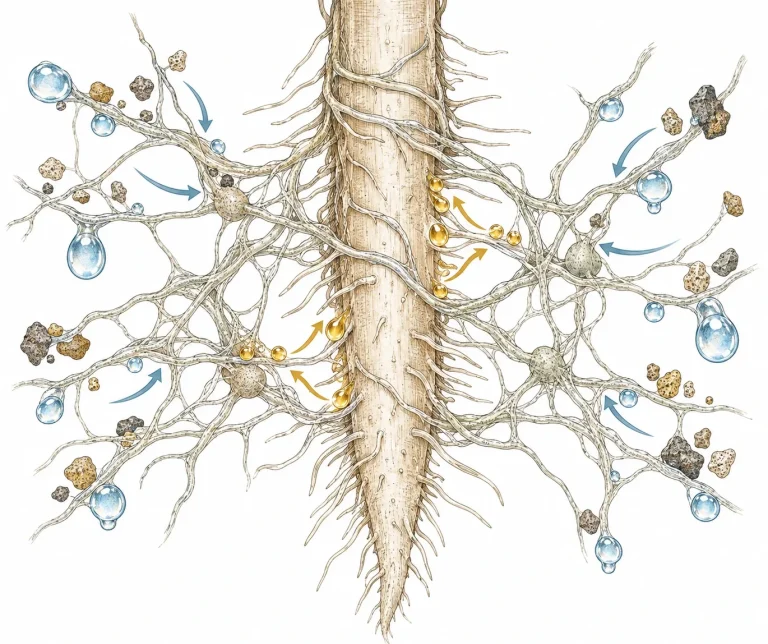
Mycorrhizae are a partnership between certain fungi and the roots of your cannabis plant. The fine fungal threads, called hyphae, grow in and around the roots and form a wide, branching network through the growing medium. This network basically works as an extension of the root system. It can increase the absorbing surface many times over. Under good conditions, manufacturers even claim up to 100 times.
In exchange for carbohydrates the plant makes through photosynthesis, the fungus supplies water and nutrients it pulls from distant parts of the soil. Phosphorus, zinc and copper in particular get absorbed much better with mycorrhizae, because these elements barely move through soil on their own. For background on plant nutrition (German), check out the Julius Kühn Institute.
For growing cannabis, the endomycorrhizal type matters most: arbuscular mycorrhizae. They actually enter the root cells and work with most crop plants. Ectomycorrhizal fungi, on the other hand, mostly partner with trees and play hardly any role for cannabis.
- Multiplies the effective root surface area
- Better uptake of phosphorus, zinc and copper
- Higher tolerance to drought stress and salt stress
- Supports a healthy soil microbiome
How Mycorrhizae Affect Cannabis Growth and Yield
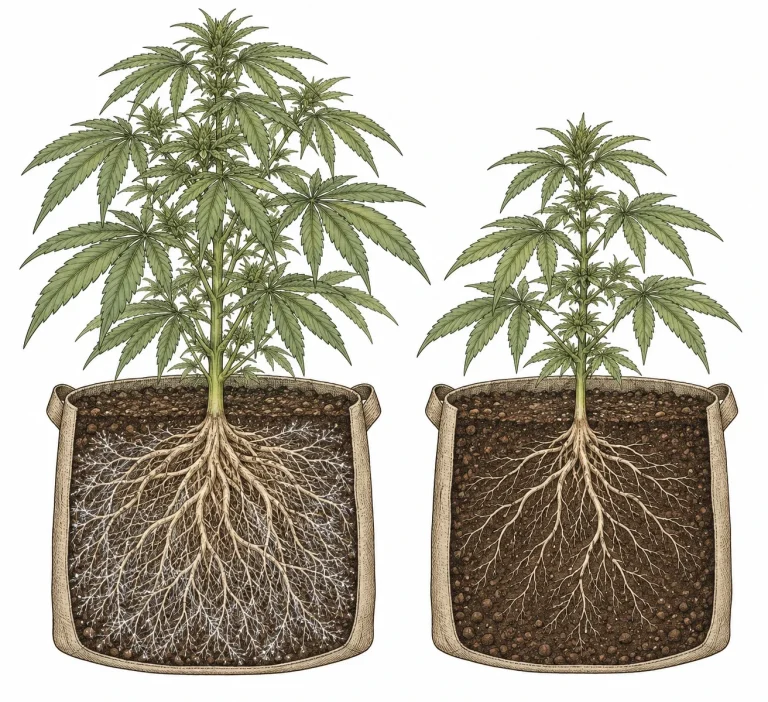
Plants that get mycorrhizae early usually show stronger, faster root growth within the first few weeks. A well-developed root system is the foundation for every stage that follows, because it drives nutrient transport and water supply.
During pre-flower and the stretch, plants benefit most from the better nutrient supply, because their energy demand is huge at this point. In the flowering stage, a working symbiosis can also help your buds develop, since phosphorus is essential for flower formation.
Many growers report tougher plants that handle dry spells better and are less sensitive to minor nutrient imbalances. That doesn’t mean mycorrhizal fungi can fully make up for a poor feeding schedule, though. Think of them as a supplement, not a replacement for balanced nutrition based on the NPK chart.
- Faster, stronger root growth in the early stages
- Better support during the stretch and the flowering stage
- Higher stress tolerance when you slightly underwater
- No replacement for a well-balanced feeding plan
How to Dose Mycorrhizal Fungi for Cannabis
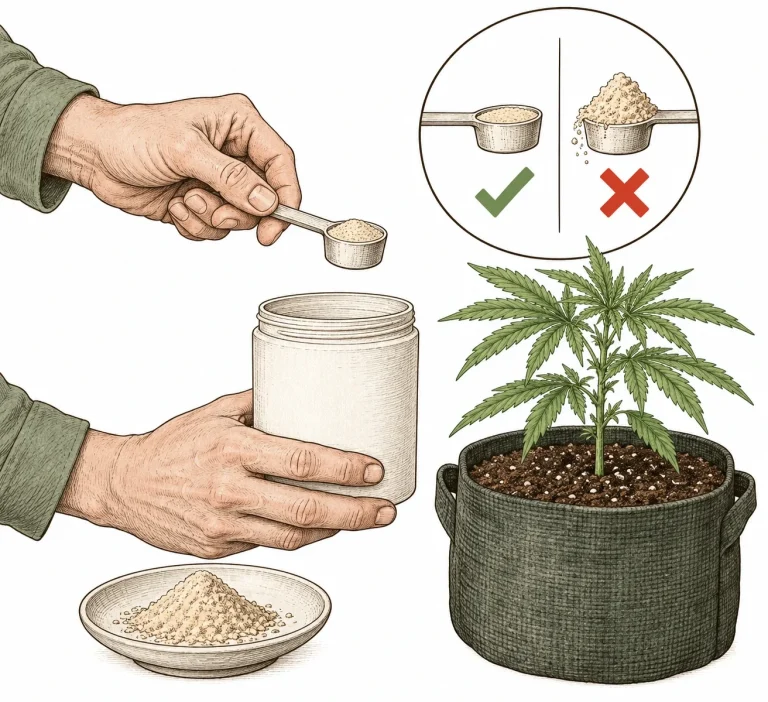
The right dose depends a lot on the product, because commercial mycorrhizal inoculants come with different spore concentrations. As a rough guide: with powders, about 4 to 19 g per gallon (1 to 5 g per liter) of growing medium is usually enough. For liquid concentrates, manufacturers often recommend about 7.5 to 19 ml per gallon (2 to 5 ml per liter) of water.
Here’s the key point: mycorrhizal fungi need direct contact with the roots to work. They’re most effective when you apply them during transplanting or right when you plant a clone or seedling. That’s when direct root contact is easiest to get.
Overdosing is usually not a problem with mycorrhizae, since they’re living organisms, not chemical salts. Still, using too much doesn’t make financial sense. Extra spores that never touch a root simply go to waste.
- Powder: about 4 to 19 g per gallon (1 to 5 g per liter) of growing medium
- Liquid concentrate: about 7.5 to 19 ml per gallon (2 to 5 ml per liter) of water
- Direct root contact is what makes it work
- Always follow the manufacturer’s directions first
Step-by-Step Application
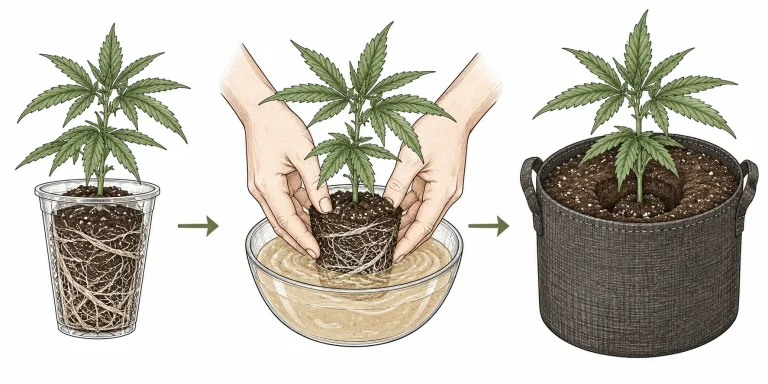
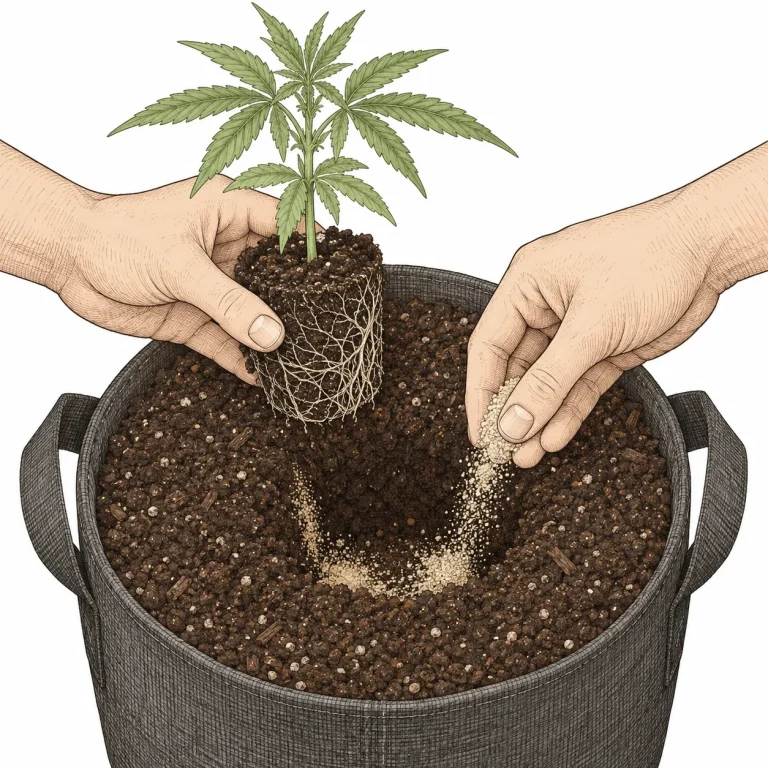
The easiest and most effective method is to apply it at planting time. Briefly soak the roots of a clone or seedling in a mycorrhizal solution, or dust the moist roots directly with powder before you set the plant into the growing medium.
When transplanting later on, you can add mycorrhizal powder straight into the planting hole. That way, new roots hit the fungi as soon as they grow out. You can also water in a liquid mycorrhizal solution, but that tends to be a bit less effective because the root contact is less targeted.
Avoid applying mycorrhizae together with strong fungicides or high-salt nutrients, since they can kill the delicate fungal spores. Too much phosphorus in the growing medium can also slow down colonization. When phosphorus is easy to get, the plant has less reason to team up with the fungi.
- Dip or dust the roots with mycorrhizae before planting
- When transplanting, add powder directly into the planting hole
- Don’t combine with fungicides or high-salt nutrients
- Avoid excess phosphorus in the growing medium to help colonization
Common Mistakes When Using Mycorrhizal Fungi on Cannabis
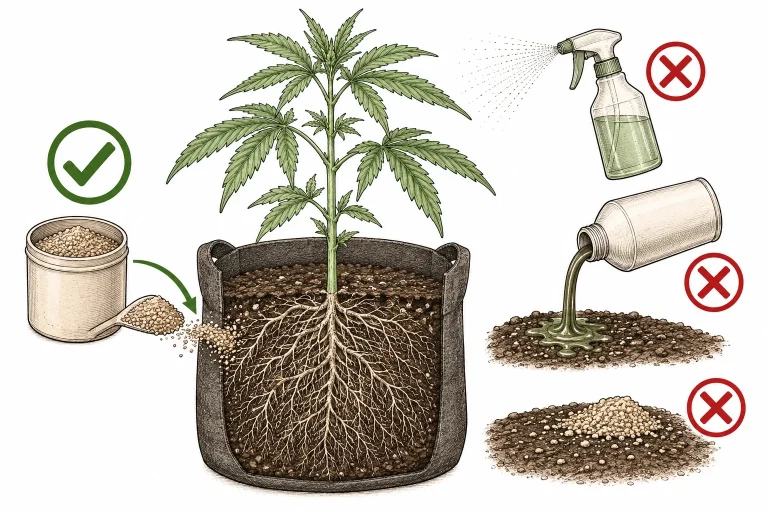
A common mistake is applying it too late. If you add mycorrhizal fungi well into the vegetative stage, the root system is already mostly built and the benefit tends to be smaller. Ideally, the first application happens right at germination or at the first transplant. If you want to give your soil life an extra boost later on, you can water with compost tea as a supplement.
Another mistake is pairing them with heavy synthetic nutrient lines that build up high salt levels in the growing medium. Those salts can damage the delicate hyphae before a stable symbiosis has a chance to form. If you want to use mycorrhizae, go with an organic or at least low-salt feeding schedule, like the one you’d typically run in organic cannabis growing.
Storing the product the wrong way can also seriously cut its effectiveness. Mycorrhizal spores are living organisms and are sensitive to heat, moisture and direct sunlight. Always keep your inoculant cool, dry and dark, and check the expiration date – expired spores often won’t germinate anymore.
- Applying too late, after root growth is mostly done
- Combining with high-salt synthetic nutrients
- Improper storage or storing the product too long
- Using expired or low-quality inoculants
Frequently Asked Questions
Can you use mycorrhizal fungi on cannabis plants that are already mature?
Yes, you can, but the effect is usually smaller than with an early application. Your best bet is to apply the inoculant directly to the fresh new roots at your next transplant, since no symbiosis has formed there yet.
Do mycorrhizal fungi make sense for cannabis in hydro?
In pure hydroponics systems without a growing medium, they’re much less effective, because the fungus needs a solid medium to spread through. In coco coir or soil-based setups, mycorrhizae work far more reliably than in plain water.
How long does it take for mycorrhizal fungi to work on cannabis?
The symbiosis usually takes two to four weeks to establish. The first visible effects on growth and vigor typically show up only after this phase, which is why applying early matters so much.
Can too much mycorrhizae hurt the plant?
No. Unlike mineral nutrients, overdoing it with mycorrhizae is generally harmless, because you’re dealing with living fungal spores. Extra spores that never touch a root simply go unused.
The Bottom Line
Mycorrhizal fungi are an effective, low-risk way to give your cannabis plants lasting boosts in root growth, nutrient uptake and stress tolerance. The keys to success are the right timing (apply them right at transplanting), the right dose, and skipping high-salt nutrients and fungicides while the fungi get established. Follow these basics and you can expect stronger, more resilient plants over the long run. Whether mycorrhizae can help with active root rot or whether you need them when mixing your growing medium is covered in dedicated articles. For more basics on the root zone, check out our guide to growing media and soil.
