
Cannabis Grow Room Climate — Get Temperature, Humidity & Ventilation Under Control
Heat stress, high humidity, poor airflow: your grow room climate decides growth, yield and mold risk — here you’ll learn how to dial in temperature, humidity and air circulation.
What is your plant showing?
The right cannabis grow room climate is the foundation of every grow
Even with perfect feeding and ideal lighting, cannabis reacts strongly to the wrong climate. Temperatures that are too high cause heat stress and slow growth, high humidity invites mold and pests, and air that’s too dry dries out leaves and buds. This hub explains how to set temperature, humidity (VPD), ventilation and CO₂ levels correctly in every growth stage — and how to spot climate problems early, before they turn into real trouble.
The key number for an ideal climate is VPD (vapor pressure deficit) — the relationship between temperature and humidity that determines how easily your plant can release water through transpiration from its leaves and move nutrients as a result. A VPD that’s too low (too humid) slows nutrient transport and encourages mold; a VPD that’s too high (too dry) stresses the plant and makes it wilt.
Target values change with every growth stage: seedlings need high humidity (65–70%) and moderate temperatures, in the vegetative stage the ideal humidity drops to 55–65%, and in flower you should stay below 50–55% to minimize mold risk. Our VPD Calculator helps you work out the exact target for each stage.
Invest early in a reliable thermo-hygrometer — most cannabis climate problems aren’t caused by obvious extremes but by gradual drift that only shows visible symptoms after days. If your plant already shows signs of climate stress, our Plant Diagnosis Tool helps you pin down the cause.

“Always measure temperature and humidity at the height of the top colas — lamp heat often creates a very different climate there than the tent thermometer at floor level shows.”
Climate in detail
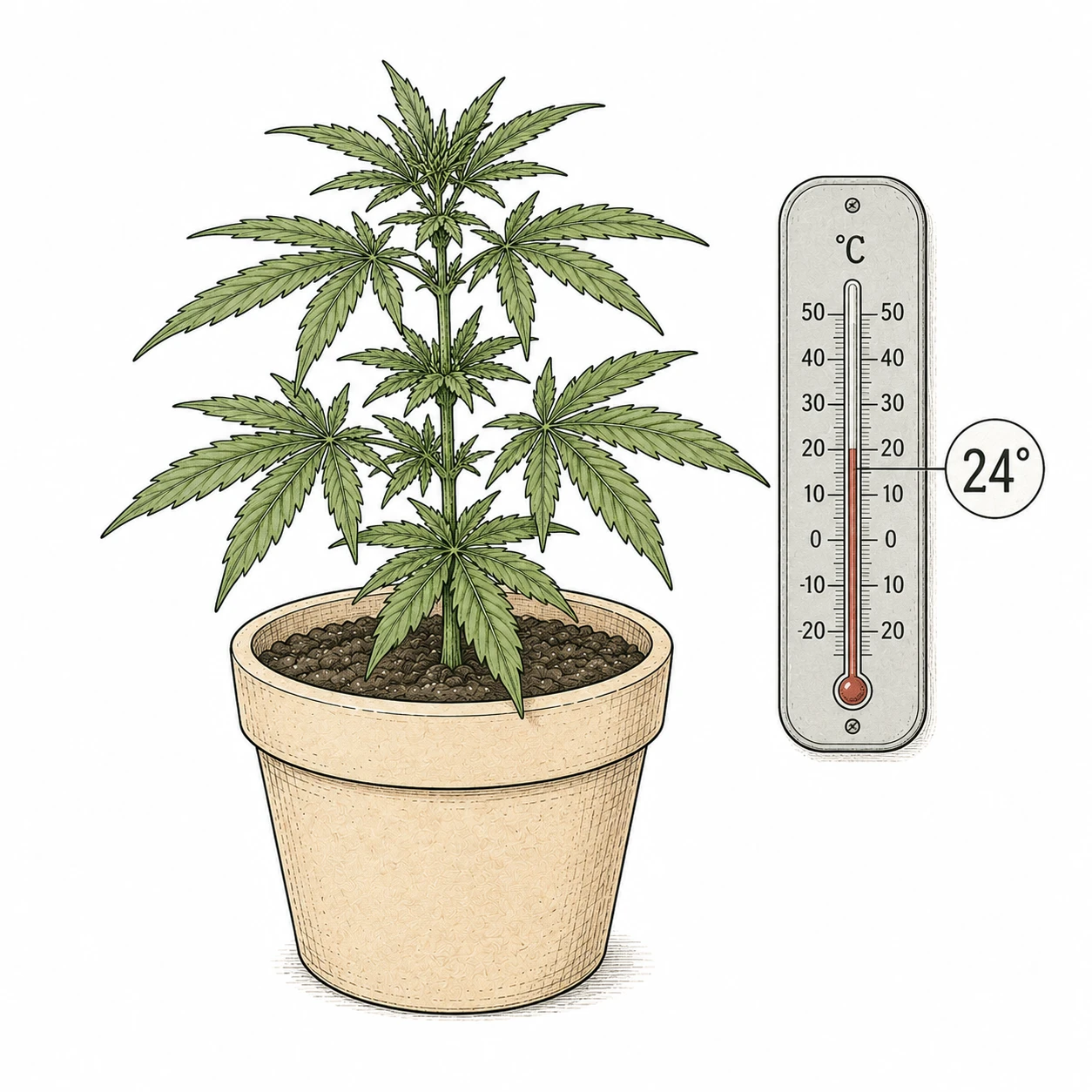
Optimizing Cannabis Temperature
Ideal temperatures for the vegetative and flowering stages, day-night differences and how to avoid heat stress.
Read article →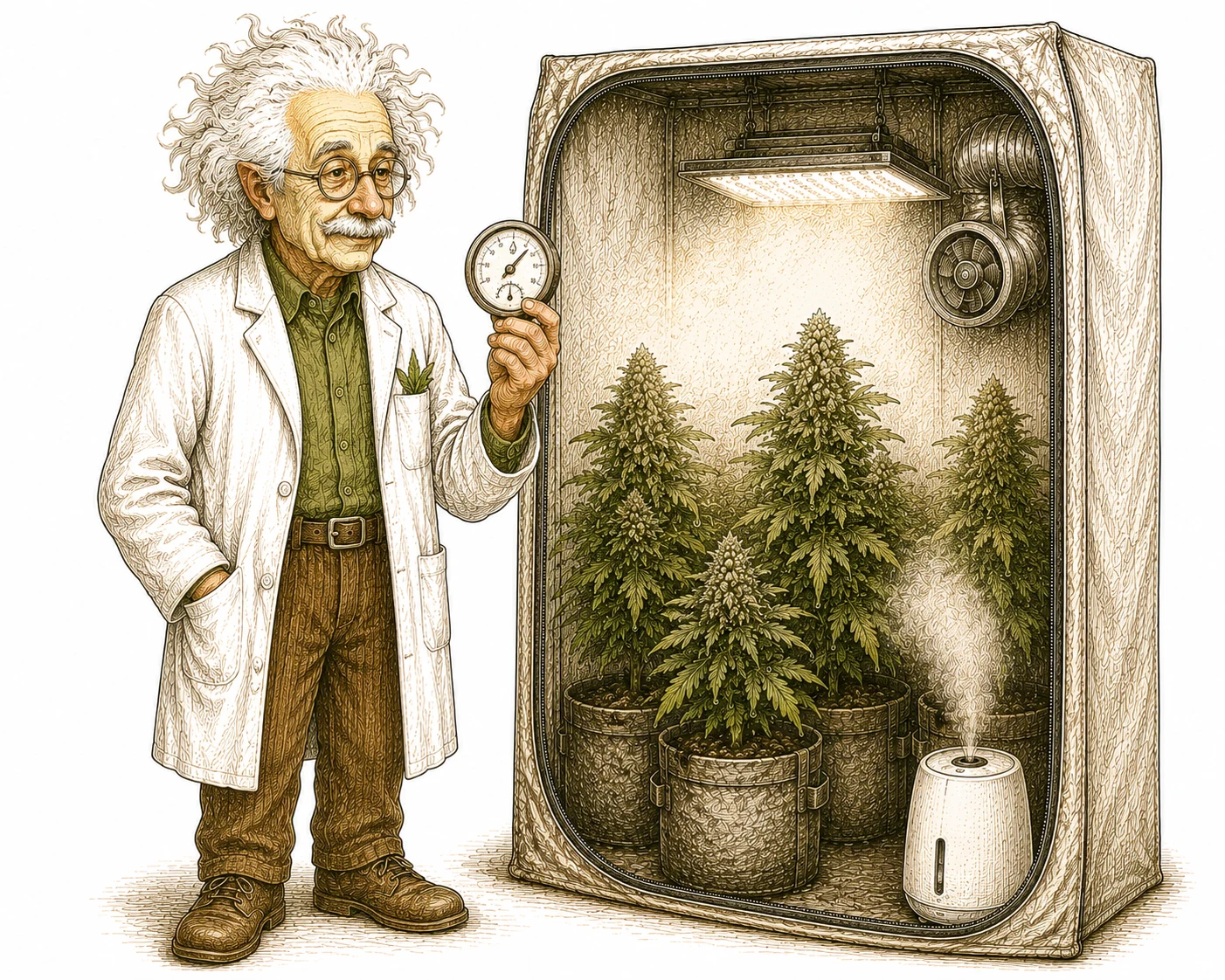
Dialing In Cannabis Humidity & VPD
Which humidity is ideal in each growth stage and how to use VPD to prevent mold.
Read article →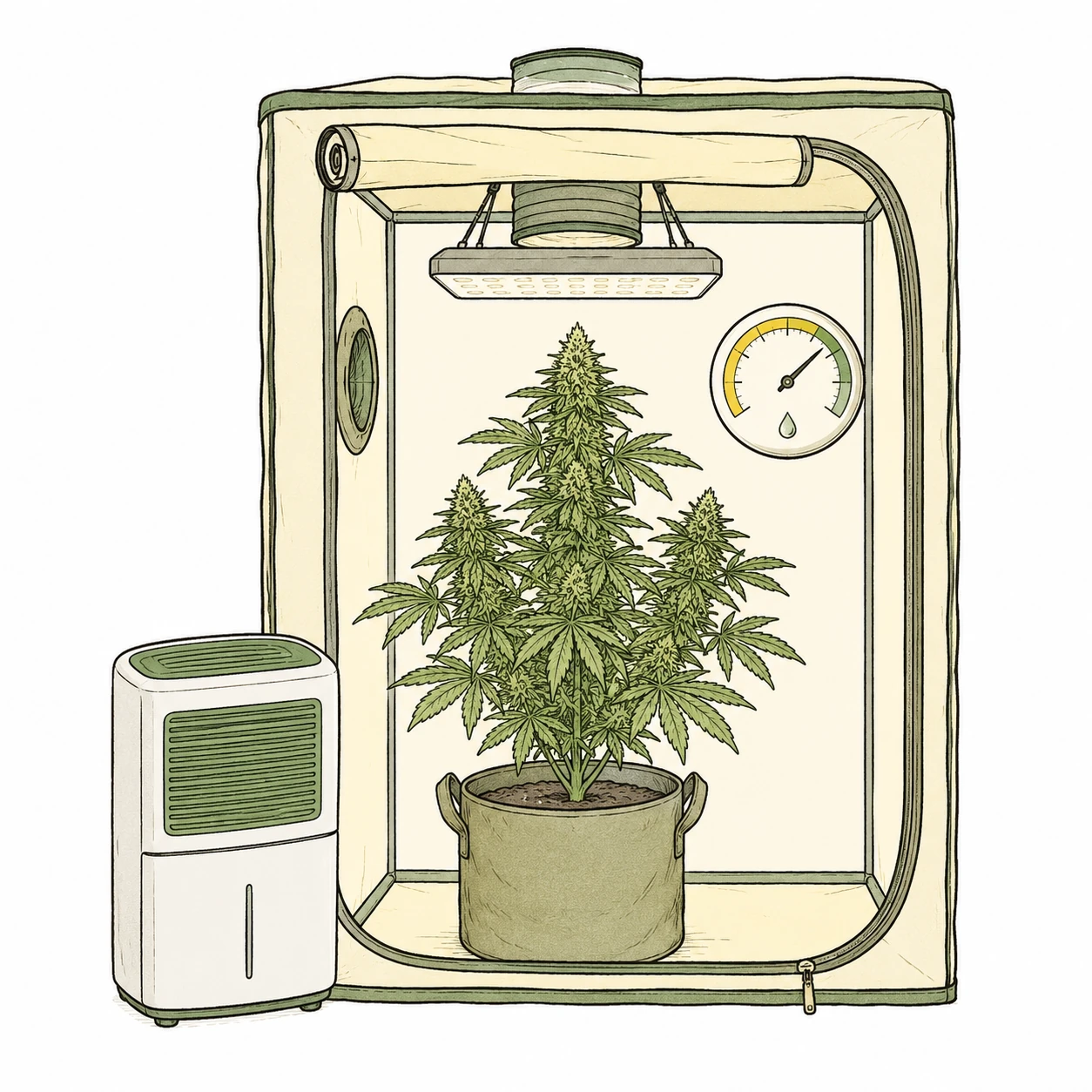
Dehumidifiers for Your Grow Tent
Which dehumidifier fits your grow tent, how to size it correctly and how to avoid common setup mistakes.
Read article →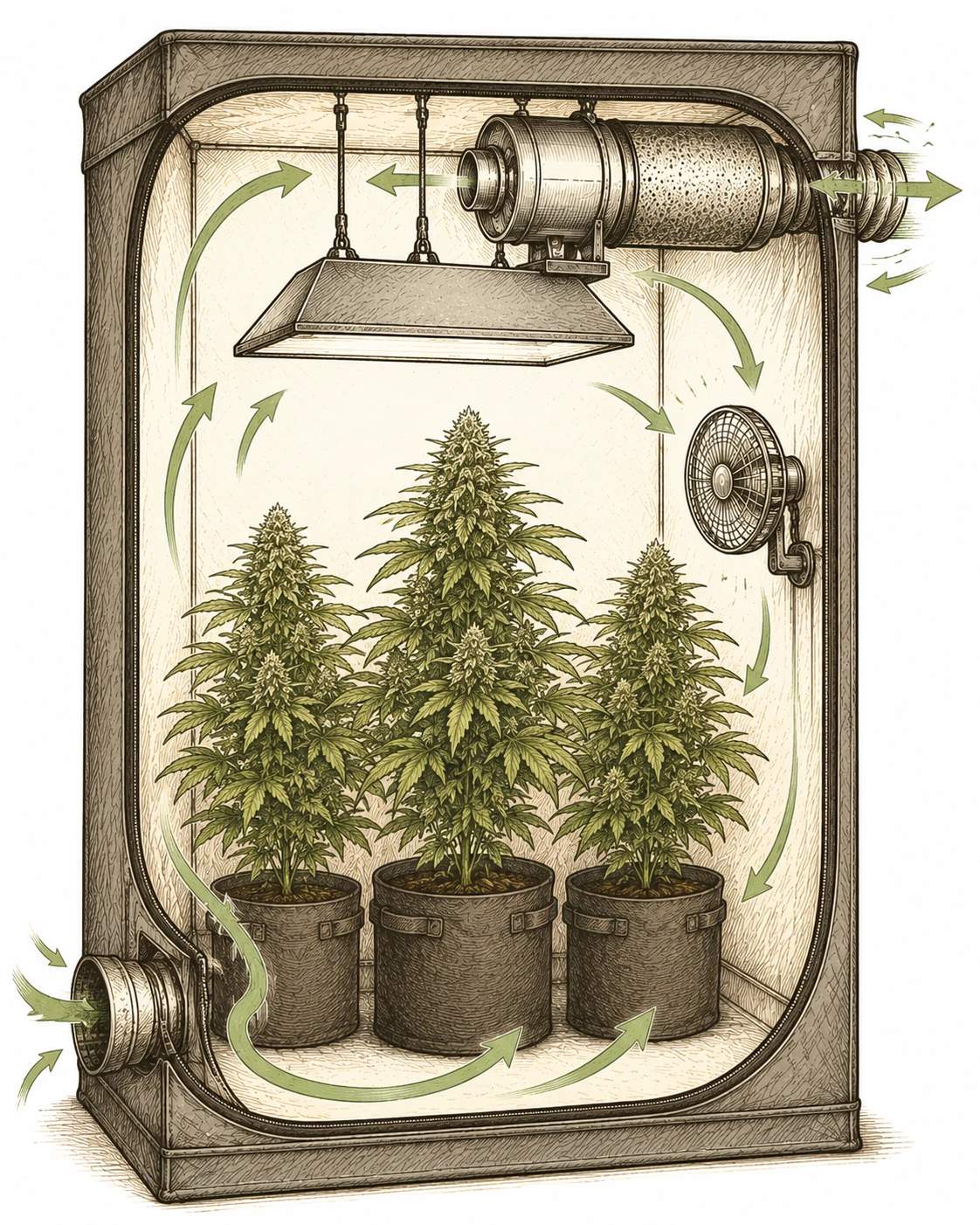
Setting Up Cannabis Ventilation & Air Circulation
Size exhaust and intake correctly, position circulation fans and prevent heat buildup in the tent.
Read article →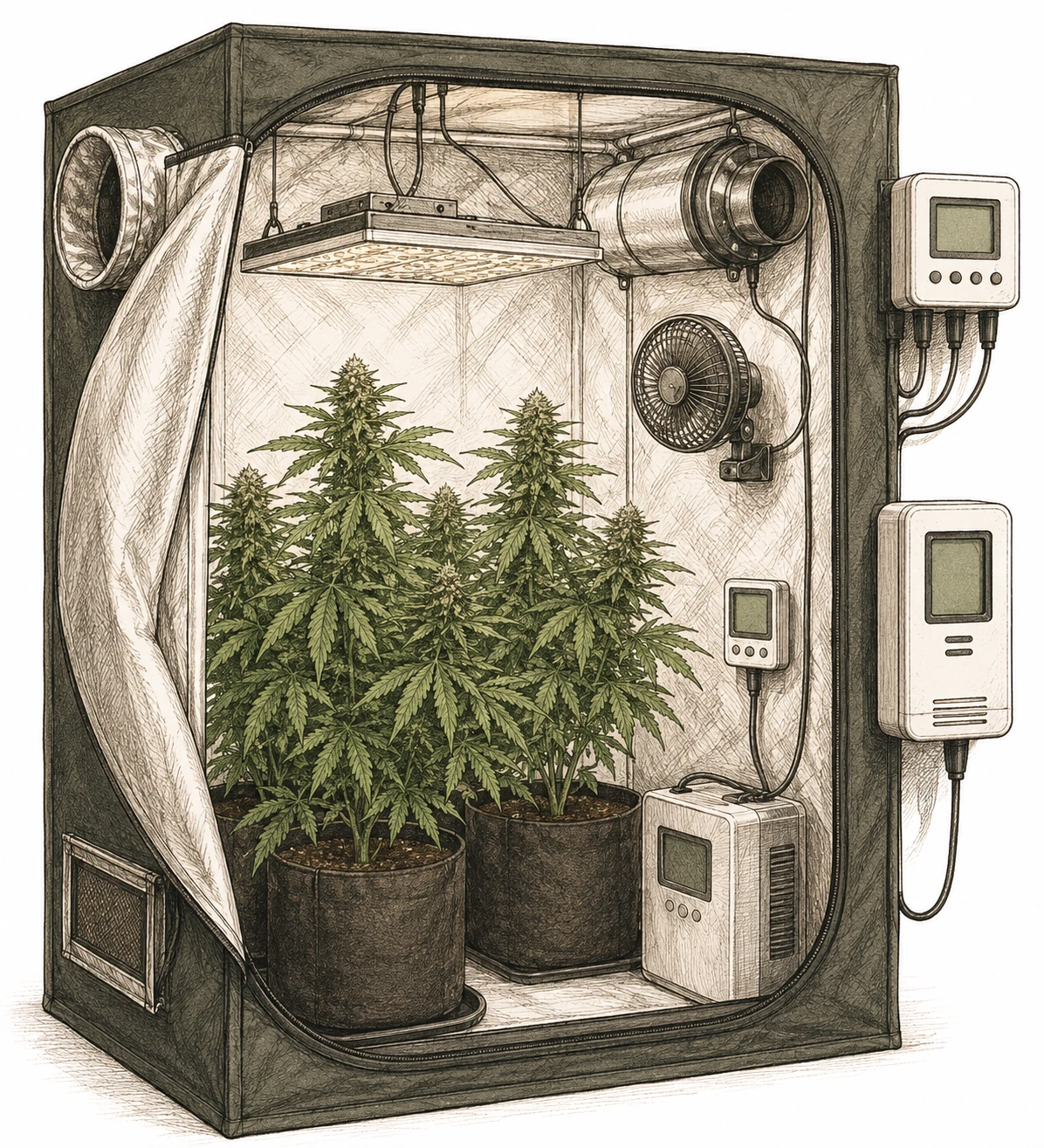
CO₂ Enrichment for Cannabis Grows
When CO₂ enrichment pays off, which levels make sense and what to watch out for when you set it up.
Read article →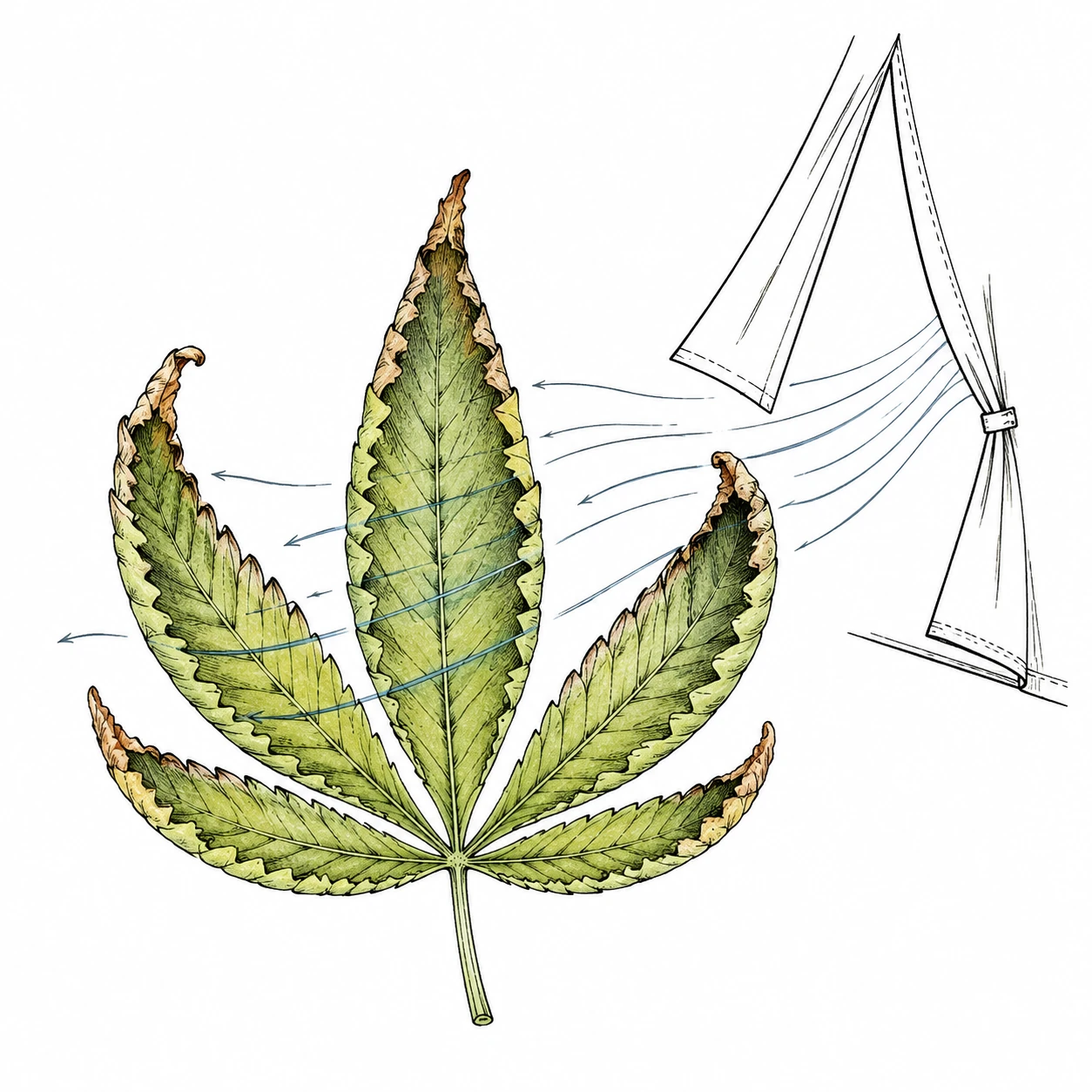
Avoiding Drafts in Your Cannabis Grow Room
How much air movement your plants need — and when drafts or wind become a problem.
Read article →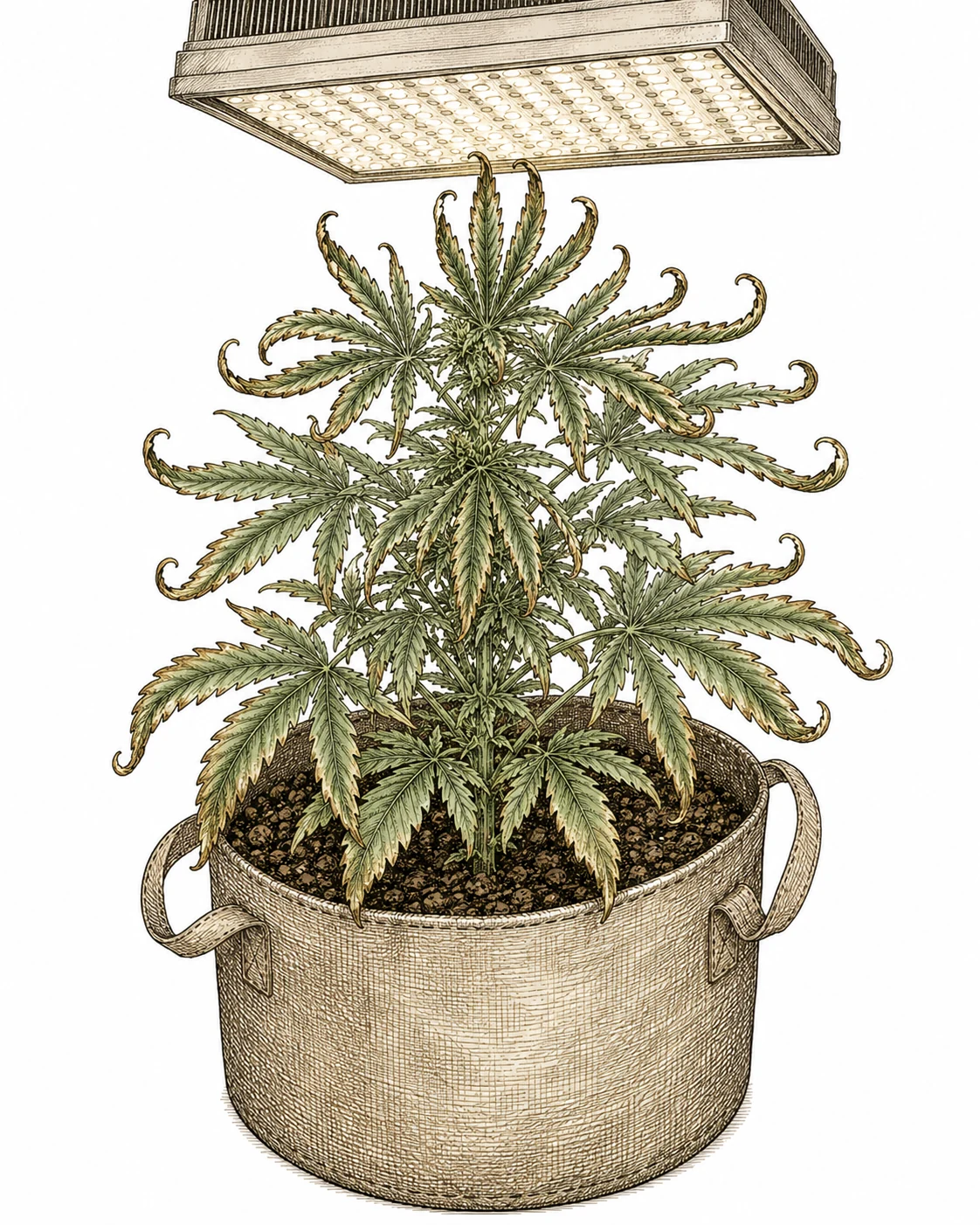
Spotting and Treating Cannabis Heat Stress
Tell typical heat stress symptoms apart from light burn and nutrient problems — and respond the right way.
Read article →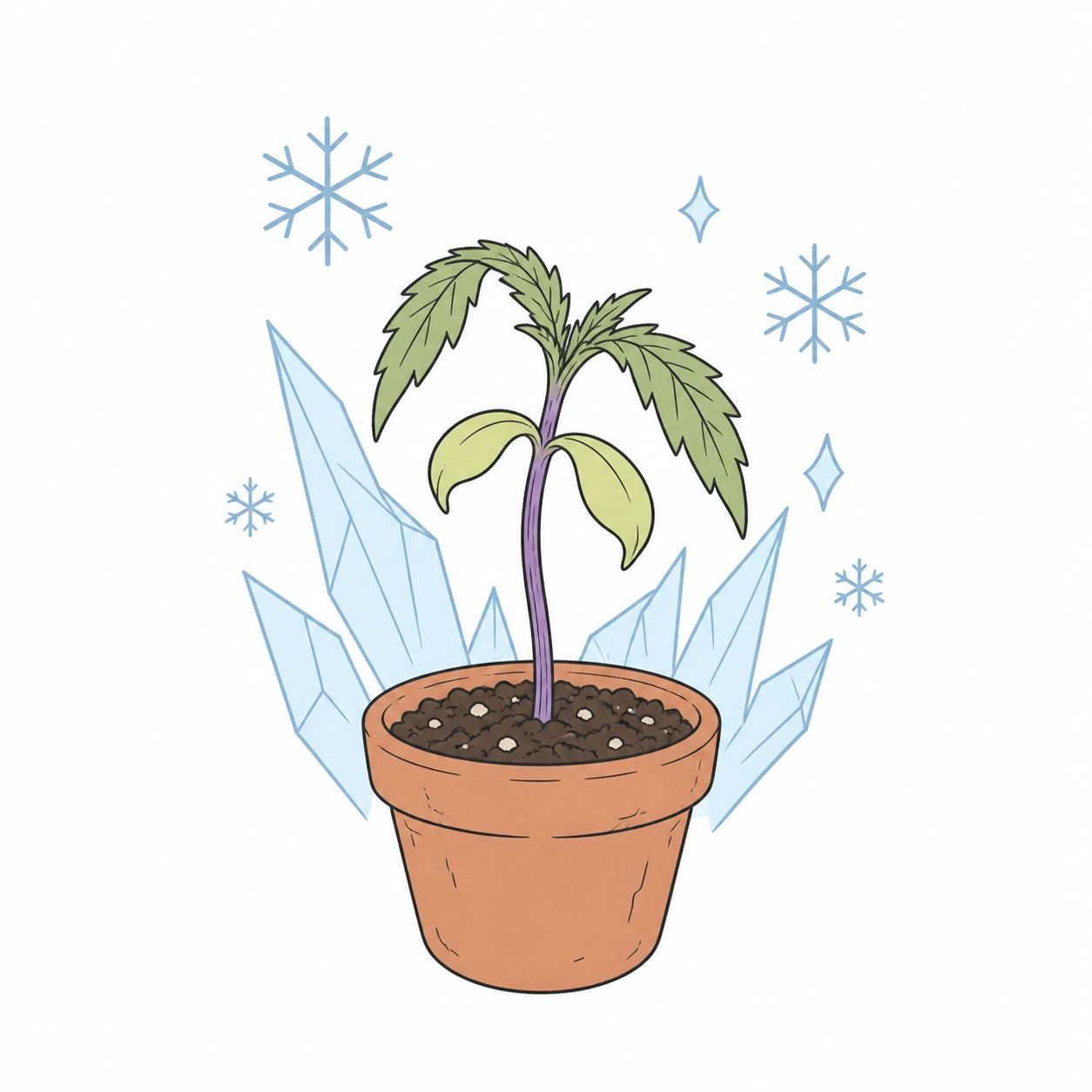
Spotting Cold Stress
Purple-red discoloration on leaves and stems below 59 °F (15 °C) — the slowed metabolism produces more anthocyanins.
Read article →Frequently asked questions about cannabis grow room climate
What is VPD and why does it matter more than temperature or humidity alone?
VPD (vapor pressure deficit) combines temperature and humidity into a single number that determines how easily your plant can release water. Temperature or humidity alone tells you little — 77 °F (25 °C) at 40% humidity feels completely different to the plant than 77 °F (25 °C) at 70%.
What humidity is ideal during the flowering stage?
In flower you should lower humidity to 45–55% to minimize mold risk as the buds get denser. Too much humidity in this stage is one of the most common causes of bud rot (botrytis, gray mold).
How do I recognize heat stress in my cannabis plant?
Typical signs are leaf edges curling upward (“tacoing”), lighter leaf color on the top leaves closest to the light, and slowed growth despite good feeding. Measure the temperature right at the height of the top colas, not with the tent thermometer.
How important is CO2 for growing cannabis?
CO2 enrichment only pays off once light, temperature and humidity are already dialed in — then it can speed up growth even more, but for beginners it isn’t a necessary investment. Without added CO2, normal room air is completely enough for healthy growth.
Where should I measure temperature and humidity?
At the height of the top colas, not on the floor or at the tent wall — lamp heat often makes it noticeably warmer and drier up there than readings lower in the tent suggest.
How quickly do climate problems affect my plant?
That depends heavily on how severe they are: extreme heat or humidity often shows first symptoms within hours, while slight deviations only become visible after several days. Measuring regularly with a thermo-hygrometer catches problems before they cause visible damage.
