

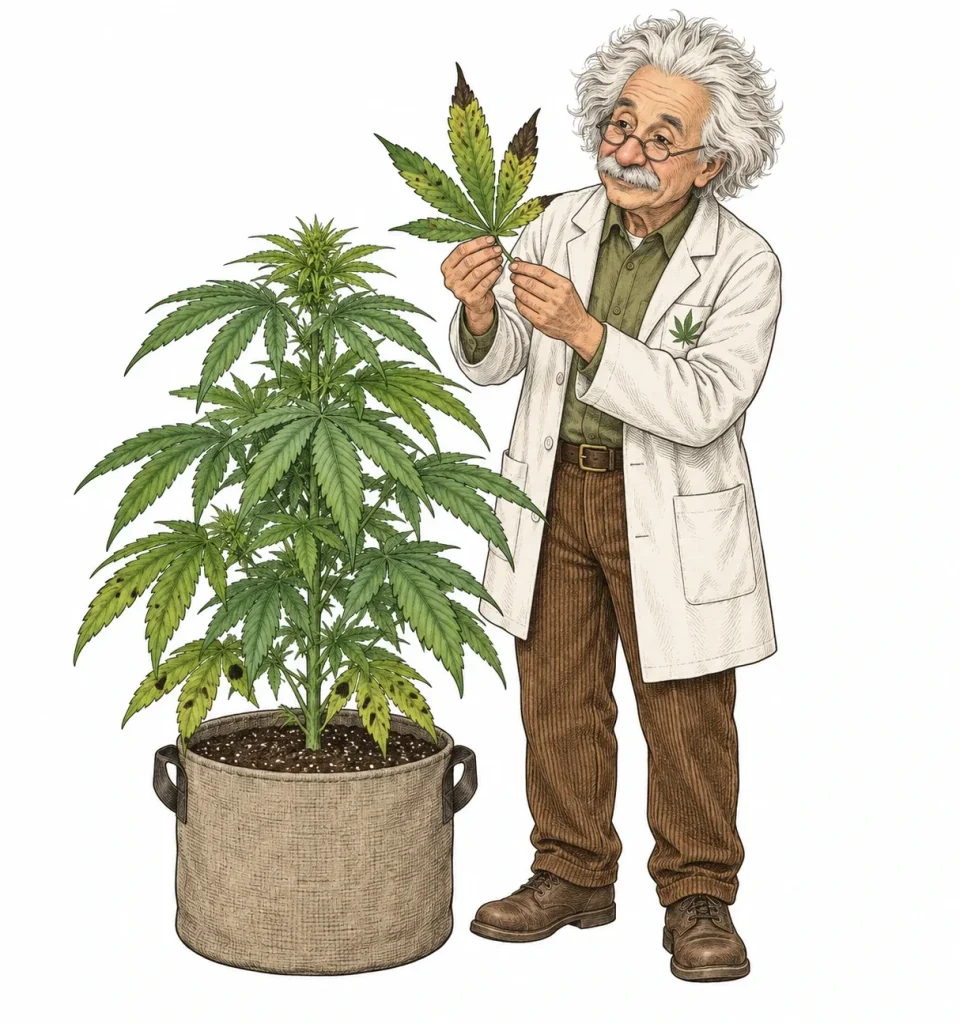
Black leaves on your cannabis plant can be a real shock. Dark spots or leaf areas that turn completely black often look more alarming than other leaf symptoms. The causes vary a lot, from fungal infections to cold stress to nutrient problems. This article shows you how to narrow down the cause step by step and which quick fixes actually help. By the end, you’ll know whether your plant can still be saved or whether it’s just a cosmetic issue.
What Do Black Leaves on Cannabis Typically Look Like?
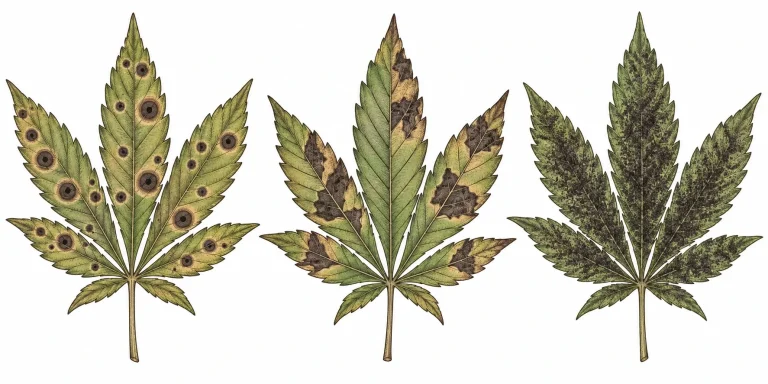
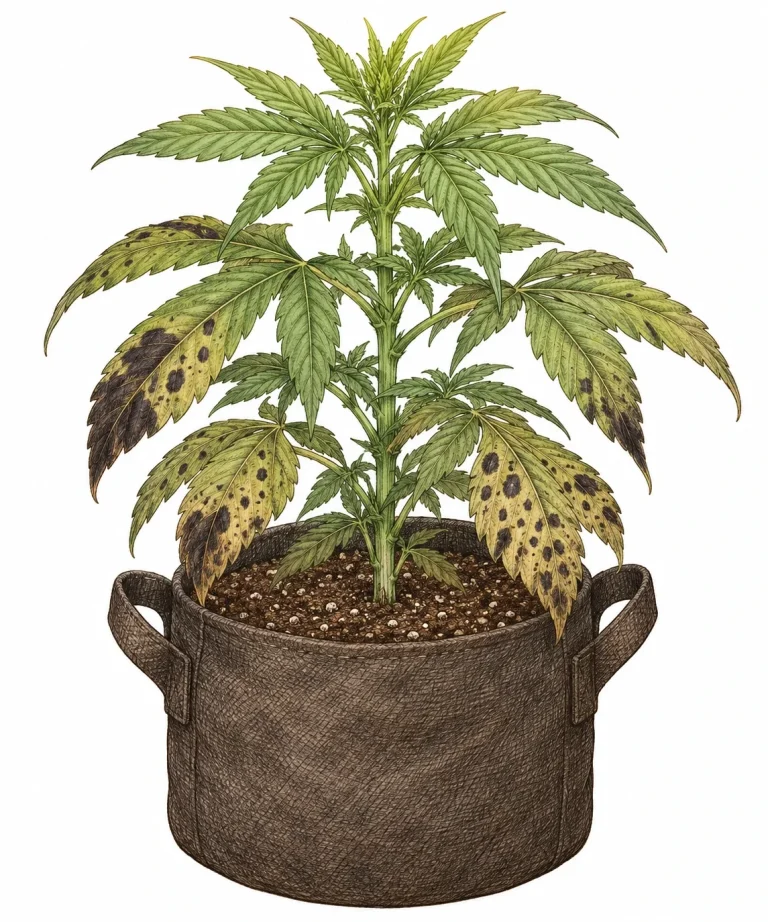
Before you start treating, take a close look at what you’re seeing. Black discoloration can start as tiny pinpoint spots, spread into larger dead (necrotic) areas, or hit entire leaf edges. Pay attention to whether the damage looks dry and crispy or wet and slimy. That alone gives you a first clue about the cause.
Where it shows up on the plant also tells you a lot. If the black spots start on the lower, older leaves, nutrient or watering problems are the more likely culprit. If they suddenly appear all over the plant, a fungus or an environmental stressor like cold is more likely. Not sure? Check out our in-depth guide to identifying cannabis diseases to sort out the symptoms.
- Small black dots that slowly get bigger
- Large black-brown dead patches on leaf tips or edges
- Black, often shiny or slimy spots when moisture is the problem
- Black discoloration along the leaf veins
Fungal Diseases: The Most Common Cause of Black Cannabis Leaves
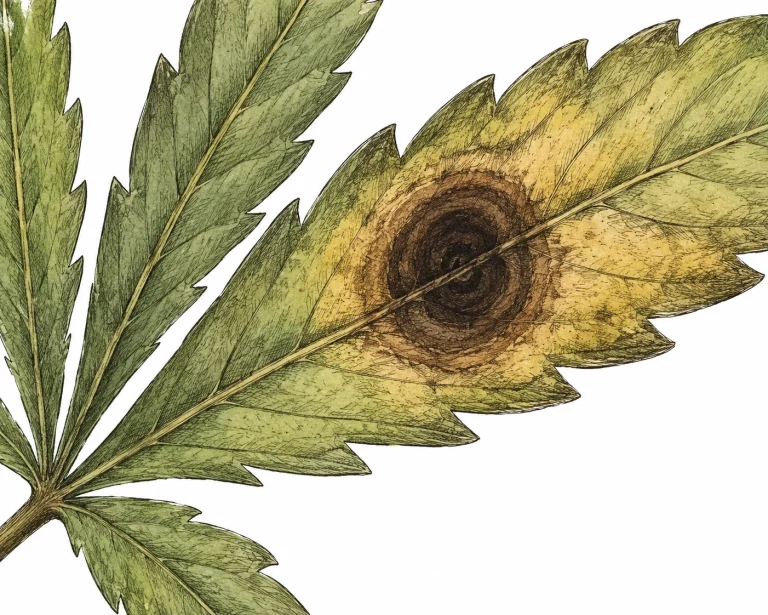
The most common cause of black leaves on cannabis is fungal leaf spot disease. High humidity (relative humidity, RH) combined with poor ventilation lets fungal spores settle on the leaves. They form telltale dark spots that often spread in rings. The best-known culprits are Alternaria and Septoria, and both leave dark to black lesions behind.
Anthracnose can also cause black, sunken spots that can wipe out whole sections of a leaf in later stages. You’ll find more details on these pathogens in our article Alternaria on Cannabis: 5 Signs to Spot Right Away and in our post on How to Identify and Beat Septoria Leaf Spot on Cannabis. If you suspect a fungal infection, remove the affected leaves right away and bring your humidity down.
- Alternaria: brown-black spots with a yellow edge
- Septoria: small dark dots that merge together
- Anthracnose: sunken black lesions
- Cladosporium: velvety black coating on the leaf surface
Bacterial Infections and Black Leaf Spots
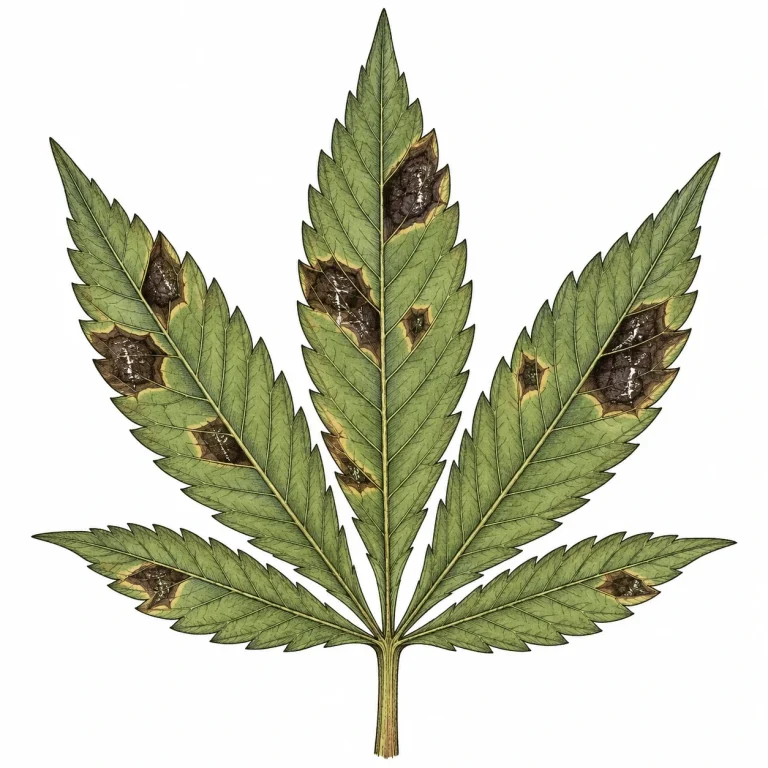
Fungi aren’t the only culprits. Bacteria can also turn cannabis leaves black. Bacterial leaf spots usually show up as dark, water-soaked lesions. They feel damp to the touch and often have a yellowish halo around them. Unlike fungal infections, bacterial infections can spread especially fast through damaged leaf surfaces, for example after mechanical stress or a pest infestation.
These infections often appear when the leaf surface stays wet all the time, for example from overhead watering or stagnant moisture in a dense canopy. To learn how to tell them apart and treat them, check out Bacterial Leaf Spot: 5 Signs to Spot Right Away.
- Dark, water-soaked spots
- Fast spread through damaged tissue
- Yellowish ring around the black areas
- Gets worse at high humidity
Cold Stress and Sunburn as Triggers
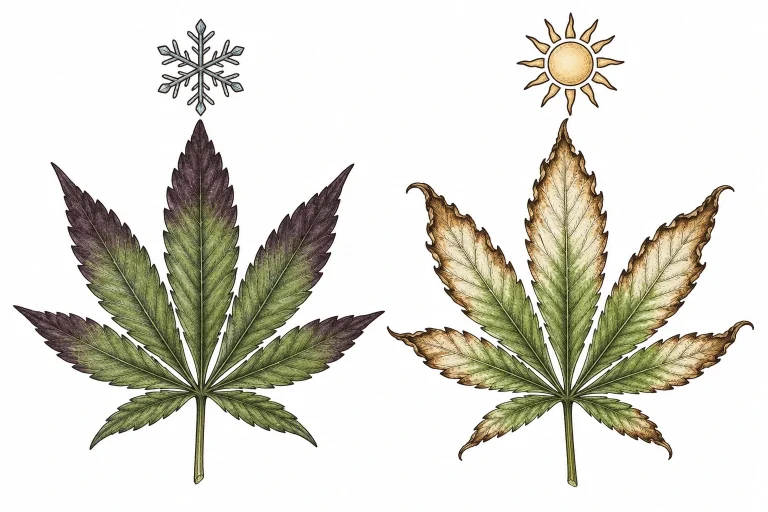
Not every black discoloration has a biological cause. Cold stress often leads to dark purple or even black discoloration, especially on leaf edges and stems. This tends to happen when nighttime temperatures drop sharply or a cold draft hits the plant directly. The purple color comes from increased production of anthocyanins. True black usually only shows up once frost kills the tissue. Both are easy to tell apart from fungal spots, because the discoloration covers larger areas and looks more even.
Extreme light intensity combined with heat can also cause burned leaf tips that look almost black. Want to dig deeper into these two stressors? Read our articles How to Spot Cold Stress in Cannabis: 7 Symptoms Explained and Cannabis Sunburn: 6 Symptoms to Spot Reliably.
- Dark purple to black leaf edges from cold
- Affected areas usually feel dry
- Black, scorched-looking tips from light stress
- Symptoms often on plant parts close to the light or a window
Nutrient Problems That Can Cause Black Spots
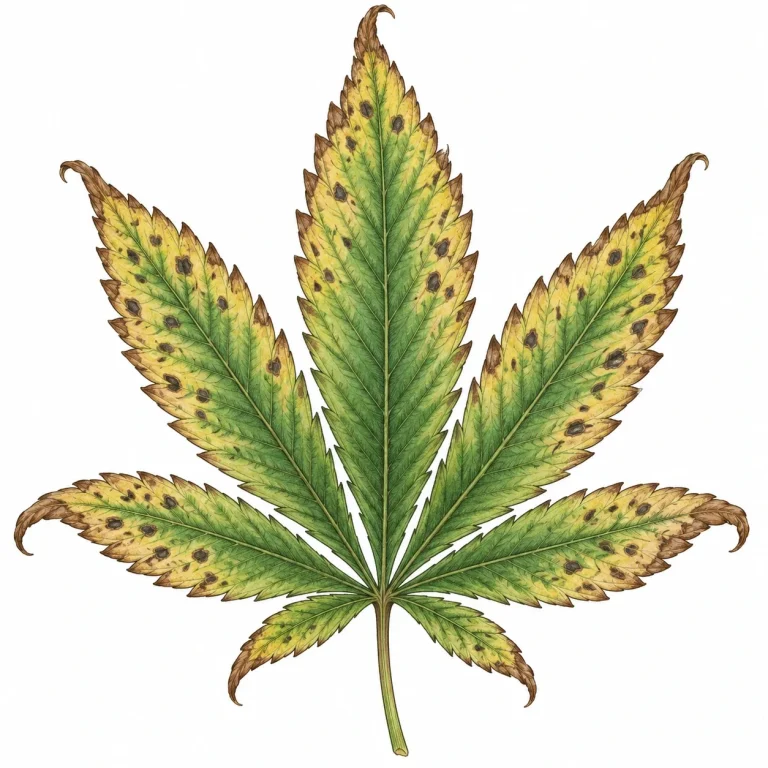
Nutrient imbalances can also indirectly turn leaves black. A severe potassium deficiency, for example, first causes yellow leaf edges that later die off and turn brown to black. A calcium deficiency can also cause black, necrotic spots, because the cell walls get weak and die. Too much of certain micronutrients like boron or manganese can also lead to dark spots.
Many deficiencies look alike at first, so it pays to compare the symptoms against a nutrient chart. Use our Cannabis NPK Chart: Feed Safely Through 5 Growth Stages to match symptoms to the right nutrient. If you suspect a toxicity, check out Cannabis Boron Toxicity: 5 Signs to Spot Right Away.
- Potassium deficiency: yellow edges that turn black and die off
- Calcium deficiency: necrotic black spots on young leaves
- Boron or manganese toxicity: dark spots on older leaves
- Usually shows up along with other discoloration, such as yellowing or browning
Pests as an Indirect Cause of Black Spots
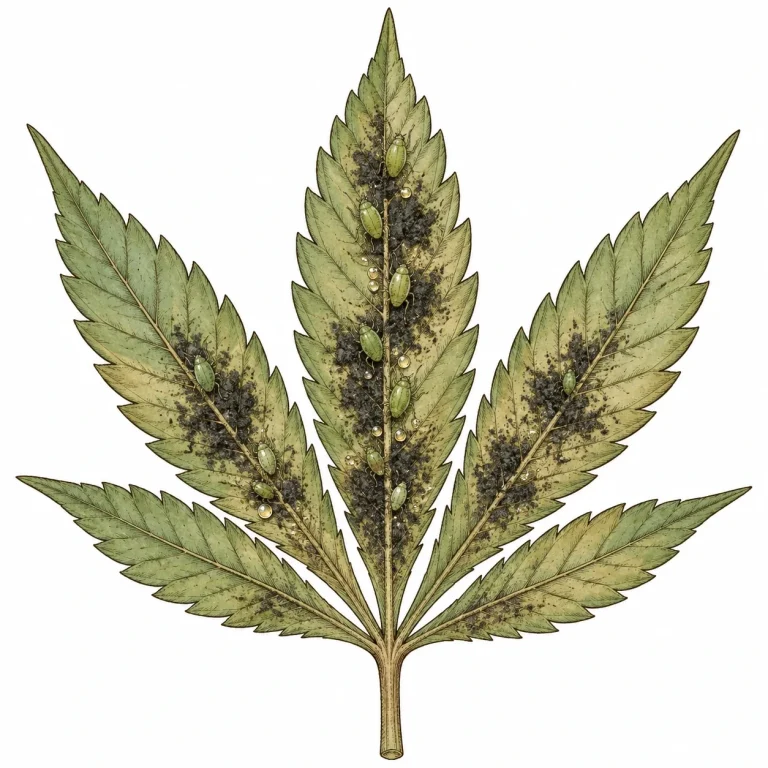
Some pests don’t cause black spots directly. Instead, their droppings feed sooty mold fungi. Aphids and scale insects, for example, excrete sticky honeydew, and black, velvety fungal growth can settle on it. Sooty mold usually stays on the surface, but if it covers large areas, it can seriously hold back photosynthesis.
Bites from thrips or spider mites can also leave small dead, dark spots. Learn more about the most common culprits in Cannabis Scale Insects: 5 Signs to Spot Right Away and How to Spot and Fight Thrips on Cannabis. For a full overview of all the critters that can bug your plants, check out our guide How to Identify Cannabis Pests.
- Black, velvety coating from sooty mold fungi
- Sticky leaf surface as an early warning sign
- Small dark bite marks from sap-sucking insects
- Often comes with visible pests on the undersides of leaves
How to Tackle Black Cannabis Leaves Step by Step
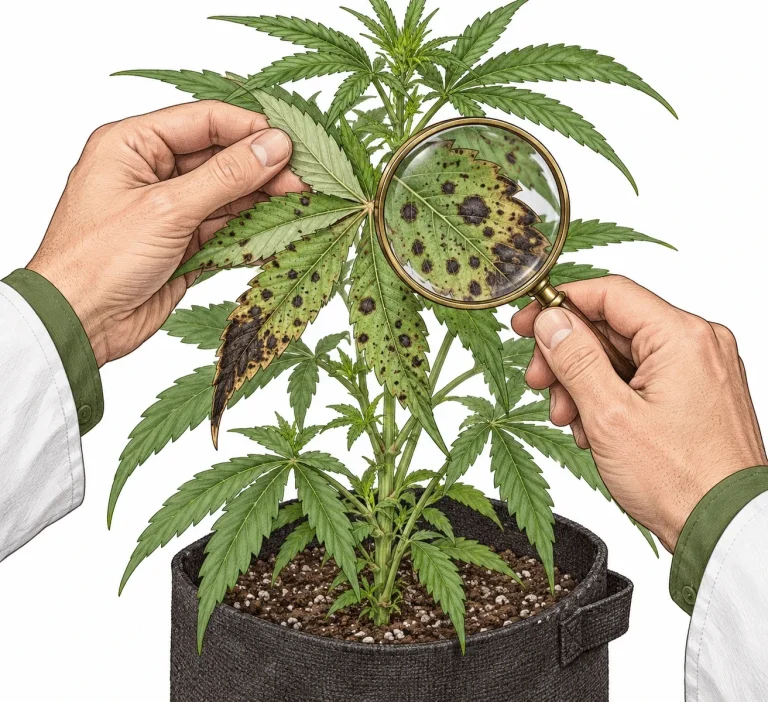
To find the real cause of black leaves on your plant, work through it step by step. Start by taking a close look at the affected leaves in good light, ideally with a magnifier, so you can spot pests or fungal growth. Then check the conditions in your grow: temperature, humidity (relative humidity, RH) and ventilation. These are the most common triggers.
Remove infected leaves consistently and get rid of them outside your grow room to keep things from spreading. After that, dial in your climate and feeding, and watch the plant for several days to see whether new black spots show up. For a general overview of how to diagnose problems step by step, see our Plant Diagnosis Overview.
- Inspect leaves in good light with a magnifier
- Check climate readings like temperature and humidity
- Remove and dispose of infected leaves right away
- Review your feeding schedule and the pH of your water
Frequently Asked Questions
Are black cannabis leaves always a sign of disease?
No, not always. Black cannabis leaves can also come from cold stress, light burn or physical damage. Only a close look at the shape, moisture and spread of the spots can tell you whether you’re dealing with a fungal or bacterial infection.
Can I just cut off leaves with black spots?
Yes, and it’s actually a good idea. Remove badly affected leaves with disinfected scissors and dispose of them outside your grow room to stop fungal spores or bacteria from spreading.
How long does it take for black spots to go away?
Tissue that has already died won’t recover. But if you treat the cause in time, fresh, healthy leaves usually grow back within one to two weeks.
What humidity level best prevents black spots?
During the flowering stage, bring your humidity down to 40–50% RH. High humidity gives fungi and bacteria a huge boost.
Are black spots on buds dangerous?
Yes. Black spots on buds often point to bud rot (botrytis, gray mold) or other rot-causing fungi. Take them very seriously, because infected buds usually can’t be harvested anymore.
How do you best prevent fungal infections in cannabis?
The most important things are good air circulation, humidity below 50% in flower and enough space between plants. Water at the base instead of from above so leaves and buds stay dry, and remove dense lower foliage so fungal spores don’t find a damp place to take hold.
Bottom Line
Black leaves on cannabis can have lots of causes: fungal and bacterial infections, cold stress and light stress, nutrient problems or pests. The key to the right diagnosis is a close look at the shape of the spots, where they show up on the plant and what your grow conditions look like. If you act fast, remove affected leaves and dial in your environment, you can save your plant in most cases. If the symptoms keep spreading, our overview of other cannabis symptoms can help you narrow down the cause.
