

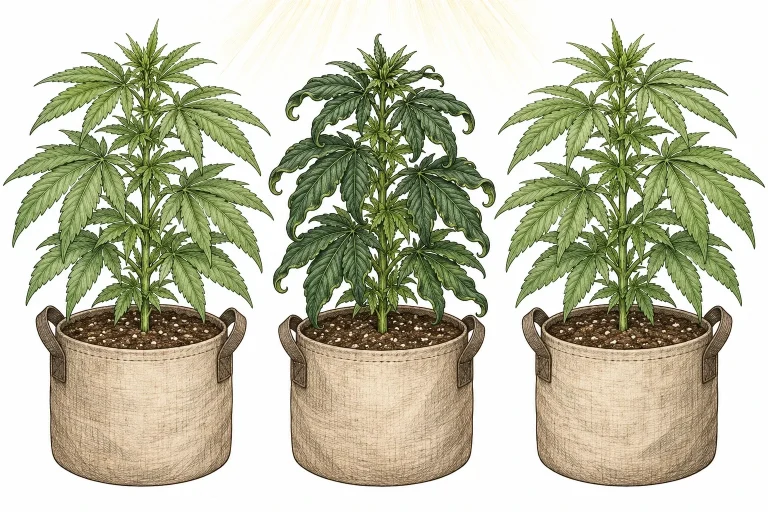
Magnesium toxicity in cannabis usually comes from adding Cal-Mag too often or from poorly dosed nutrient combos, and it can throw off the whole nutrient balance in your growing medium. Instead of vigorous growth, you may see dark green, sometimes clawing leaves and signs of deficiencies in other elements. In this article, you’ll learn how to reliably spot magnesium toxicity and how to get it back under control fast. If you read the symptoms early, you can prevent lasting damage to roots and yield.
What Is Magnesium Toxicity in Cannabis?
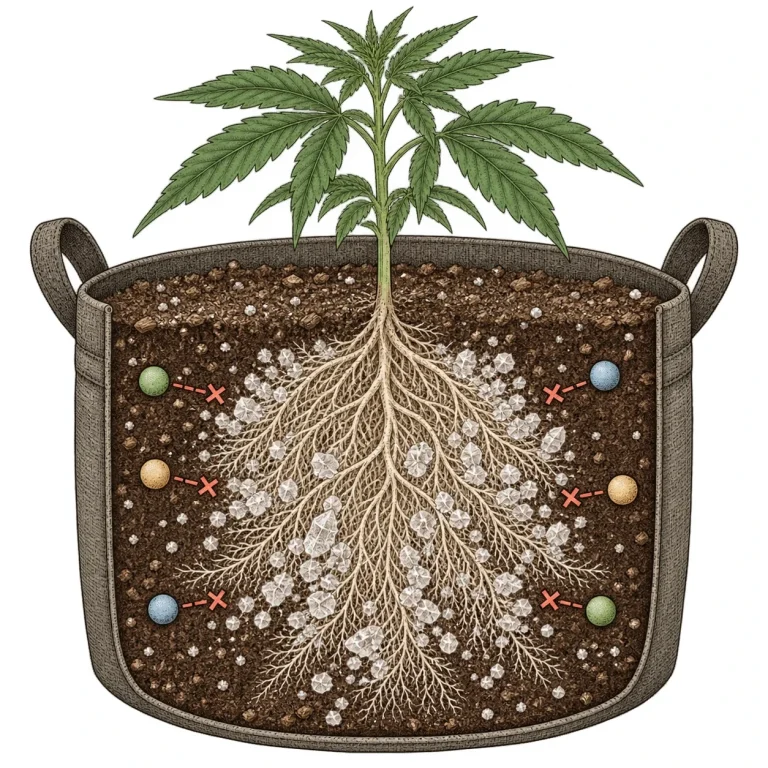
Magnesium is an essential secondary nutrient that cannabis plants need to build chlorophyll and run many enzyme processes. It sits at the center of every chlorophyll molecule, so it’s directly involved in photosynthesis. Problems start when the concentration in your growing medium or nutrient solution gets too high, because then the finely tuned balance between nutrients can tip over.
In practice, magnesium toxicity is less common than a deficiency. You’ll mostly see it in growers who add Cal-Mag on top of their base nutrients without knowing how hard their water actually is. Since a lot of tap water already contains plenty of magnesium, that extra dose can quickly push you into overfeeding. Here’s the catch: too much magnesium blocks the uptake of potassium and calcium, so new deficiency symptoms can show up even though all the nutrients are technically there.
What makes it especially tricky: magnesium toxicity often gets caught late, because the first signs are easy to mistake for healthy, vigorous growth. Once you understand how it all connects, though, you can step in early and avoid bigger damage.
5 Signs of Magnesium Toxicity in Cannabis
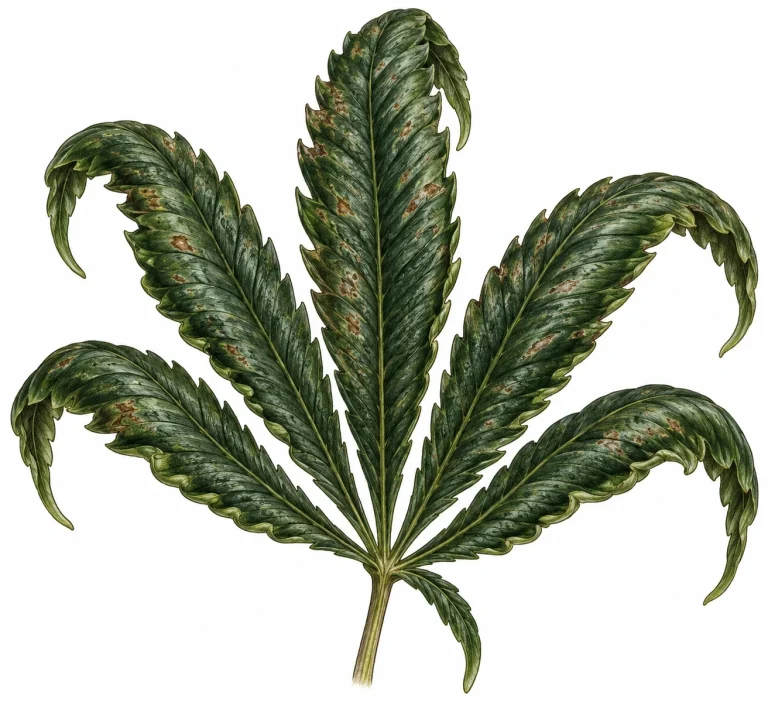
Magnesium toxicity symptoms usually creep in slowly over several weeks. If you know these five signs, you can react early, before your plant visibly suffers.
- Strikingly dark green to almost blackish-green leaves that look noticeably darker than those of healthy neighboring plants
- Mild potassium or calcium deficiency symptoms despite proper feeding, showing up as yellow edges or brown spots
- Slower growth and smaller new leaves, even under ideal lighting
- Stiff, slightly brittle leaves with edges curling downward
- Whitish salt buildup on the surface of the growing medium, a hint of general nutrient burn
How to Identify the Causes of Magnesium Toxicity
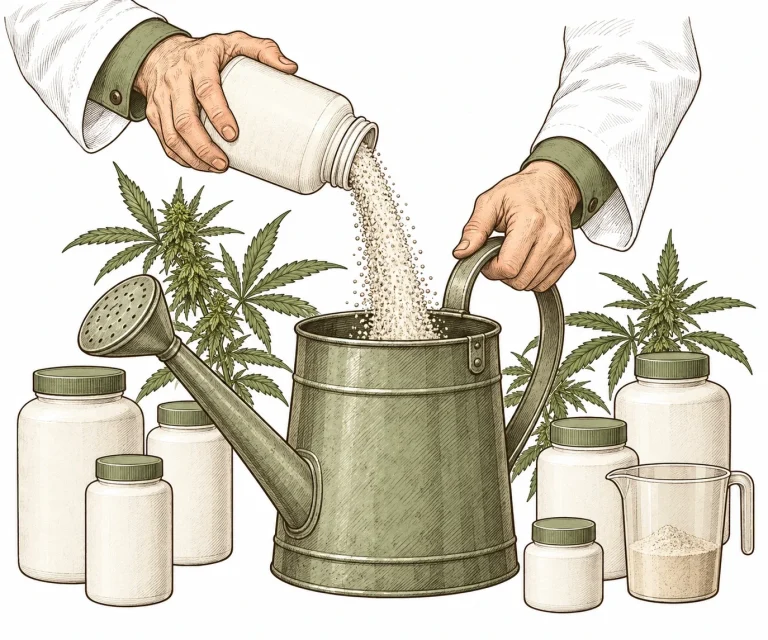
Magnesium toxicity almost always comes down to one thing: how you feed. Once you understand how it happens, you can avoid the same mistakes next time and give your plants exactly what they need.
- Adding Cal-Mag too often or at too high a dose, even though your tap water already has plenty of magnesium
- Using Epsom salt at too high a concentration or at too short intervals
- Combining several magnesium-containing products at once, like base nutrients plus additives
- Skipping EC (electrical conductivity) and pH checks, so nutrients slowly build up in the growing medium over time
- Very hard tap water with high natural magnesium and calcium levels, without adjusting your feeding schedule
How to Tell Magnesium Toxicity Apart From Other Problems
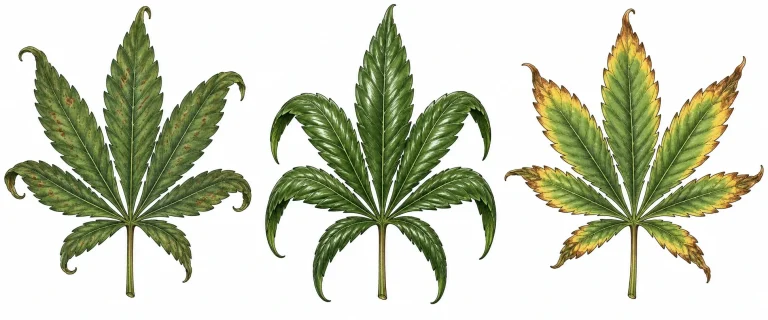
Magnesium toxicity often gets mistaken for other nutrient problems because the symptoms can overlap. Telling them apart carefully helps you pick the right fix. For an overview of other leaf symptoms, check out our diagnosis guide for cannabis diseases.
Nitrogen toxicity also causes very dark green leaves, but usually together with leaf tips that claw downward, as described in Nitrogen Toxicity in Cannabis: Spot 5 Symptoms Fast. Pure magnesium toxicity, on the other hand, tends to darken the whole leaf evenly without the typical claw shape. If you also see light green or yellowish patches between the leaf veins, take a look at Cal-Mag Deficiency in Cannabis: Symptoms, Causes and Fixes. Paradoxically, magnesium toxicity can lock out potassium and calcium, which can create deficiency signs that look a lot like a real Cal-Mag deficiency.
General nutrient burn combined with an off pH can cause similar leaf discoloration, too. That’s why you should always check the EC and pH of your nutrient solution first before settling on a diagnosis.
Quick Fixes for Magnesium Toxicity
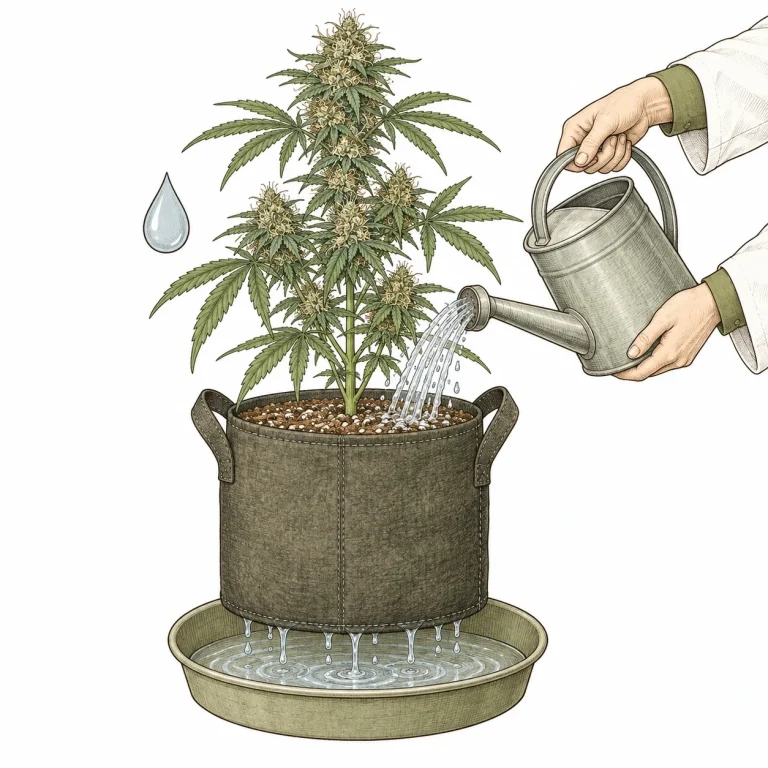
As soon as you suspect magnesium toxicity, it pays to act fast so your roots and overall nutrient balance don’t take lasting damage. These steps help you get things back on track.
- Flush the growing medium right away with plain, pH-adjusted water to wash out excess salts
- Pause feeding for at least one to two weeks, or cut it back hard
- Check the EC (electrical conductivity) of your nutrient solution and your runoff regularly so you can track progress
- Skip Cal-Mag supplements completely unless you’ve confirmed a real deficiency
- Get your tap water hardness tested to avoid overdosing in the future
Long-Term Prevention of Nutrient Toxicity
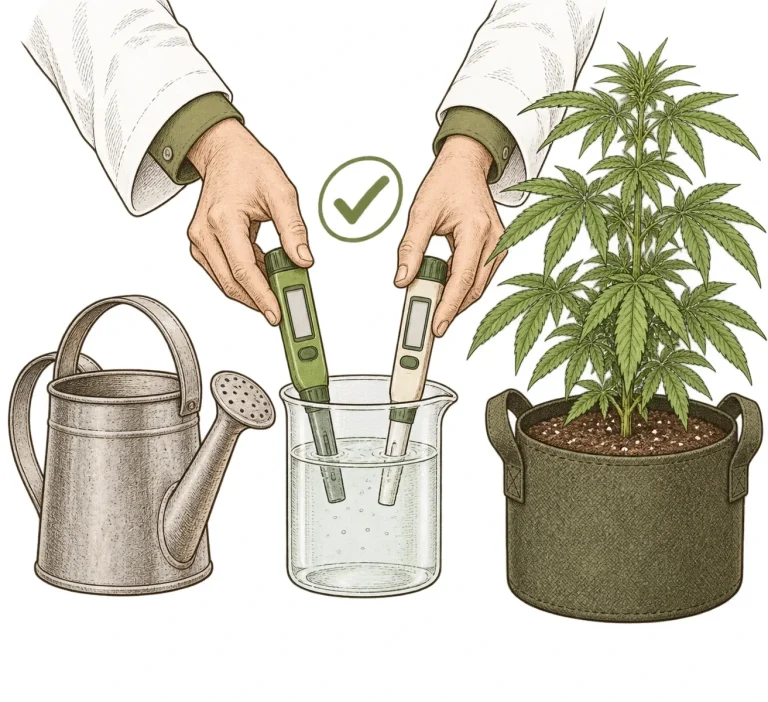
To keep magnesium toxicity from coming back, it pays to rethink your whole feeding strategy. Instead of feeding by feel, work systematically and log your readings every time.
A good starting point is the Cannabis NPK Chart: Feed Safely Through 5 Growth Stages, which shows how much of each nutrient your plant actually needs at each stage. And if dosing tends to trip you up, Cannabis Nutrients: 7 Dosing Mistakes to Avoid has practical tips to help you steer clear of overfeeding and underfeeding.
The basic rule: less is often more. Many growers overfeed just to be safe, even though the plant does much better with moderate baseline nutrition. An EC meter and regular runoff tests help you keep an eye on the actual nutrient concentration in your growing medium, instead of relying only on how much you put in.
Frequently Asked Questions
How fast does cannabis recover from magnesium toxicity?
After flushing the growing medium and taking a break from feeding, most plants bounce back within one to two weeks. Leaves that are already damaged won’t recover, but new leaves should grow in normally again.
Can I keep using Cal-Mag?
Yes, but only after adjusting your dose. First test the hardness of your tap water, and only add Cal-Mag if you can actually confirm a deficiency, rather than mixing it in just in case.
What role does pH play in magnesium toxicity?
The wrong pH can block uptake of other nutrients on top of that and make the symptoms worse. Keep your pH between 6.0 and 6.5 in soil, and between 5.5 and 6.0 in hydro. Our pH Calculator helps you dial in your nutrient solution.
Is magnesium toxicity more common in soil or hydro grows?
Hydro and coco growers are more at risk, because nutrients are taken up more directly and faster, and there’s no soil buffer. In soil, magnesium builds up more slowly, but it tends to stick around longer.
The Bottom Line
Magnesium toxicity in cannabis is almost always caused by heavy-handed Cal-Mag doses or nutrient combos that don’t work well together. You’ll usually spot it by dark green leaves plus secondary potassium and calcium deficiencies. If you know the five typical signs and react fast with flushing and a break from feeding, you can usually save your plant within a few weeks. Long term, the best fix is a disciplined feeding plan based on real measurements: check your EC and pH regularly to keep your nutrient balance stable.
