

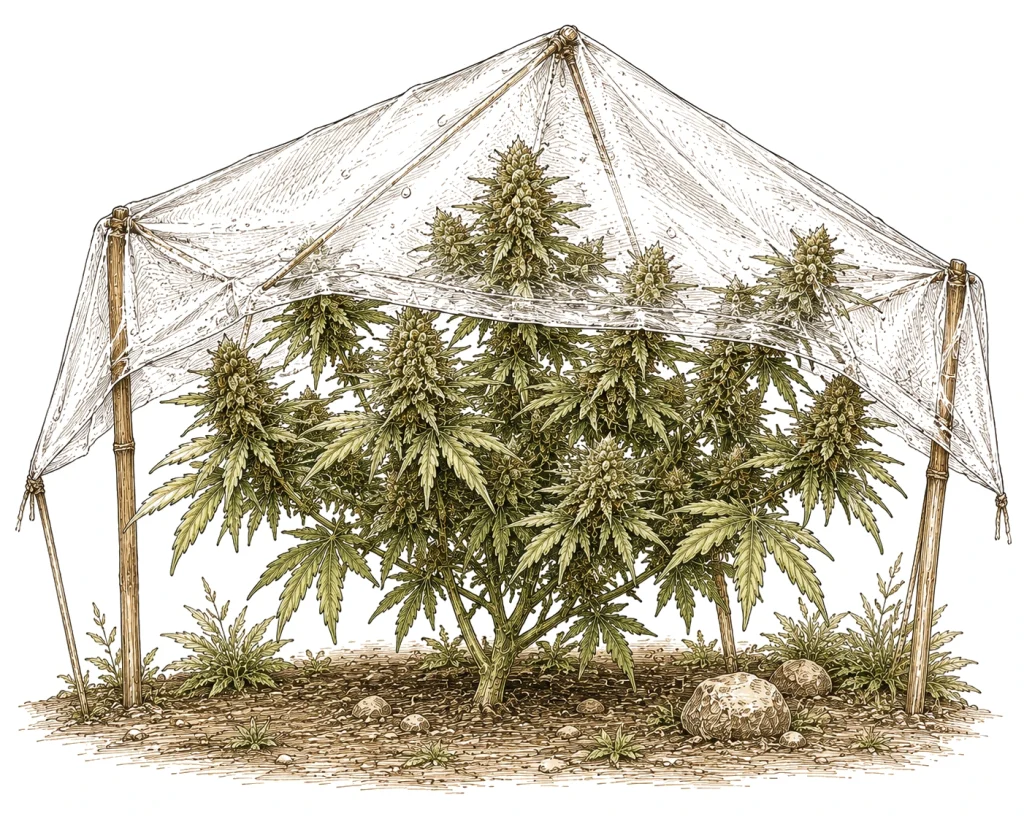
For many home growers, solid rain protection is one of the biggest keys to success for the whole outdoor season. Too much moisture means mold, bud rot (botrytis, gray mold) and, in the worst case, losing your entire harvest — especially in the last weeks of flowering. In cool, wet climates where summers are often rainy and unpredictable, your plants need targeted support. In this article, we show you all the proven ways to protect cannabis plants from rain outdoors and secure your harvest.
Why rain protection matters so much for outdoor cannabis
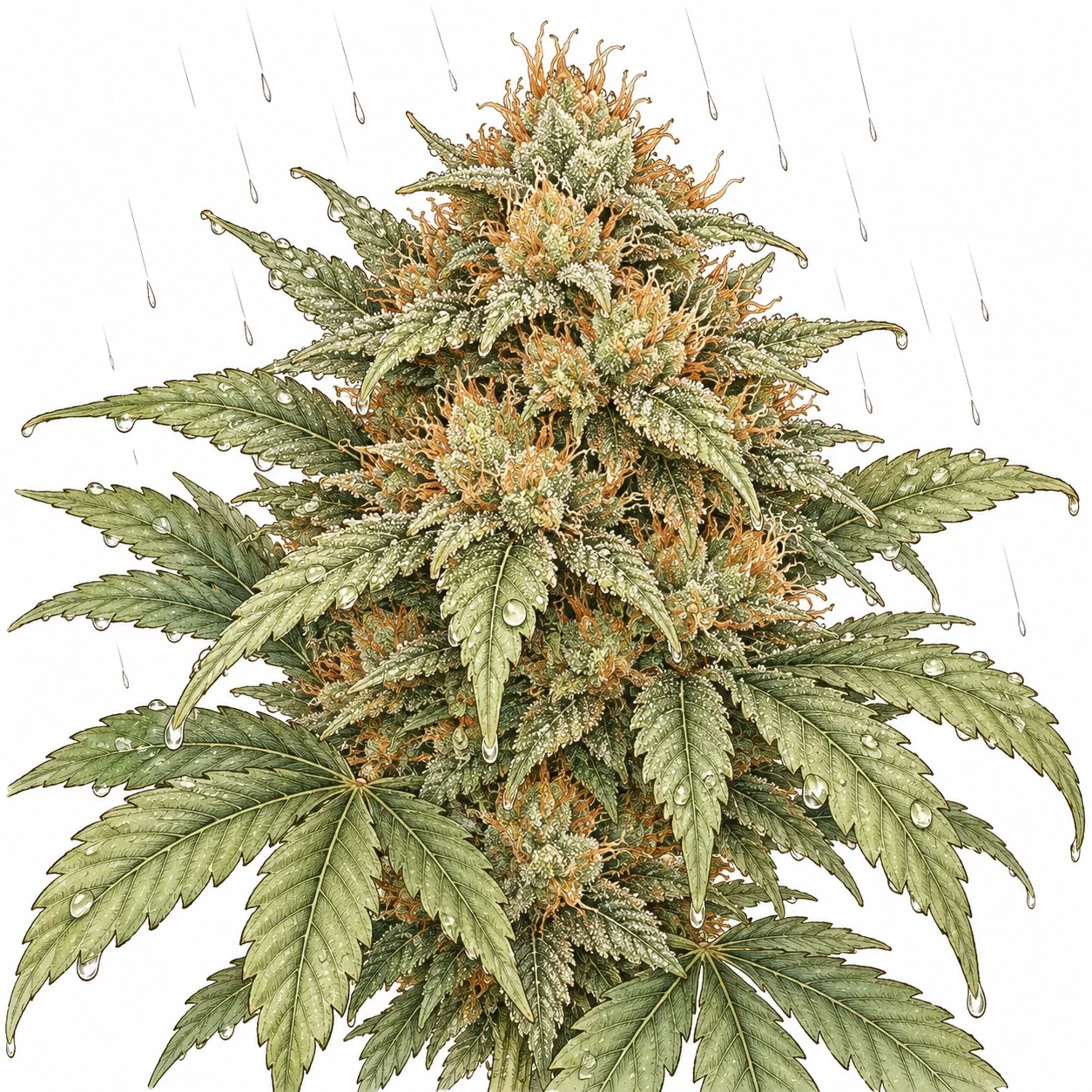
Cannabis originally comes from warm, relatively dry climate zones. The buds that develop in the second half of the season are dense and complex — a perfect habitat for mold as soon as moisture sticks around. Especially Botrytis cinerea (gray mold) can destroy an entire bud from the inside out within a few days. What still looks healthy on the outside has long since turned brown and rotten inside.
On top of that, standing water on leaves and in buds doesn’t just encourage fungal diseases — it can also clog the stomata, the plant’s breathing pores, and hinder gas exchange. That weakens the plant overall and makes it more vulnerable to other stress factors. Consistent rain protection for outdoor cannabis isn’t a luxury, it’s a basic requirement for a successful outdoor harvest in rainy regions.
As anyone who has looked into the most common cannabis plant problems knows, a lot of damage that gets identified as a nutrient deficiency or a pH problem actually starts with too much moisture. A dry, well-ventilated growing environment is the best prevention.
- Bud rot (gray mold) is the most dangerous enemy of wet buds
- Constant rain weakens the plant’s immune system
- Powdery mildew and other fungi also thrive in high humidity
- Waterlogged growing medium promotes root rot
- The risk rises sharply during flowering from August/September on
The best ways to protect cannabis plants from rain outdoors
There’s no single perfect solution — the best method depends heavily on your available space, your budget and the size of your plants. The simplest and cheapest option is a clear rain tarp or polyethylene sheeting, stretched over a simple wood or metal frame. What matters is that the structure is sturdy enough to stand up to wind and that there’s enough room between the plastic and the plant so airflow isn’t cut off completely.
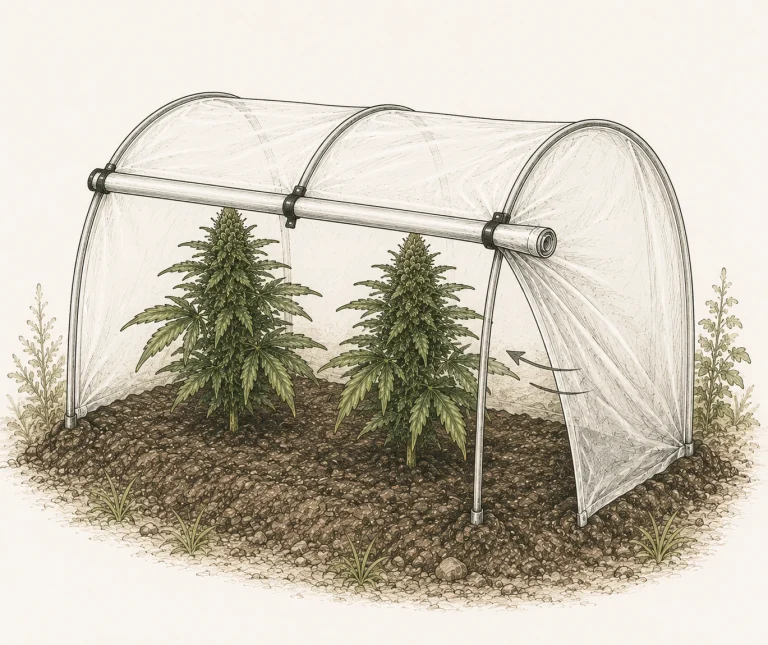
For larger setups, mini greenhouses or plastic hoop houses with vents are a good choice. They don’t just keep the rain off — they also regulate temperature and humidity much better. When buying one, look for models with adjustable side vents — the combination of rain protection and good ventilation is key. If you grow in containers, you also have the big advantage that you can simply move your plants under a roof, onto a covered patio or into another sheltered spot when heavy rain hits.
Another underrated method is choosing the right spot: plants growing under natural cover such as tree canopies, house roofs or pergolas already get some basic protection. Combine that with an extra plastic cover for periods of heavy rain and you have a robust system that takes little effort. Also keep in mind that the angle of the plastic matters — it should be sloped so water runs off and no puddles form that weigh down the structure.
- Clear rain tarp over a wood or metal frame: cheap and quick to set up
- Mini greenhouse with vents: the best combination of protection and climate control
- Container plants: simply move them when heavy rain hits
- Use natural cover as basic protection
- Slope the plastic for optimal water runoff
- Keep at least 12–16 in (30–40 cm) between the plastic and the top of the canopy
Materials and setup: how to build your rain cover the right way
For a simple, sturdy DIY rain cover, you need clear PE (polyethylene) sheeting at least 4 mil (100 µm) thick, PVC pipes or wooden slats for the frame, and zip ties or clamps to fasten everything. PVC pipes are especially handy because they bend easily, letting you build a tunnel-shaped roof that sheds rain perfectly. The clear plastic makes sure your plants still get enough light.
Stability is key when you build it: anchor the frame deep in the ground or attach it to a wall or fence so it doesn’t collapse in strong wind. Nothing is more frustrating than a structure that falls onto your plants during the first stormy night and breaks branches. To play it safe, also use guy lines and anchor the structure at several points.
It’s also a good idea to cover the ground under the rain cover with a drainage layer or gravel so collected water can drain away quickly. Waterlogging around the roots is almost as harmful as moisture on the buds. If you want to learn more about proper watering and drainage, be sure to read our article on how to water cannabis plants — it covers everything you need to know about water needs and root health.
- PE sheeting: at least 4 mil (100 µm), clear so light gets through
- PVC pipes: flexible and easy to bend, ideal for hoop structures
- Wood frame: sturdier, but less flexible as plants grow
- Use zip ties and ratchet straps to secure everything
- Guy lines against wind damage
- Drainage layer under the structure to prevent waterlogging
Rain protection for outdoor cannabis and humidity: what to watch out for
A common rain-cover mistake: growers build a tight structure that keeps rain out perfectly — but forget about ventilation. Under a closed tarp, humidity climbs fast, especially after rainfall. The result is a paradox: you’ve protected the plant from rain but created an even damper microclimate that encourages mold and fungi even more. So always keep the sides open or build active ventilation into your structure.
The ideal relative humidity (RH) for cannabis in the flowering stage is between 40 and 50 percent. Anything above that — especially in late flowering from week 6 on — significantly raises the risk of mold. A simple hygrometer placed near your plants lets you keep an eye on the numbers. If humidity stays above 60 percent, either improve ventilation or reduce the number of plants under the cover.
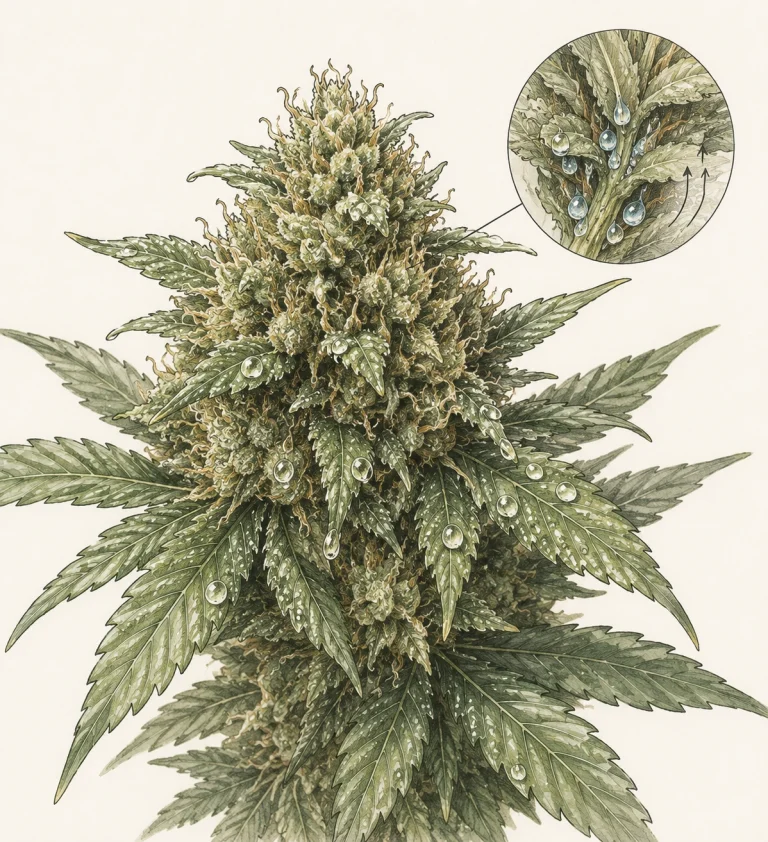
After every heavy rain, also remember to check the buds gently and, if possible, remove excess water by lightly shaking the branches. Especially dense sativa hybrids or strains with compact indica buds collect water between the calyxes — a classic starting point for bud rot. If you already spot the first brown spots or gray fuzz in a bud, act right away: cut out the affected area generously and dispose of it away from your grow.
- Always plan for side ventilation openings
- Target humidity during flowering: 45–55% RH
- Place a hygrometer under the structure
- After heavy rain, gently shake branches to remove water
- Early signs of bud rot: brown spots, gray fuzz — act immediately
- Check dense buds especially carefully
Rain protection for outdoor cannabis: timing and season planning
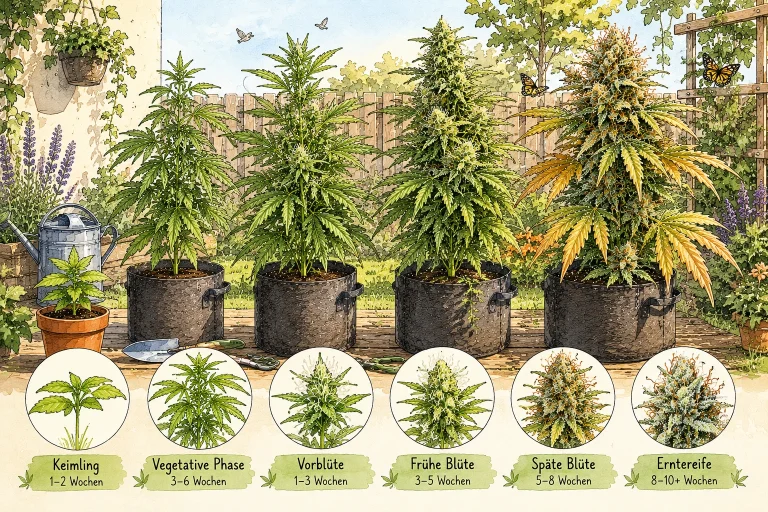
When to put up your rain cover depends heavily on your strain and your location. As a rule of thumb, in cool, wet climates in the Northern Hemisphere, your rain protection should be in place by mid- to late August at the latest — that is, once the plants have fully entered flowering and the first buds are clearly forming. Around this time, the weather typically becomes more unsettled, nights get cooler and the chance of rain goes up.
Strains with a short flowering time — like many autoflowers — can often be harvested before the heavy fall rains. But if you grow photoperiod strains that flower into October or even November, you absolutely need a sturdy, weatherproof rain cover. So when you buy seeds, factor in how long flowering lasts and whether it overlaps with the rainy season in your area. A shorter-flowering, mold-resistant outdoor strain can make more sense in rainy climates than an exotic long-flowering sativa.
The weather forecast also belongs in every experienced outdoor grower’s toolbox. Apps like Windy or Meteoblue show not just rain but also humidity and wind in detail. Set up alerts for heavy rain and put up your rain cover a day early rather than reacting a day too late. The combination of planning ahead and a sturdy protective structure is the key to a successful fall harvest.
- Install rain protection by mid-August (cool, wet climates)
- Photoperiod strains: protection needed into October/November
- Autoflowers: often ready to harvest before the fall rains
- Use weather apps to plan ahead (Windy, Meteoblue)
- Choose mold-resistant strains for rainy locations
- Factor in the strain’s flowering time when choosing seeds
Rain protection for outdoor cannabis: common mistakes and how to avoid them
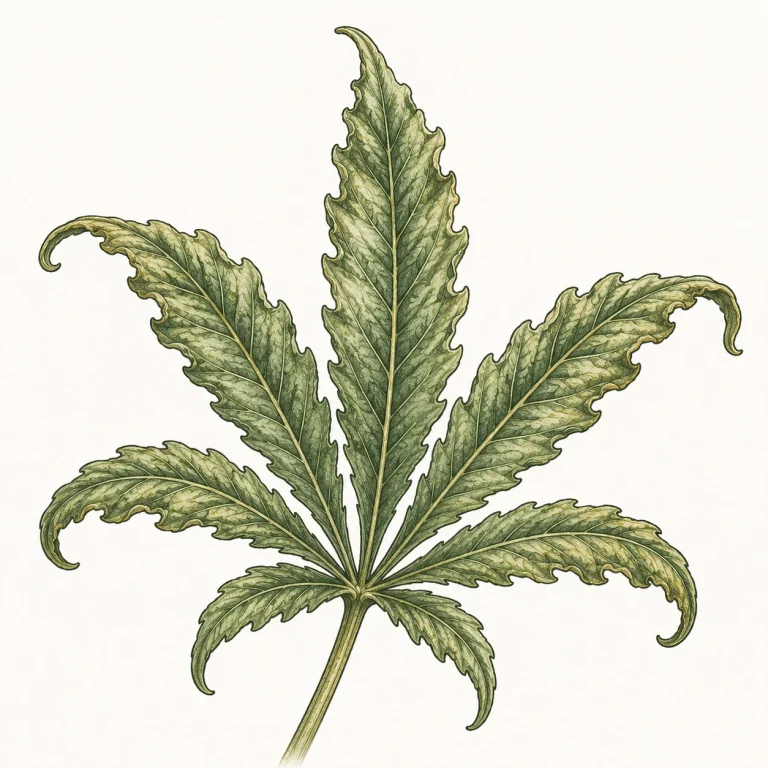
The most common mistake is acting too late. Many growers wait until the first mold spots appear — but by then it’s often too late to prevent major damage. In damp conditions, bud rot can spread from one infected spot to neighboring buds within 24 to 48 hours. A proactive approach is key here: put up your protective structure before the weather turns — not after.
Another common mistake is neglecting feeding under the rain cover. When the roof keeps natural rainwater from reaching your plants, you have to adjust watering manually. Many growers underestimate how fast the growing medium dries out under a tarp, because airflow under the structure is often stronger than expected. Check the growing medium regularly and adjust your watering intervals accordingly. Our guide to nutrient deficiencies and nutrient burn helps you keep track of your plants’ nutrition even under changed conditions.
Finally, we regularly see structures in the community that do keep the rain out but sit so close to the plants that the leaves touch the plastic. Moisture collects at these contact points and temperatures swing a lot — a perfect breeding ground for fungi. Always keep enough distance between the plant surface and the cover material, and trim the top branches if needed to avoid contact. If you also keep an eye out for calcium deficiency in cannabis — which frequent swings in moisture can encourage — you’re clearly a step ahead.
- Acting too late: put up protection before mold appears
- Check watering under the roof manually
- Growing media dry out faster under a tarp — check more often
- Don’t let plants touch the plastic
- Enough distance: at least 12 in (30 cm) between the top of the canopy and the tarp
- Regular visual checks, even in dry weather
You’ll find a complete guide to growing cannabis outdoors in our outdoor grow guide.
Frequently asked questions
When do I need to protect cannabis plants from rain outdoors?
In cool, wet climates, start setting up your rain cover by mid-August at the latest — as soon as flowering is clearly visible. For photoperiod strains that flower into October, a sturdy rain cover is essential. Autoflowers can often be harvested before the heavy fall rains.
What’s the best material for a cannabis rain tarp?
Clear PE sheeting at least 4 mil (100 µm) thick is the cheapest and most practical choice. It lets light through and is easy to work with. For longer-lasting structures, twin-wall polycarbonate panels are a good option — they’re even sturdier and can be used for years.
Can I grow outdoor cannabis entirely in a greenhouse?
Yes, that’s possible and gives you the best control over temperature and humidity. But make sure there’s enough ventilation, because closed greenhouses overheat quickly and humidity can rise sharply. Vents are a must, and at temperatures above 86 °F (30 °C) you should provide active cooling.
What should I do if my outdoor cannabis plant gets mold despite rain protection?
Act immediately: cut out all affected bud parts generously with a clean knife and dispose of them far away from your grow. Improve ventilation and lower the humidity. If you catch mold early, biological fungicides based on Bacillus subtilis can help. Check all remaining buds carefully every day for new infection spots.
Does my cannabis plant still get enough light under a rain cover?
With clear PE sheeting or clear polycarbonate panels, 80–90% of daylight reaches the plant — enough for healthy growth and good bud development. Avoid tinted or milky plastic, though, which significantly reduces light transmission and slows growth.
Do I need to change my watering when I install a rain cover?
Yes, definitely. Under a rain cover, the plant no longer gets natural rainwater, and depending on ventilation, the growing medium can dry out faster. Check soil moisture daily and adjust your watering intervals accordingly. Use the finger test or a moisture meter to avoid both drying out and waterlogging.
What should I do if cannabis buds got wet despite rain protection?
Act fast: remove soaked bud parts from the dense foliage as soon as possible and maximize airflow so the surfaces dry quickly. Shortly before harvest, a potassium bicarbonate spray can change the pH of the leaf surface and neutralize fungal spores. If the buds are close to maturity, harvest a little early rather than leaving them hanging in damp air for days. When harvesting wet buds, store them loosely with plenty of air instead of piling them up, so no extra moisture builds up between the garden and the drying room.
Conclusion
A well-planned rain cover for outdoor cannabis is one of the most effective investments you can make in your harvest as a home grower. If you act early, don’t forget ventilation and build your structure sturdy and light-permeable, you’ll reliably protect your plants from mold, rot and yield loss. Especially in the critical late-flowering phase from August on, a simple plastic cover can make the difference between a heavy harvest and a mold-ruined failure. With the right materials, the right timing and regular checks, you’ll get your outdoor plants safely through the fall.
