
How to Identify and Treat Cannabis Pests
Spider mites, thrips, fungus gnats, aphids: every common pest explained — with clear symptoms, quick fixes and prevention.
What do you see on your plant?
Spot cannabis pests early — save your harvest
Most of the damage isn’t caused by the infestation itself, but by catching it too late. Spider mites can multiply exponentially within 3 days. Thrips hide on the undersides of leaves until the plant visibly suffers. This hub shows you how to identify each pest with confidence — and what you can do right away.
Cannabis pests fall roughly into three groups: sap-sucking insects such as spider mites, aphids and thrips, which drain plant sap and leave fine specks or discoloration; flying pests such as fungus gnats and whiteflies, which you usually notice first in the growing medium or around the plant; and larger chewing pests such as caterpillars or slugs and snails, which leave visible holes and feeding damage.
Three things matter for a reliable diagnosis: where the infestation shows up first (leaf undersides, growing medium, growing tips), how the damage is distributed (isolated spots vs. even coverage) and whether you can see the pests themselves or only their traces. A simple magnifying glass is often enough to positively identify spider mites, thrips or aphids instead of just guessing.
With pests, prevention is far more effective than treatment: a stable climate, clean tools, a growing medium that isn’t soggy and regular inspections prevent most infestations from the start. If you’re not sure whether you’re dealing with a pest or a fungal disease, our Plant Diagnosis Tool or a look at our Fungal Diseases & Mold hub will help.

“Check the leaf undersides with a magnifying glass every week. 90% of all cannabis pests settle there first — by the time you notice anything, they’re already established.”
Pests in detail
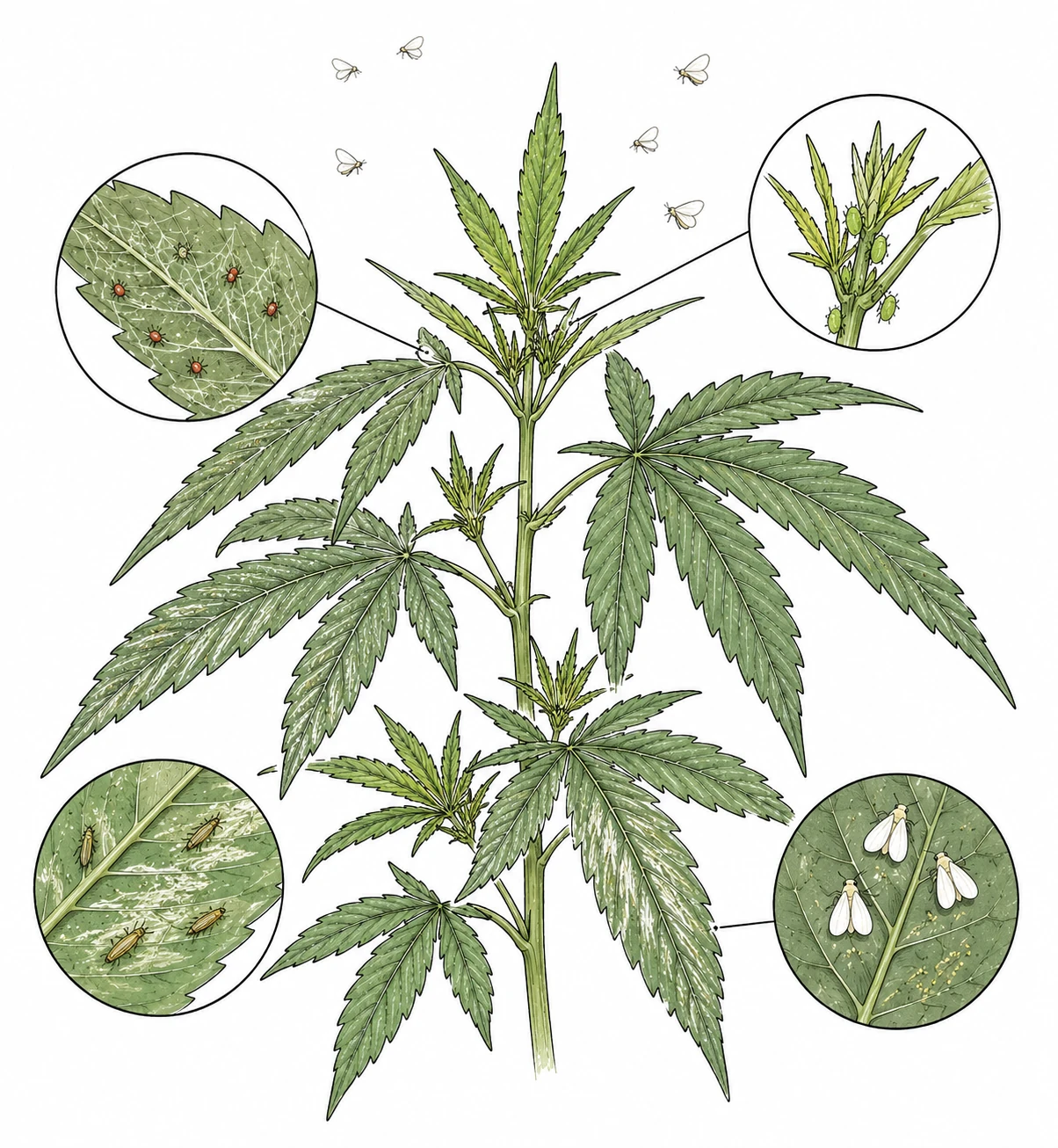
Pest Control — The 3-Step Strategy
Quarantine, organic treatments and when chemicals are really necessary — a systematic approach to any infestation.
Read article →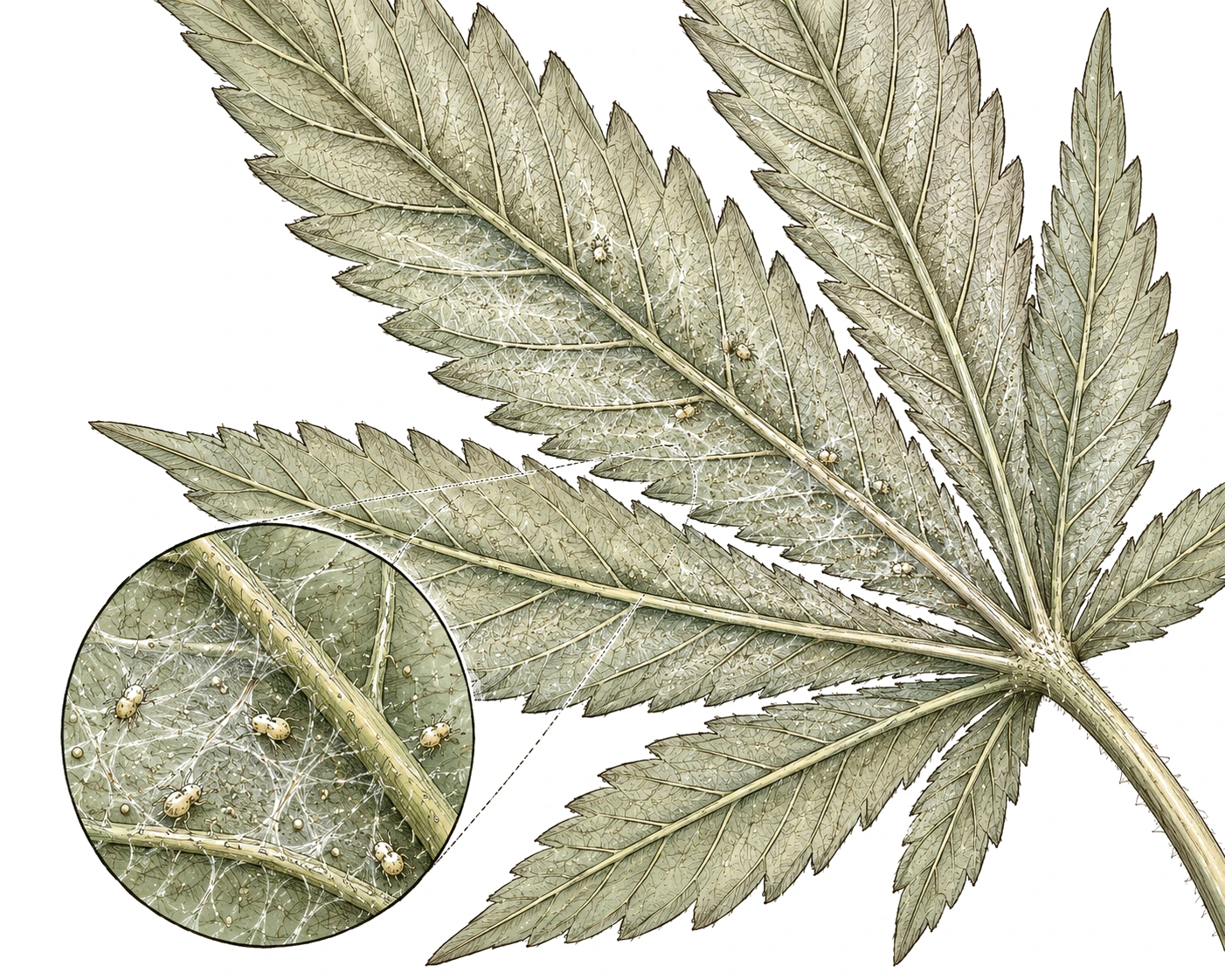 Common
How to Identify and Treat Spider Mites
Webbing, pale specks, sticky leaves — how to spot and eliminate spider mites before they threaten your harvest.
Read article →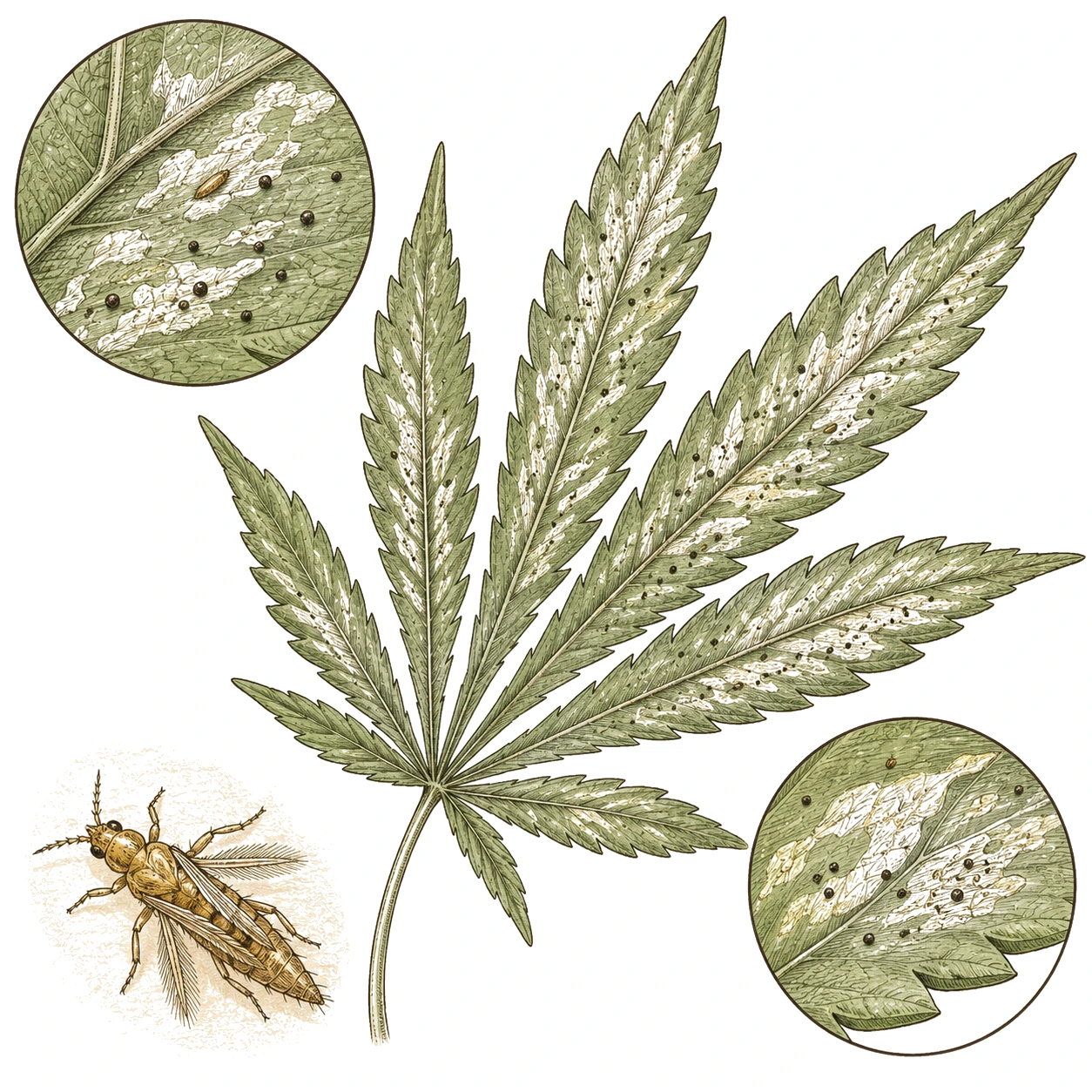 Common
How to Identify and Treat Thrips
Silvery streaks, stunted leaves — tiny insects with big damage potential, especially when taking clones.
Read article →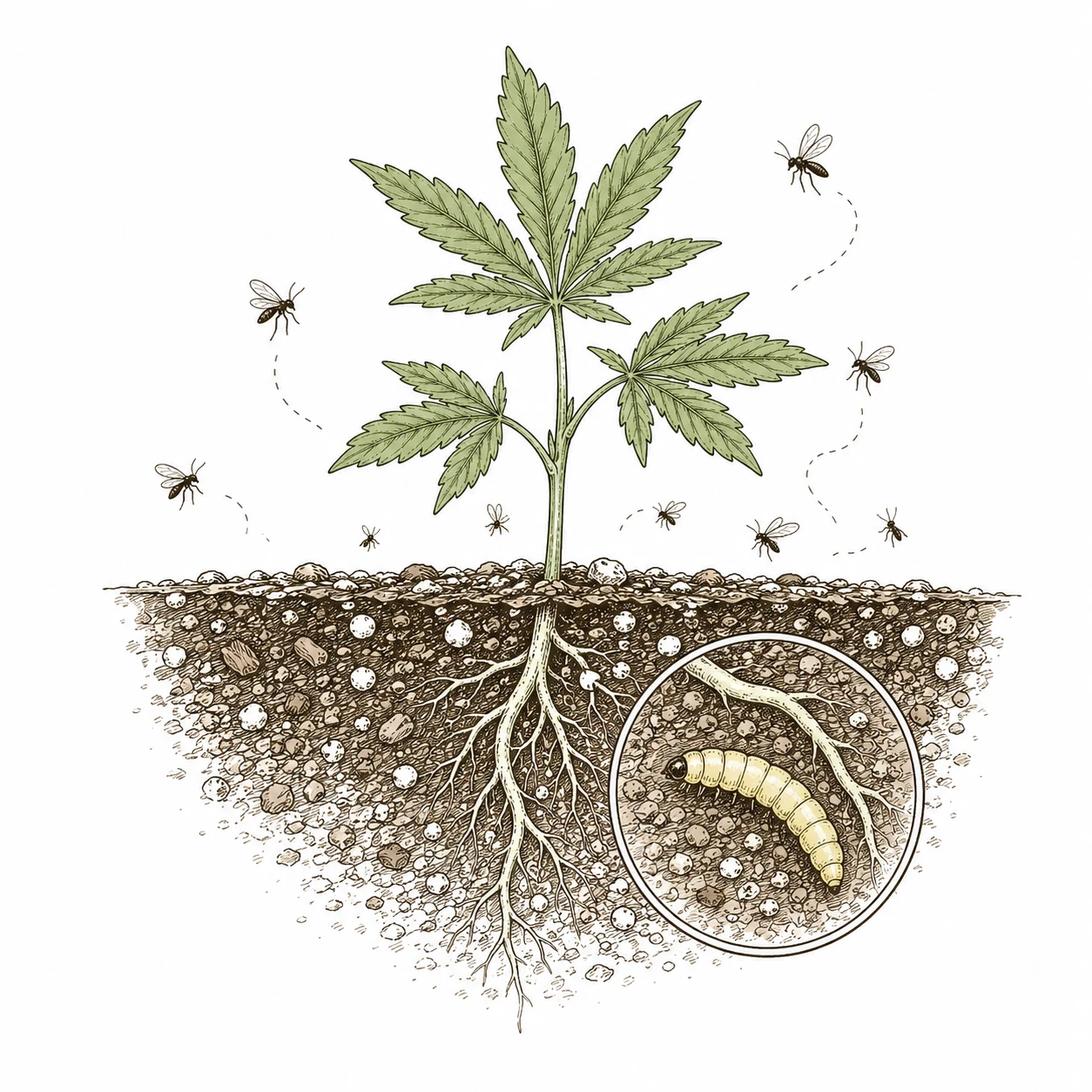
How to Identify and Treat Fungus Gnats
Small black flies above the soil are a warning sign — their larvae feed on roots and open the door to fungal infections.
Read article →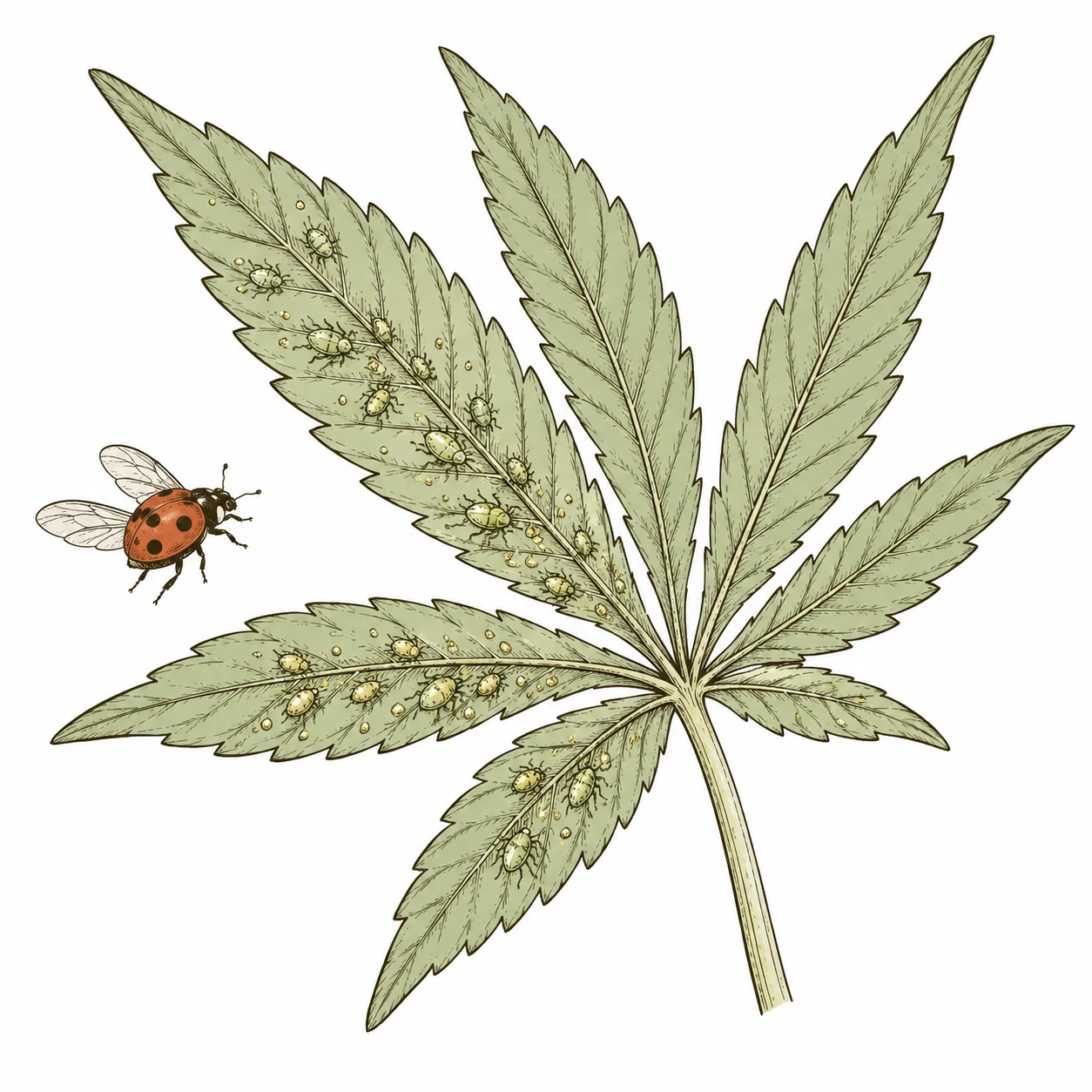
How to Identify and Treat Aphids
Green or black colonies on young shoots and leaf undersides — aphids suck plant sap and transmit viruses.
Read article →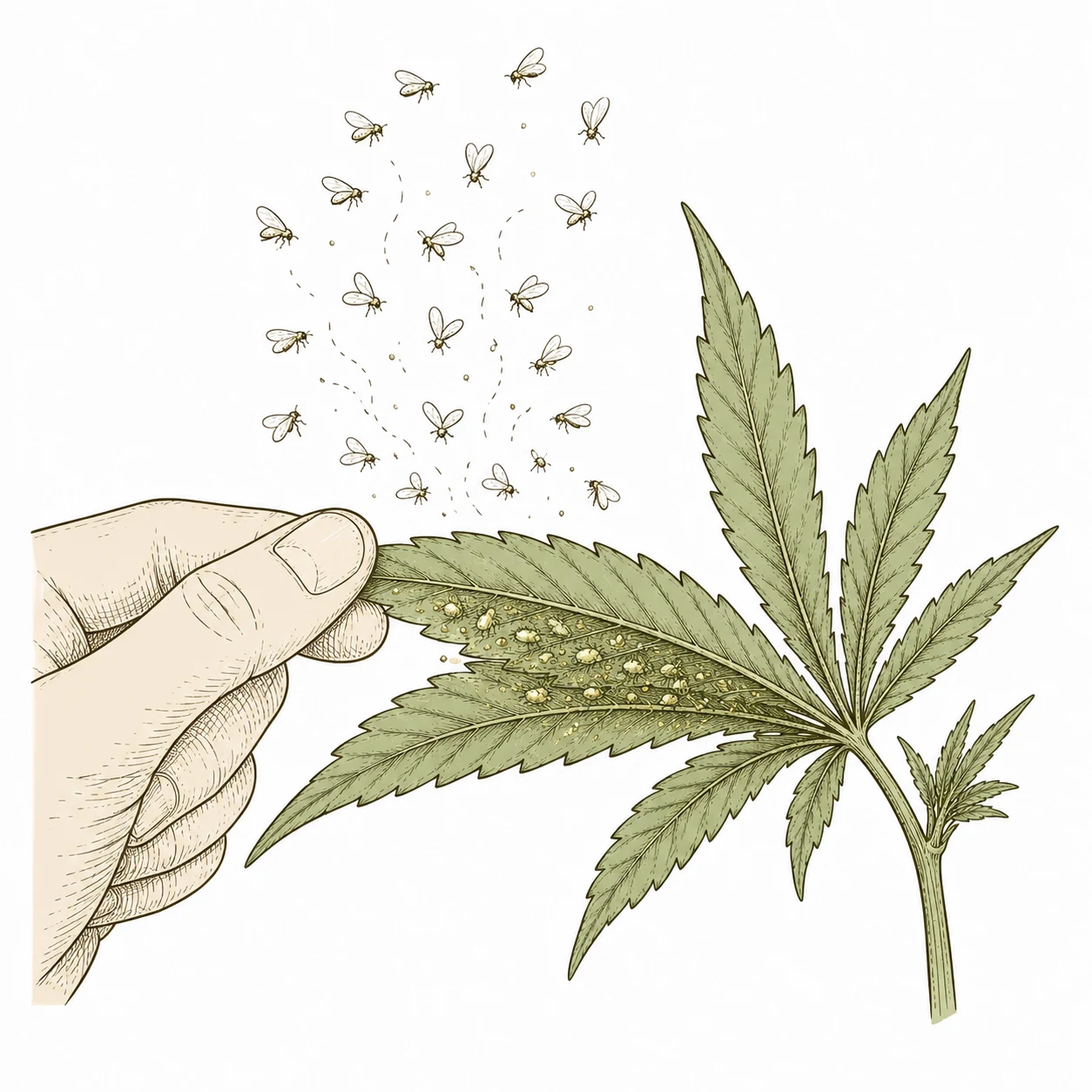
How to Identify and Treat Whiteflies
White clouds when you shake the plant, sticky leaves — whiteflies mainly infest warm grow rooms and greenhouses.
Read article →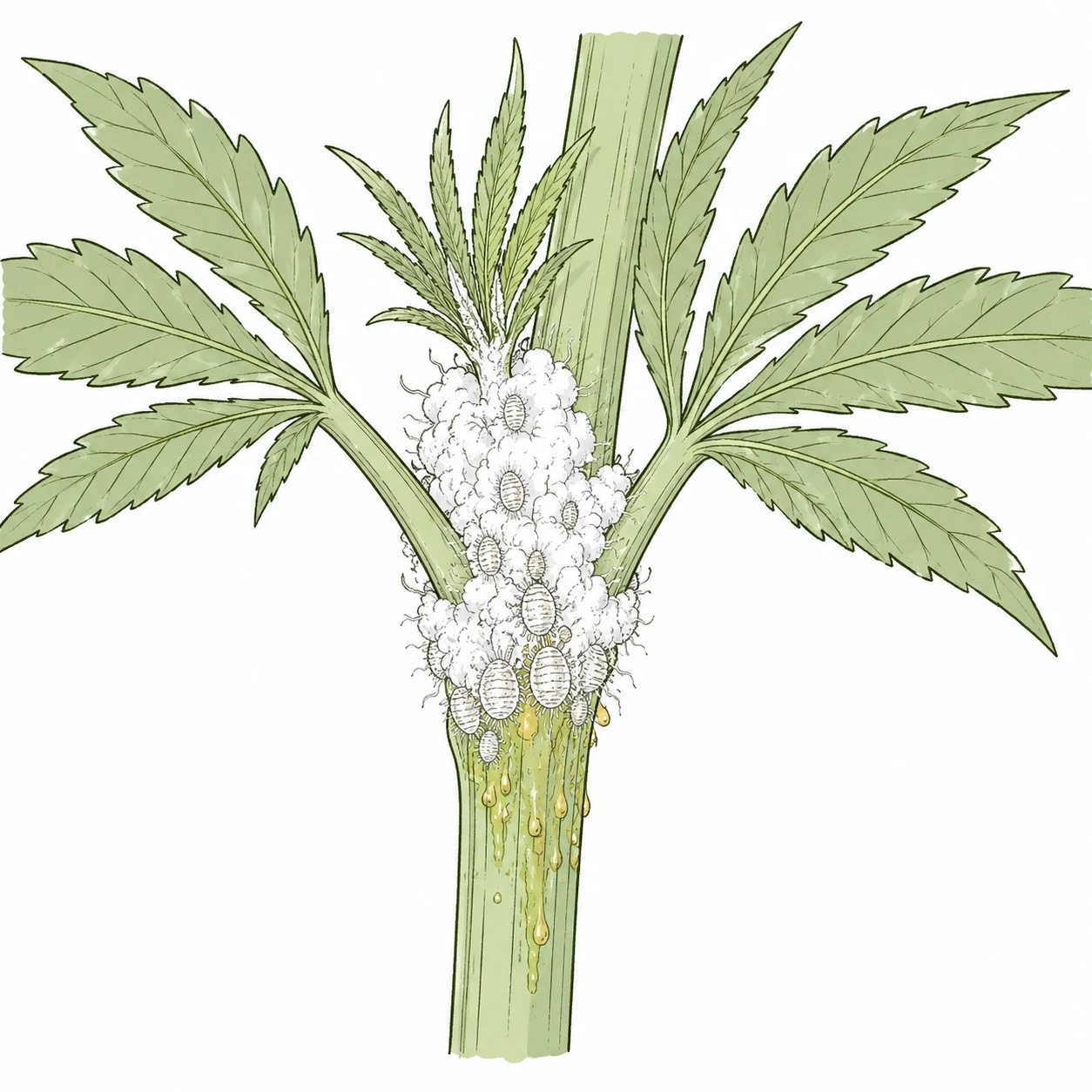
How to Identify and Treat Mealybugs
White, cottony tufts in leaf axils and on stems — mealybugs are stubborn and hide in cracks and crevices.
Read article →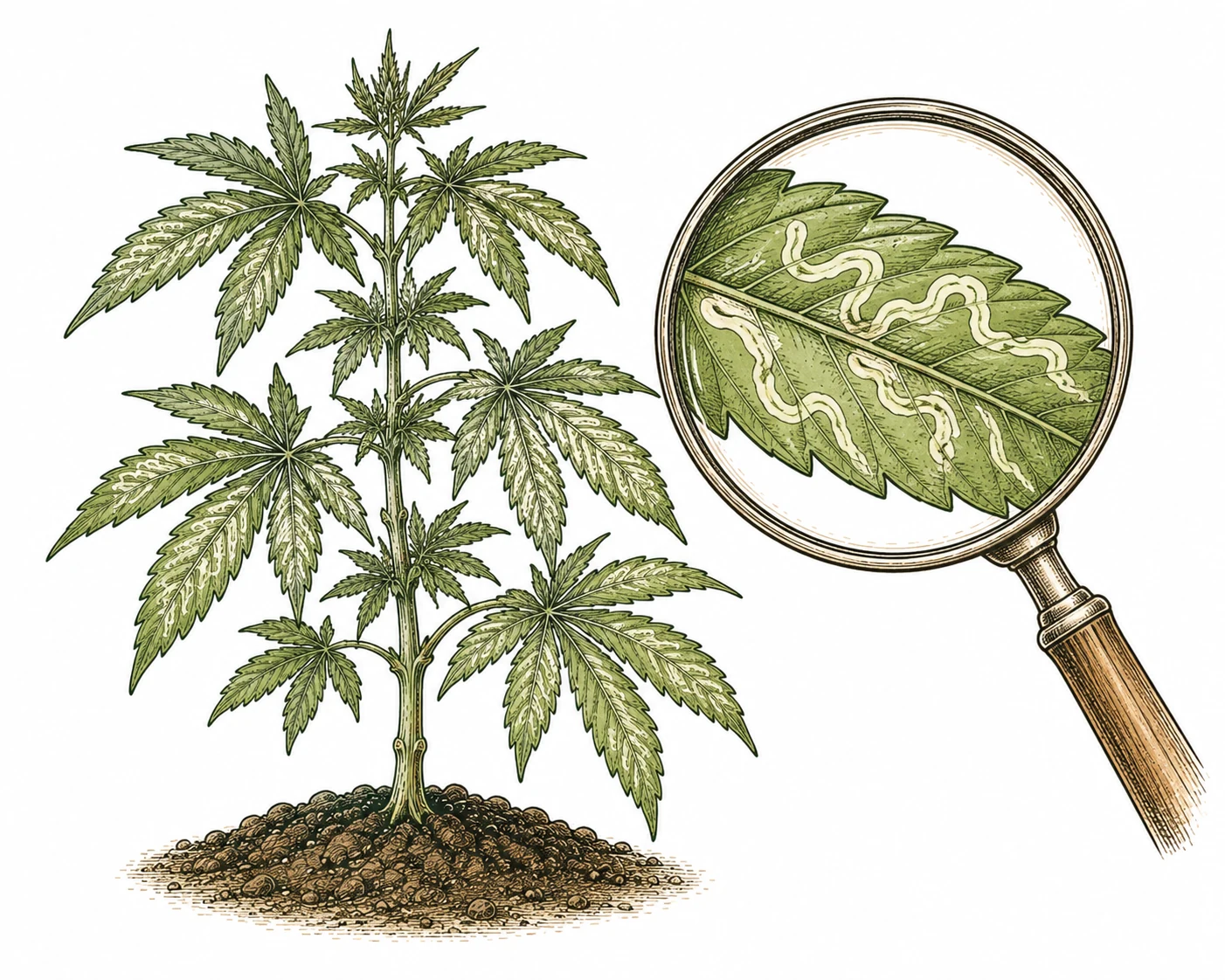
How to Identify and Treat Leaf Miners
White, winding trails inside the leaf — leaf miner larvae feed between the leaf layers, invisible from the outside.
Read article →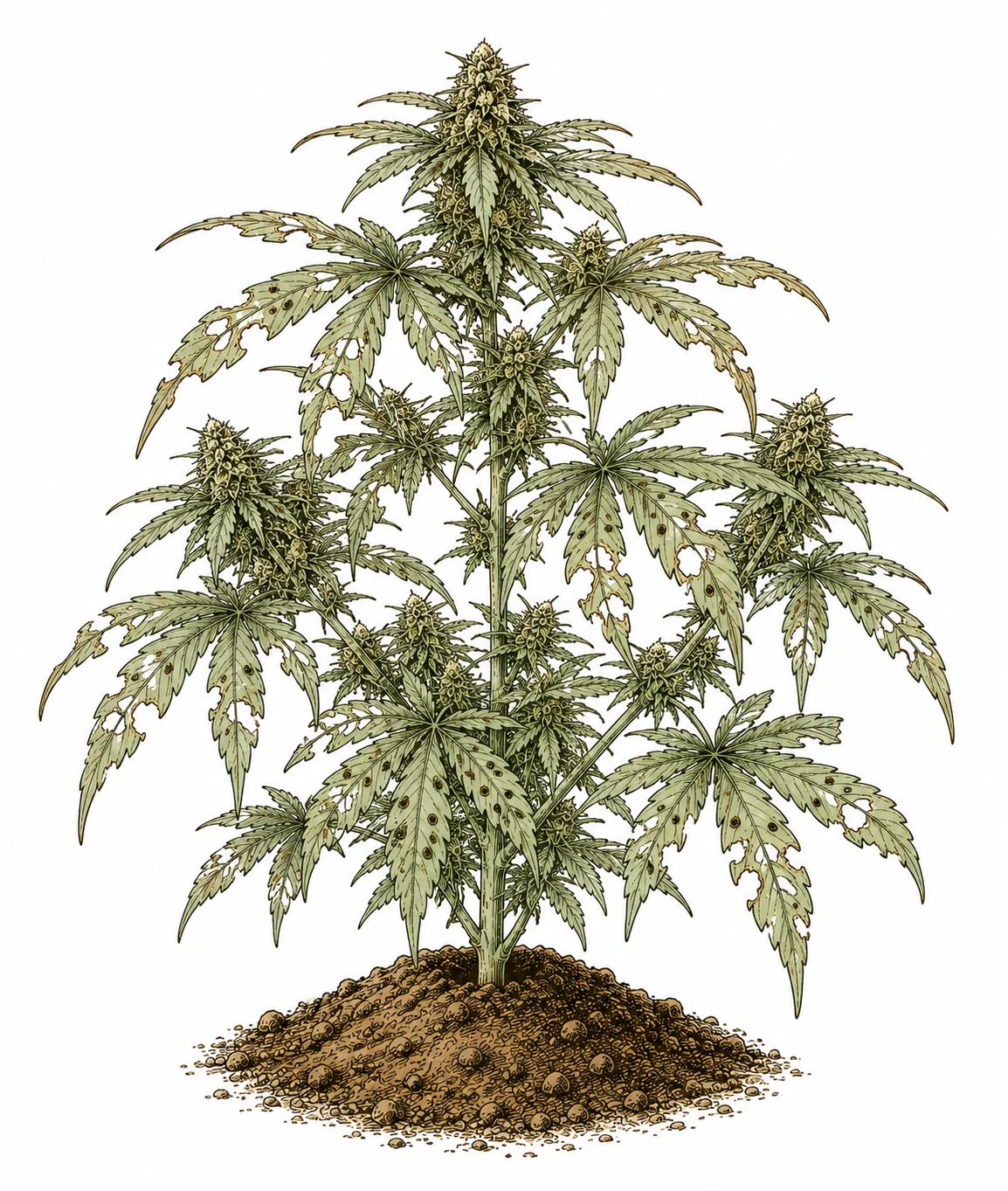
How to Identify and Treat Caterpillars
Large, irregular holes and droppings on outdoor plants — caterpillars such as budworms and corn borers chew through the leaves at night.
Read article →
How to Identify and Treat Broad Mites
Bronzed, leathery leaves and curled leaf tips on young shoots — tiny, barely visible and often only noticed once the damage is advanced.
Read article →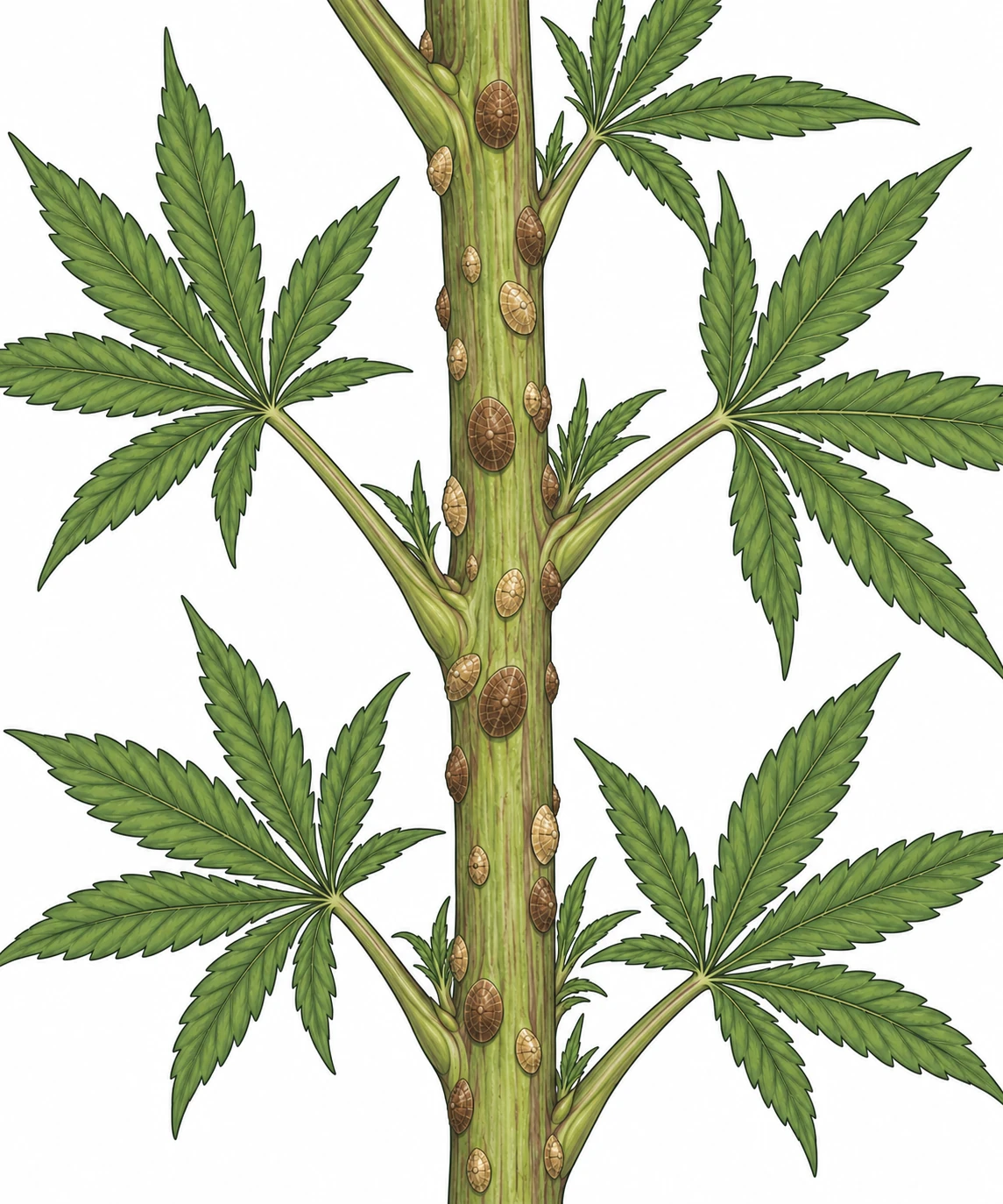
How to Identify and Treat Scale Insects
Scaly brown-beige bumps on stems and sticky residue — their hard protective shell makes them especially hard to control.
Read article →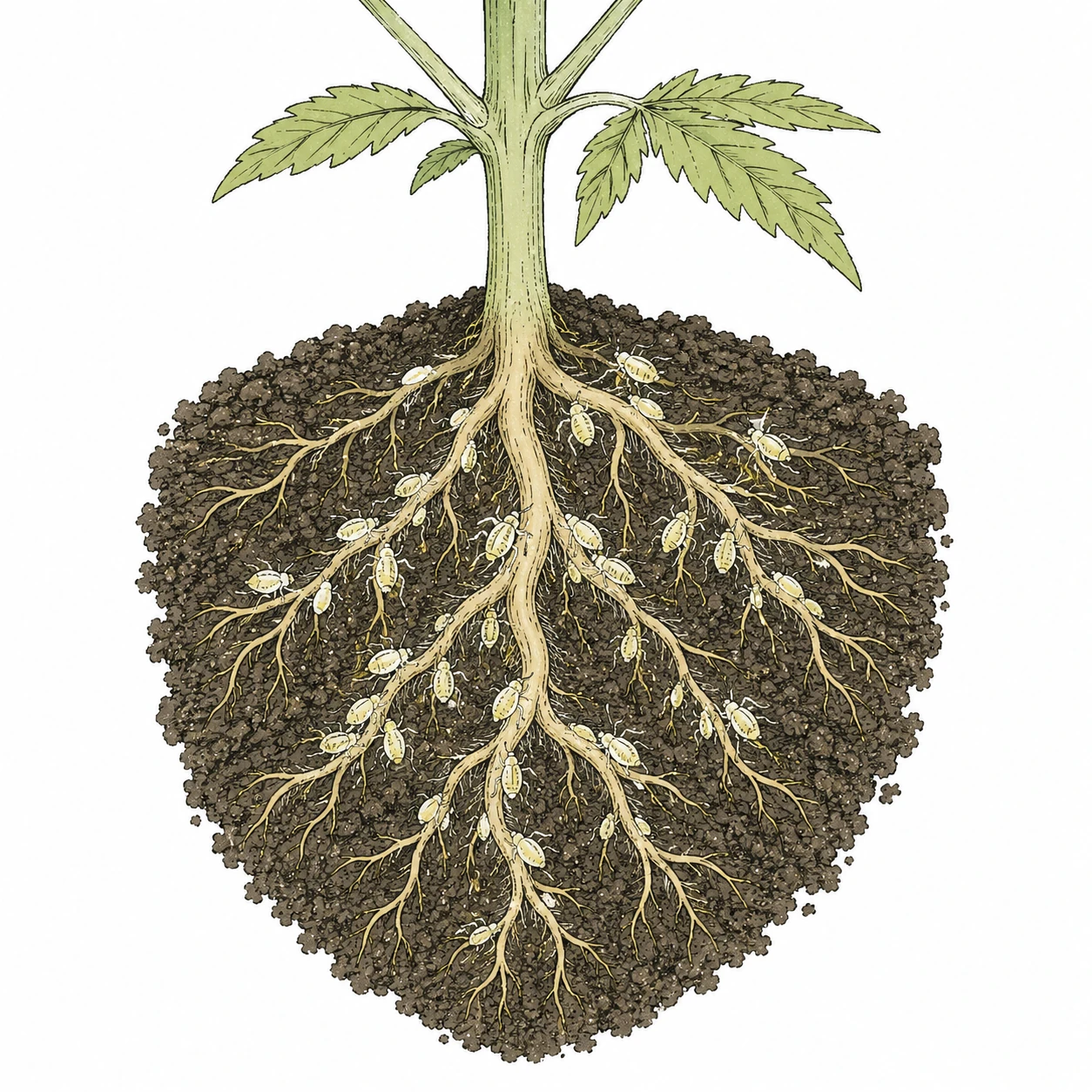
How to Identify and Treat Root Aphids
Dull, drooping leaves even though you water correctly — the real cause hides out of sight on the roots and is often mistaken for a nutrient deficiency.
Read article →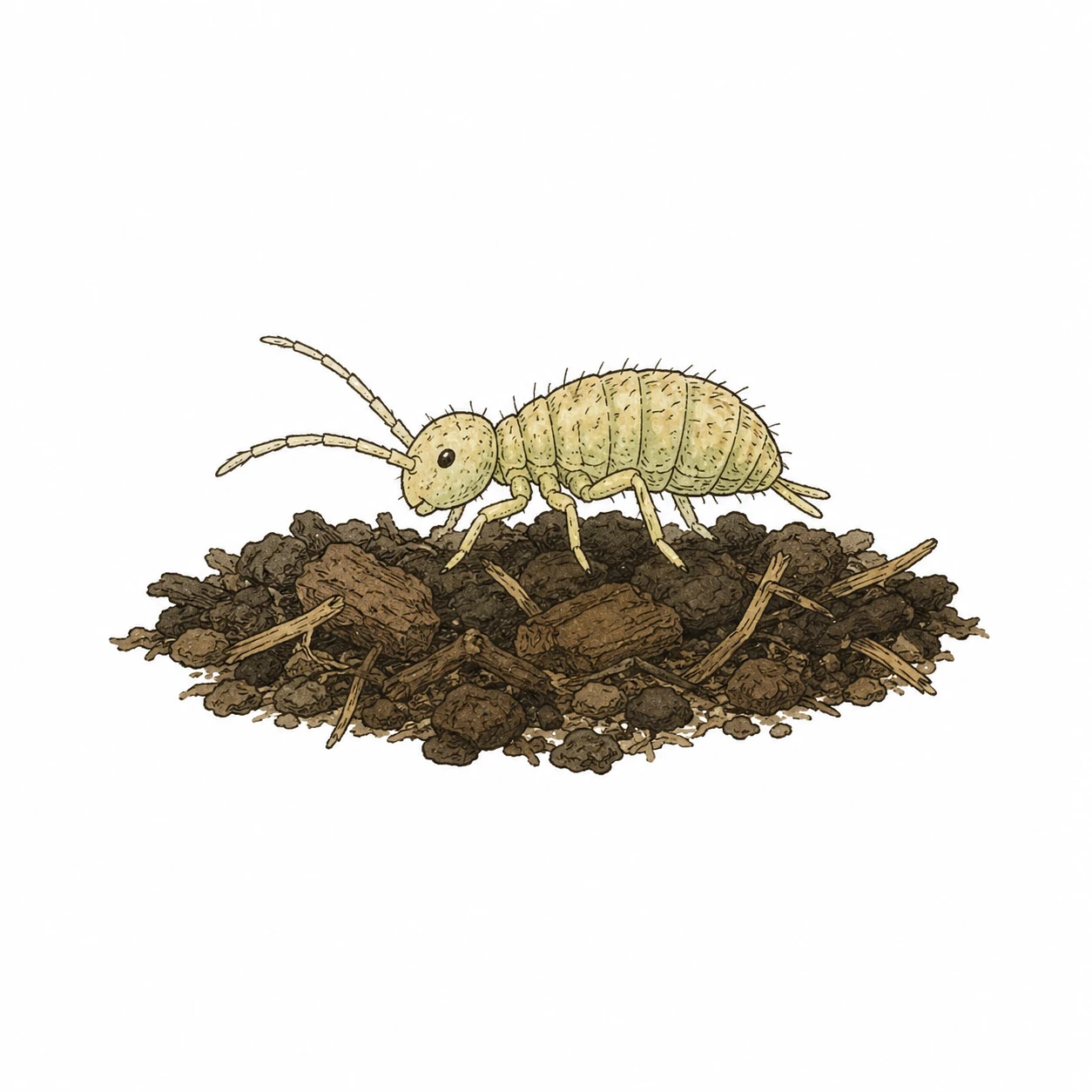
How to Identify and Treat Springtails
Tiny, jumping white-gray critters in the growing medium — usually harmless, but a warning sign that conditions are too wet.
Read article →Identifying cannabis pests: step by step
A systematic inspection saves time and prevents the wrong treatment. Always work from the outside in: first the plant as a whole, then the affected leaves, and finally the leaf undersides with a magnifying glass or your smartphone’s macro mode.
-
The Big Picture
Are single leaves or whole branches drooping? Is the discoloration concentrated in certain areas? Aphids and thrips prefer young shoots, while spider mites in dry air tend to start low and in the interior of the plant.
-
Close-up
Inspect affected leaves on both sides. Does anything move under the magnifying glass? Do you see sticky residue, dark dots, shed skins or fine threads? Leaf axils and the joints between stem and leaf are favorite hiding spots.
-
Growing Medium and Pot
Check the growing medium for small black flies or white larvae. Lift the pot and look up into the drainage holes from below.
-
Identify and Act
Compare your observations with the quick table below and open the matching article. If the plant also shows yellow leaves, read up on the causes of yellow cannabis leaves, too, because infestations and deficiencies can make each other worse.
Checklist for Every Inspection
- Use a magnifying glass or smartphone macro mode
- Check both sides of the leaves systematically
- Don’t forget leaf axils and stem forks
- Check the growing medium for larvae and flies
- Check with a flashlight at night now and then, since some pests are nocturnal
- Jot down a quick note: date, affected spots, rough count
Which pest is it? The quick table
This overview narrows down the most likely pest based on your observations. Use it as a first orientation, then open the article on that pest.
| Pest | Typical signs | First step |
|---|---|---|
| Spider mites | White specks on the upper leaf surface, fine webbing, often in dry air | Predatory mites, neem oil |
| Fungus gnats | Small black flies, wet growing medium, stalled growth | Beneficial nematodes in the growing medium, yellow sticky traps |
| Aphids | Sticky leaves (honeydew), deformed shoots, ants | Neem oil spray, beneficial insects |
| Thrips | Silvery streaks, black specks of droppings | Predatory bugs (minute pirate bugs); for heavy infestations, pyrethrin (not on buds) |
| Mealybugs | White, cottony coating in the leaf axils | Spot-treat with isopropyl alcohol, neem oil |
| Caterpillars | Large feeding holes, droppings on the leaves | Hand-pick, Bacillus thuringiensis (Bt) |
| Root aphids | Wilting despite moist growing medium, white coating on the roots | Replace the growing medium, organic treatments |
Several problems can show up at the same time. A calcium deficiency , for example, causes spots that look like pest damage. Green or black films on the growing medium are usually not a pest but algae, which is still a warning sign that conditions are too wet.
How to keep cannabis pests away for good
The best pest control is the one you never need. Prevention starts before germination with clean equipment, fresh growing medium and a thoroughly cleaned grow tent. An old pot, a dirty fan or your own clothes can bring pests in. Outdoors, many insects move from infested ornamental plants onto cannabis, so check the neighboring plants too.
The Key Measures
- Clean equipment and fresh growing medium from day one
- Keep new plants and clones separate for 1–2 weeks and watch them
- Remove fallen leaves from the grow room immediately
- Make sure you have good air circulation and the right humidity
- Hang yellow and blue sticky traps permanently as an early-warning system
- Spray neem oil preventively during the vegetative stage (every 1–2 weeks)
- Change your clothes before entering the grow room from outside
Frequently asked questions about cannabis pests
How can I tell which pest is attacking my cannabis plant?
Look at three things: where the infestation shows up first (leaf undersides, growing medium, shoot tips), what the damage looks like (spots, webbing, holes, discoloration) and whether you can see the pests themselves. In most cases, a magnifying glass on the leaf undersides helps you positively identify spider mites, thrips or aphids.
How fast do I need to act on a pest infestation?
As soon as possible. Spider mites, for example, can multiply exponentially within a few days under good conditions (warm, dry) — a small infestation can spread to the whole plant within a week. The earlier you step in, the easier the treatment.
How do I tell a pest infestation from a fungal disease?
Cannabis pests usually leave localized damage (spots, holes, webbing) and are often visible to the naked eye or with a magnifying glass. Fungal diseases tend to show up as a coating over larger areas, discoloration or a rotten smell, without any visible insects. If in doubt, our Plant Diagnosis Tool helps you tell them apart.
Can I prevent cannabis pests instead of having to fight them?
Yes, prevention is far more effective than treatment. A stable climate without humidity spikes, clean tools, quarantine for new plants and regular checks of the leaf undersides prevent most infestations from the start.
Do I need chemical treatments against cannabis pests?
For most infestations, organic options such as neem oil, beneficial insects or insecticidal soap are enough, especially if you act early. Chemical pesticides are a problem with cannabis because residues can end up in your harvest — always try organic and mechanical methods first.
Which cannabis pests are most common in indoor grows?
Indoors, the most common pests are spider mites, fungus gnats (more precisely, their larvae), aphids, thrips and mealybugs. Spider mites and fungus gnats top the list because they multiply especially fast in a warm, sheltered grow room with no natural enemies.
Can I still spray against pests during the flowering stage?
Spraying buds isn’t recommended, because residues stay in the flowers and it can encourage mold. In early flower, diluted neem oil is still acceptable, but by the second half of flowering at the latest you should switch to beneficial insects and mechanical methods. With a heavy infestation shortly before harvest, it can make more sense to harvest early.
What do I do if I can’t clearly identify the pest?
Use our free Plant Diagnosis Tool or upload a photo of your plant — the location of the symptoms and the type of damage usually narrow down the cause, even if you’re unsure about the details.
