

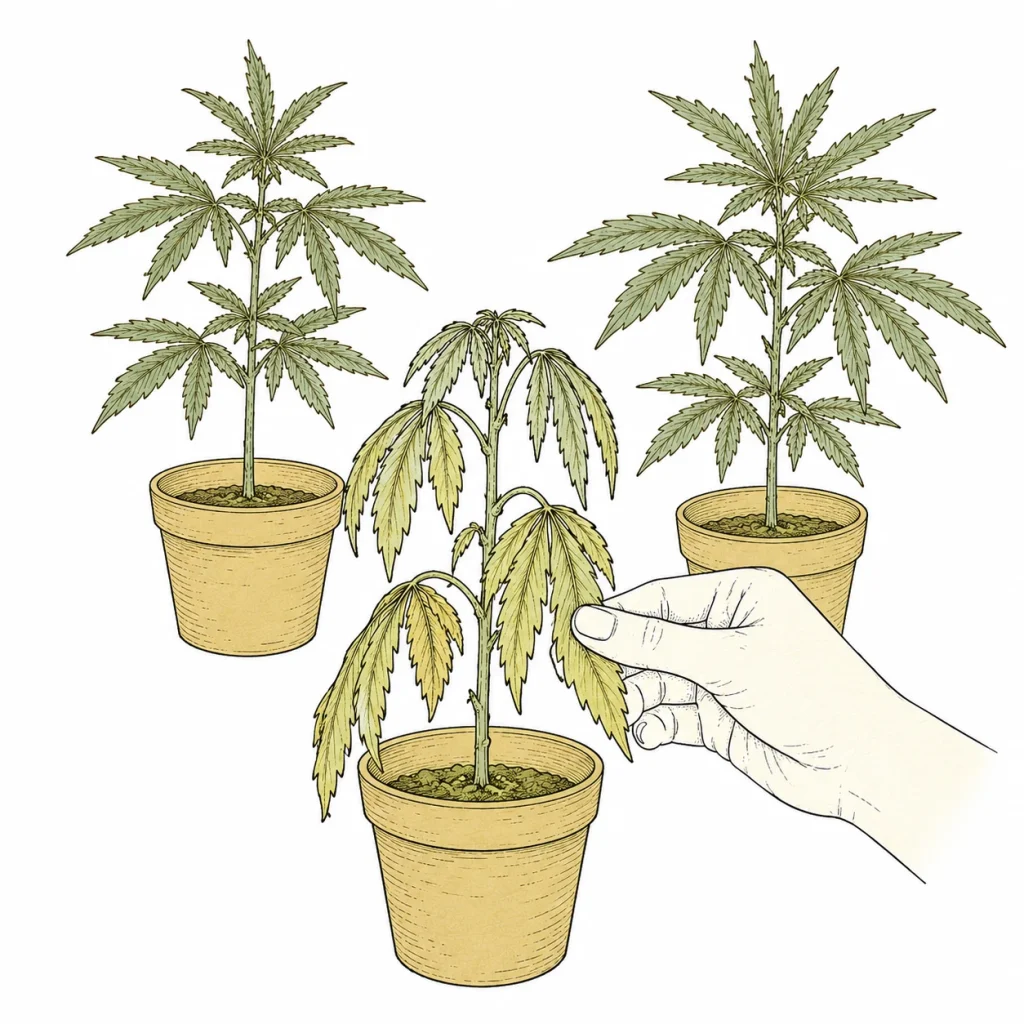
Recognizing drooping cannabis leaves is one of the most important skills you can develop as a grower – because limp leaves hanging down are a clear alarm signal from your plant. Whether your cannabis plant is getting too much or too little water, suffering from heat stress or struggling with root problems: the leaves tell you everything, as long as you know what to look for. Our complete plant diagnosis guide gives you an overview of all common symptoms at a glance. In this article, you’ll learn step by step which causes are behind drooping leaves, how to tell them apart with confidence and what exactly you can do to save your plant fast.
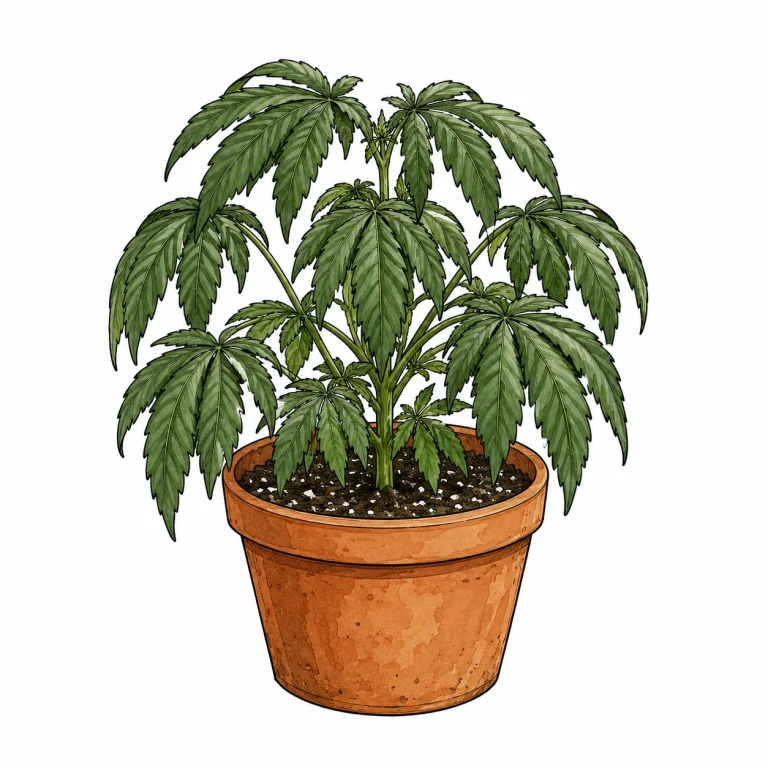
Cannabis leaves drooping: the most common causes at a glance
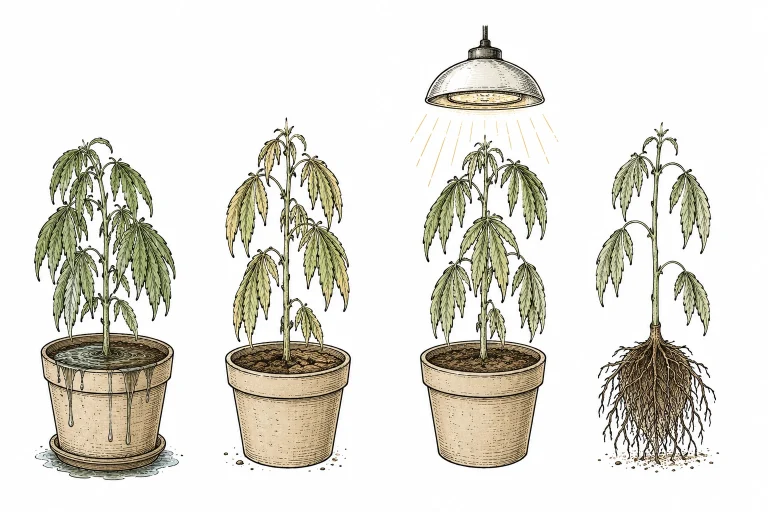
Before you start treating your plant, you need to know the exact cause – because the fix differs a lot depending on the problem. If you water even more when the plant is overwatered, you make things worse. If you turn off the fan during heat stress, you do damage as well. Drooping cannabis leaves can have four fundamentally different causes, and you should rule them out one by one.
The four main causes of drooping cannabis leaves are: overwatering (by far the most common cause), underwatering or lack of water, heat stress from temperatures that are too high, and root problems such as root rot or a pot that’s too small. Less common causes are nutrient deficiencies, transplant shock or severe pH problems. The good news: with a little practice, you can identify the cause within a few minutes, without any special equipment.
- Overwatering: leaves hang limp, the soil stays wet, the pot is heavy
- Underwatering: leaves droop and feel dry or leathery, the soil is bone-dry
- Heat stress: leaves droop only while the lights are on and partly recover at night
- Root problems: leaves droop constantly despite correct watering
- Nutrient deficiency or pH problem: drooping often combined with discolored leaves
- Transplant shock: leaves droop for 1–3 days right after transplanting
How to spot and fix drooping cannabis leaves caused by overwatering
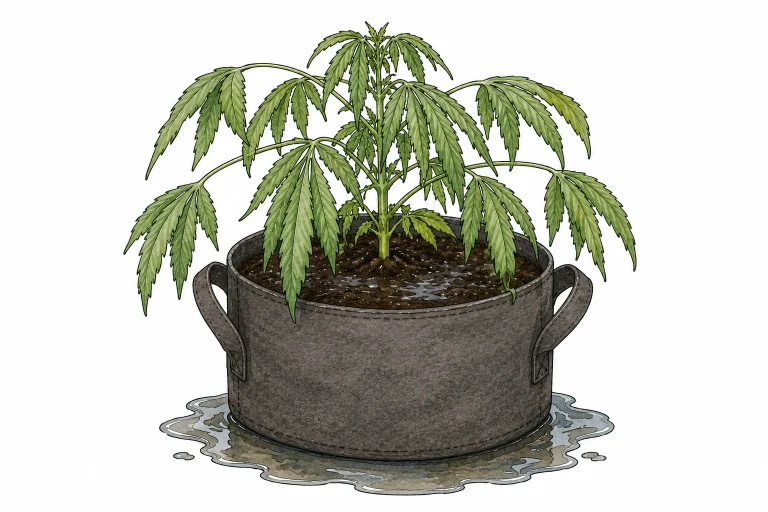
Overwatering is by far the most common reason for drooping cannabis leaves – especially with beginners. Many growers think their plant needs water every day and, out of care, water too much and too often. The result: the soil stays wet all the time, the roots can’t breathe properly, and the plant can no longer take up water and nutrients. Paradoxically, overwatered plants often look like dried-out ones – the leaves hang down limply because the roots can no longer transport nutrients.
You can tell it’s overwatering when the pot feels heavy, the top of the soil is still moist and the leaves are drooping anyway. The soil often smells slightly musty or moldy. Learn how to water cannabis properly and use the finger test to find the right watering amount – it’s the fastest way to avoid overwatering for good. The fix is simple: only water again once the top 1 in (2–3 cm) of soil is dry and the pot feels light. If the overwatering is severe, move the plant to a well-ventilated spot and turn down the light intensity slightly to minimize stress.
As an immediate step when the soil is already overwatered, tilt the pot slightly or clear the drainage holes so excess water can drain off. Hold off on watering for at least 3–5 days. If you’re using pots without enough drainage, repotting into a better-draining growing medium is the most lasting solution. Well-structured soil with added perlite prevents waterlogging and lets the roots breathe properly.
- Pot feels heavy even though the leaves are drooping
- Top of the soil is still moist or wet
- Leaves hang down soft and without any tension
- Possibly a slightly musty smell from the soil
- No recovery after lights-out, leaves stay limp
- Immediate action: stop watering for 3–5 days, improve ventilation
How to quickly spot drooping cannabis leaves caused by underwatering
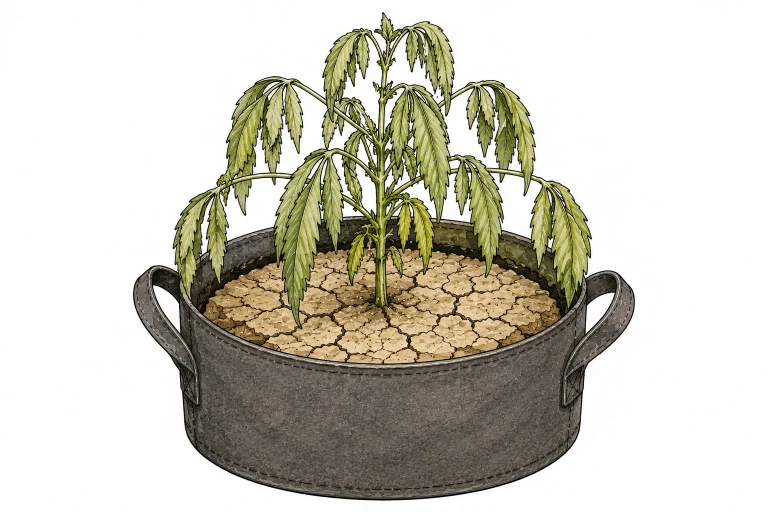
Underwatering as the cause of drooping cannabis leaves is easier to diagnose than overwatering, because you can confirm it very quickly with a simple combination of looking and touching. When the plant is short on water, the leaves hang down but feel dry, thin or slightly leathery – they’ve lost their natural tension. The pot is noticeably light, and the soil often pulls away a little from the sides of the pot because it’s so dried out.
Cannabis shows water stress by drooping its leaves as a last warning sign before lasting damage sets in. If you notice in time that the plant is thirsty, it usually recovers completely within a few hours of watering. If you suspect underwatering, water thoroughly right away until water runs out of the drainage holes at the bottom. An hour later, the leaves should already be standing up again – that’s the best proof that lack of water was the cause.
To avoid underwatering for good, build a regular routine: lift your pot every day and compare the weight. A dry pot feels much lighter than a freshly watered one. This simple method is more reliable than fixed watering intervals, because your plant’s water use varies a lot depending on the growth stage, temperature and pot size.
- Pot feels very light
- Soil is dry and pulls away from the sides of the pot
- Leaves droop and feel dry or leathery
- Recovery within 1–2 hours after watering
- Leaves visibly lose their shine and tension
- Immediate action: water thoroughly until water runs out the bottom
How to recognize heat stress as the cause of drooping cannabis leaves
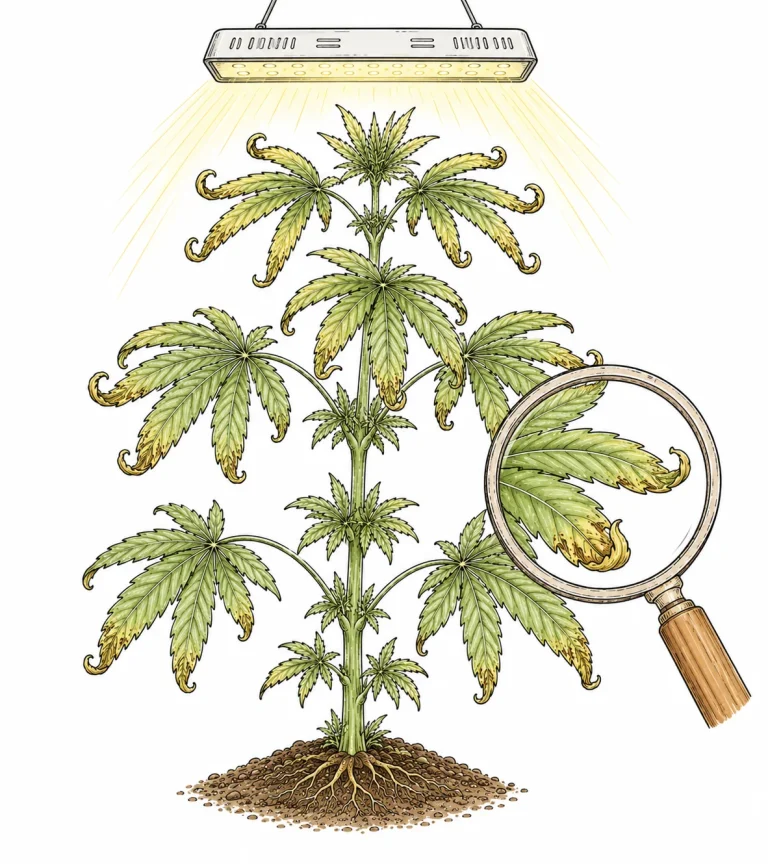
Temperatures above 82–86 °F (28–30 °C) quickly lead to heat stress, which often shows up first as drooping cannabis leaves – especially the upper leaves close to the light. The plant tries to reduce its surface area and minimize evaporation by letting its leaves droop. A typical sign of heat stress is that the leaves droop during the day and recover somewhat at night or after the lights go off.
If you suspect heat stress, first check your room temperature and the distance between the lamp and the canopy. Depending on their wattage, LED lights should be at least 12–24 in (30–60 cm) away from the plant. An infrared thermometer pointed at the leaf surfaces gives you the most accurate readings. Bring temperatures above 86 °F (30 °C) down with better ventilation, a stronger exhaust fan or by reducing the light intensity.
Heat stress combined with low humidity is especially aggressive, because the plant then transpires very heavily and dries out fast. Keep humidity in the vegetative stage at 50–70% and in the flowering stage at 40–50%. If you notice that your plant droops every day around midday despite enough water, check the temperature first – it’s the most reliable indicator of heat stress.
- Leaves droop mainly while the lights are on
- Partial recovery after lights-out or at night
- Upper leaves close to the lamp droop first
- Measured temperature in the grow tent above 82 °F (28 °C)
- Leaves may also curl or show damaged edges
- Immediate action: raise the lamp, improve ventilation, lower the temperature
Root problems and drooping cannabis leaves: when the cause runs deeper
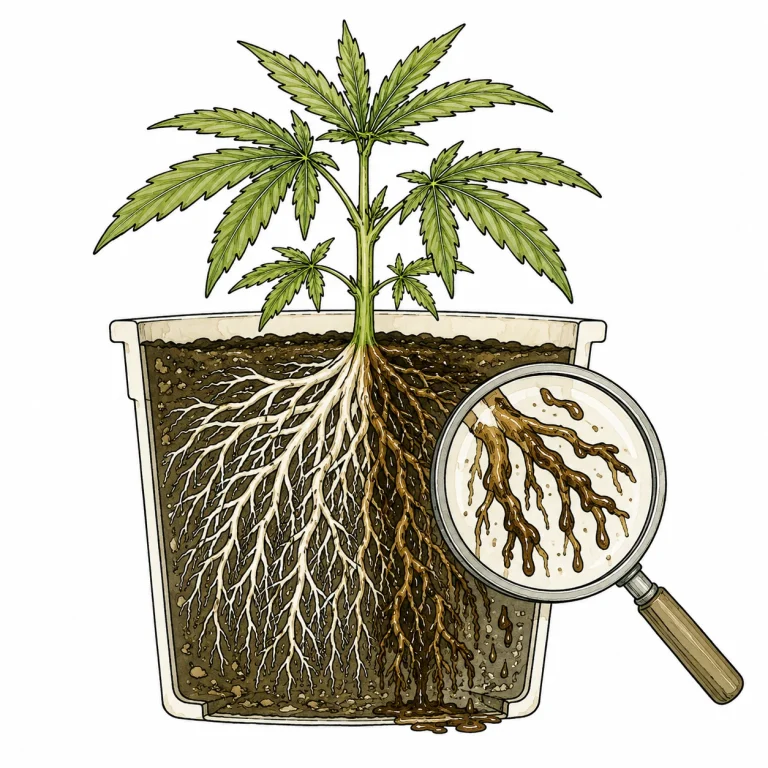
If you’ve ruled out overwatering, underwatering and heat stress but your cannabis leaves keep drooping, the problem may be in the roots. Root rot is caused by overly wet conditions, poor drainage or pythium – a water mold that attacks the roots and turns them brown and slimy. Even with enough water in the pot, the plant can’t take up nutrients because the roots are damaged.
Take a look at the roots by carefully lifting the plant out of its pot. Healthy roots are white or cream-colored and firm. Brown, mushy or slimy roots with a musty smell are a clear sign of root rot. In that case, only drastic action helps: cut away brown root sections with sterile scissors, disinfect the growing medium or replace it completely, and treat the roots with hydrogen peroxide (3% solution).
A pot that’s too small can also cause drooping leaves, because the plant becomes root-bound and can no longer take up enough water and nutrients. When roots are poking out of the drainage holes at the bottom, it’s time to repot. Choose the next pot size up and use fresh, well-draining growing medium, which keeps stress on the roots to a minimum. Likewise, a pH problem in the root zone can block nutrient uptake so badly that the leaves droop – check the pH of your water and your growing medium.
- Leaves droop despite correct watering and normal temperatures
- Roots are brown, mushy or smell musty
- Roots are growing out of the drainage holes at the bottom
- Pot has been too small for the size of the plant for weeks
- pH of the growing medium outside the optimal range of 6.0–7.0
- Immediate action: check the roots, repot if needed and check the pH
Drooping cannabis leaves from nutrient deficiencies and pH problems
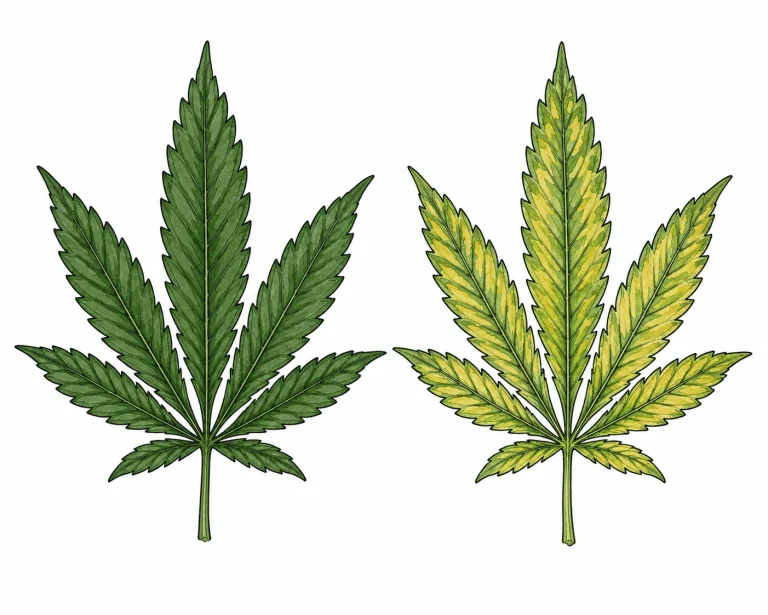
A nutrient deficiency on its own rarely causes drooping leaves right away, but combined with the wrong pH it can block nutrient uptake so badly that the plant practically collapses. The most common case: the pH is outside the optimal range (6.0–7.0 in soil, 5.5–6.5 in hydro), so nutrients like calcium, magnesium or iron can no longer be absorbed. The leaves droop and at the same time turn yellow or show spots.
You can recognize calcium deficiency in cannabis by brown spots on the middle leaves and curled leaf tips – combined with limp leaves. Calcium deficiency often isn’t caused by missing nutrients but by the wrong pH, which prevents uptake. Correct the pH of your water first before you add more nutrients – otherwise you’ll make the problem worse with nutrient burn.
Nitrogen deficiency in the vegetative stage can also lead to weak, drooping leaves, since nitrogen is essential for building chlorophyll and for cell growth. You can recognize nitrogen deficiency by yellowing that starts on the lower leaves and works its way up. Before you adjust nutrients, always check the pH first – that solves apparent nutrient deficiencies in 80% of cases. You’ll find a complete overview of all deficiency symptoms in our deficiency overview.
- Drooping leaves combined with discoloration point to nutrient problems
- A pH outside 6.0–7.0 blocks nutrient uptake even with enough nutrients
- Calcium deficiency: brown spots and curled leaf tips in addition to drooping leaves
- Nitrogen deficiency: yellowing starts on the lower leaves, the plant looks limp
- Always check the pH first before you add more nutrients
- Nutrient burn can also cause drooping leaves – less is often more
Diagnosing drooping cannabis leaves: a quick checklist for growers
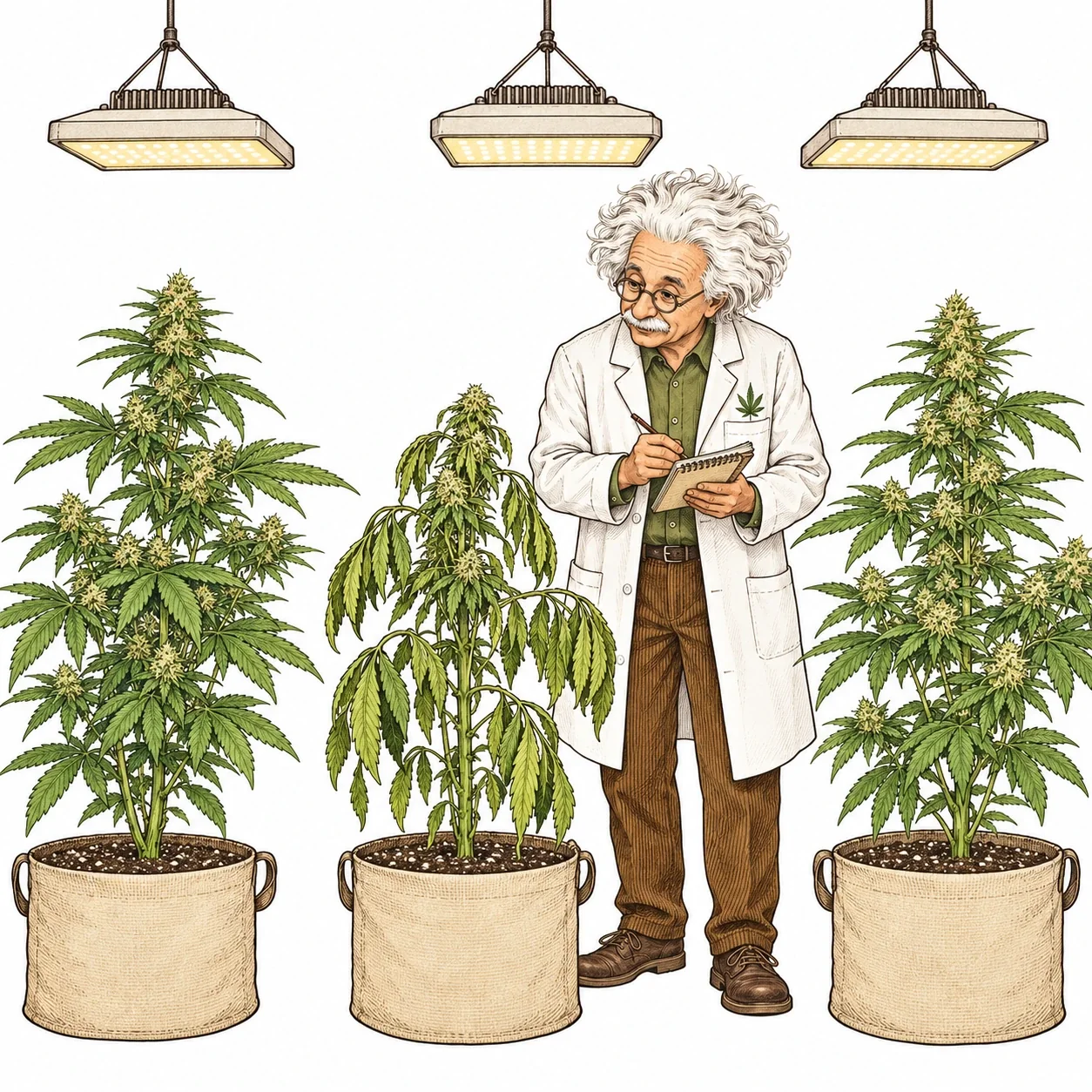
With this step-by-step checklist, you’ll find the cause of drooping cannabis leaves in just a few minutes. Work through the points in order – the most common cause comes first. Take your time for a thorough diagnosis at the first symptom, because the wrong treatment can make your plant’s condition worse instead of better.
Step 1: Lift the pot. Is it heavy and the soil wet? Then overwatering is likely – take a break from watering. Is the pot light and the soil dry? Then water thoroughly right away. Step 2: Measure the room temperature. Above 82–86 °F (28–30 °C)? Improve ventilation and raise the lamp. Step 3: Do the leaves perk up at night or after lights-out? Then heat stress is the likely cause. Do they stay droopy? Check the roots and the pH. Step 4: Are there additional symptoms like discoloration, spots or curled leaves? Then a nutrient deficiency or nutrient burn could be the cause.
Document every step with a quick photo and a note. That way, you’ll spot patterns over time and get better at catching problems early. Most experienced growers develop a feel over time for how their plant should look – and react to the smallest changes right away. Don’t get discouraged: drooping leaves are one of the most common problems in day-to-day growing and in most cases can be fixed completely.
- Step 1: Check the pot weight – heavy or light?
- Step 2: Check the soil for moisture and smell
- Step 3: Measure the room temperature – above 82 °F (28 °C)?
- Step 4: Watch for recovery after lights-out – yes or no?
- Step 5: Check the roots for color and texture
- Step 6: Measure the pH of your water and growing medium
- Step 7: Look for additional symptoms like discoloration or spots
If the cause is in the roots, you’ll find more in our article on oxygen deprivation in the roots. If the plant keeps getting limper, read how to save wilting plants as well.
Frequently Asked Questions
Why are my cannabis leaves drooping even though I water regularly?
Watering regularly doesn’t always mean watering correctly. The most common cause is overwatering: you water too often, before the soil has dried out enough. Check the weight of the pot – is it still heavy? Then take a break from watering. If the soil is dry and the pot is light, water right away. Other possible causes are heat stress, root problems or the wrong pH, which blocks nutrient uptake.
How long does it take for drooping cannabis leaves to recover?
That depends on the cause. With underwatering, the leaves often perk back up within 1–2 hours of watering. With overwatering, recovery can take 2–5 days until the soil has dried out enough. Heat stress symptoms usually disappear within a few hours once things cool down. With root problems or severe pH stress, recovery can take 1–2 weeks.
Can drooping leaves permanently hurt my cannabis harvest?
After short, one-time stress, the plant recovers fully with no loss in yield. Stress that lasts for several weeks – especially in the flowering stage – can cut your harvest significantly, though. Chronic overwatering can lead to root rot, which damages the plant for good. So act as early as possible as soon as you see drooping leaves.
Do cannabis leaves always droop at some point – is that normal?
No, healthy cannabis plants have upright, turgid leaves throughout the entire vegetative and flowering stages. Slight drooping toward the end of the light period, shortly before the plant’s “sleep” phase, is normal and no cause for alarm. But if leaves hang limp all the time, that’s always a sign that something is wrong – and you should narrow down the cause step by step.
Is drooping normal in cannabis seedlings?
Seedlings sometimes droop shortly after germination or after transplanting – that’s normal transplant shock and fades after 1–3 days. Otherwise, seedlings are mostly affected by overwatering, too: they need very little water and are especially sensitive to wet soil. Water seedlings very sparingly and only in a small circle around the stem.
Drooping leaves on their own are often harmless — it only becomes a problem when thin, unstable stems show up as well, pointing to a deeper issue.
Can pests like spider mites also cause drooping leaves?
Yes – with a heavy spider mite or thrips infestation, the pests suck out so much plant sap that, on top of drooping, the leaves also show fine light speckles or fine webbing. Unlike with overwatering, the soil stays normally moist and the pot doesn’t feel unusually heavy. If you keep suspecting pests, check the undersides of the leaves with a magnifying glass – more on this in our guide to identifying and controlling cannabis pests.
Conclusion
Diagnosing drooping cannabis leaves is easier than many growers think – as long as you know what to look for. In most cases, limp leaves come down to overwatering, underwatering or heat stress, and all three can be fixed with a few simple steps. Use the diagnostic checklist in this article as your first tool to narrow down the cause quickly. You’ll find more help with specific symptoms in our Plant Diagnosis overview on PlantClue – there you’ll get quick answers to all common grow problems.
