

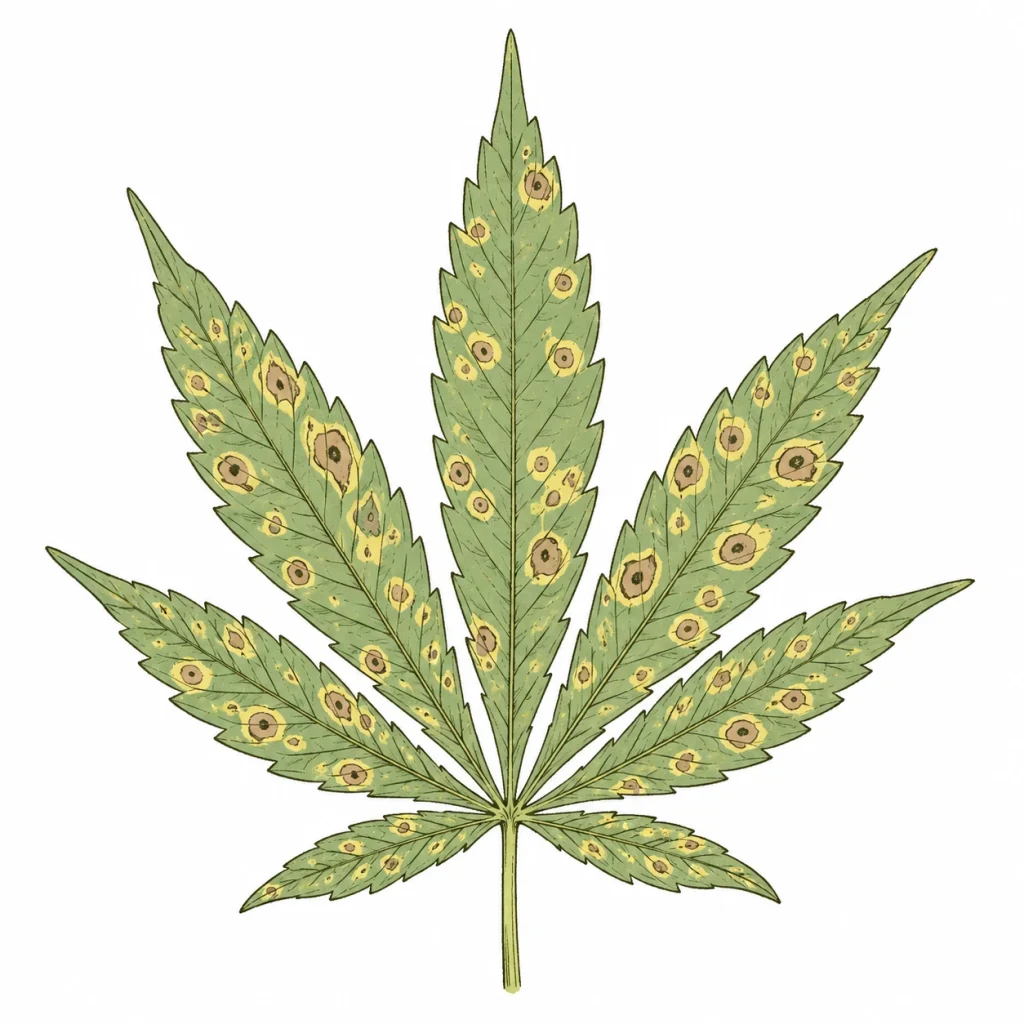
Septoria leaf spot is one of the most common fungal infections in cannabis growing, and left untreated, it can wipe out an entire harvest. The fungus Septoria cannabis usually hits the lower leaves first. In damp, cool conditions, it can climb up the plant fast. Watch for small, round spots in yellow, brown or white with a clearly darker edge. That’s a warning sign you should never ignore. In this article, you’ll learn the symptoms, the causes and proven treatments, so you can save your plants quickly and effectively.
Septoria Leaf Spot on Cannabis: How to Spot the Symptoms
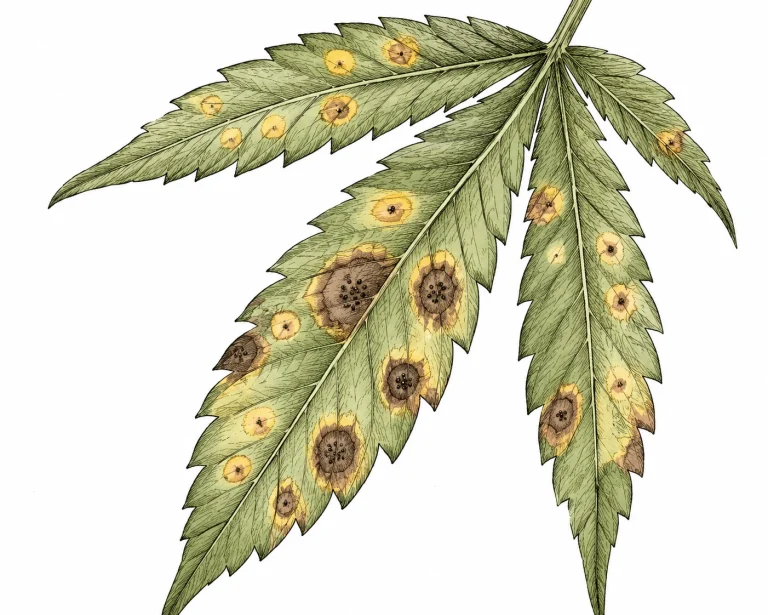
A septoria infection usually starts on the lower, older leaves. At first, you’ll see small spots that look water-soaked. Within a few days, they change color. Early on, the spots are pale yellow and only a few millimeters across. As the infection progresses, the centers turn brown to creamy white, while the edges stay dark brown to almost black. This distinctive two-tone pattern is the key sign of septoria leaf spot on cannabis.
Later, tiny black dots show up in the center of the spots. These are pycnidia, the fungus’s spore-producing structures. Once you can see them, the infection is advanced and actively spreading spores. Infected leaves turn fully yellow, then yellow-brown, and finally drop off. Without treatment, the fungus can work its way up the plant layer by layer and seriously cut down its ability to photosynthesize.
For an accurate diagnosis, you need to rule out other problems. Unlike magnesium deficiency or other nutrient deficiencies, septoria spots don’t follow the leaf veins. They’re scattered randomly and have sharply defined edges. Nutrient burn looks different too: with septoria, the two-tone pattern with the dark edge is a dead giveaway.
- Small, round spots that start on the lower leaves
- Spots: pale yellow to white center with a dark brown to black edge
- Black dots (pycnidia, spore structures) in the center as the infection advances
- Infected leaves turn fully yellow and drop off
- Spreads from the bottom up as the infection progresses
- Not tied to leaf veins: spots are scattered randomly
Causes and Risk Factors for Septoria on Cannabis
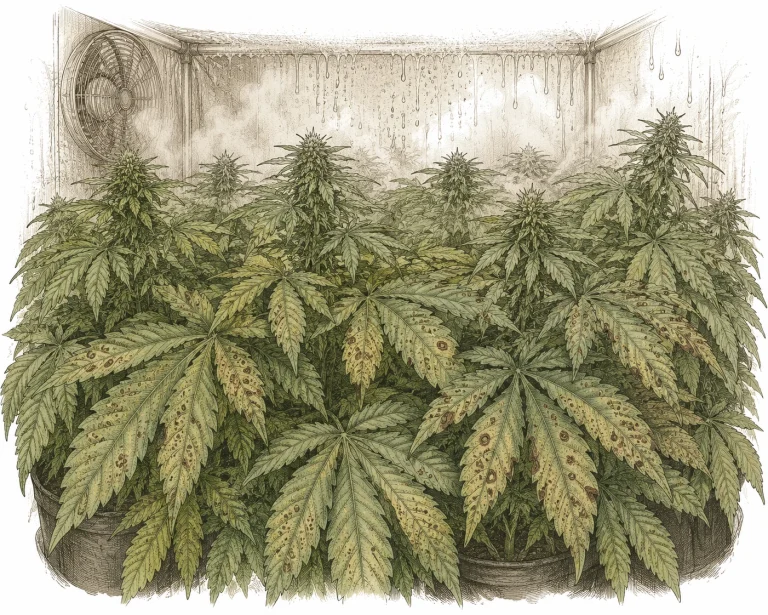
Septoria cannabis is a soil-borne fungal pathogen that can explode under the right conditions. The biggest risk factor is constantly high humidity combined with mild to cool temperatures between 59 and 77 °F (15 and 25 °C). This combo is a classic problem in outdoor growing in the fall, when nights get colder and morning dew sits on the leaves. But septoria can show up indoors too, when ventilation is poor and pockets of damp air get trapped between the leaves.
Poor air circulation is another critical factor. Dense plants without enough space between the leaves give the fungus ideal conditions: moisture doesn’t dry off fast enough, and spores can spread freely. On top of that, septoria spores can survive in soil, on fallen leaves and even on tools. Once a grow space has been infected, it stays a risk until you clean it thoroughly.
A stressed plant with weakened defenses makes an outbreak much more likely. Stress from pH swings in the growing medium, nutrient deficiencies or nutrient burn makes your plant more vulnerable to all kinds of fungal infections. An unstable pH is especially harmful: it blocks optimal nutrient uptake and weakens the plant’s natural defenses, which opens the door wide for fungal diseases like septoria.
- Humidity above 60 % during the flowering stage
- Cool temperatures between 59–77 °F (15–25 °C), especially at night
- Poor air circulation and dense foliage
- Soil-borne spores from last season’s infections
- Plants weakened by nutrient stress or pH problems
- Contaminated tools or infected soil bringing the fungus in
Treat Septoria Leaf Spot on Cannabis Right Away: Step-by-Step Guide
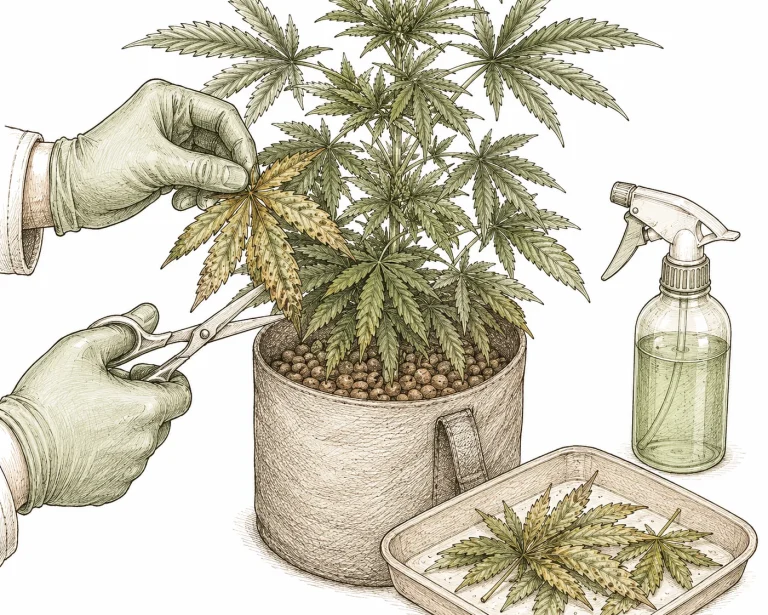
Once you spot the first signs of a septoria infection, act fast. Your first and most important step is to remove every infected leaf right away. Use clean, disinfected scissors or a scalpel. Take off the badly spotted leaves and also any lower leaves that look even slightly suspicious. Get the leaves out of your grow space immediately. Never toss them in the compost or near other plants, or you may spread the spores.
Next, bring your humidity down and improve airflow. Keep humidity below 50 % in the flowering stage and keep the air moving with fans that blow directly under the leaf layer of your canopy. For indoor growing, double-check your light schedule and make sure temperatures don’t drop too far. Also take a look at your watering routine. Watering too often keeps the growing medium wet and raises the risk of disease.
Several products have a solid track record for direct treatment. On the organic side, potassium bicarbonate (mixed like a baking soda spray, about 1 tsp per quart (1 L) of water) is an effective fungicide. It raises the pH on the leaf surface and slows fungal growth. Copper-based products can also work well. Check whether they’re approved for use on cannabis where you live. Neem oil extracts with a high azadirachtin content have fungicidal effects too and can be used both to prevent and to treat infections. Spray in the evening or during the dark period to avoid leaf burn under the lights, and repeat every 3–5 days.
- Remove all infected leaves right away with sterile scissors and dispose of them safely
- Lower humidity below 50 % and improve air circulation
- Spray all leaves with a potassium bicarbonate solution (1 tsp per quart (1 L) of water)
- Use copper-based products or neem oil as organic fungicides
- Repeat treatment every 3–5 days until no new spots appear
- Disinfect your tools after every use to stop spores from spreading
How to Prevent Septoria Leaf Spot on Cannabis Long-Term
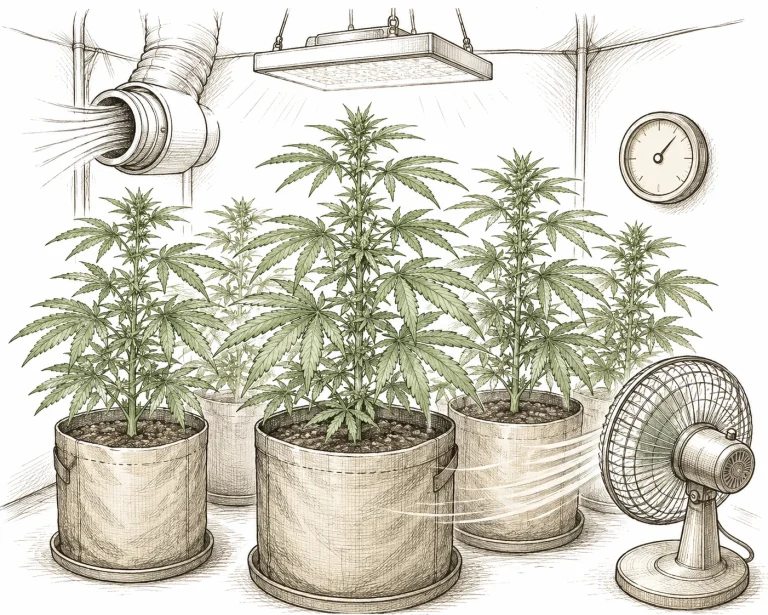
With septoria, prevention is everything. Once a grow area has been infected, it can stay a risk zone for good unless you take action. For outdoor growing, it’s a good idea to replace infected soil completely between seasons or disinfect it thoroughly. A layer of organic mulch can keep soil-borne spores away from your plants while also helping regulate soil moisture. Pick spots with good airflow and avoid crowding your plants without enough space between them.
Indoors, consistent climate control is your best protection. Keep humidity below 60 % in the vegetative stage and below 50 % in the flowering stage, especially in the last few weeks before harvest. Regular lollipopping and removing the lower leaves can greatly improve airflow under the canopy and literally take away the ground septoria thrives on. Clean all your equipment between runs with a suitable disinfectant.
Choosing resistant strains can also make a real difference. Some sativa-dominant hybrids or strains with ruderalis genetics are considered tougher against fungal infections. On top of that, balanced feeding – especially enough calcium and magnesium – noticeably strengthens your plant’s immune system. If you’ve dealt with calcium deficiency in cannabis, you know how much a single deficiency can weaken a plant’s overall resilience. Check the root zone and growing medium regularly for signs of overwatering or waterlogged soil.
Another underrated prevention step is simply watching your plants closely, especially the lower leaf levels. If you check the undersides of older leaves every day, you can catch septoria very early, while it’s still easy to contain. For a complete overview of possible plant problems, check out our Plant Diagnosis hub. It helps you quickly sort out any symptom.
- Replace or disinfect soil between seasons (outdoor)
- Keep humidity consistently below 50 % in the flowering stage
- Use lollipopping and remove lower leaves for better airflow
- Fully disinfect your equipment between runs
- Go for resistant strains, especially in humid outdoor climates
- Check the lower leaf levels daily for early detection
- Feed a balanced diet of nutrients for a strong plant immune system
How to Tell Septoria in Cannabis Apart from Similar Diseases and Deficiencies
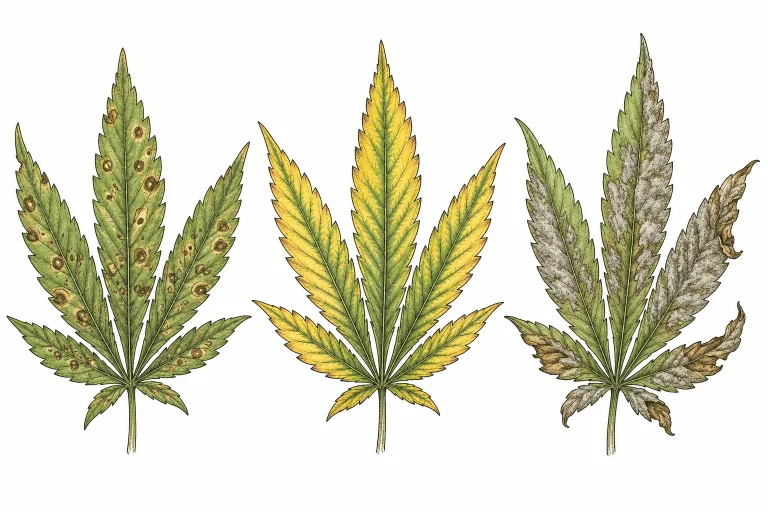
Lots of fungal diseases and nutrient deficiencies can cause symptoms that look alike. That’s why an accurate diagnosis matters so much for the right treatment. The key difference between septoria and a nutrient deficiency is the shape and pattern of the discoloration. Deficiencies cause diffuse yellowing that often follows the leaf veins or spreads evenly across the leaf. Septoria, on the other hand, creates sharply defined spots, round to irregular, with a clear dark border.
Compared with other fungal diseases, bud rot (botrytis, gray mold) shows a typical gray, fuzzy mycelium on the leaf surface. You’ll never see that with septoria. Powdery mildew leaves a white, powdery coating on the leaves. Septoria doesn’t form anything like that. Instead, it leaves sunken, dry spots. The clearest proof of septoria is the tiny black pycnidia. In heavy infections, you can see them with the naked eye as small dots in the center of the spots.
Light burn and heat stress can also look similar at first glance. But they usually show up on the upper leaves that get the most light, while septoria starts at the bottom. Not sure about your diagnosis? Our guide on yellow cannabis leaves and their causes can help. It lists all the common causes of yellowing step by step, so you can narrow things down fast.
- Septoria: round spots with a dark border, no diffuse yellowing like with deficiencies
- No white coating like with powdery mildew
- No gray mycelium like with bud rot (botrytis)
- Black pycnidia (dots) in the center of the spots are a clear sign of septoria
- Septoria starts at the bottom, while heat damage shows up on top leaves that get the most light
- The spot pattern doesn’t follow the veins, a key difference from nutrient deficiencies
Septoria or Cercospora: Does the Difference Matter?
Besides septoria, there’s a second fungus that causes almost identical symptoms on cannabis: cercospora leaf spot. You’ll see round to slightly angular spots on the lower leaves that work their way up the plant. With the naked eye, you can only partly tell them apart. Cercospora spots often have a reddish-purple border instead of a dark brown one. They also form the tiny black pycnidia dots in the center less often, because this fungus produces its spores differently than septoria. In practice, though, an exact ID barely matters. The causes, risk factors and treatment of both diseases overlap almost completely. If you follow the septoria steps above (remove infected leaves, lower the humidity, treat with potassium bicarbonate or copper-based products), you’ll knock out a cercospora infection too.
According to the plant protection guide from the Bavarian Garden Academy (German), good hygiene and a well-managed climate are the most important ways to prevent leaf spot diseases in home and greenhouse growing.
Frequently Asked Questions
How dangerous is septoria for my cannabis plant?
Septoria is a serious fungal disease. Left untreated, it can wipe out all of a plant’s leaves. In the worst case, your plant loses so many leaves that photosynthesis can no longer feed the buds. That can mean a much smaller yield and weak, airy buds. If you catch it early and treat it consistently, though, you can usually keep the infection under control.
Can I harvest buds if my plant has septoria?
Yes, you can still harvest infected plants as long as the buds themselves aren’t infected. Septoria mainly attacks the leaves and rarely spreads directly into the buds. Still, remove all infected leaves before harvest and check your buds closely for any signs of mold or rot. Badly weakened plants will naturally give you a smaller yield.
How long does it take septoria to take over a whole plant?
Under ideal conditions for the fungus (high humidity, cool temperatures and poor air circulation), septoria can climb from the lower leaves to the top of the plant within 2–3 weeks. In drier, warmer conditions, it spreads much more slowly. That’s why regular checks and early action are so important.
Can septoria spread from one plant to another?
Yes. Septoria spores spread through water (watering, rain), wind and contaminated tools. In indoor growing, the airflow from your fans can carry spores from an infected plant to a healthy one. Always disinfect your tools between plants and, if you can, isolate infected plants from the rest of your grow.
What’s the difference between septoria and a Cal-Mag deficiency?
A calcium-magnesium deficiency shows up as diffuse yellowing. It often starts between the leaf veins and spreads evenly, without sharply defined spot edges. Septoria, on the other hand, causes round to irregular spots with a clearly defined dark border. The key difference: tiny black spore dots (pycnidia) in the center of the spots. You’ll only see those with septoria.
Does baking soda really work against septoria on cannabis?
Potassium bicarbonate (a close cousin of baking soda) is a recognized organic fungicide. It raises the pH on the leaf surface, which slows down fungal growth. It works best as prevention and in early infection stages, and less well in advanced cases. Mix about 1 teaspoon per quart (1 L) of water, add a few drops of liquid soap as a sticker, and spray the solution directly onto all leaf surfaces in the evening.
To avoid mix-ups, it helps to know a few other fungal diseases that look similar: Alternaria, Cladosporium and bacterial leaf spot all cause spotty leaf damage, but they differ in cause and treatment.
The Bottom Line
Septoria leaf spot is one of the most common and potentially most damaging fungal infections in cannabis growing – but with the right know-how, you can get it under control. The key is catching it early by its telltale round spots with dark borders and black spore dots. If you act fast, remove infected leaves right away, lower the humidity and treat with organic fungicides, you can save your plant in most cases. In the long run, consistent climate control is your best insurance against septoria and other fungal diseases in your grow.
