

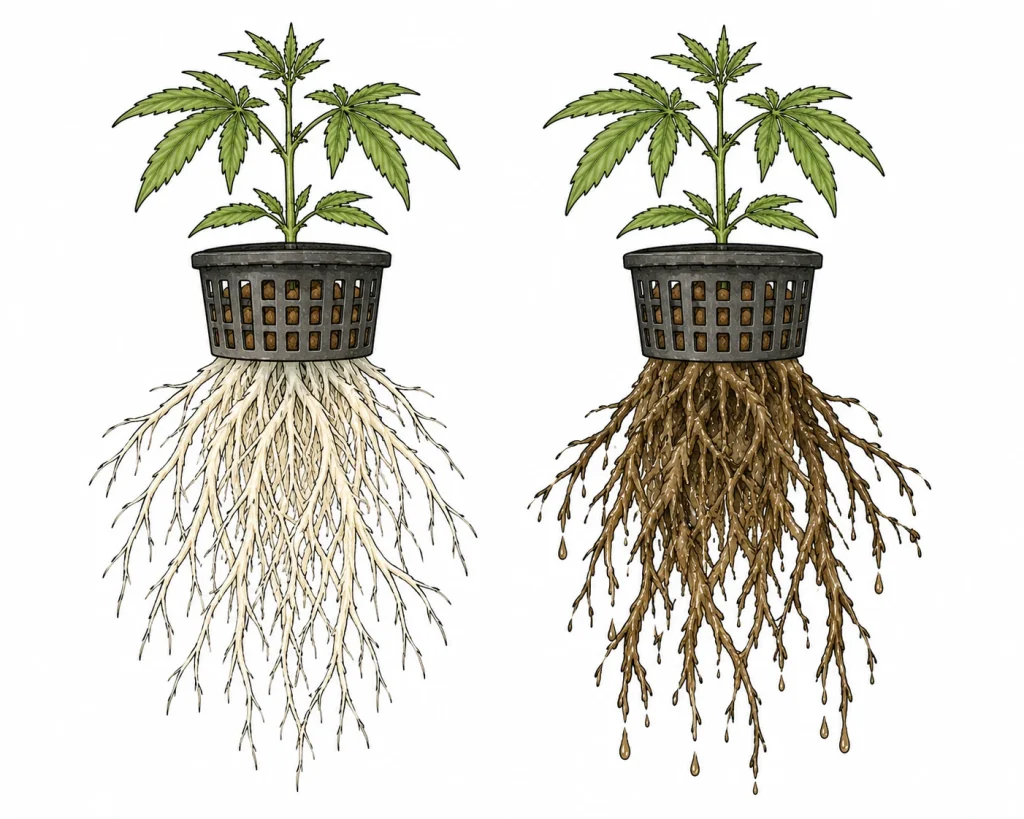
Pythium root rot in cannabis is one of the most dangerous root diseases you can run into. This water-loving mold can wreck a root system within just a few days, sometimes before you even notice something’s wrong. If you spot the typical signs of a Pythium infection in your cannabis roots early, you have a real chance of saving your plants. In this article, you’ll learn how Pythium starts, how to recognize it and which countermeasures actually work. Everything here is based on current hands-on experience from home grows. Check the cannabis laws where you live before growing.
What Is Pythium and Why Is It So Dangerous for Cannabis?
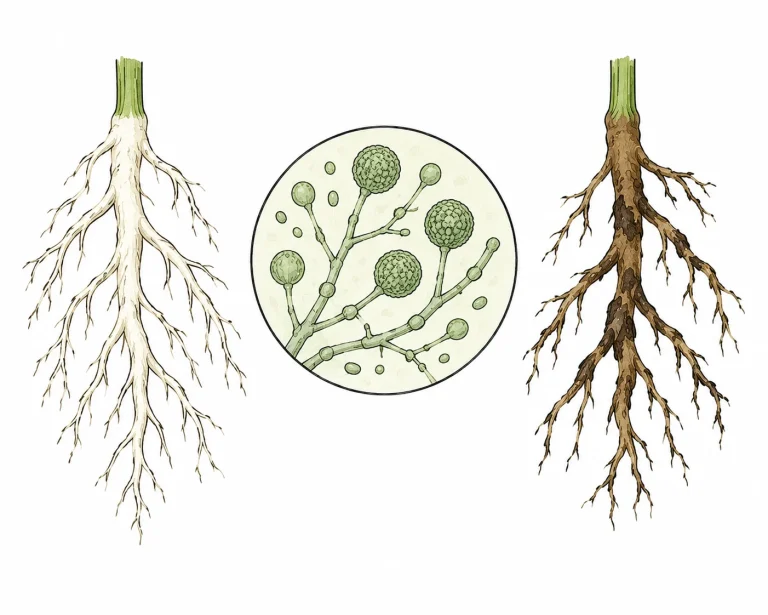
Strictly speaking, Pythium isn’t a true fungus. It belongs to the oomycetes, also known as water molds. These organisms are common in soil and water, and they thrive in damp, low-oxygen environments. For cannabis, the most relevant species are Pythium ultimum and Pythium aphanidermatum, which attack and break down root tissue.
What makes Pythium so nasty is its speed. Other root diseases can take weeks to develop, but Pythium can damage a healthy root system within 48 to 72 hours, badly enough that the plant can no longer take up nutrients. It can spread explosively in hydroponics and coco, and in regular soil too. Because the symptoms show up on the leaves only after a noticeable delay, the real cause is often mistaken for something else, like a nutrient deficiency or a watering mistake.
Pythium spores can survive in your growing medium, in pots, in your watering water and even on tools. Once you’ve had an infection, strict hygiene and prevention are a must to keep it from coming back. Understanding how this pathogen works is the first step toward treating it successfully.
- Pythium is an oomycete (water mold), not a true fungus
- Prefers warm, wet, low-oxygen root zones
- Most common species in cannabis: Pythium ultimum, Pythium aphanidermatum
- Can destroy a root system within 48 to 72 hours
- Spreads through water, growing medium, pots and contaminated tools
- Often mistaken for a nutrient deficiency or overwatering
How to Spot Pythium Symptoms in Cannabis
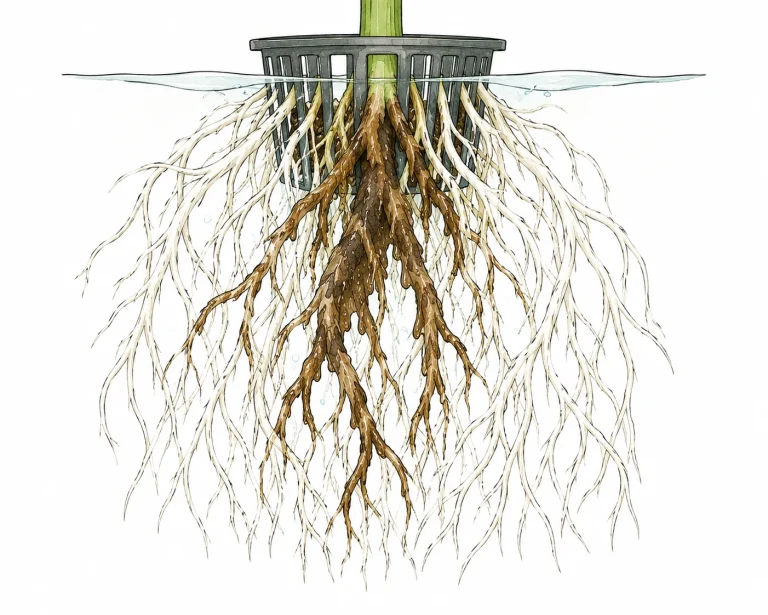
The sneaky part of a Pythium root infection is that the first visible signs don’t show up on the roots. They show up on the foliage. By the time you see wilting, discoloration or stalled growth, the root system can already be badly damaged. That’s why it pays to check the roots directly on a regular basis, especially in hydro, DWC (deep water culture) or coco grows.
On the leaves, Pythium first looks like general weakness. The plant seems limp, the leaves droop even though it has enough water, and growth suddenly stops. Later, yellowing and brown leaf edges show up, which at first glance can look like a calcium or magnesium deficiency. The key difference: with Pythium, the plant doesn’t respond to feeding or pH corrections, because the roots simply can’t take up nutrients anymore.
When you look at the roots directly, these are the signs of Pythium: The roots turn from white to brown or grayish brown. In later stages, they get slimy and smell rotten and sweetish. The outer layer of the root slips off easily and leaves a thin, thread-like strand underneath. In DWC systems, you’ll often see brown streaks in the water. All of these point clearly to an active Pythium infection that needs action right away.
- Leaves droop even with enough water (wilting)
- Growth stops suddenly with no obvious outside cause
- Yellowing usually starts on older, lower leaves
- Roots turn brown to grayish brown, then black
- Slimy, rotten-smelling roots are a clear sign
- Outer root layer slips off easily
- Brown streaks or cloudiness in the nutrient solution (hydro/DWC)
- No response to feeding or pH corrections
Causes: When and Why Does Pythium Show Up in Cannabis?
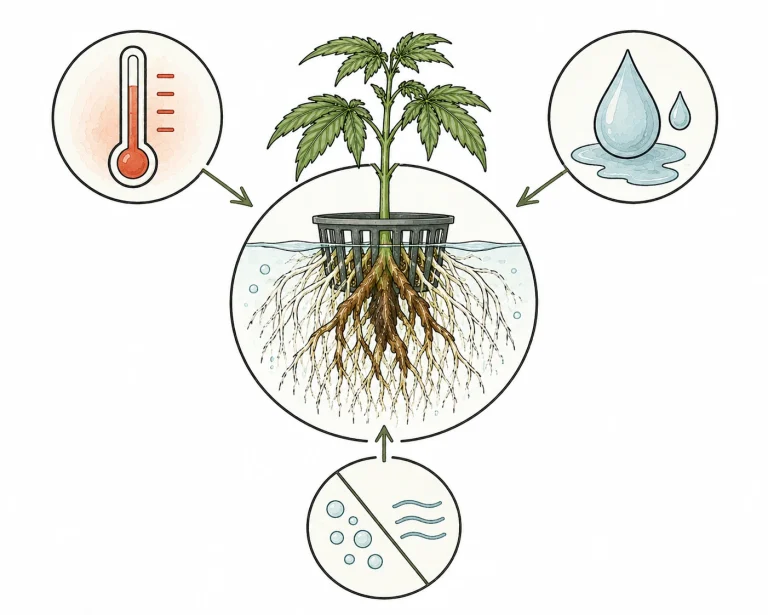
Pythium doesn’t come out of nowhere. Specific conditions set the stage for an outbreak. If you know these triggers, you can keep pythium out of your grow for good. The most common culprit is a combo of a growing medium that’s too wet and temperatures that are too high, especially in the root zone.
Too much water in the growing medium or nutrient solution cuts off the oxygen your roots need to survive. Without oxygen, roots can’t breathe, and they become an easy target for pathogens like pythium. If you water your cannabis the wrong way (too often, too much or without letting the medium dry out between waterings), you create the perfect home for pythium. In DWC systems, nutrient water that’s too warm (above 72 °F (22 °C)) is one of the most common triggers.
Other risk factors include poor ventilation in your grow space, pots that are too small or drain poorly, dirty equipment and pots, and contaminated growing medium or water. Stress from the wrong lighting, an off pH or previous nutrient burn can also weaken your plant and make it easier to attack. Pythium is an opportunist: it strikes when your plant is already weakened.
- Growing medium that stays too wet without enough time to dry out
- Water temperature in DWC/hydro above 72 °F (22 °C)
- Lack of oxygen in the root zone from waterlogging
- Poor ventilation and high humidity in the grow space
- Contaminated growing medium, pots or irrigation water
- pH outside the ideal range (6.0–7.0 in soil)
- A plant weakened by stress, nutrient burn or lighting problems
- Reused pots that weren’t disinfected first
How to Treat Pythium Root Rot in Cannabis: First Steps and Treatment
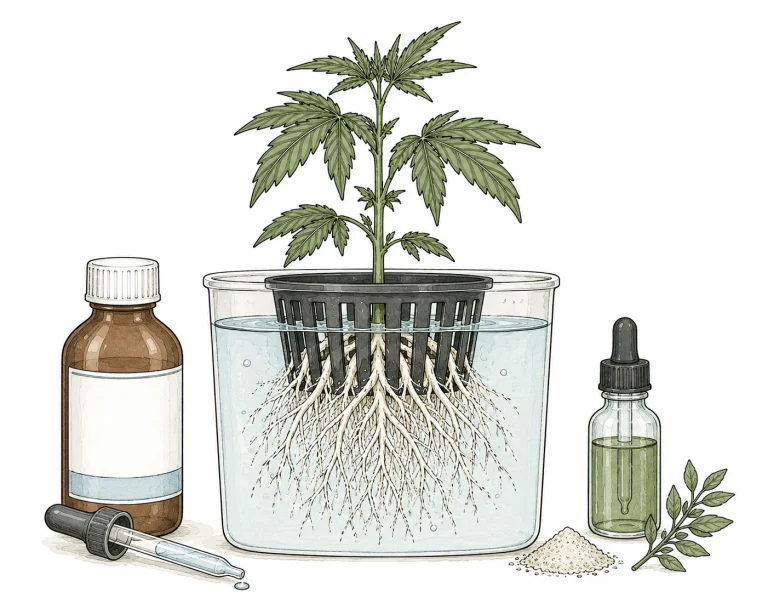
Once you’ve spotted pythium on your cannabis plant, every hour counts. Step one: isolate the infected plant right away so the spores can’t spread to other plants in your grow space. Next, change the conditions pythium loves and fight the pathogen directly at the same time.
One of the most effective and widely used treatments for pythium is 3% hydrogen peroxide (H2O2). Diluted with water (about 8–11 ml of H2O2 per gallon, or 2–3 ml per liter), you can use it for watering or spray it directly on the roots. H2O2 kills anaerobic pathogens like pythium by releasing oxygen, and it boosts the oxygen supply to your roots at the same time. Important: don’t overdo the dose, or you can also kill the beneficial microbes in your growing medium.
Over the long run, biological allies often work better than chemical treatments. Trichoderma products (for example, a root inoculant with Trichoderma harzianum) are considered one of the best natural enemies of pythium. This beneficial fungus colonizes the root zone and crowds out pythium by claiming the nutrients and space for itself. Products based on Bacillus subtilis have also proven themselves. Combine them with better growing conditions (lower water temperature, adjusted watering schedule, improved ventilation) and you can seriously boost your plant’s chances of survival. With this combined approach, even moderate pythium infections can often still be treated successfully.
After treatment, a thorough cleanup is a must. Wash all pots, tubing, containers and tools with a 10% bleach solution or isopropyl alcohol. Use fresh, high-quality growing medium, and never restart with a system contaminated by pythium. Cut corners here and you can be looking at the next outbreak within just a few weeks.
- Isolate the infected plant immediately and keep it away from the rest of your grow
- Use 3% H2O2 diluted with water for watering or as a root spray
- Use trichoderma products as a biological ally
- Add Bacillus subtilis products as a supporting biological treatment
- Lower the water temperature in DWC/hydro to below 68 °F (20 °C)
- Check your watering schedule right away and fix any overwatering
- Disinfect all equipment, pots and containers after an outbreak
- Use fresh growing medium and throw out contaminated medium
How to Prevent Pythium Root Rot in Cannabis: Protect Your Grow for the Long Run
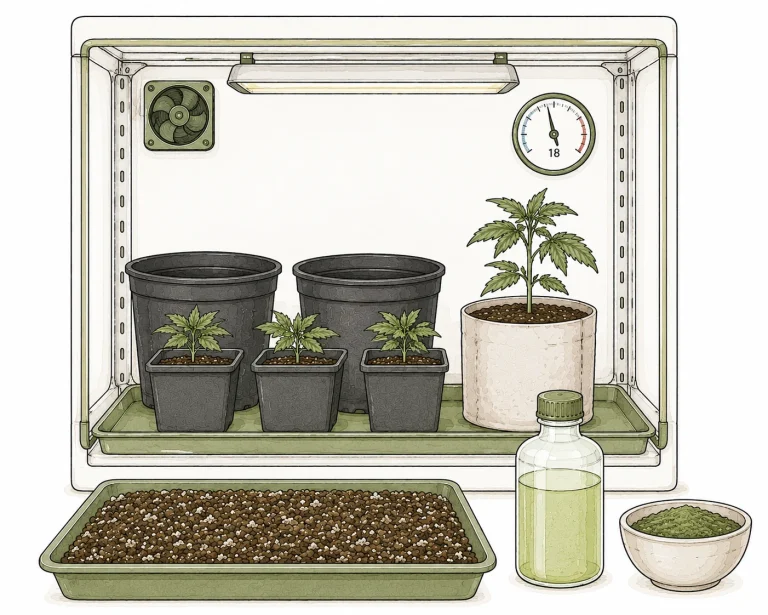
With pythium, prevention is way easier than treatment. And it starts before your first plant ever goes into the pot. Your most important foundation is a well-aerated growing medium that never stays soggy. For indoor grows, a coco coir mix with perlite (about 30–50% perlite) works great. It gets far more oxygen to the roots than plain potting soil. You’ll find more tips on picking the right growing medium in our complete indoor growing guide.
Using trichoderma products* preventively is worth its weight in gold. Mix beneficial microbes into your growing medium at transplant, and you build a living barrier that crowds out pythium and other pathogens. Just as important: monitor your pH and keep it stable in the right range. An unstable pH weakens the roots and gives pathogens an opening. Regular checks are your best protection against nasty surprises.
*Ad / affiliate link: The link to the trichoderma products leads to Amazon. As an Amazon Associate, we earn from qualifying purchases.
If you run DWC or hydroponics, controlling your water temperature is absolutely critical. Keep your nutrient solution below 72 °F (22 °C) at all times, ideally between 64 and 68 °F (18–20 °C). A water chiller is a solid investment here. On top of that, always clean and disinfect your grow space and all your gear thoroughly between grows. Good hygiene is still your most powerful weapon against pythium.
- Choose a growing medium with lots of perlite for better drainage and aeration
- Work trichoderma in preventively at transplant
- Adjust your watering schedule: only water once the top layer of the medium has dried out
- Keep the water temperature in hydro/DWC below 72 °F (22 °C) at all times
- Measure your pH regularly and keep it in the right range
- Fully disinfect your grow space and gear between grows
- Never reuse old pots without cleaning them first
- Test your tap water for pathogens before using it, or use UV-treated water
Pythium on Cannabis Roots vs. Other Root Problems: How to Tell Them Apart Fast
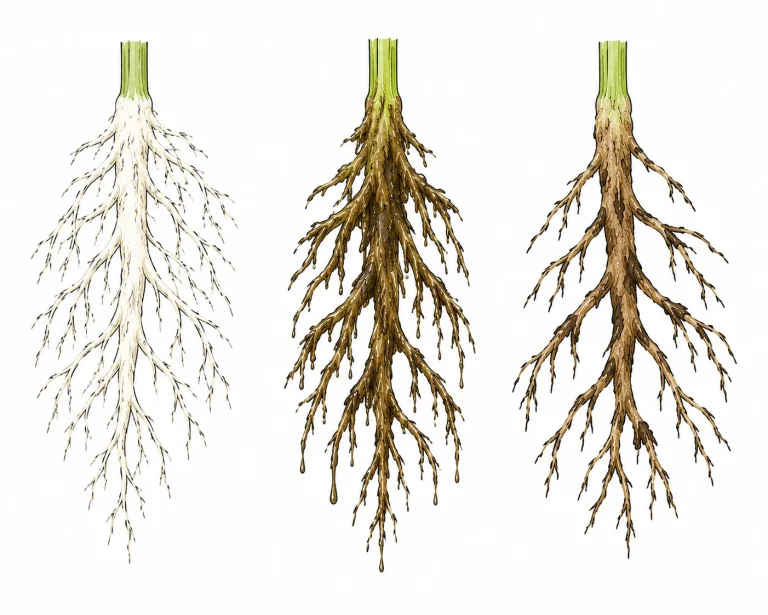
Not every brown root means pythium. There are several causes of root problems in a grow that can look alike but need very different treatments. That’s why an accurate diagnosis matters. The wrong fix can do even more damage.
Brown roots can also come from overly strong nutrient concentrations, a classic sign of nutrient burn. In that case, the roots are discolored but not slimy, and they don’t smell rotten. You should also rule out normal brown staining from organisms like Bacillus strains or from organic nutrients. That’s harmless and needs no treatment. Pythium has a clear signature: brown + slimy + rotten smell + wilting even though the plant has water.
Other common look-alikes are fusarium wilt (also a fungal pathogen, but it often attacks the stem too), algae on the roots (a green film caused by light leaking into the root zone) and physical root stress from a pot that’s too small (root bound). Close observation, especially of smell and texture, usually clears things up fast. When in doubt, take precautions as if it were pythium while you keep collecting clues.
- Pythium: brown + slimy + rotten smell + wilting even though the plant has water
- Nutrient burn damage: brown, but dry and no rotten smell
- Algae: green film caused by light leaking into the root zone
- Fusarium wilt: also attacks the stem, dark discoloration inside
- Root bound: tangled, dense roots, but white and smelling healthy
- Staining from organic nutrients: brownish tint, but no slime
For a general overview of root rot and its causes, check out our article on cannabis root rot.
Frequently Asked Questions
Can I still save a plant with a severe pythium infection?
It depends on how far the infection has spread. If you can still find white, healthy roots, you can often save the plant with an H2O2 treatment, trichoderma and better growing conditions. If the whole root system is brown and slimy with no healthy parts left, the plant usually can’t be saved. At that point, it’s more important to fully disinfect your grow and take steps to protect your next run.
How fast does pythium root rot spread to other plants?
Very fast. Within 24 to 48 hours, pythium can jump to neighboring plants through water, splashes or contaminated tools. That’s why isolating an infected plant right away is your very first step. In DWC or NFT systems, where all plants share the same water, pythium can spread even faster.
What water temperature prevents pythium root rot in DWC systems?
Keep the nutrient solution in your DWC system consistently below 72 °F (22 °C). The ideal range is 64 to 68 °F (18 to 20 °C). Warmer water holds less dissolved oxygen and gives pythium and other anaerobic pathogens a big boost. For DWC growers, a water chiller is a smart investment in prevention.
Can I use H2O2 and trichoderma at the same time?
No, not at the same time. H2O2 kills all microorganisms, including beneficial ones like trichoderma. Treat the roots with H2O2 first to kill the pathogen, then wait at least 24 to 48 hours. Only then should you add trichoderma or other biostimulants, so the beneficial organisms can settle in your root zone for the long haul.
Is pythium root rot a problem in outdoor grows too?
Yes, pythium can show up in outdoor growing as well, but it’s less common than indoors. Rainy summers and waterlogged soil are the main triggers for pythium infections outside. Well-draining soil, raised beds and preventive use of trichoderma can cut the risk a lot.
How can I tell pythium apart from normal dirt on the roots?
Healthy roots can look slightly brown from organic nutrient residue or soil particles, but they still feel firm and dry and smell neutral or a little earthy. Roots hit by pythium are slimy and mushy, with a distinctly rotten, sweetish smell. Not sure? Rub a root between your fingers. If it turns slimy and gives off a nasty smell, pythium is the likely culprit.
Bottom Line
Pythium in cannabis is a serious threat that can catch any grower off guard, but you can get it under control if you know the warning signs and act fast. Early detection, immediate isolation, targeted treatment with H2O2, biological helpers like trichoderma and consistent prevention give you the best shot at saving your plants. In the long run, a stable grow environment with smart watering, controlled water temperature and good hygiene is your best protection against new outbreaks. Want to expand your whole diagnosis toolkit? The Plant Diagnosis overview on PlantClue sums up all the key topics in one place.
